Artwork
Burgos, Spain
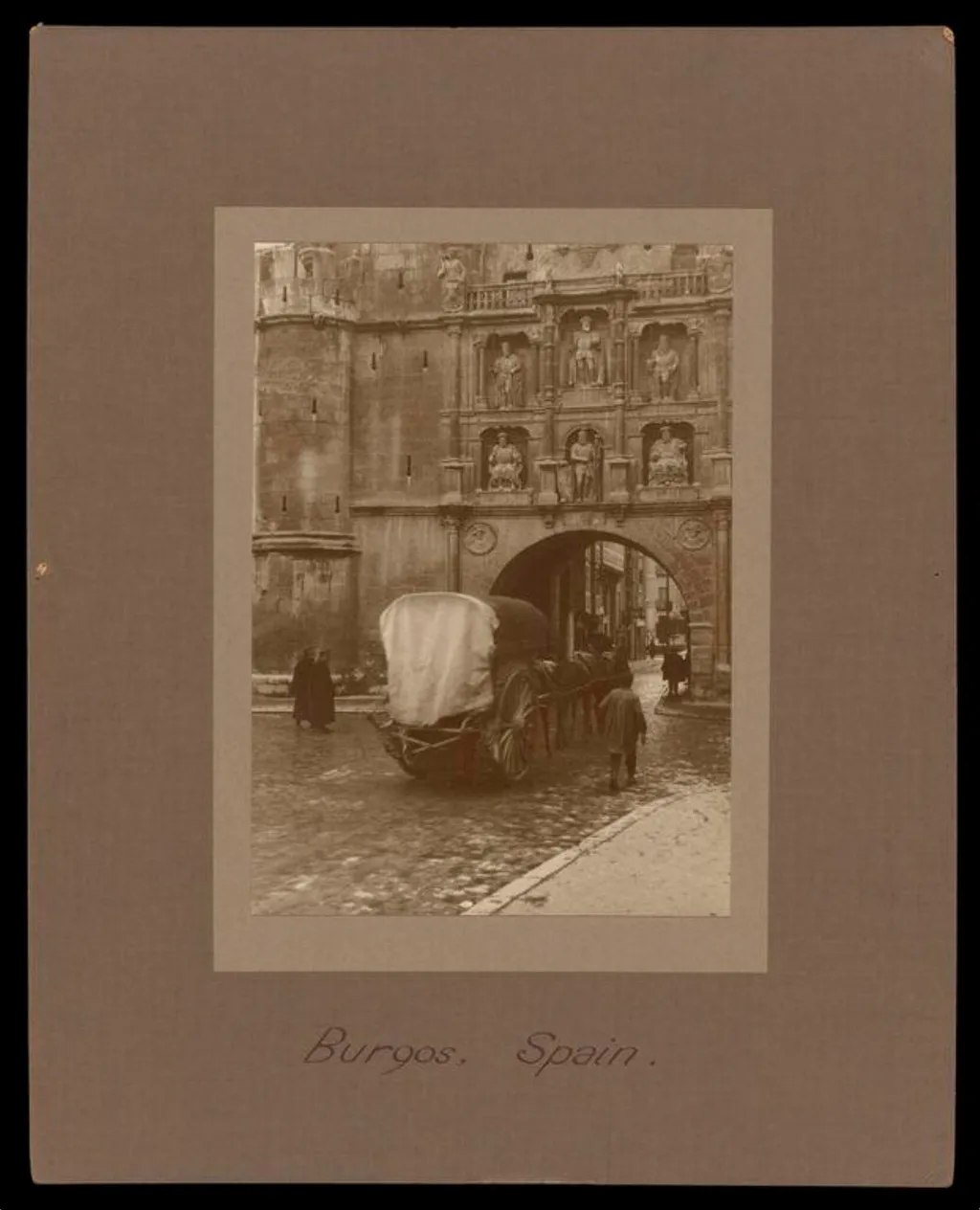
Burgos, Spain is a photographic photography by Ernest Russell Ashton. It dates from 1929 and is held in the collection of the Victoria and Albert Museum.
About this work
Overview
Mounted on brown card, the image shows a horse-drawn cart beneath a stone archway, its tarpaulin covering partially obscured by shadow.
A sepia-toned photograph captures a quiet urban scene in Burgos, Spain, likely taken in the late 19th or early 20th century. Mounted on brown card, the image shows a horse-drawn cart beneath a stone archway, its tarpaulin covering partially obscured by shadow. The wet cobblestones reflect the subdued light, while pedestrians move along the periphery. The title, handwritten in ink at the base, anchors the location and confirms its documentary purpose.
Subject & Meaning
The scene presents ordinary urban life—transport, commerce, and pedestrian movement—without theatricality. The covered cart suggests goods in transit, while the carved archway and ornate building imply historical continuity. The presence of people, neither central nor staged, reinforces the photograph’s role as a record of daily rhythm rather than a curated moment. The absence of modern vehicles underscores a transitional era in transportation.
Technique & Style
The photograph employs natural, diffused lighting to render depth and texture with clarity. Wet pavement enhances tonal contrast, drawing attention to architectural details and the cart’s form. The sepia tone, typical of albumen or gelatin silver prints of the period, adds warmth without obscuring fine detail. The image is composed with a balanced foreground-background relationship, emphasizing spatial depth and architectural scale.
History & Provenance
The photograph likely originated from a local or traveling photographer documenting Spanish urban life during a period of gradual modernization. Its mounting on card and handwritten title suggest it was intended for personal or archival use, possibly as part of a regional collection. The Victoria and Albert Museum holds similar works, indicating its alignment with early photographic documentation practices in Europe.
Context
Burgos, a city with medieval roots, retained many historic structures into the modern era. This image reflects a time when traditional transport coexisted with emerging technologies. The ornate archway and sculpted niches point to the city’s religious and civic heritage, while the wet street and casual pedestrians hint at routine life amid enduring architecture. Such photographs helped preserve visual records of places undergoing slow change.
Legacy
As a modest but carefully composed document, the photograph contributes to the broader archive of 19th-century urban photography. It offers insight into how ordinary spaces were observed and preserved before widespread mechanization. Its survival and inclusion in institutional collections affirm its value as a quiet witness to a moment of transition in Spanish civic life.
Artist & collection
Artist
Ernest Ashton carried a tiny camera everywhere, snapping black-and-white photos like postcards—each one a quick hello to the world.

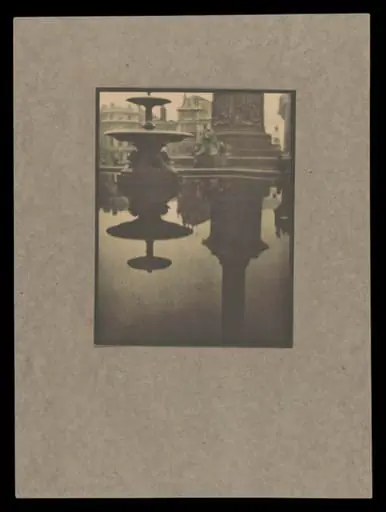 Trafalgar Square
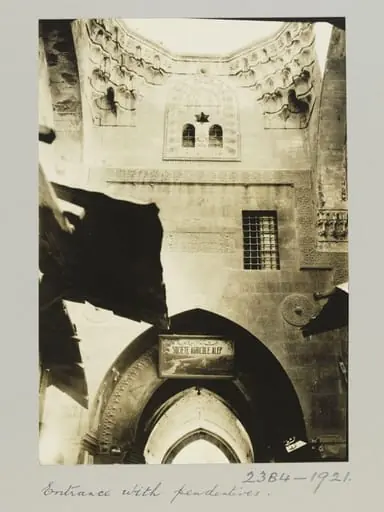 Entrance of Khan al-Jumruk, Aleppo
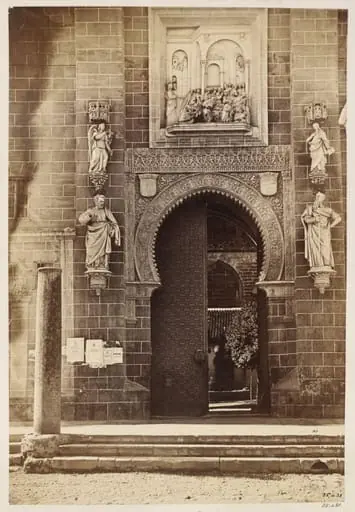 Cathedral Moorish Door (or door of Pardon), Seville
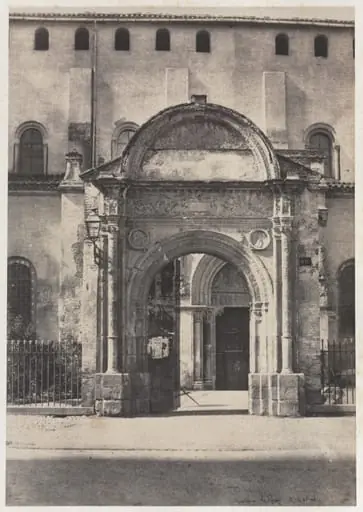 Porte Bachelier, Eglise Saint-Sernin, Toulouse (Haute-Garonne)
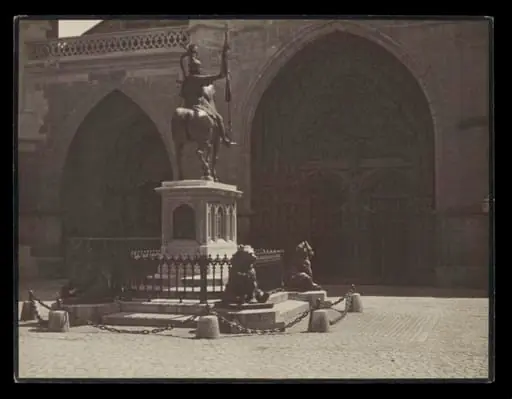 Sunshine
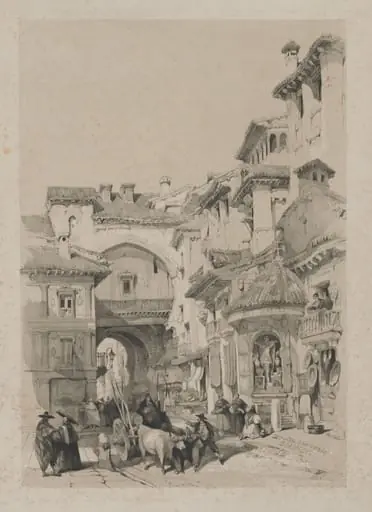 Picturesque Sketches in Spain: Gate of the Vivarrambla, Granada
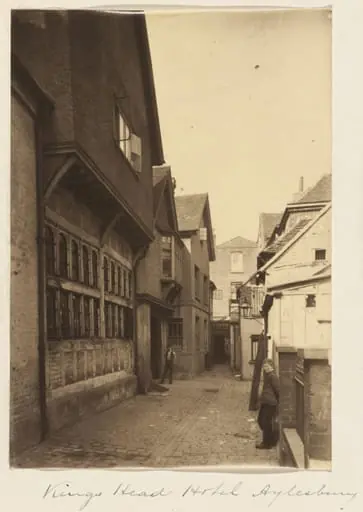 National Photographic Record and Survey
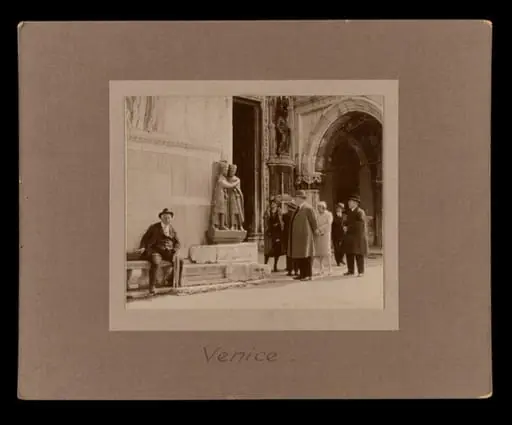 Venice
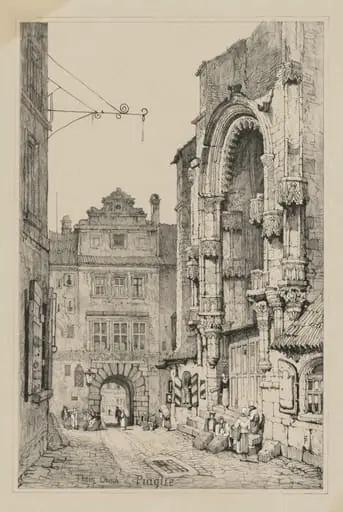 Facisimilies of Sketches made in Flanders and Germany: Thein Church, Prague
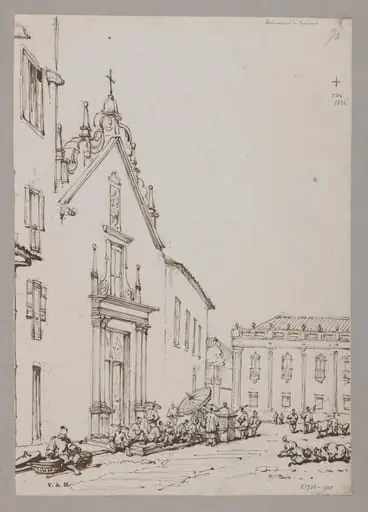 The Misericordia Church and part of the Senate House, Macao
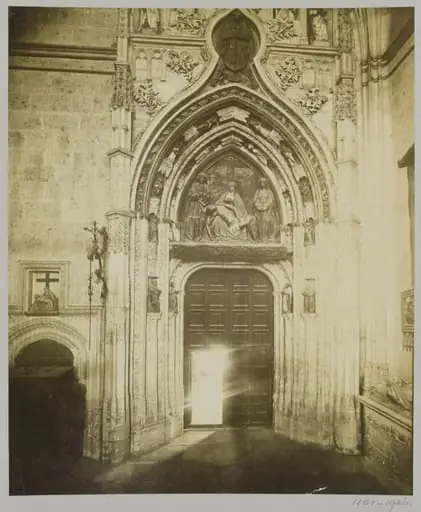 Doorway of Segovia Cathedral
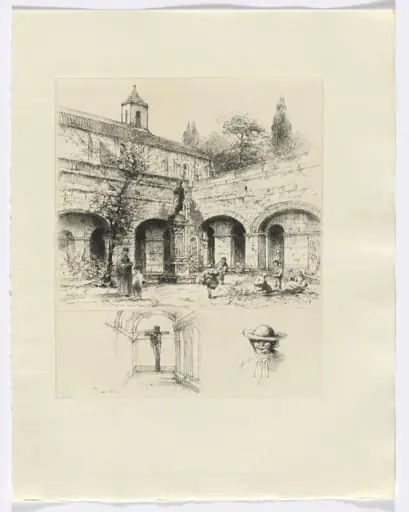 Frédéric Mistral: Mémoires et Recits by Frédéric Mistral: figures in a cloister/ crucifix and bust of a man (insert after p. 56)