Artwork
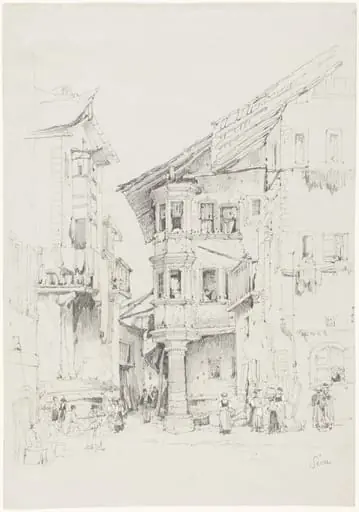
Facisimilies of Sketches made in Flanders and Germany: Thein Church, Prague
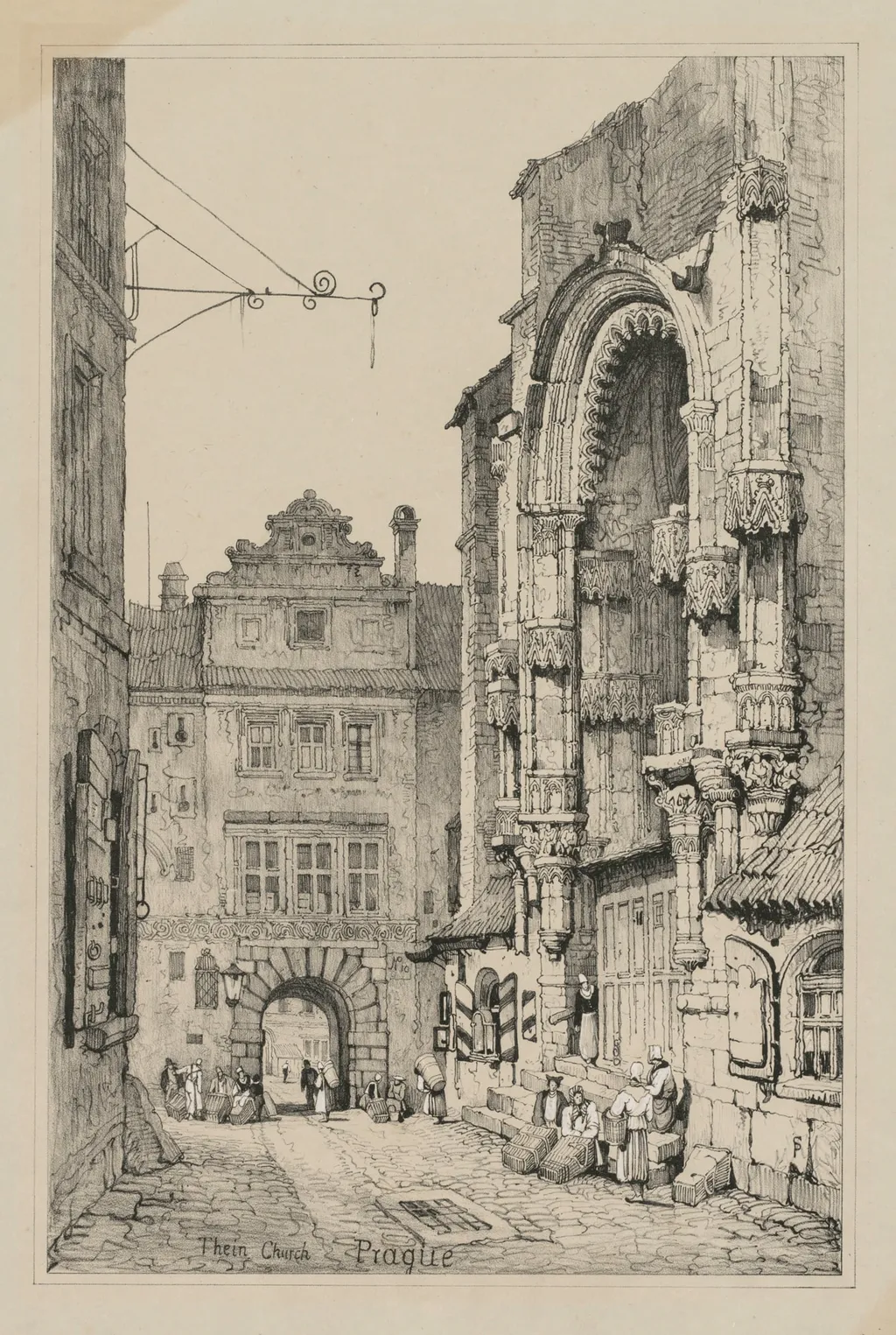
Facisimilies of Sketches made in Flanders and Germany: Thein Church, Prague is a print by the Romanticist artist Samuel Prout. It dates from 1833 and is held in the collection of the Cleveland Museum of Art.
About this work
Overview
It is part of the collection at The Cleveland Museum of Art, reflecting 19th-century interest in European vernacular architecture.
Created in 1833 by Samuel Prout, this print is one of a series documenting architectural scenes from Flanders and Germany. It depicts a quiet urban alley in Prague, rendered in monochrome ink. The work was produced as a facsimile of a sketch, preserving the immediacy of on-site observation. It is part of the collection at The Cleveland Museum of Art, reflecting 19th-century interest in European vernacular architecture.
Subject & Meaning
The scene captures a modest street in Prague, centered on a medieval church with intricate stonework. Daily life unfolds subtly: pedestrians pass, laundry hangs between buildings, and the cobblestones suggest routine foot traffic. There is no grand narrative—only the quiet rhythm of ordinary existence. The focus on unidealized architecture and civilian activity reflects an interest in authentic, lived environments rather than romanticized history.
Technique & Style
Prout employed fine, precise pen-and-ink lines to define textures and forms, emphasizing the weathered surfaces of stone and tile. Shading is minimal, relying on line weight and density to suggest depth and age. The absence of color heightens the documentary tone, while the careful rendering of architectural details—carvings, arches, window frames—demonstrates a disciplined attention to structural accuracy over decorative flourish.
History & Provenance
The print originated as part of a published series of travel sketches, intended for dissemination among British audiences interested in continental architecture. Prout made on-site drawings during his travels, later translating them into engraved prints. The Cleveland Museum of Art acquired the work as part of its broader collection of 19th-century European graphic art, preserving its role as a record of pre-industrial urban landscapes.
Context
Produced during the height of Romanticism, the work aligns with a cultural shift toward valuing authentic, everyday scenes over idealized historical subjects. While Romantic artists often emphasized emotion and nature, Prout extended this ethos to urban environments, treating ordinary streets and aging buildings as worthy of careful study. His approach resonated with contemporary antiquarian interests and the rise of architectural preservation.
Legacy
Prout’s sketches influenced later topographical artists and contributed to the documentation of European architecture before widespread modernization. His method of recording buildings with fidelity, without embellishment, set a precedent for architectural illustration as a form of historical record. Though not widely known today, his work remains a quiet testament to the value of observing the mundane as culturally significant.
Artist & collection
Artist
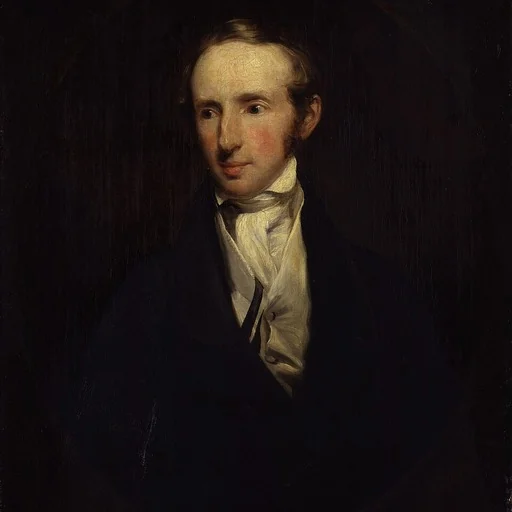
Samuel Prout (; 17 September 1783 – 10 February 1852) was a British watercolourist, and one of the masters of watercolour architectural painting, who largely invented the genre of the grand steet scene in British…

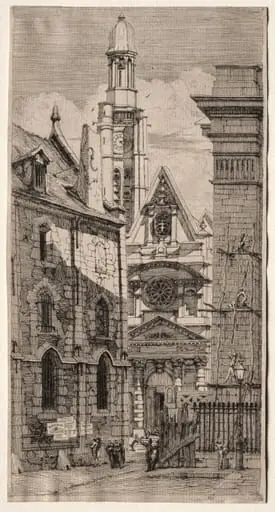 Etchings of Paris: Church of St. Stephen of the Mount
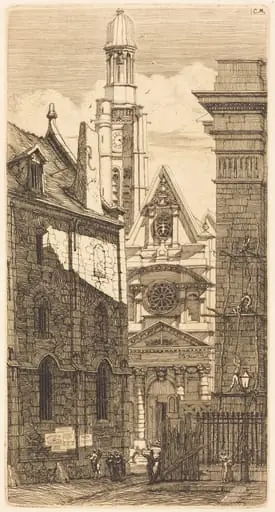 Saint-Etienne-du-Mont, Paris (Church of St. Stephen of the Mount, Paris)
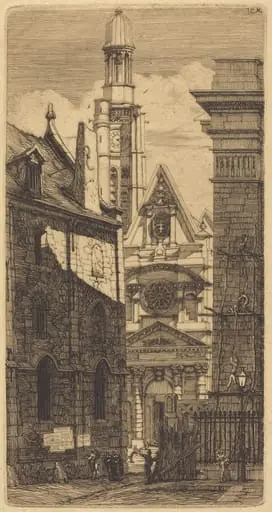 Saint-Etienne-du-Mont, Paris (Church of St. Stephen of the Mount, Paris)
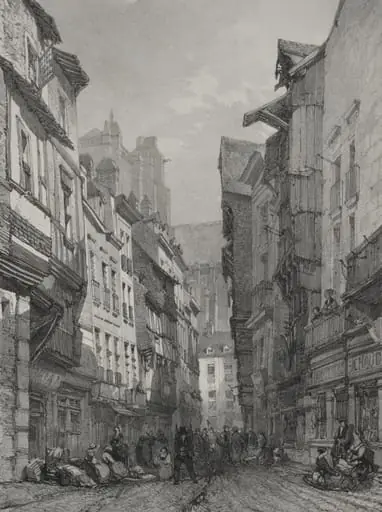 Voyages pittoresques et romantiques dans l'ancienne France. Bretagne: Grande rue vieille à Nantes
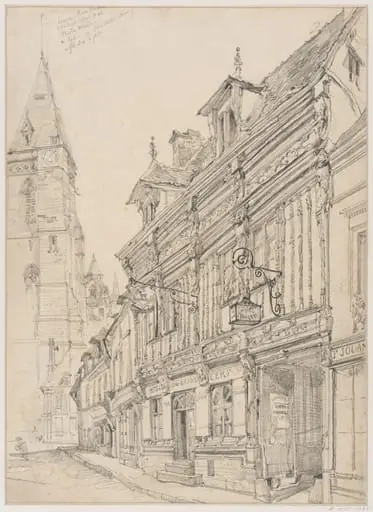 Hôtel du Grand Cerf, Les Andelys
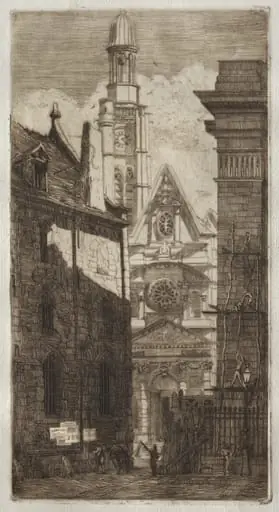 Saint-Etienne-du-Mont
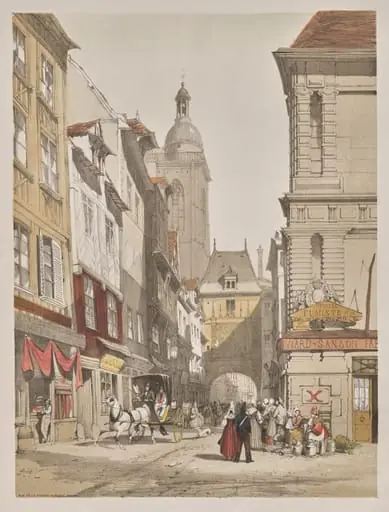 Picturesque Architecture in Paris, Ghent, Antwerp, Rouen: Rue de la Crosse Horlogue, Rouen, France
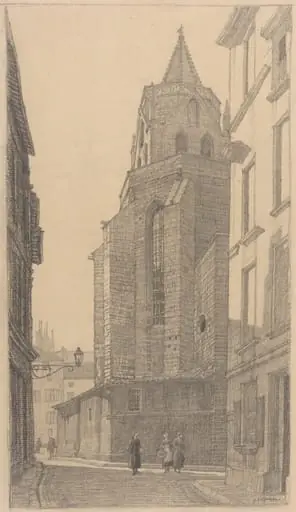 Apse of St.-Didier, Avignon
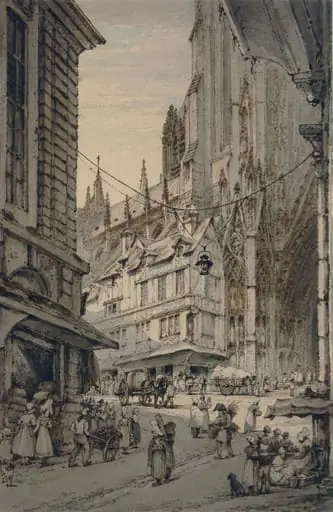 Rouen
Rouen![Le Preson. V. [lower left], by Canaletto](https://artifactworldgallery.com/img/canaletto--le-preson-v-lower-left--26be544f774fb814-w320.webp) Le Preson. V. [lower left]
Le Preson. V. [lower left]