Artwork
1907 (De ce l-au omorât?)
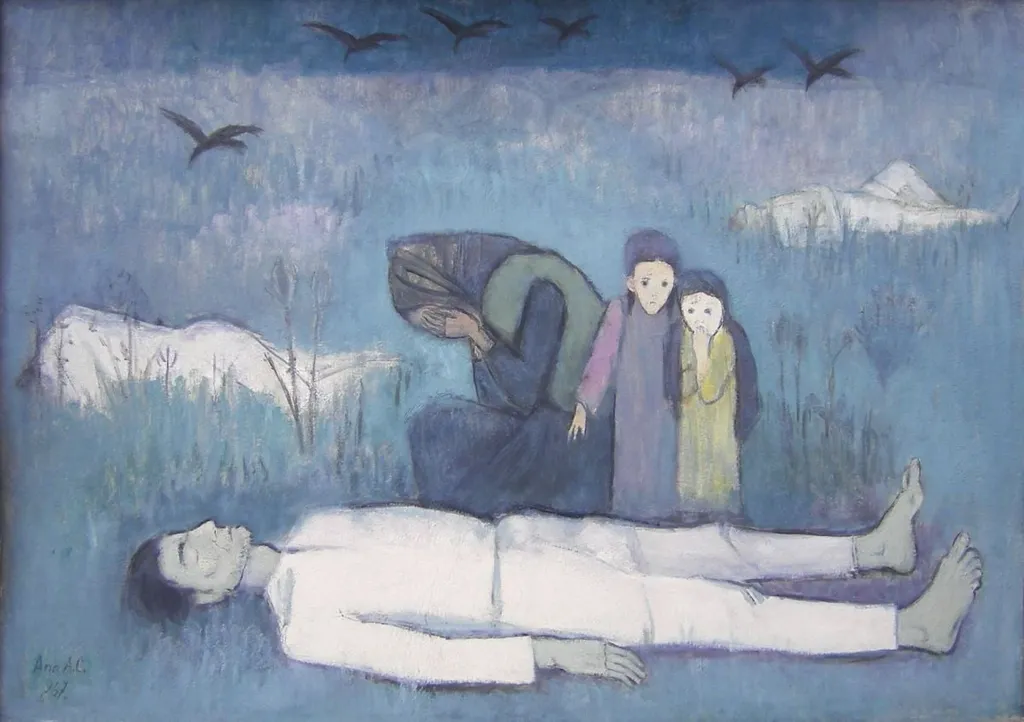
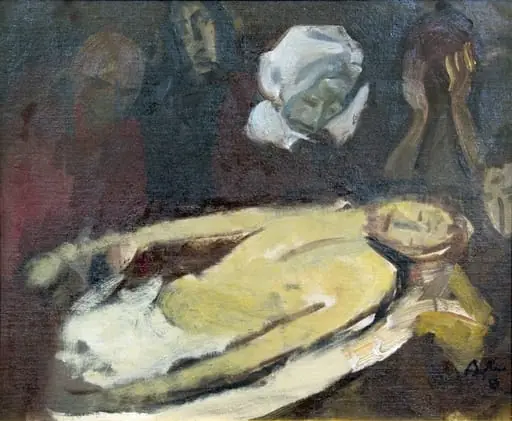
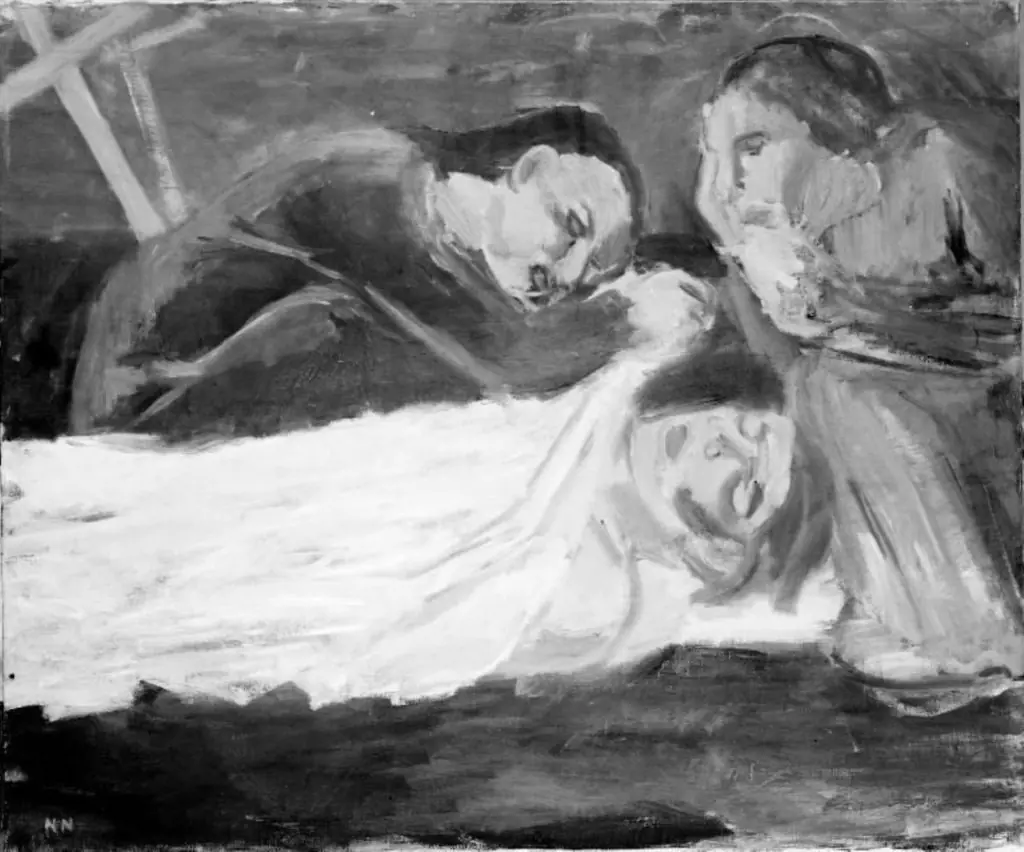
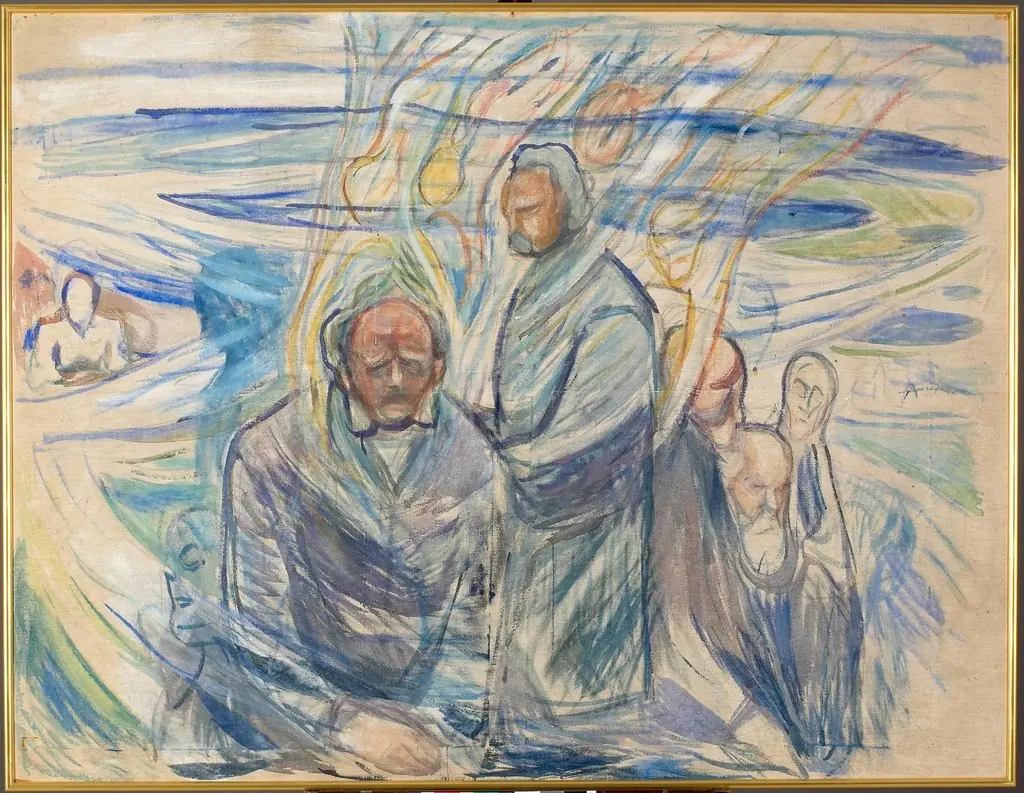
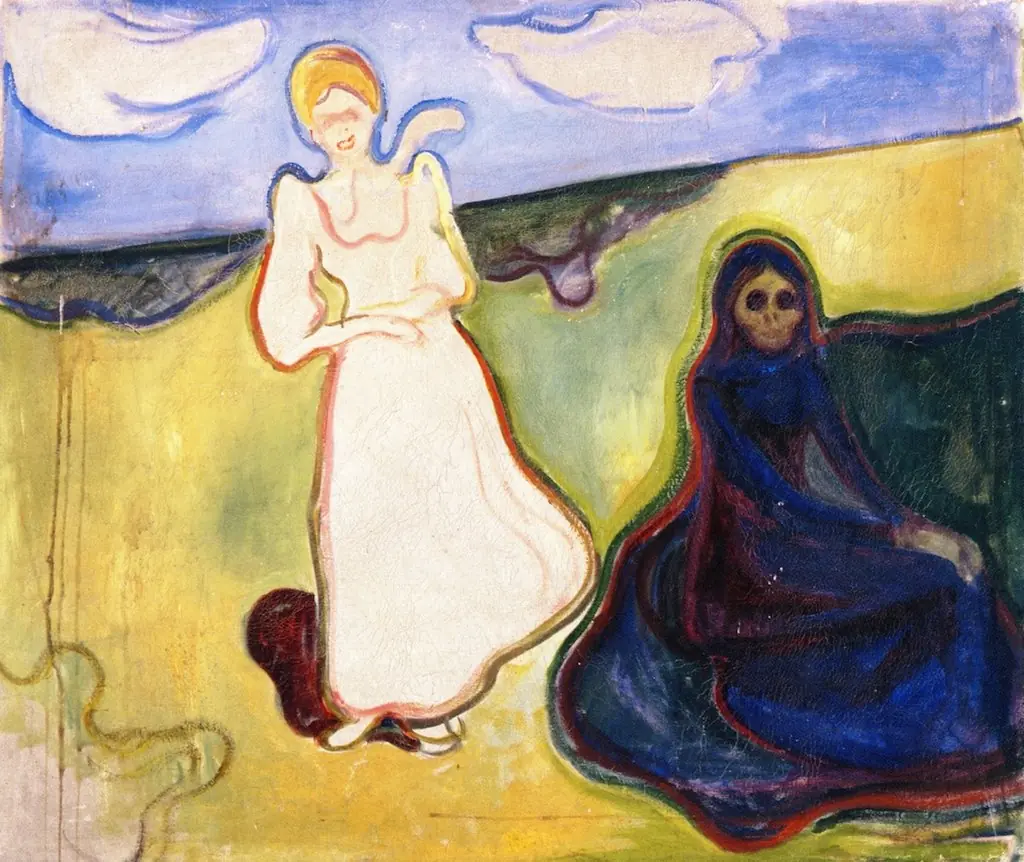
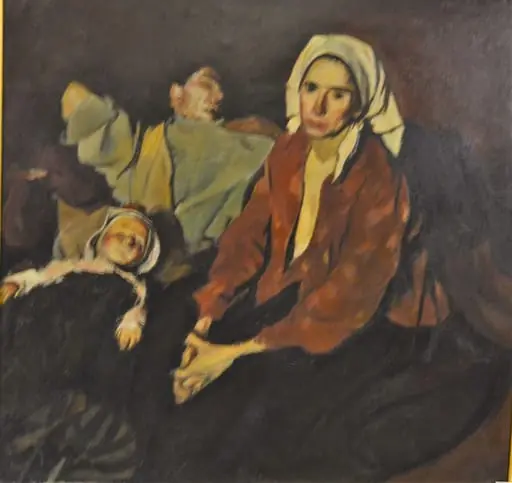
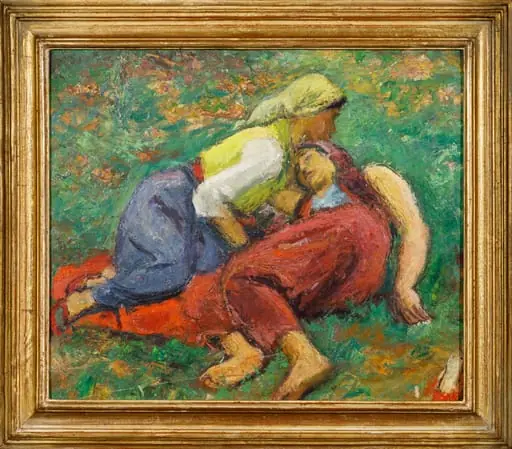
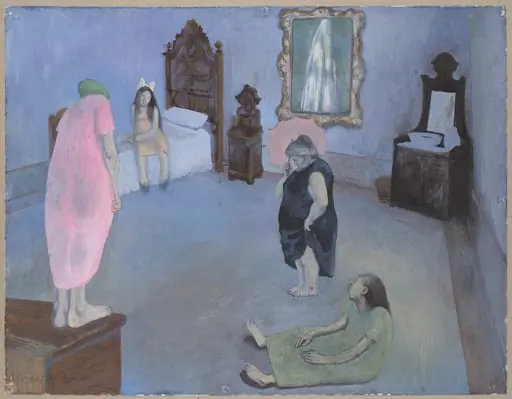
1907 (De ce l-au omorât?) is a print by Ana Asvadurova-Ciucurencu. It is held in the collection of the Bucharest Municipality Museum. Painted in 1907, this work presents a quiet, enigmatic scene in a muted blue landscape.
About this work
Overview
The composition avoids dramatic tension, instead inviting contemplation through its restrained palette and simplified shapes.
Painted in 1907, this work presents a quiet, enigmatic scene in a muted blue landscape. Four figures are arranged around a prone body, their forms rendered with minimal detail and flat color planes. The absence of deep modeling or chiaroscuro creates a sense of stillness, as if the moment has been suspended. The composition avoids dramatic tension, instead inviting contemplation through its restrained palette and simplified shapes.
Subject & Meaning
The central figure, clad in white and lying on the ground, appears lifeless, while a cloaked figure leans over them in a gesture that suggests mourning or inquiry. Two smaller figures, dressed in purple and yellow, observe silently. The scene evokes a ritual or aftermath, though no clear narrative is given. The title, translated as 'Why Did They Kill Him?', hints at unresolved questions, deepening the sense of ambiguity and solemnity.
Technique & Style
The painting employs flat, unmodulated colors and simplified contours, rejecting traditional modeling and perspective. Forms are outlined rather than shaded, and the landscape lacks depth cues, contributing to a dreamlike flatness. The brushwork is loose, almost schematic, emphasizing emotional tone over realism. This approach aligns with early modernist tendencies to prioritize symbolic expression over naturalistic representation.
History & Provenance
Created in 1907, the work emerged during a period of artistic experimentation in Eastern Europe. Its origins are tied to a small circle of avant-garde painters who sought to break from academic conventions. The painting remained in private hands for decades, with limited public exposure until the late 20th century, when it was included in regional modernism surveys. Its current location is held in a regional museum collection.
Context
This piece reflects broader early 20th-century shifts away from realism toward symbolic and emotional expression. While Western artists explored Cubism or Fauvism, this work shares affinities with Symbolist and Expressionist tendencies in the Balkans and Carpathians, where artists used simplified forms to convey spiritual or existential themes. The sparse landscape and stillness echo folk imagery and religious iconography adapted into modern idioms.
Legacy
Though not widely known outside regional art histories, the painting has influenced later artists interested in non-naturalistic storytelling and emotional economy. Its rejection of chiaroscuro and depth in favor of flatness and mood contributed to a local aesthetic that valued introspection over spectacle. It remains a quiet reference point in discussions of early modernism beyond the Parisian mainstream.
Artist & collection
Artist
A printmaker from an earlier era, Ana Asvadurova-Ciucurencu made linocuts and woodcuts capturing everyday scenes.