Artwork
David and Bathsehba
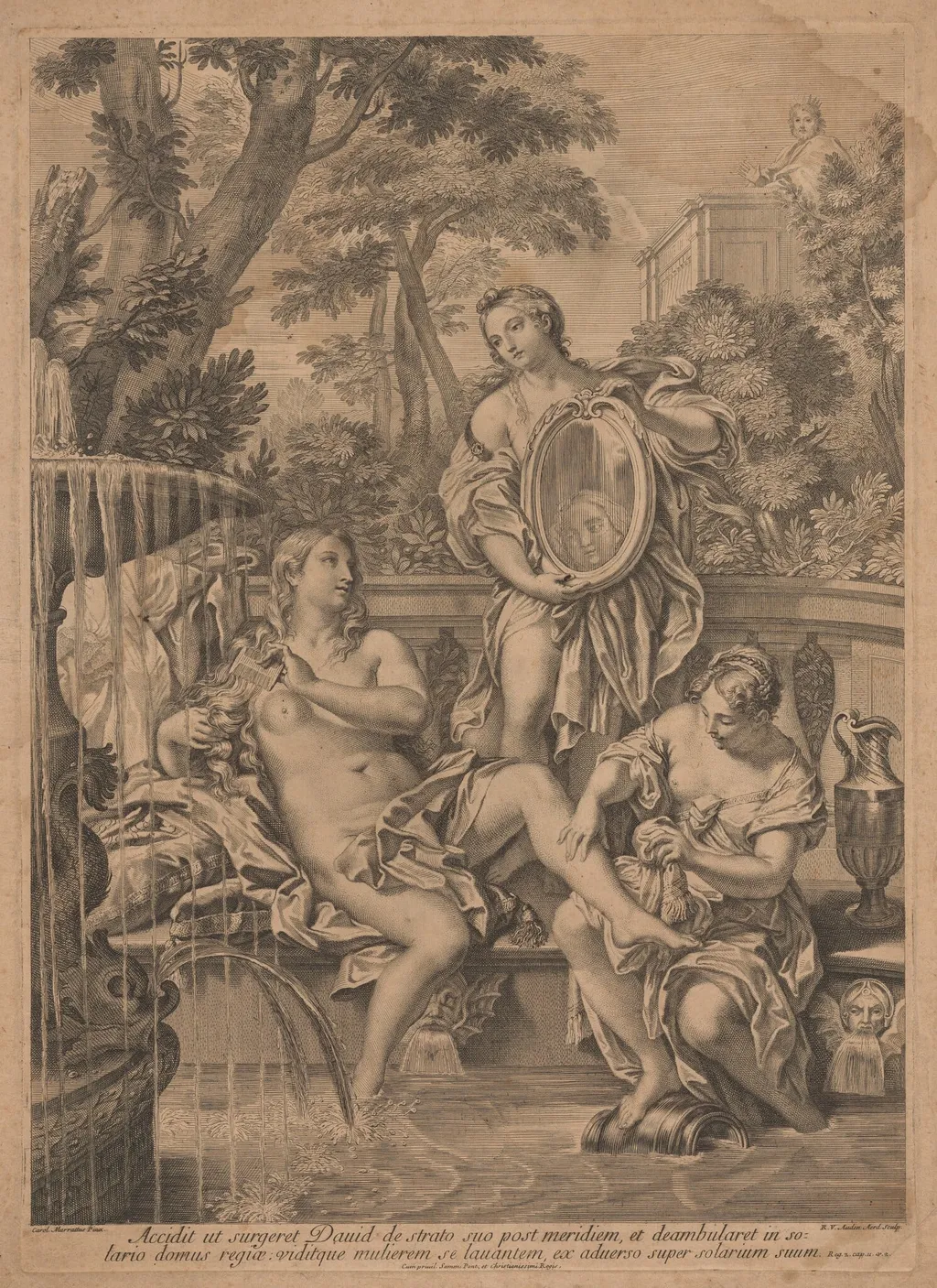
David and Bathsehba is an ink print by the Baroque artist Robert van Audenaerd. It dates from 1712 and is held in the collection of the National Gallery of Art.
About this work
Overview
Robert van Audenaerd’s 1712 engraving titled *David and Bathsheba* presents a pastoral tableau in which a seated male figure is attended by three women. The composition unfolds outdoors amid trees, foliage, distant architecture, and a waterfall, creating a tranquil backdrop for the intimate actions depicted.
Subject & Meaning
The central man, likely representing King David, is shown being groomed: one woman tends his hair, another holds a mirror, and a third washes his feet. The presence of the mirror and the act of foot washing allude to themes of vanity, purification, and the biblical narrative of David’s encounter with Bathsheba.
Technique & Style
Executed as an engraving on laid paper, the work demonstrates van Audenaerd’s skill in rendering fine textures and intricate patterns. The artist employs a nuanced range of line work to differentiate skin tones, fabrics, and natural elements, achieving a sense of depth and realism within the monochrome medium.
History & Provenance
Created in the early eighteenth century, the print reflects the period’s interest in biblical subjects rendered for a learned audience. While specific ownership records are scarce, the engraving has been catalogued among van Audenaerd’s oeuvre and appears in several collections of Dutch printmaking.
Artist & collection


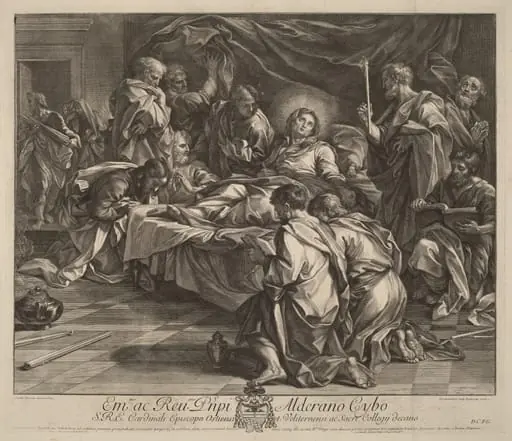
![Omnia Vincit Amor [Apollo and Daphne], by Robert van Audenaerd](https://artifactworldgallery.com/img/robert-van-audenaerd--omnia-vincit-amor-apollo-and-daphne--7af37b2f424f6e58-w320.webp)
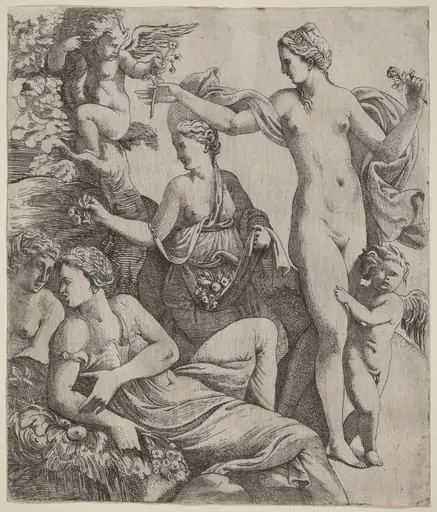 Venus with the Graces and Putti
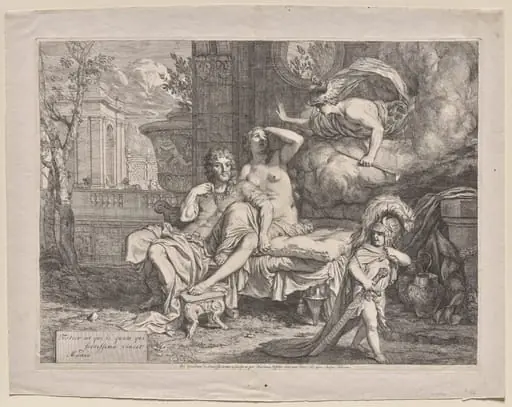 Mercury Orders Calypso to Allow Ulysses Depart
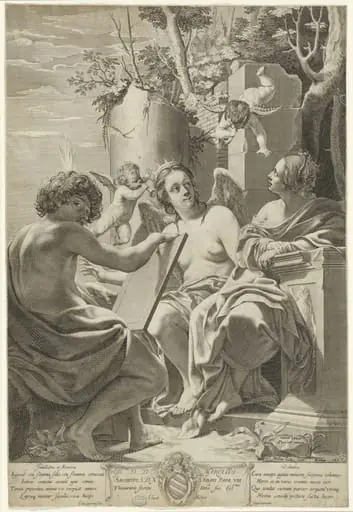 Allegory of Intellect, Memory, and Will
![Temporalis Aeternitas [Second Version], by Giovanni Benedetto Castiglione](https://artifactworldgallery.com/img/giovanni-benedetto-castiglione--temporalis-aeternitas-second-version--d9ecb26010022a5a-w320.webp) Temporalis Aeternitas [Second Version]
Temporalis Aeternitas [Second Version]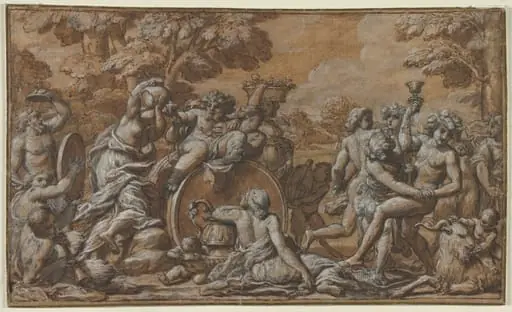 Bacchanal
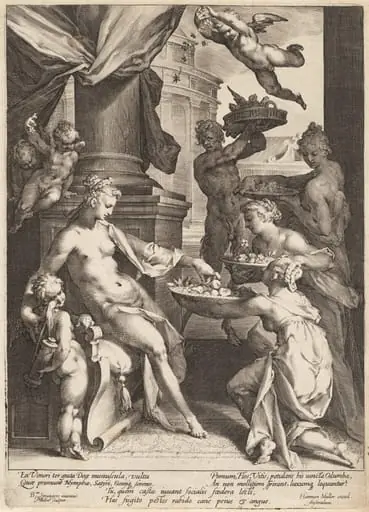 Venus Honored by the Nymphs
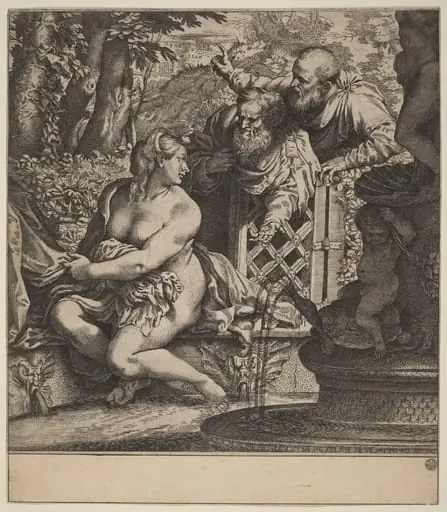 Susanna and the Elders
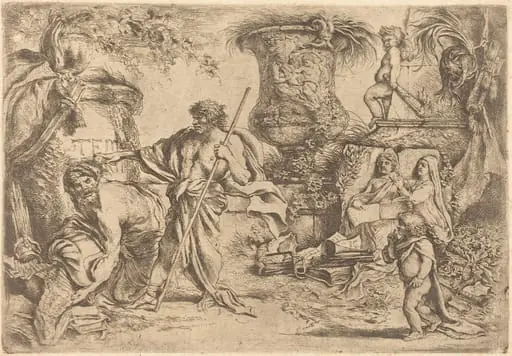 Temporalitas Aeternitas
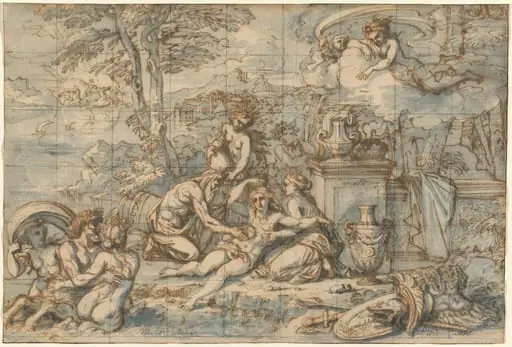 The Purification of Aeneas
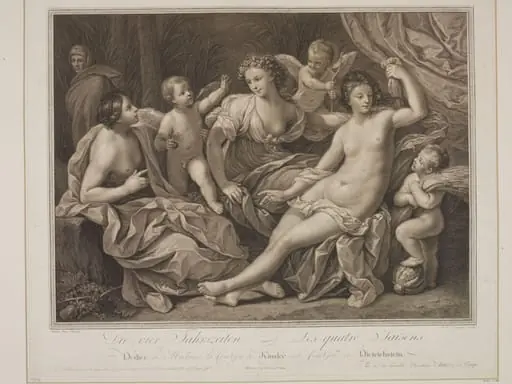 The Four Seasons
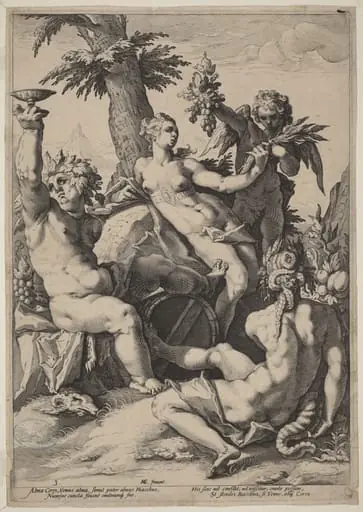 Without Ceres and Bacchus, Venus Would Freeze