Artwork
Without Ceres and Bacchus, Venus Would Freeze
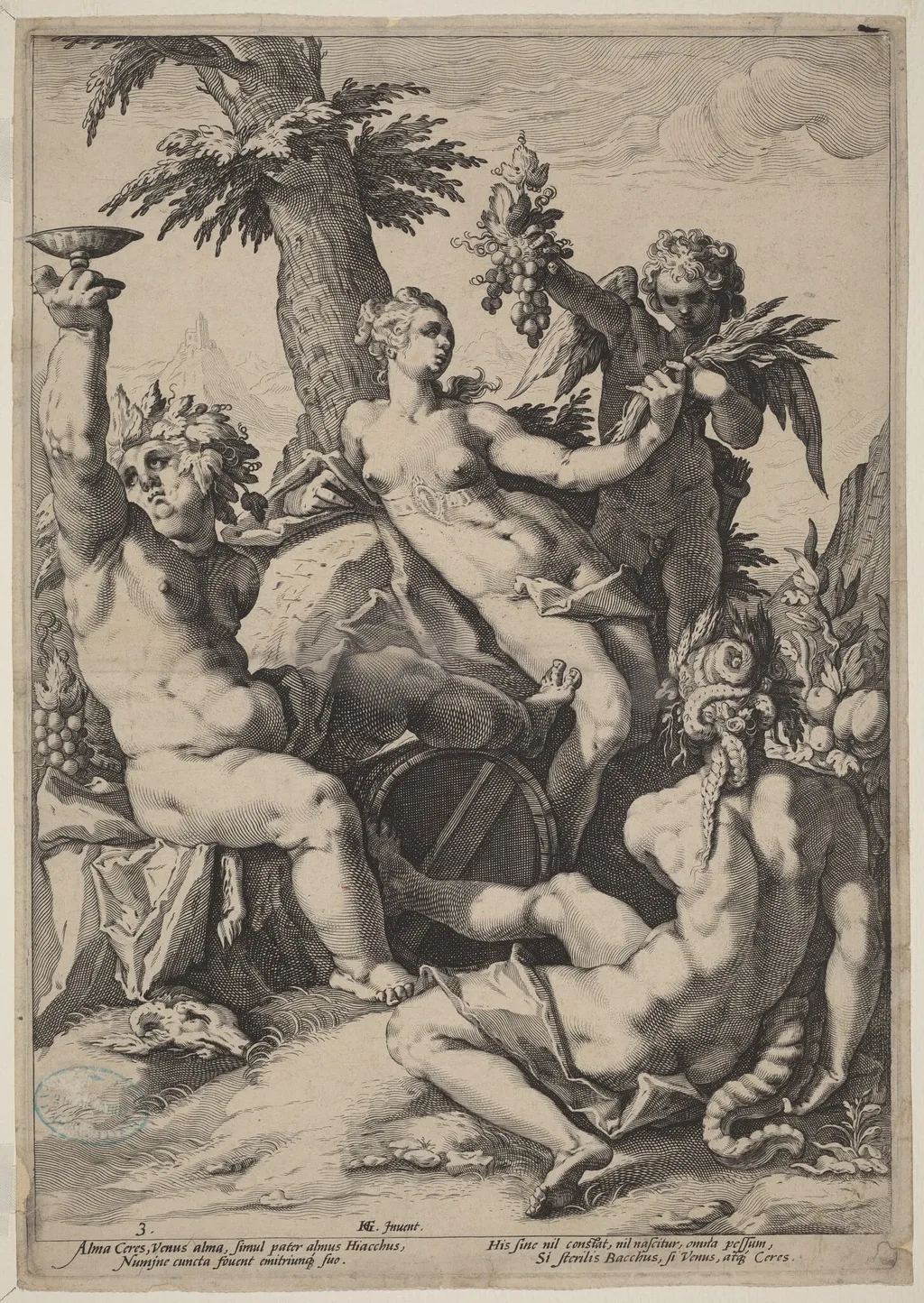
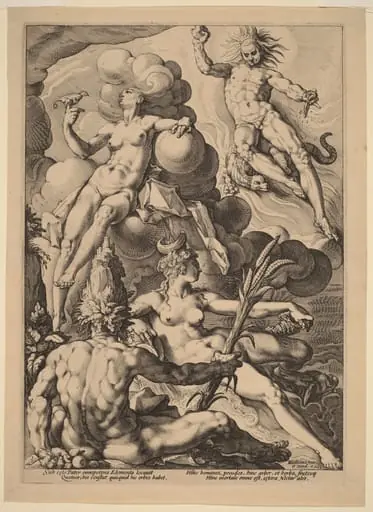
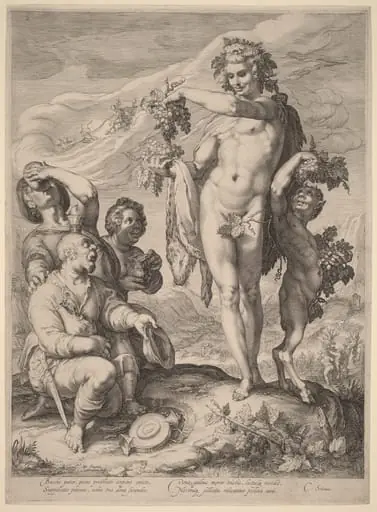
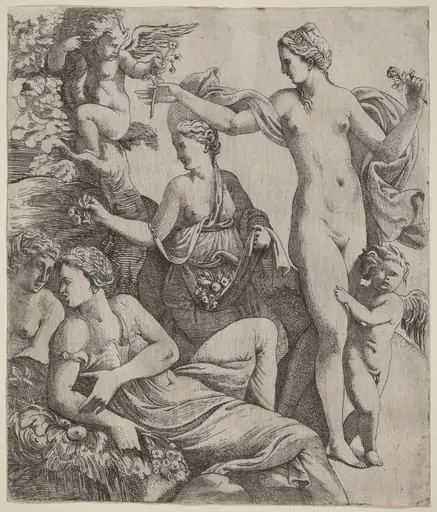
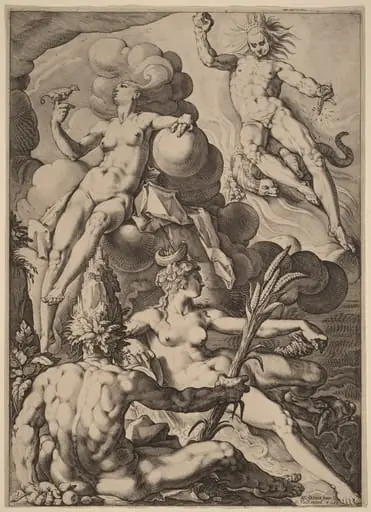
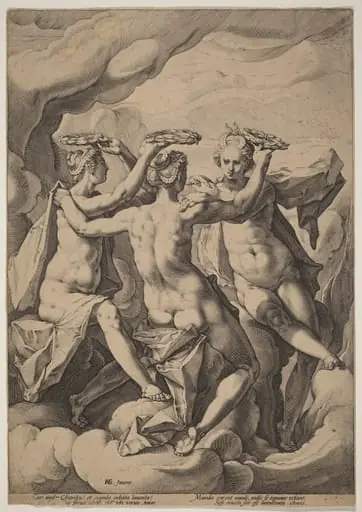
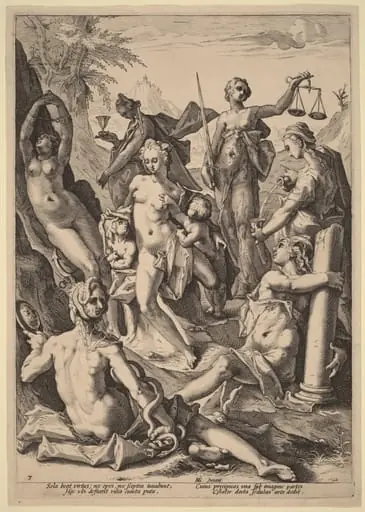
Without Ceres and Bacchus, Venus Would Freeze is an ink print by the Renaissance artist Jacob Matham. It dates from 1588 and is held in the collection of the National Gallery of Art.
About this work
Overview
Without Ceres and Bacchus, Venus Would Freeze is a 1588 engraving on laid paper by Jacob Matham, depicting an intimate, mythological scene of three intertwined figures within a dense, rocky landscape.
Subject & Meaning
The print illustrates a mythological narrative where Venus (half-naked, reaching for a child with grapes, possibly Bacchus), Ceres (crowned, with a fruit basket), and a winged figure (likely Cupid) interact in a symbolic tableau, highlighting the interdependence of love (Venus), abundance (Ceres), and revelry (Bacchus).
Technique & Style
Matham employed engraving techniques, notably cross-hatching, to achieve depth and three-dimensionality through intricate, fine lines that create shading and texture, adding visual richness to the black-and-white composition.
History & Provenance
Created in 1588, specific provenance details are not provided, though the work reflects Matham's engagement with mythological themes common in late 16th-century European art.
Context
This engraving sits within the broader context of Northern European Mannerist printmaking, characterized by complex compositions and detailed linework, often exploring classical mythology.
Legacy
While specific legacy details of this piece are not detailed, it contributes to the enduring interest in Jacob Matham's oeuvre and the continued study of 16th-century engraving techniques in art historical discourse.
Artist & collection