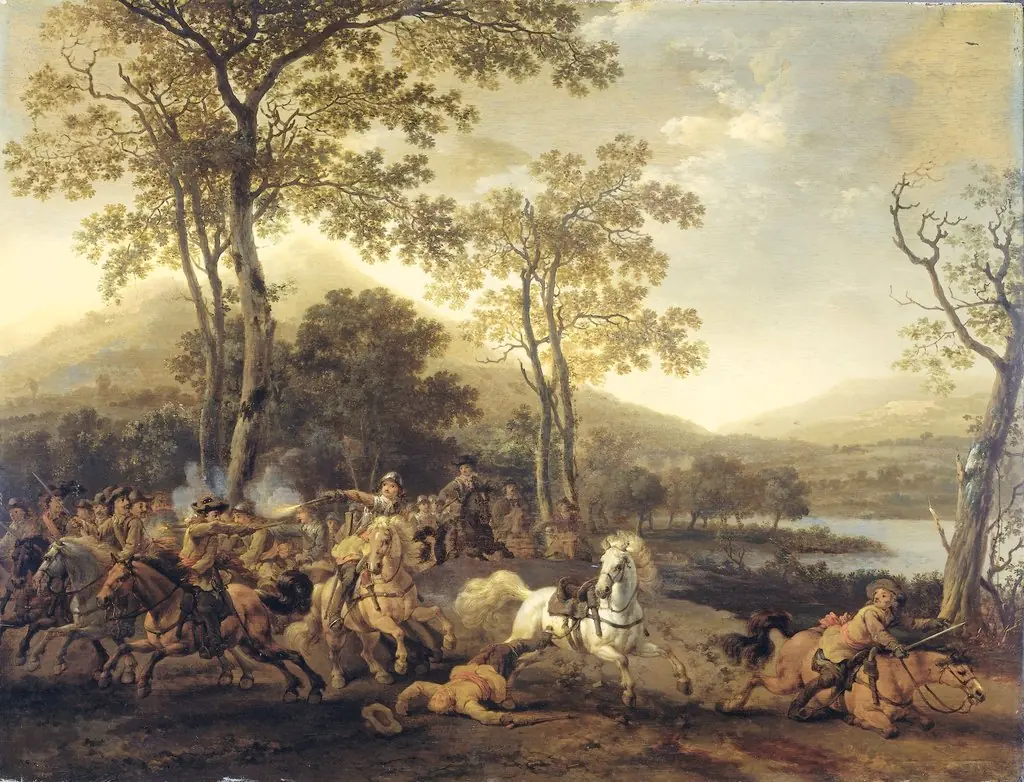
Artwork
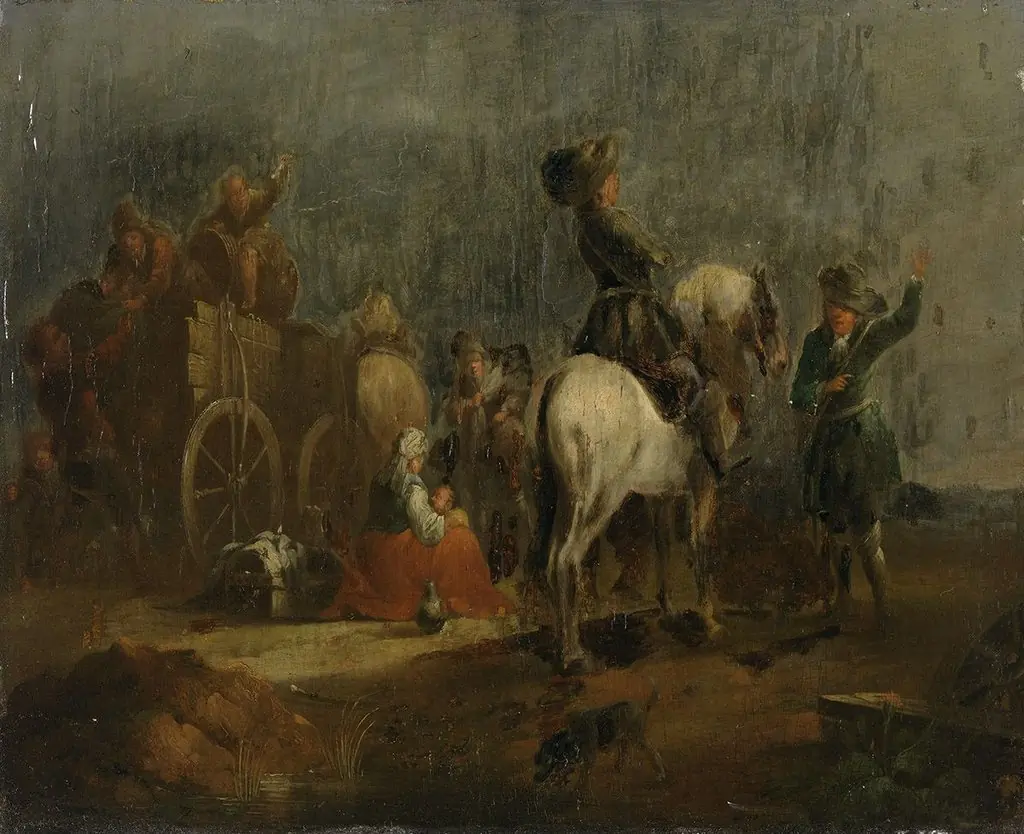
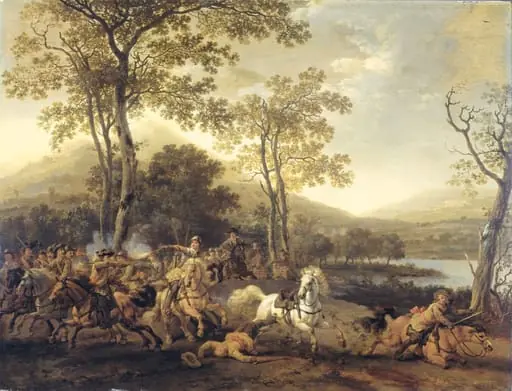
Assault on travellers
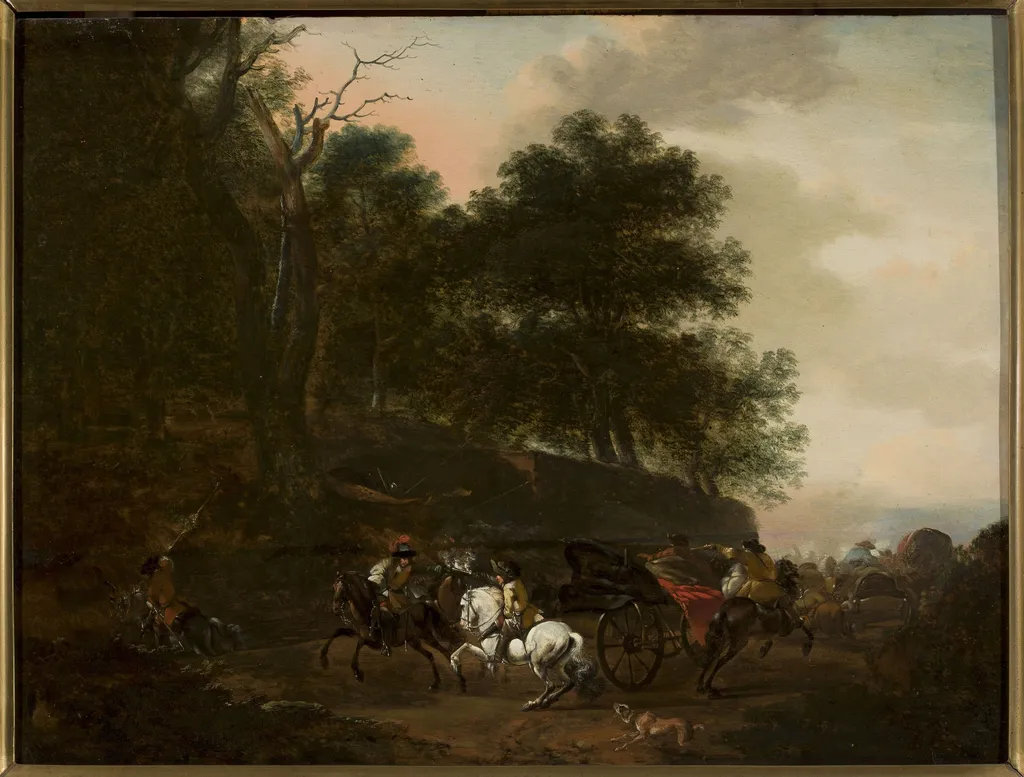
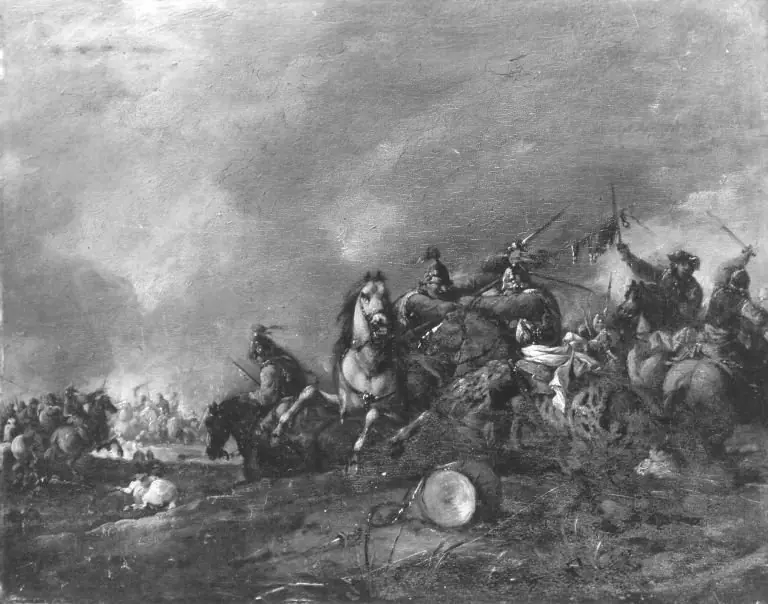
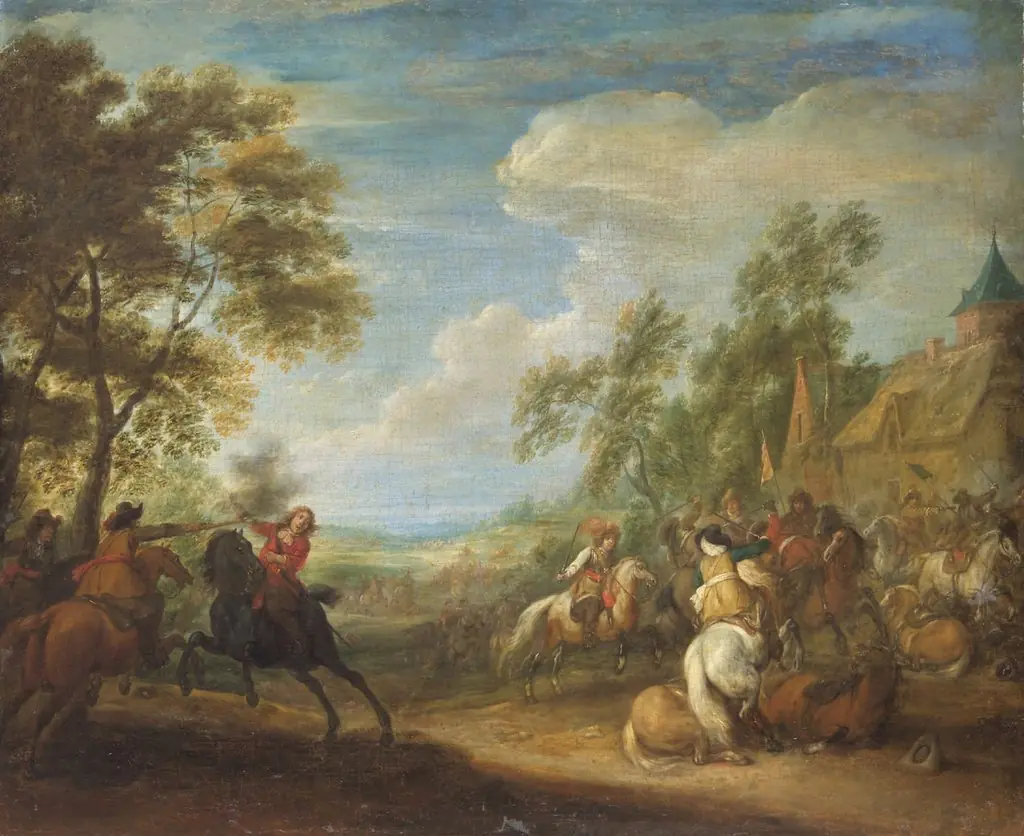
Assault on travellers is an oil painting by August Querfurt. It dates from 1738 and is held in the collection of the National Museum in Warsaw.
About this work
Overview
Painted around 1738 by Austrian artist August Querfurt, this oil-on-canvas work portrays a violent encounter between travelers and armed attackers.
Painted around 1738 by Austrian artist August Querfurt, this oil-on-canvas work portrays a violent encounter between travelers and armed attackers. Querfurt, known for his focus on equestrian and military subjects, rendered the scene with dynamic movement and emotional intensity. The painting is part of the National Museum in Warsaw’s collection, where it stands as a representative example of early 18th-century Central European battle painting.
Subject & Meaning
The scene captures a moment of sudden violence: mounted travelers are ambushed in a wooded landscape. Some riders attempt to escape, others raise weapons in defense, while figures on the ground lie fallen. The lack of clear narrative context—no identifiable location or historical event—suggests the painting functions as a generalized depiction of lawlessness on rural roads, reflecting contemporary anxieties about travel safety in contested border regions.
Technique & Style
Querfurt employed chiaroscuro to heighten the drama, using sharp contrasts between shadow and light to isolate figures in motion. Brushwork is energetic, with loose strokes suggesting chaos, while the composition directs the viewer’s eye through diagonal lines of fleeing horses and raised arms. The forested background, rendered in muted tones, recedes into atmospheric haze, reinforcing the isolation of the conflict and the vulnerability of its victims.
History & Provenance
The painting entered the National Museum in Warsaw’s holdings in the 19th century, likely through acquisitions of Central European art during the period of Polish cultural consolidation. Its origins trace back to Querfurt’s workshop in Vienna or Augsburg, where he produced numerous similar scenes for private patrons. No documentation of its early ownership survives, but its style aligns with commissions from nobility interested in martial themes.
Context
In the early 1700s, Central Europe remained fragmented, with poorly patrolled roads and frequent banditry. Querfurt’s depictions of ambushes resonated with audiences familiar with the dangers of travel between towns and estates. His work drew from Dutch and German precedents, particularly the cavalry scenes of Philips Wouwerman, adapting their compositional energy to regional concerns about security and social order.
Legacy
Though Querfurt was not widely celebrated beyond his lifetime, his paintings contributed to a genre of military narrative art that persisted in Central Europe. *Assault on Travellers* remains a tangible record of how artists visualized everyday violence, offering insight into the lived realities of mobility and danger in the pre-modern landscape. It continues to inform scholarly study of 18th-century visual culture in the Habsburg territories.
Artist & collection
Artist
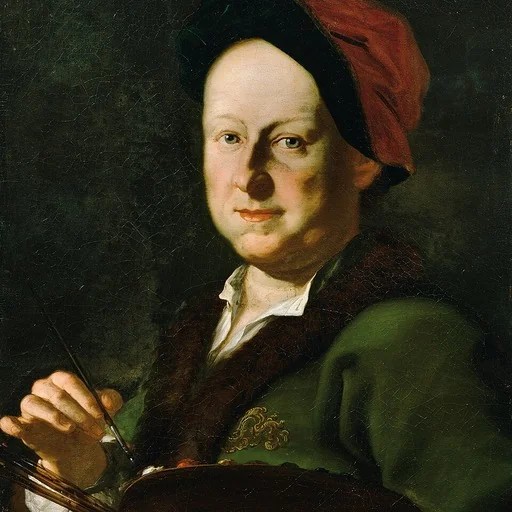
August Querfurt (1696, Wolfenbüttel – 1761, Vienna) was an Austrian painter. He painted primarily soldiers and battle scenes. He was first instructed by his father, Tobias Querfurt, a landscape and animal painter, and…