Artwork
Hungarian Oxcart
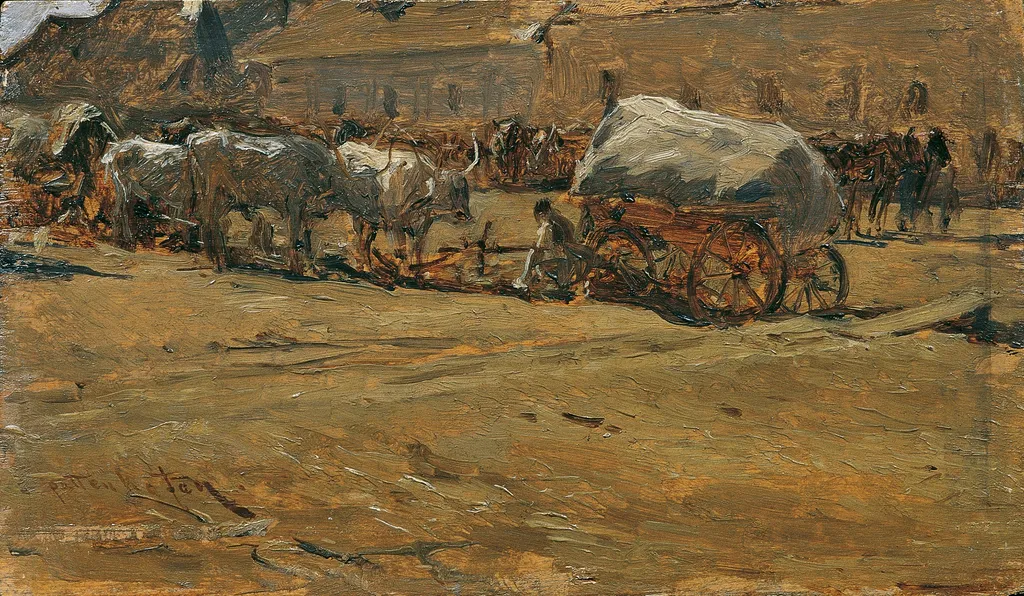
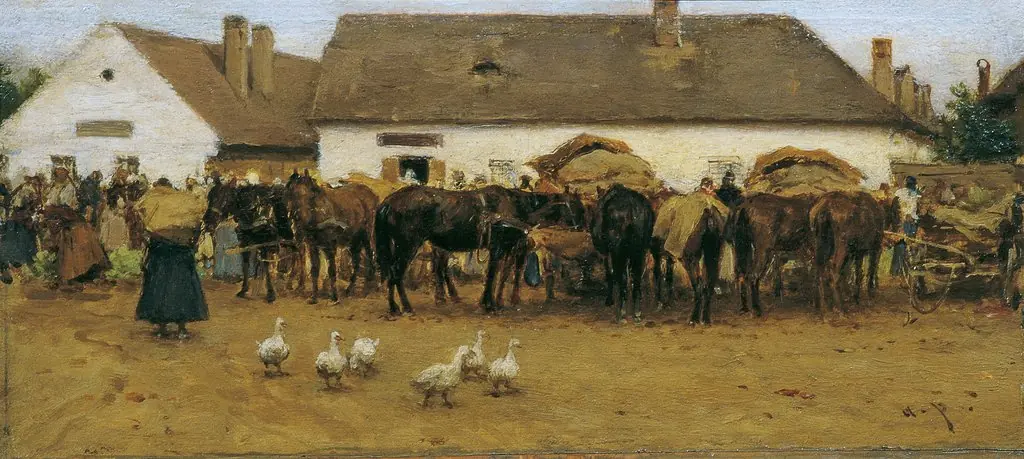
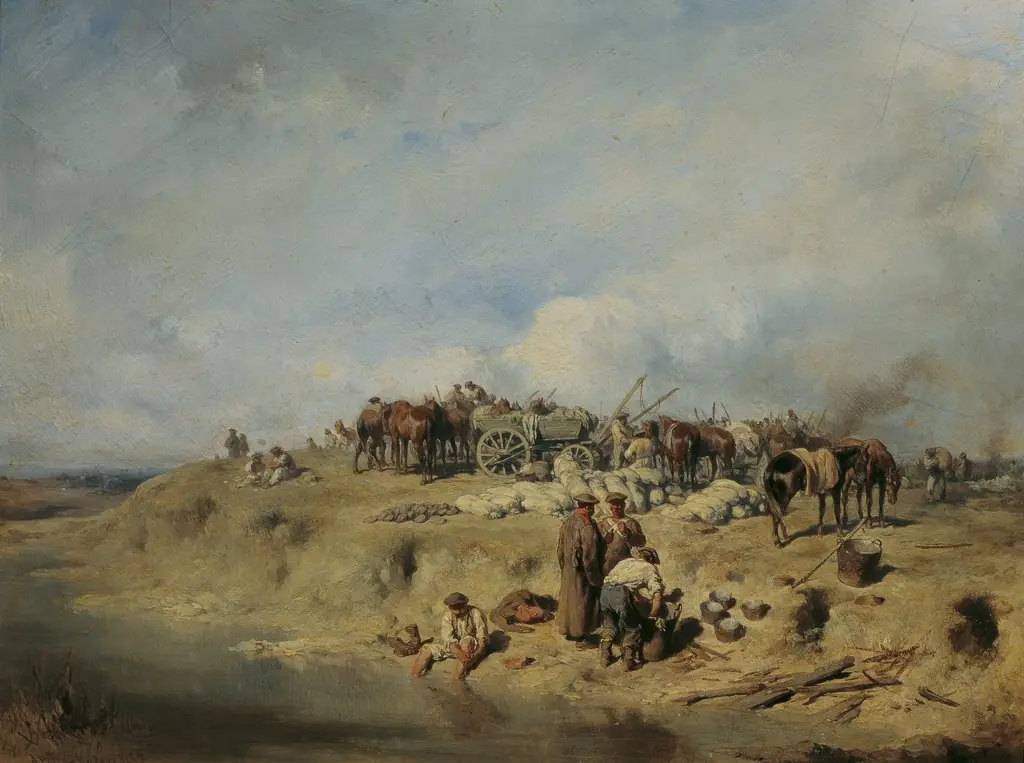
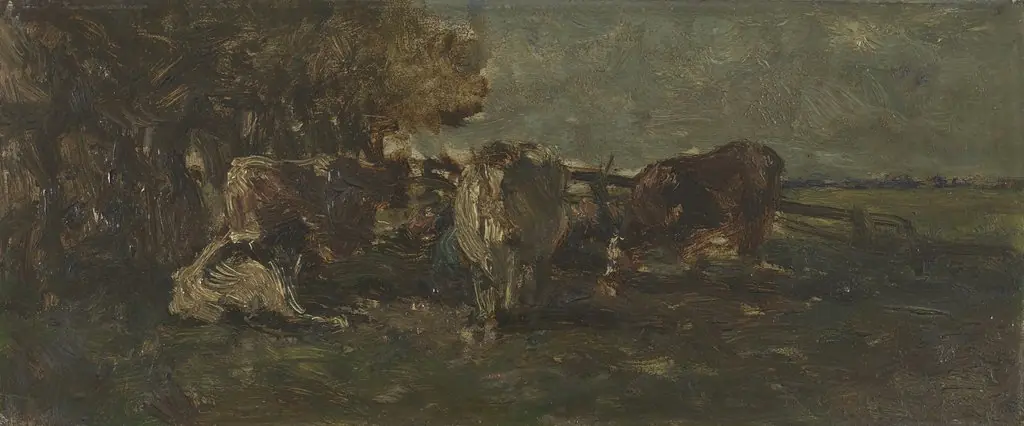
Hungarian Oxcart is an oil painting by the Realist artist August von Pettenkofen. It dates from 1874 and is held in the collection of the Kunsthistorisches Museum.
About this work
Overview
August von Pettenkofen's Hungarian Oxcart is an oil painting executed in 1874, currently part of the collection at the Kunsthistorisches Museum.
Subject & Meaning
The painting's subject is a traditional Hungarian oxcart, implying a focus on rural life or ethnographic detail, though specific interpretive layers beyond the depiction are not explicitly documented.
Technique & Style
While specific stylistic or technical innovations of Hungarian Oxcart are not detailed, as an oil painting, it reflects Pettenkofen's adherence to traditional mediums of his time.
History & Provenance
Created in 1874, the work is now housed at the Kunsthistorisches Museum, indicating its recognition within Austrian cultural heritage collections.
Context
Painted in 1874, Hungarian Oxcart situates itself within late 19th-century European art, potentially reflecting interests in folk culture or realism prevalent during this period.
Legacy
The painting's lasting impact or influence on subsequent artists is not prominently recorded, suggesting it may be valued more for its representational or historical significance than for pioneering artistic movements.
Artist & collection