Artwork
Hungarian market with blue umbrellas
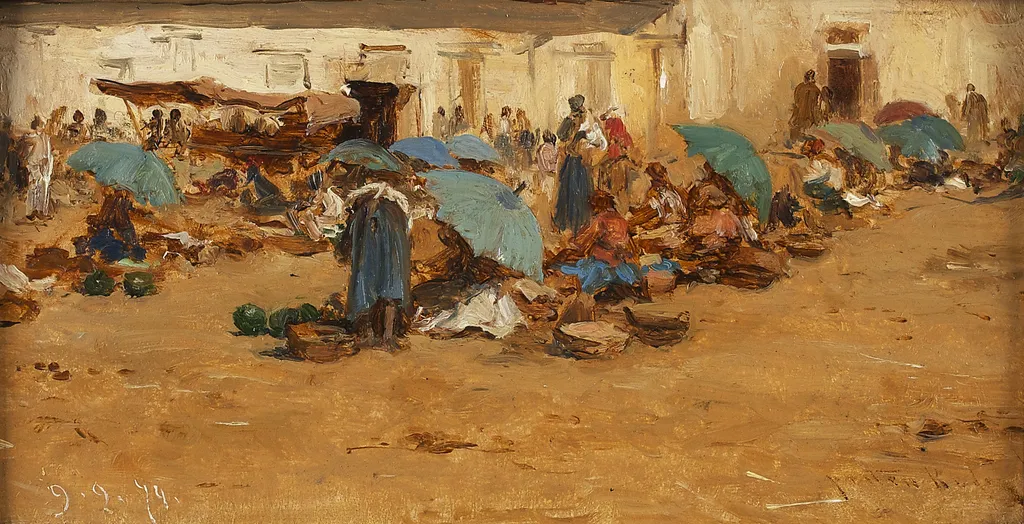
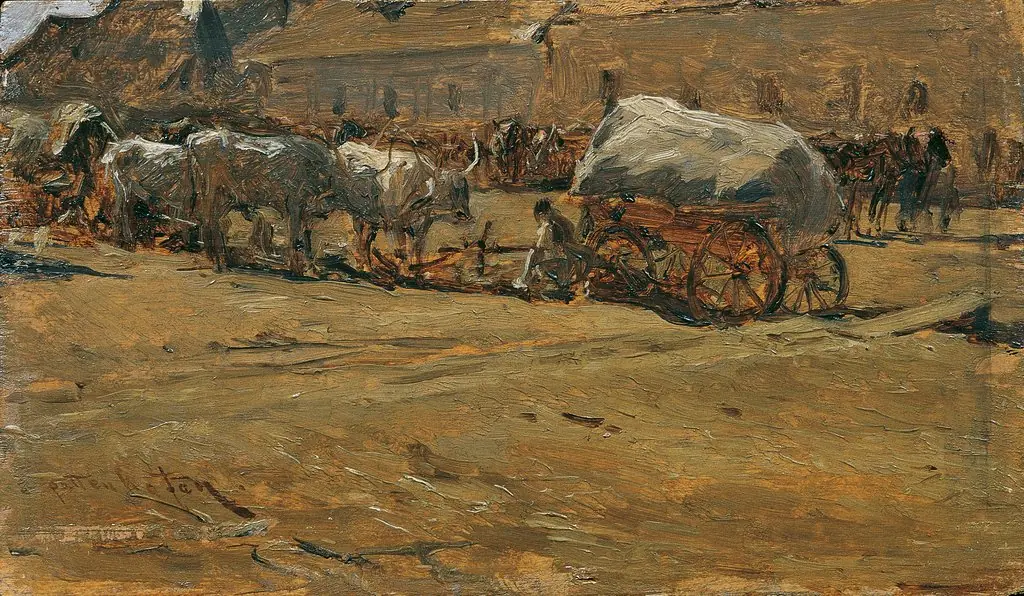
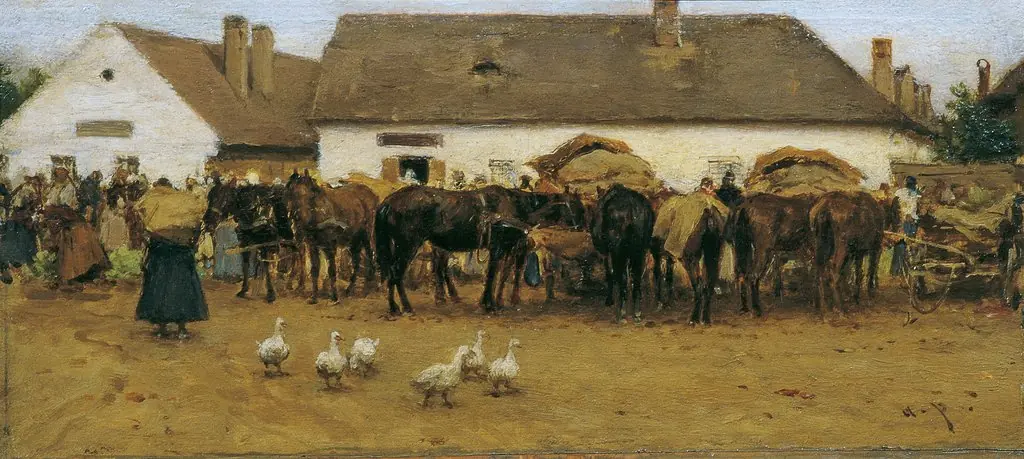
Hungarian market with blue umbrellas is an oil painting by the Impressionist artist August von Pettenkofen. It dates from 1874 and is held in the collection of the Kunsthistorisches Museum.
About this work
Overview
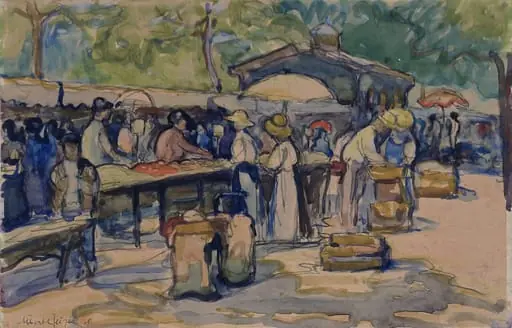
August von Pettenkofen’s 1874 oil on canvas, titled Hungarian Market with Blue Umbrellas, depicts a bustling courtyard scene.
August von Pettenkofen’s 1874 oil on canvas, titled Hungarian Market with Blue Umbrellas, depicts a bustling courtyard scene. The composition centers on a group of figures gathered around a stone-paved space, each sheltering beneath vivid blue umbrellas that punctuate the muted tones of the surrounding architecture. The work is part of the permanent collection of Vienna’s Kunsthistorisches Museum.
Subject & Meaning
The painting captures a moment of everyday commerce in a Hungarian market, emphasizing communal activity and the rhythm of daily life. The uniformity of the umbrellas suggests a shared response to the weather, while the varied postures of the figures—standing, seated, conversing—convey a sense of collective yet individual experience within the public space.
Technique & Style
Pettenkofen employs a restrained palette for the stone courtyard and background structures, allowing the bright blue of the umbrellas to dominate the visual field. Careful modulation of light and shadow across the fabric creates a luminous quality, giving the umbrellas a three‑dimensional presence that contrasts with the flatter architectural elements.
History & Provenance
Completed in 1874, the canvas entered the holdings of the Kunsthistorisches Museum, where it remains on display. Its acquisition reflects the museum’s 19th‑century focus on Central European genre painting, situating Pettenkofen among contemporaries who documented regional life through realist observation.
Context
Pettenkofen, an Austrian painter of Hungarian descent, frequently portrayed rural and market scenes, aligning with the broader 19th‑century European interest in genre subjects that illustrated social customs. The work’s emphasis on light, color, and ordinary activity mirrors the realist tendencies of the period while hinting at emerging impressionistic concerns for atmospheric effects.
Artist & collection