Artwork
Frédéric Mistral: Mémoires et Recits by Frédéric Mistral: title page, bust of woman in profile
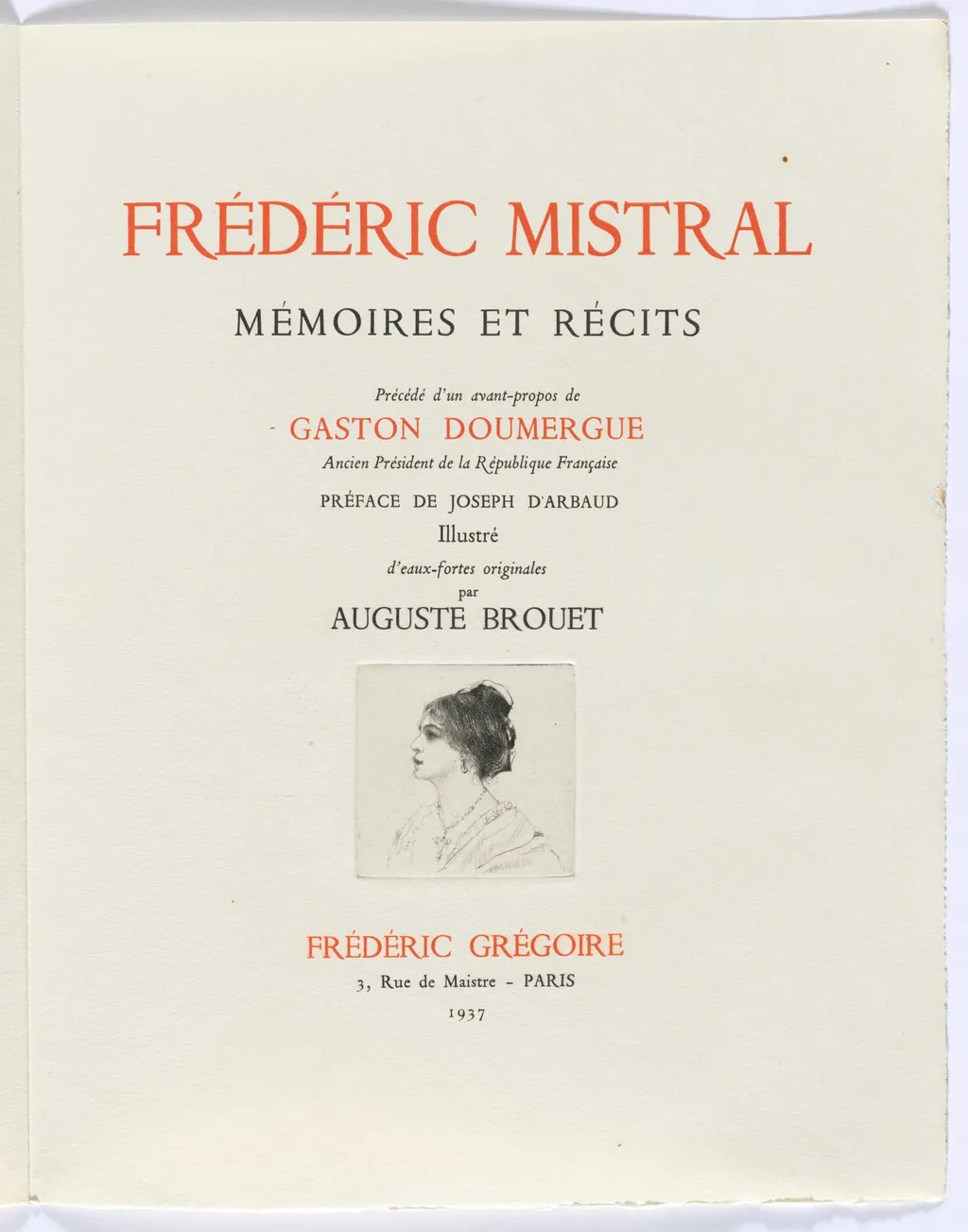
Frédéric Mistral: Mémoires et Recits by Frédéric Mistral: title page, bust of woman in profile is a work on paper by Auguste Brouet. It dates from 1937 and is held in the collection of the Cleveland Museum of Art.
About this work
Overview
It features a finely rendered bust of a woman in profile, integrated as a typographic element rather than a standalone image.
This 1937 title page illustration by Auguste Brouet accompanies Frédéric Mistral’s Mémoires et Recits. It features a finely rendered bust of a woman in profile, integrated as a typographic element rather than a standalone image. The design reflects the book’s literary tone through restrained visual elegance, aligning with early 20th-century book arts traditions that valued harmony between text and image.
Subject & Meaning
The woman’s bust, rendered in calm profile, serves as a symbolic figure rather than a portrait of a specific individual. Her stillness and anonymity evoke a muse-like presence, suggesting contemplation and cultural continuity. In the context of Mistral’s work—rooted in Provençal identity—her image may subtly honor feminine roles in preserving regional memory and language.
Technique & Style
Brouet employed fine-line etching to achieve delicate contours and subtle tonal gradations. The portrait’s clarity and minimal background emphasize form over narrative, characteristic of his book illustration style. The precision of the engraving complements the printed text, creating a unified visual rhythm that prioritizes quiet refinement over dramatic effect.
History & Provenance
The illustration was produced for the 1937 edition of Mistral’s memoirs, published in France. It entered the collection of The Cleveland Museum of Art as part of a broader acquisition of 20th-century book arts. The work remains in its original context as a printed page, preserved as an artifact of interwar French literary publishing.
Context
In the 1930s, French publishers increasingly collaborated with printmakers to elevate book design beyond mere reproduction. Brouet’s contribution reflects this movement, where illustrators like him revived traditional engraving techniques to lend intellectual gravitas to literary editions. Mistral’s status as a Nobel laureate further justified such artisanal treatment of his texts.
Legacy
Brouet’s illustration exemplifies a quiet but enduring tradition in French book arts: the integration of fine printmaking into literary publications. While not widely reproduced outside its original volume, it stands as a representative example of how mid-century illustrators contributed to the cultural prestige of the printed word through understated craftsmanship.
Artist & collection
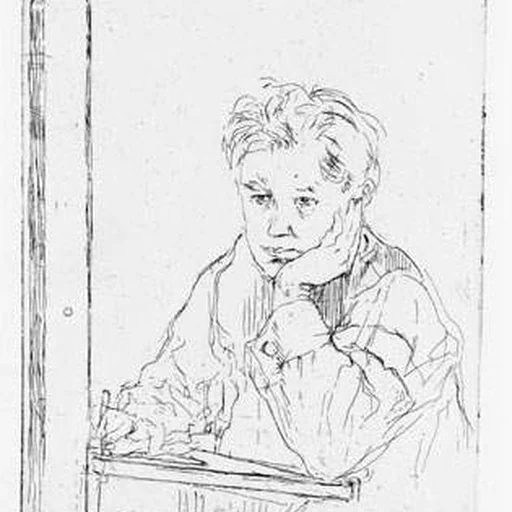

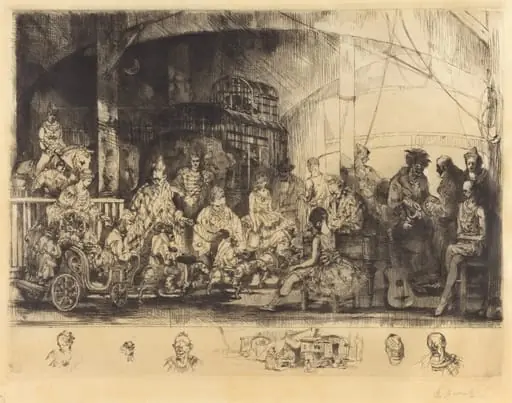
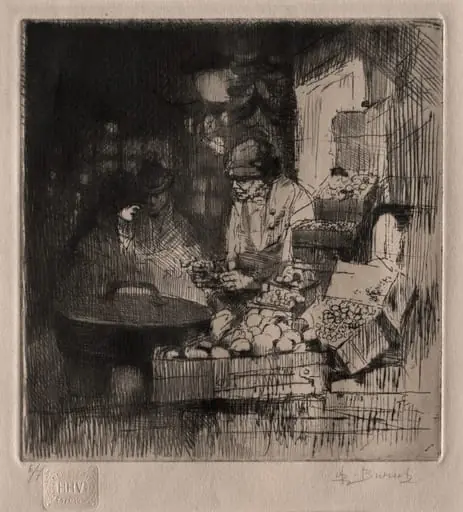
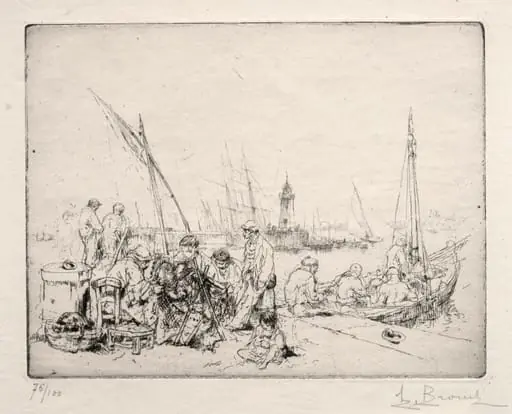
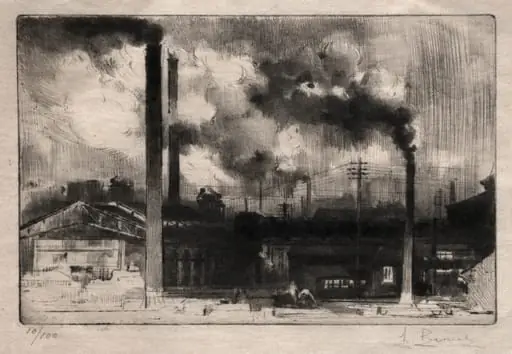
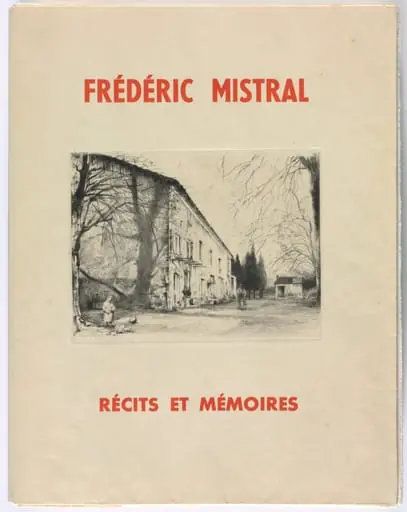 Frédéric Mistral: Mémoires et Recits by Frédéric Mistral
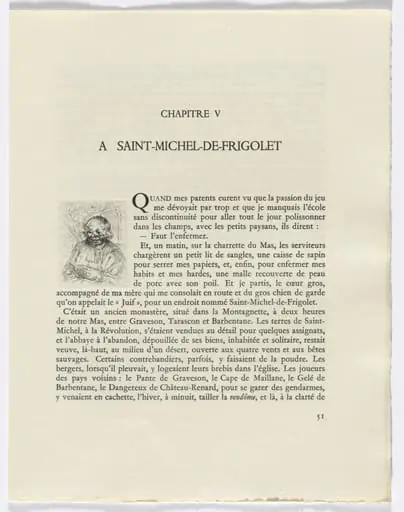 Frédéric Mistral: Mémoires et Recits by Frédéric Mistral: bust of a man (page 51)
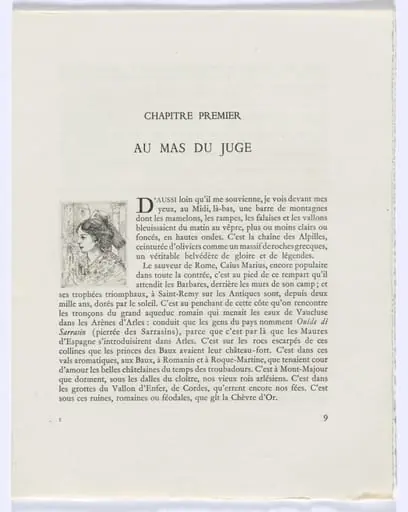 Frédéric Mistral: Mémoires et Recits by Frédéric Mistral: bust of woman in profile (page 9)
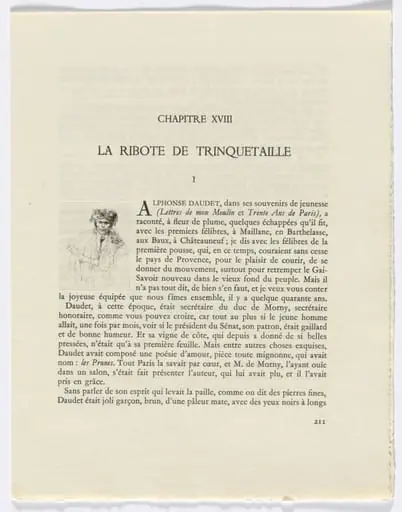 Frédéric Mistral: Mémoires et Recits by Frédéric Mistral: man (page 211)
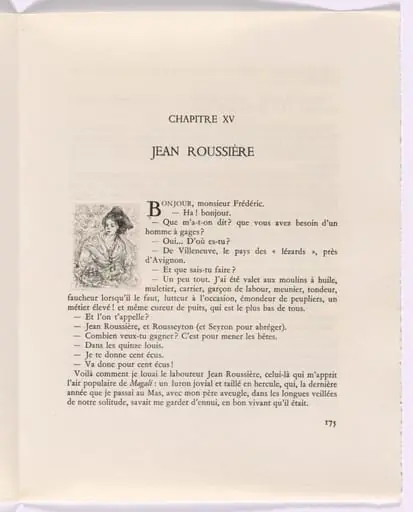 Frédéric Mistral: Mémoires et Recits by Frédéric Mistral: woman (page 175)
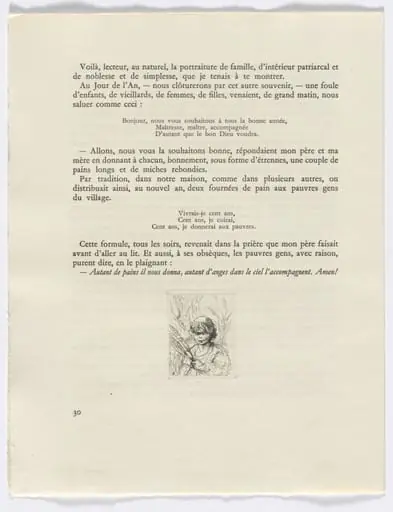 Frédéric Mistral: Mémoires et Recits by Frédéric Mistral: bust of a child (page 30)
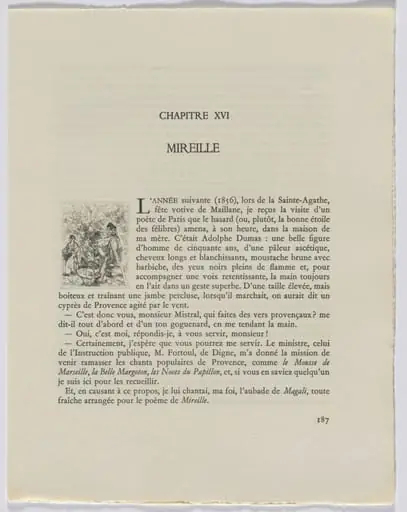 Frédéric Mistral: Mémoires et Recits by Frédéric Mistral: figures outside (page 187)
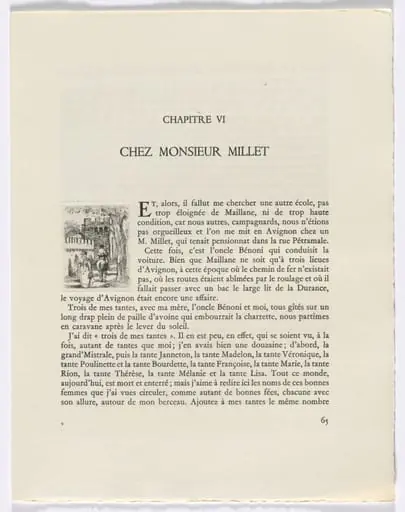 Frédéric Mistral: Mémoires et Recits by Frédéric Mistral: woman and man on horse (page 65)
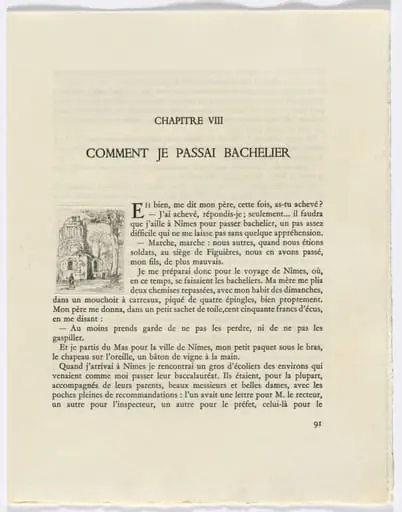 Frédéric Mistral: Mémoires et Recits by Frédéric Mistral: building and tree (page 91)