Artwork
Frédéric Mistral: Mémoires et Recits by Frédéric Mistral: woman (page 175)
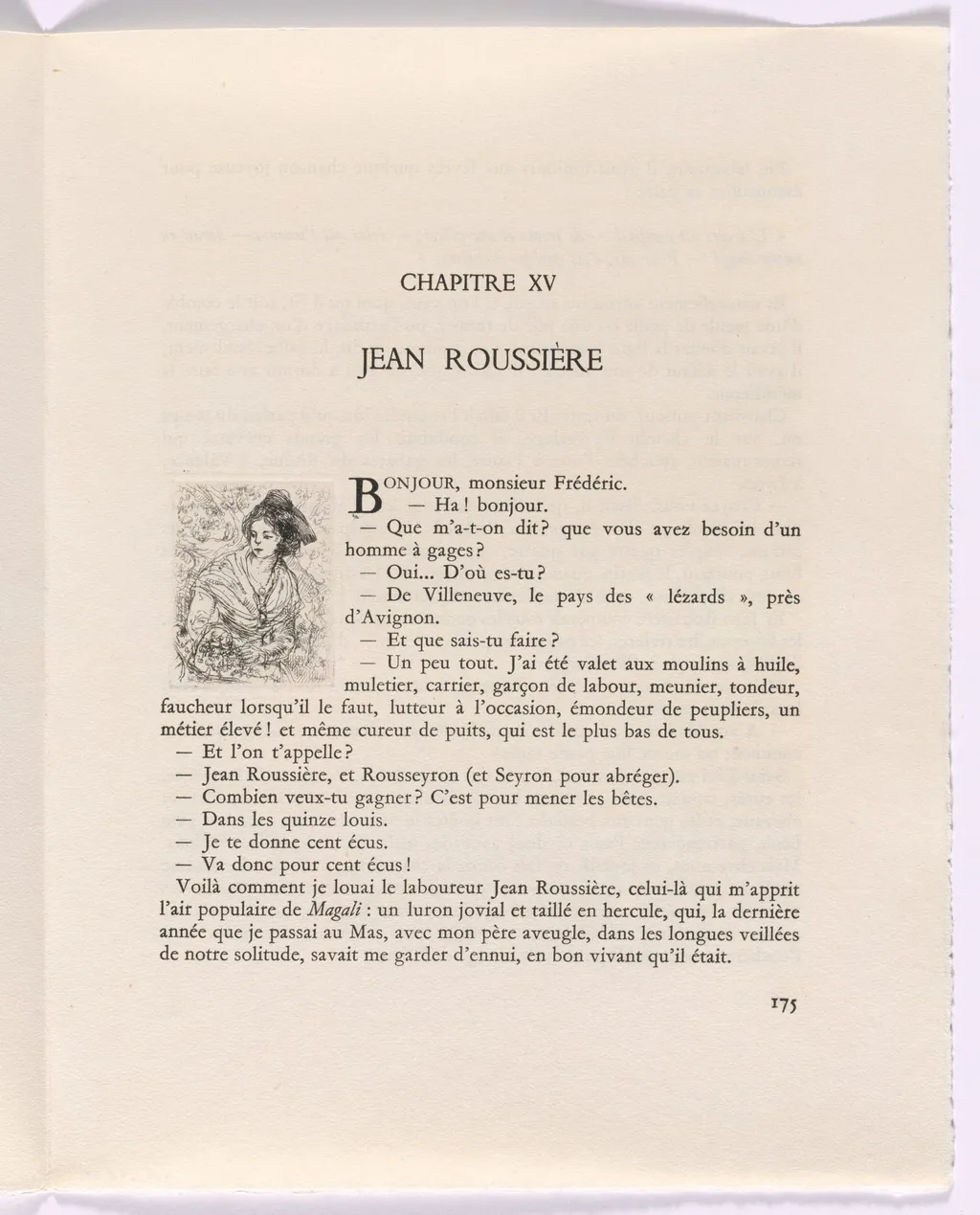
Frédéric Mistral: Mémoires et Recits by Frédéric Mistral: woman (page 175) is a work on paper by Auguste Brouet. It dates from 1937 and is held in the collection of the Cleveland Museum of Art.
About this work
Overview
This image appears in the 1937 illustrated edition of Frédéric Mistral’s Mémoires et Recits, featuring a woodcut by Auguste Brouet on page 175.
This image appears in the 1937 illustrated edition of Frédéric Mistral’s Mémoires et Recits, featuring a woodcut by Auguste Brouet on page 175. It is one of several illustrations Brouet produced for the volume, which commemorates the life and literary legacy of the Provençal poet. The work is part of a portfolio of prints held by The Cleveland Museum of Art, representing early 20th-century book illustration in France.
Subject & Meaning
The illustration depicts a woman, likely representing a figure from Mistral’s poetic world—perhaps a peasant, matriarch, or symbol of Provençal tradition. Her posture and attire suggest rural life in southern France, evoking the cultural roots Mistral championed. The image does not illustrate a specific scene but rather conveys a quiet dignity tied to regional identity and memory.
Technique & Style
Auguste Brouet employed woodcut printing, using bold lines and high contrast to define form with minimal detail. The style is restrained and graphic, emphasizing silhouette and texture over realism. This approach aligns with early 20th-century revival of artisanal printmaking, favoring clarity and emotional resonance over ornamental flourish.
History & Provenance
The print was created in 1937 for a limited-edition publication of Mistral’s memoirs, published to honor his centenary. Brouet, known for his book illustrations and etchings, was commissioned to visually interpret Mistral’s literary themes. The Cleveland Museum of Art acquired the print as part of a broader collection of illustrated books and prints from the period.
Context
The illustration emerged during a cultural resurgence of Provençal language and identity, spurred by Mistral’s Nobel Prize and the Félibrige movement. Artists like Brouet were enlisted to lend visual weight to regional literature, countering Parisian cultural dominance. This work reflects a broader trend of integrating folk themes into modern print culture.
Legacy
Brouet’s illustration remains a quiet testament to the intersection of regional literature and graphic art in interwar France. While not widely reproduced outside the original volume, it contributes to the historical record of how regional identities were visually articulated in print. The piece endures as an example of book illustration’s role in preserving cultural memory.
Artist & collection

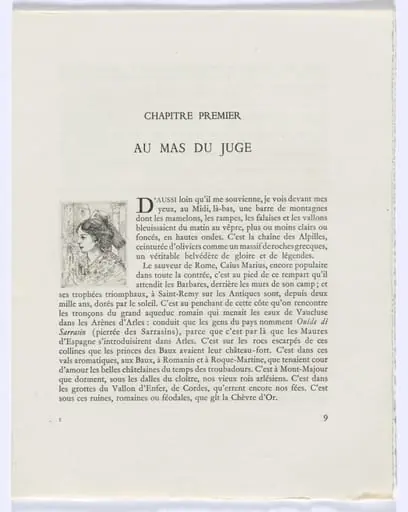 Frédéric Mistral: Mémoires et Recits by Frédéric Mistral: bust of woman in profile (page 9)
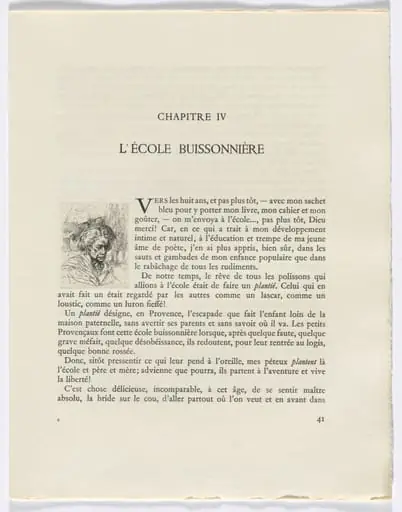 Frédéric Mistral: Mémoires et Recits by Frédéric Mistral: bust of a woman (page 41) DUPLICATE
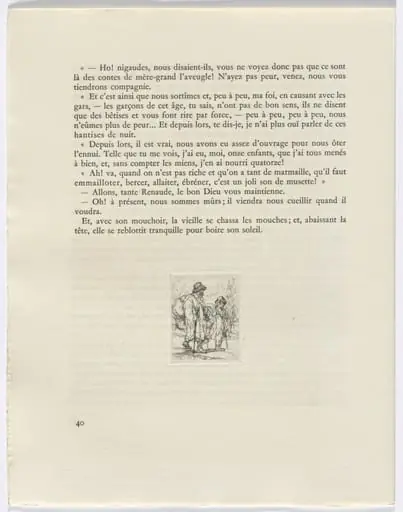 Frédéric Mistral: Mémoires et Recits by Frédéric Mistral: two figures walking (page 40)
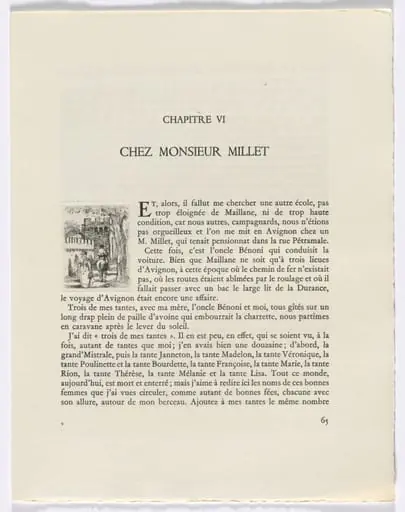 Frédéric Mistral: Mémoires et Recits by Frédéric Mistral: woman and man on horse (page 65)
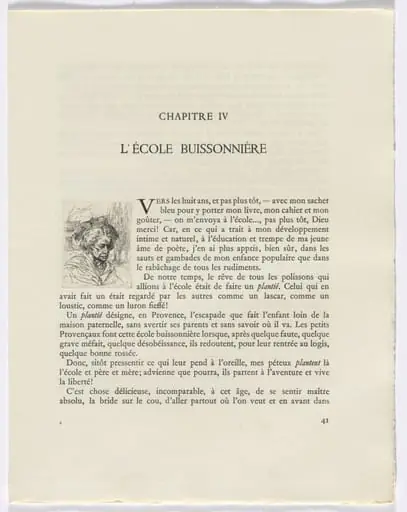 Frédéric Mistral: Mémoires et Recits by Frédéric Mistral: bust of a woman (page 41)
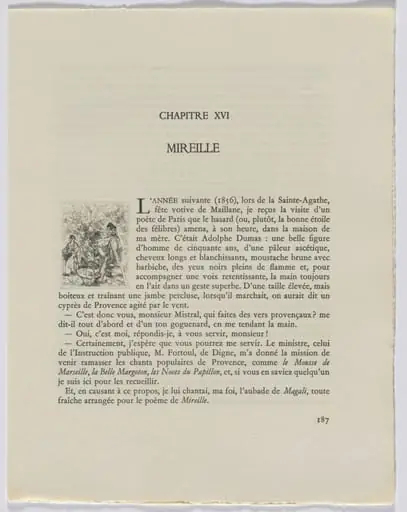 Frédéric Mistral: Mémoires et Recits by Frédéric Mistral: figures outside (page 187)
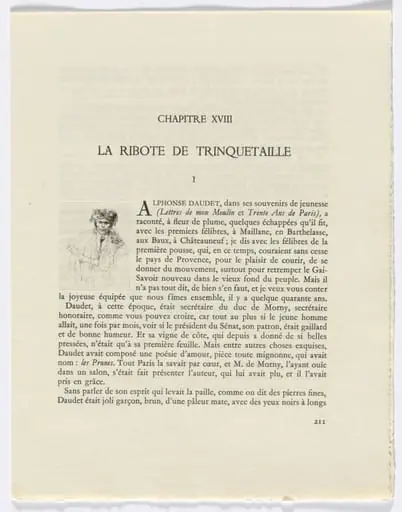 Frédéric Mistral: Mémoires et Recits by Frédéric Mistral: man (page 211)
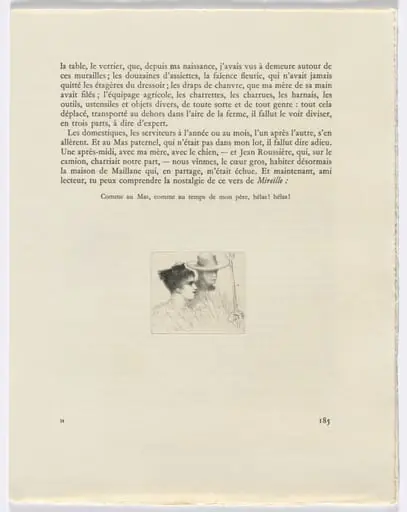 Frédéric Mistral: Mémoires et Recits by Frédéric Mistral: bust of a man and a woman (page 185)
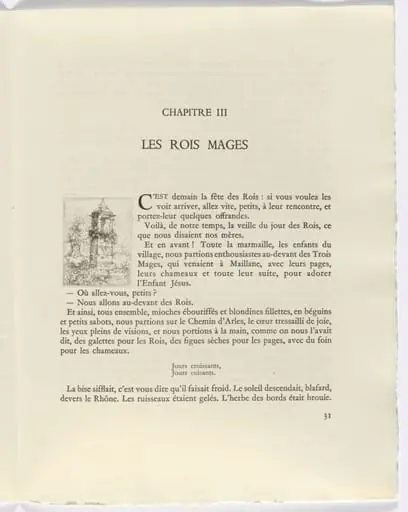 Frédéric Mistral: Mémoires et Recits by Frédéric Mistral: pillar (page 31)
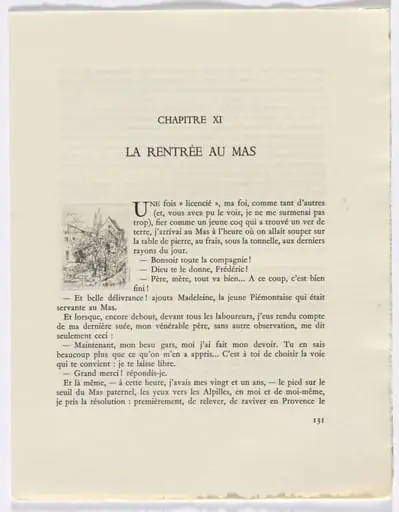 Frédéric Mistral: Mémoires et Recits by Frédéric Mistral: buildings and trees (page 131)
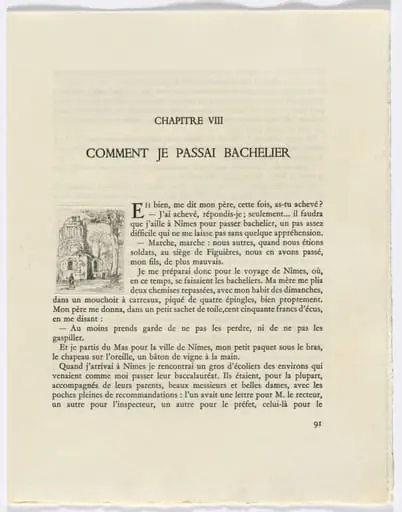 Frédéric Mistral: Mémoires et Recits by Frédéric Mistral: building and tree (page 91)
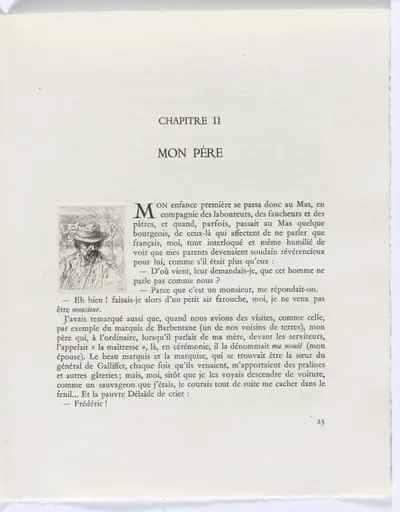 Frédéric Mistral: Mémoires et Recits by Frédéric Mistral: bust of man with hat (page 23)