Artwork
Gothic Doorway
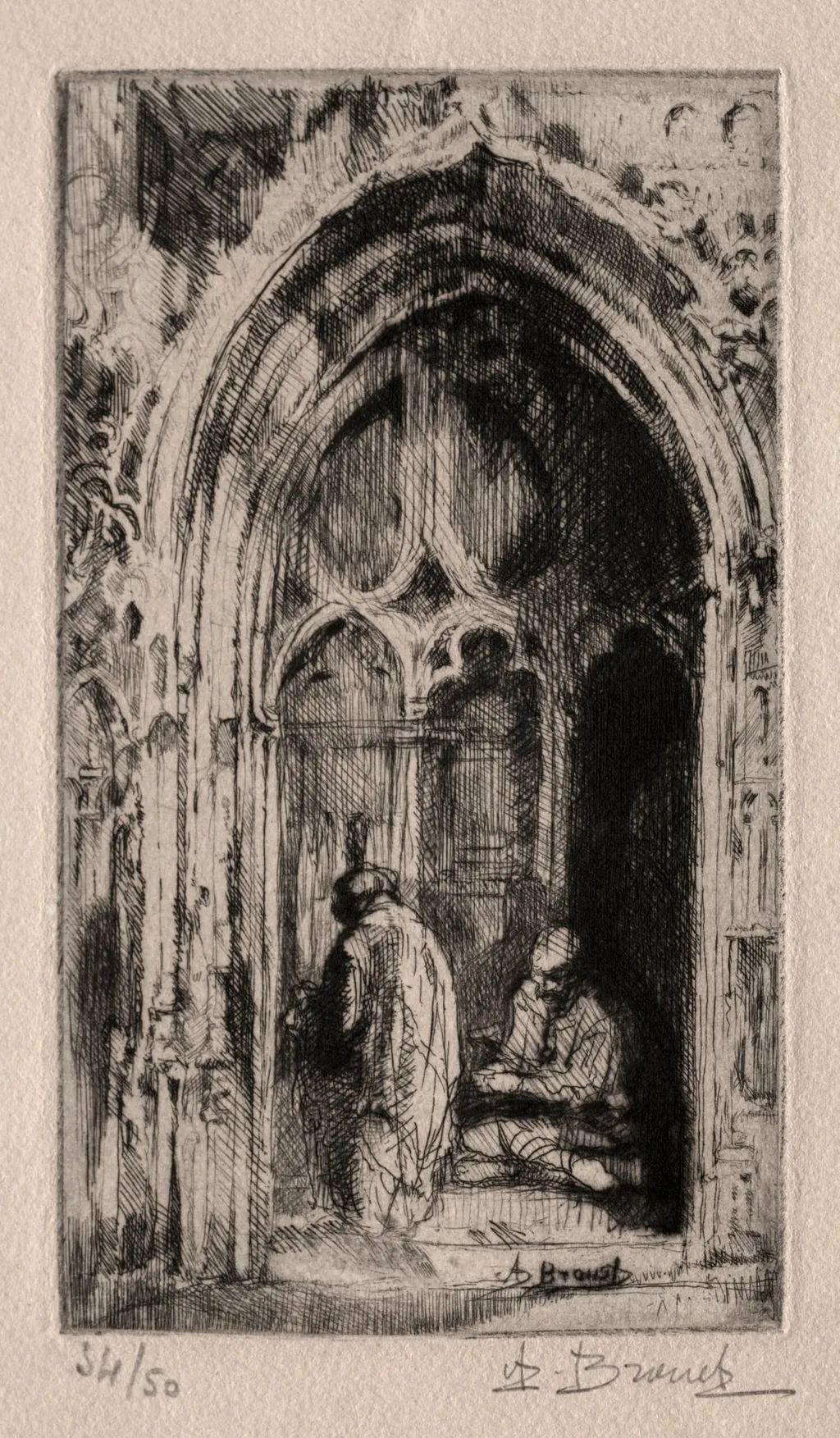
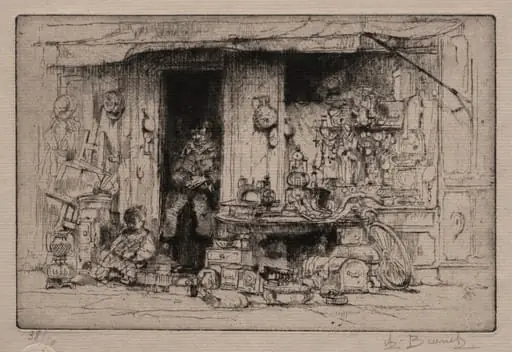
Gothic Doorway is a print by Auguste Brouet. It dates from 1922 and is held in the collection of the Cleveland Museum of Art.
About this work
Overview
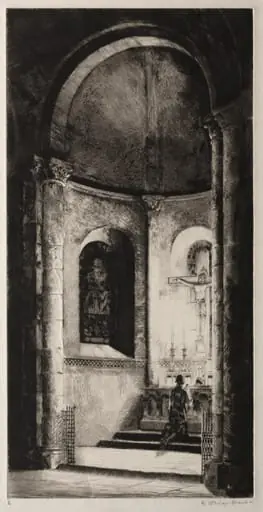
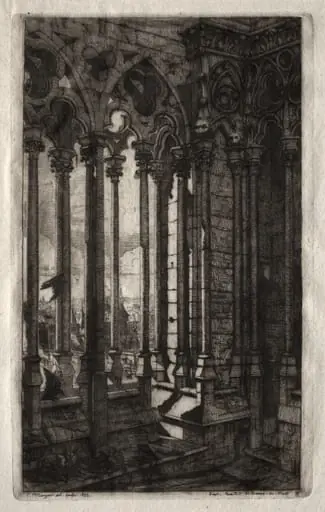
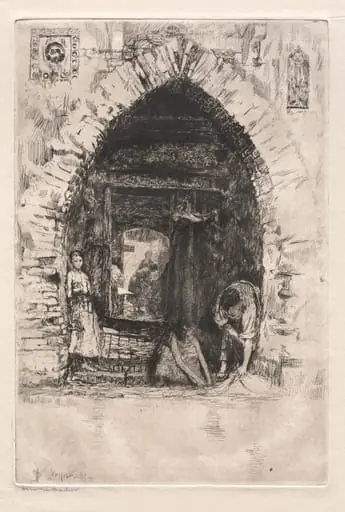
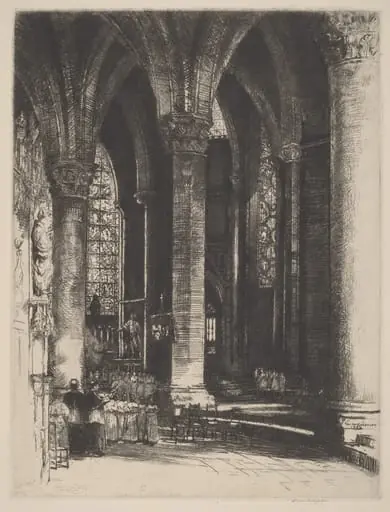
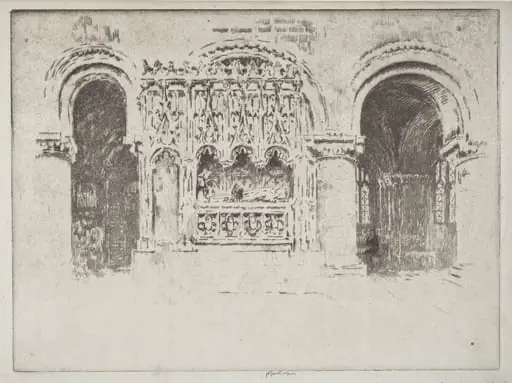
Created in 1922 by Auguste Brouet, this print captures a Gothic architectural interior with rapid, expressive linework. Executed in ink on paper, it belongs to the collection of The Cleveland Museum of Art. The composition emphasizes texture and atmosphere over precise detail, suggesting a spontaneous observation rather than a polished study.
Subject & Meaning
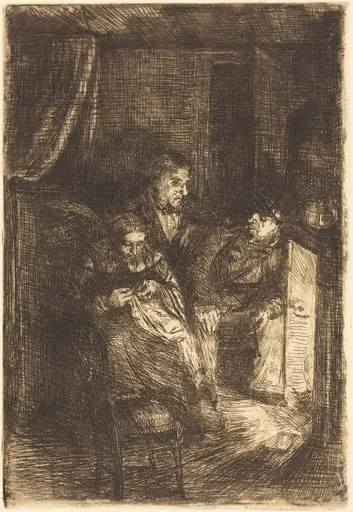
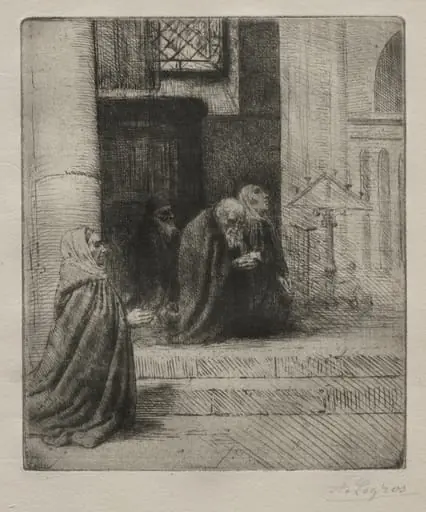
The scene depicts two figures within a narrow ecclesiastical space: one kneeling on a bench, the other standing nearby. Their postures imply quiet devotion or contemplation, though their faces remain indistinct. The heavy shadows and enclosed architecture evoke a sense of solitude and reverence, reinforcing the spiritual tone of the setting without narrative clarity.
Technique & Style
Brouet employed dense, hatched lines to model form and suggest depth, using contrast to define the archway’s structure and the figures’ garments. The strokes are loose and energetic, conveying immediacy. Shadows are built through layered crosshatching, while the absence of fine detail invites the viewer to infer the scene’s mood rather than its specifics.
History & Provenance
The print entered The Cleveland Museum of Art’s collection as part of its broader acquisition of early 20th-century European graphic works. Brouet, known for his etchings of urban and religious interiors, produced this piece during a period when he focused on intimate, atmospheric scenes. Its provenance traces directly to the artist’s estate and was acquired by the museum in the mid-20th century.
Context
Made in the aftermath of World War I, the work reflects a broader European interest in medieval architecture as a symbol of enduring spiritual values amid social upheaval. Brouet’s focus on quiet, unpopulated sacred spaces aligns with contemporary printmakers who sought emotional resonance through minimalism and texture rather than grandeur.
Legacy
Brouet’s approach influenced later generations of printmakers interested in expressive line and psychological atmosphere. While not widely exhibited, this piece remains a representative example of interwar French graphic art that prioritized mood over monumentality. Its preservation in a major American museum underscores its significance within the medium’s history.
Artist & collection