Artwork
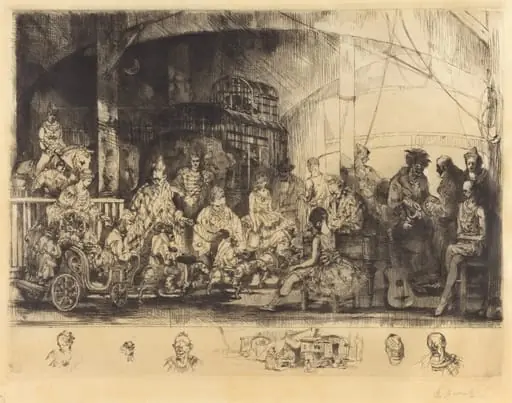
The Franconian Circus
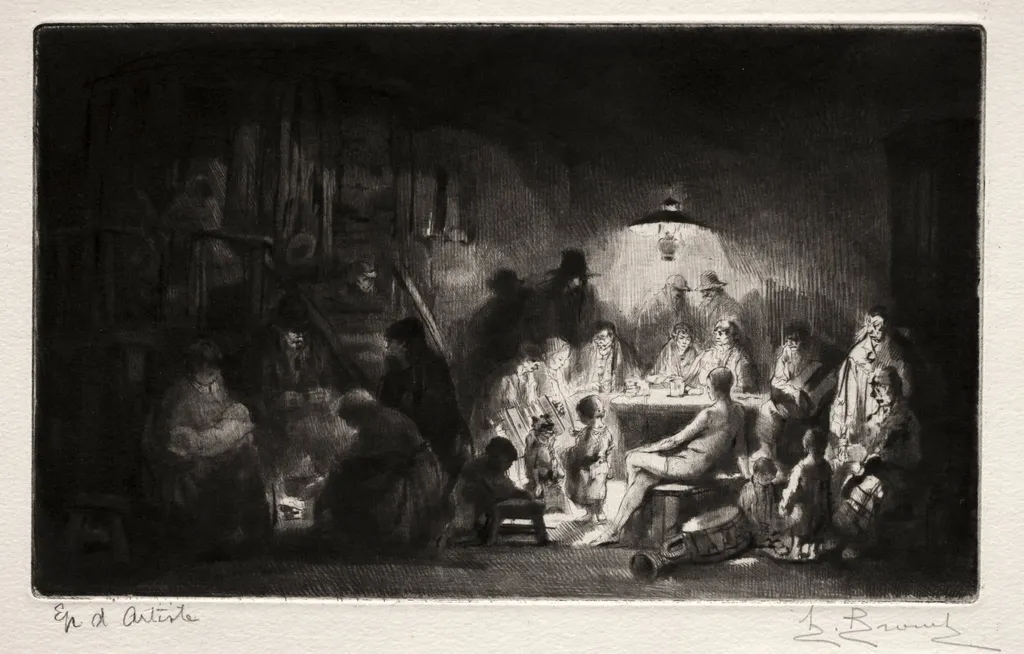
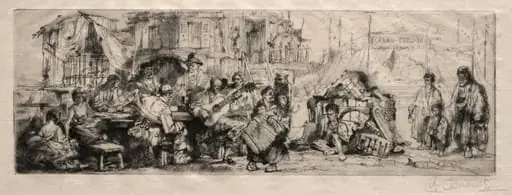
The Franconian Circus is a print by the Impressionist artist Auguste Brouet. It dates from 1925 and is held in the collection of the Cleveland Museum of Art.
About this work
Overview
Brouet’s use of fine, incised lines captures texture and atmosphere with precision, characteristic of his printmaking style.
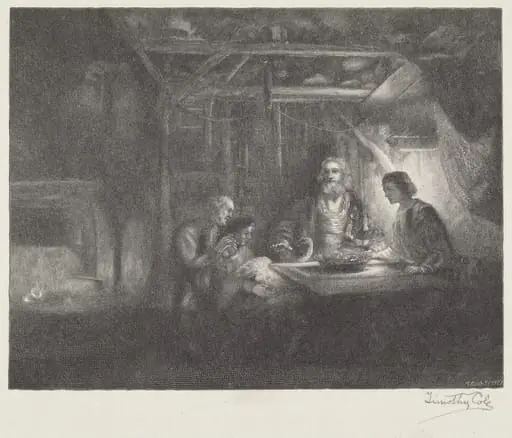
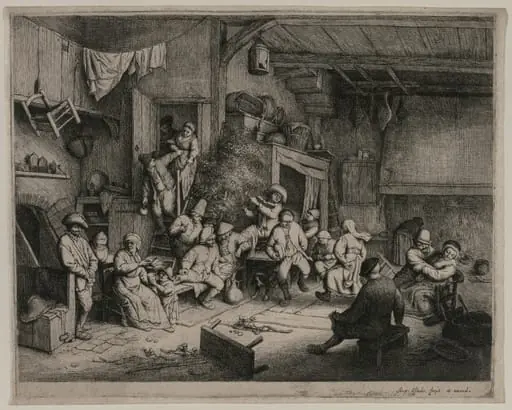
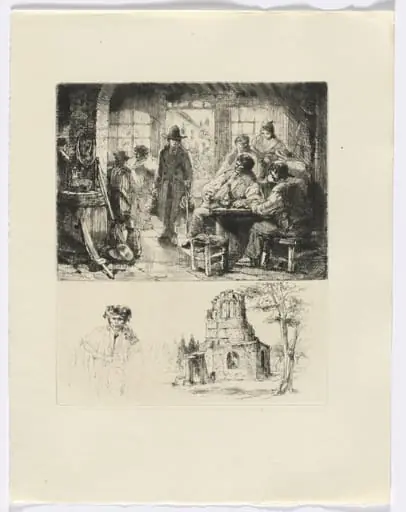
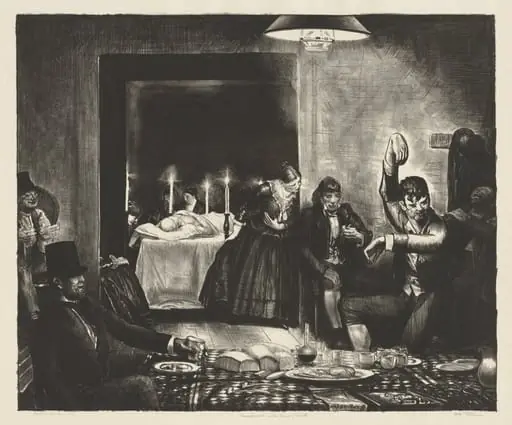
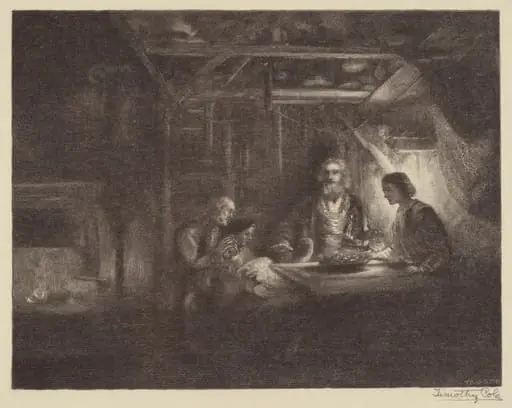
Created in 1925 by Auguste Brouet, The Franconian Circus is a drypoint print depicting an intimate, nocturnal gathering. The scene unfolds in a confined interior illuminated by a single lamp, casting deep shadows across the space. Brouet’s use of fine, incised lines captures texture and atmosphere with precision, characteristic of his printmaking style. The work is part of the collection at The Cleveland Museum of Art.
Subject & Meaning
A small group of figures huddle in a dim room, some seated at a table, others standing or crouching nearby. Their postures suggest quiet anticipation or exhaustion, with no clear narrative or action. The absence of overt drama invites interpretation of everyday solitude or ritual. The title, referencing a regional folk tradition, hints at a hidden cultural context, though the scene remains deliberately ambiguous.
Technique & Style
Brouet employed drypoint, a printmaking method that creates rich, velvety lines by scratching directly into a metal plate. The contrast between the lamp’s glow and the surrounding darkness is heightened through deep etching, producing strong chiaroscuro effects. Fine, dense lines build shadowed areas, while the illuminated zones remain sparse and sharp, guiding the viewer’s eye through the composition with minimal detail.
History & Provenance
The print was made in 1925 during Brouet’s mature period, when he focused on intimate interior scenes of rural and working-class life. It entered The Cleveland Museum of Art’s collection through a gift or acquisition in the 20th century, though specific provenance details prior to museum ownership are not widely documented. The work reflects Brouet’s consistent interest in quiet, psychologically resonant moments.
Context
Brouet worked in France during a time when printmaking experienced a revival among artists seeking alternatives to painting. His focus on domestic and folk settings aligned with regionalist trends in interwar European art. The Franconian Circus may reference local traditions in Franconia, a cultural region spanning parts of modern Germany and France, though the scene’s specificity remains intentionally understated.
Legacy
Though not widely exhibited outside specialized print collections, The Franconian Circus exemplifies Brouet’s contribution to early 20th-century graphic art. His mastery of light and shadow in drypoint influenced later artists interested in mood-driven imagery. The work endures as a quiet meditation on isolation and observation, valued for its restraint and technical finesse rather than dramatic impact.
Artist & collection