Artwork
Unloading Peat
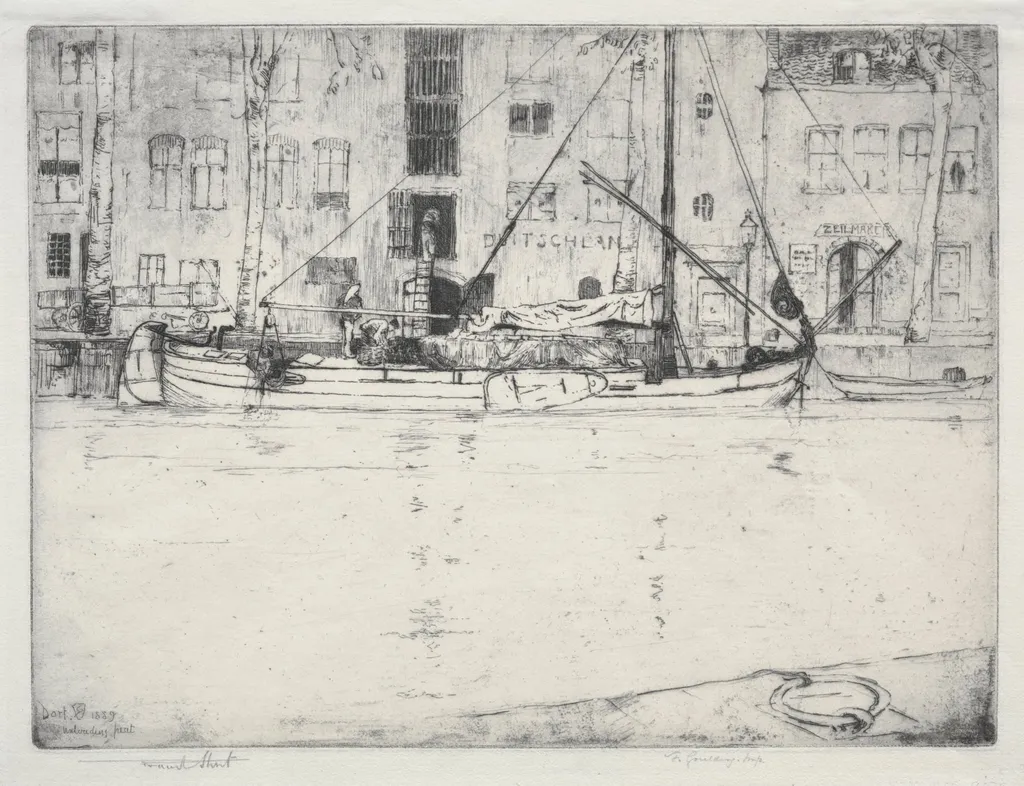
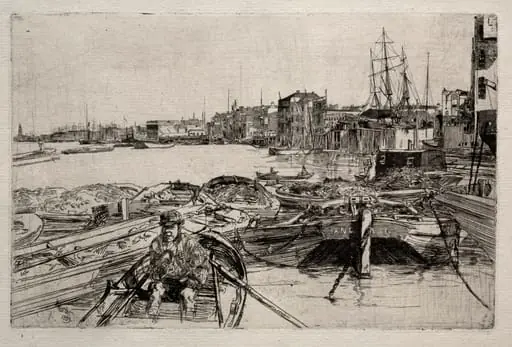
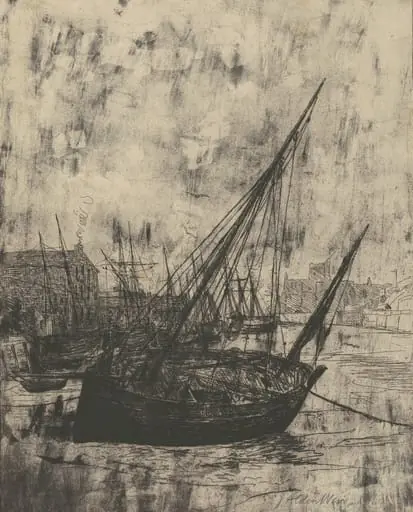
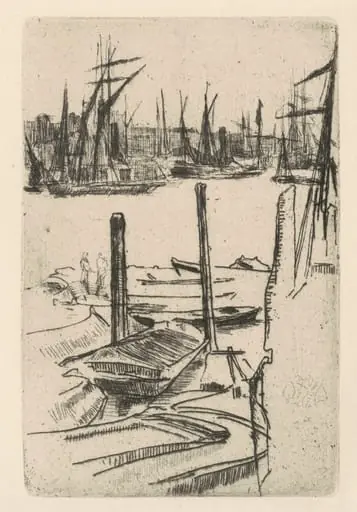
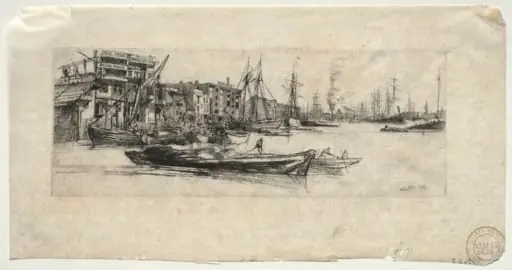
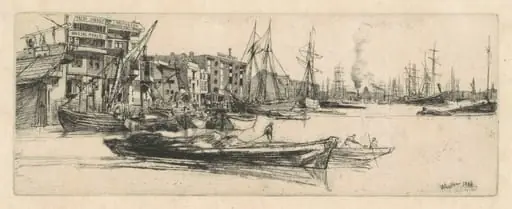
Unloading Peat is a print by the Impressionist artist Frank Short. It dates from 1889 and is held in the collection of the Cleveland Museum of Art.
About this work
Overview
The print reflects his commitment to portraying ordinary life with precision and emotional weight, grounded in direct observation rather than idealization.
Created in 1889 by British printmaker Frank Short, *Unloading Peat* is a drypoint and etching that captures a working dockside scene. Short, known for his technical innovations in intaglio printing, used this work to explore the interplay of light, texture, and labor. The print reflects his commitment to portraying ordinary life with precision and emotional weight, grounded in direct observation rather than idealization.
Subject & Meaning
The scene depicts laborers unloading peat from a moored vessel at a bustling port, likely in the Netherlands given the signage. Figures move with purpose amid ropes, sails, and stacked fuel, emphasizing the physicality of daily work. The presence of commercial signs like 'DUTSCHLAN' and 'ZEILMAKER' anchors the image in a specific cultural and economic context, highlighting the global trade of fuel and the rhythms of maritime labor.
Technique & Style
Short employed drypoint and etching to achieve rich tonal contrasts and dynamic texture. His loose, urgent lines convey motion in the water, fabric, and human figures, avoiding polished finish in favor of immediacy. The roughness of the marks mirrors the gritty reality of the scene, while subtle gradations of ink suggest atmospheric depth and the play of natural light on wet surfaces and wooden hulls.
History & Provenance
The print was made during a period when Short was actively reviving traditional print methods and teaching at the Royal College of Art. While its early ownership is undocumented, it aligns with his broader project of elevating printmaking as a serious artistic medium. The work was likely produced for exhibition or educational use, reflecting his dual role as practitioner and pedagogue.
Context
In late 19th-century Europe, industrialization reshaped port economies, and peat remained a vital fuel source in regions like the Netherlands. Artists increasingly turned to scenes of labor and urban life, rejecting romanticized narratives. Short’s focus on unglamorous work fits within this Realist current, aligning with contemporaries who sought truth in the mundane rather than the heroic.
Legacy
Though not widely exhibited today, *Unloading Peat* exemplifies Short’s influence on British printmaking’s revival. His technical rigor and commitment to depicting everyday labor helped redefine printmaking’s artistic potential. The work remains a quiet testament to his belief that the ordinary, rendered with honesty and skill, holds enduring visual and historical value.
Artist & collection
Artist
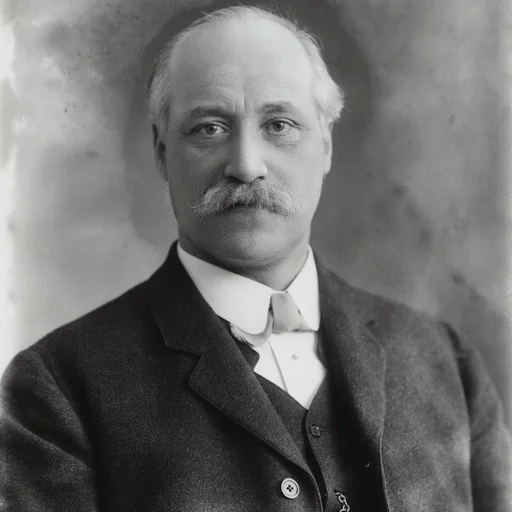
Sir Francis Job Short PPRE (19 June 1857 – 22 April 1945) was a British printmaker and teacher of printmaking.