Artwork
Au Maroc
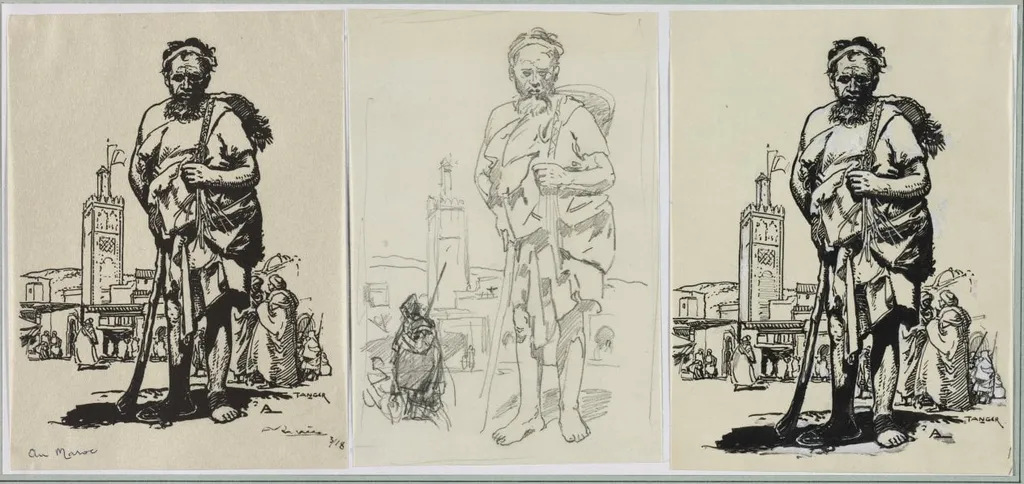
Au Maroc is a drawing by Auguste Lepère. It dates from 1914 and is held in the collection of the Cleveland Museum of Art.
About this work
Overview
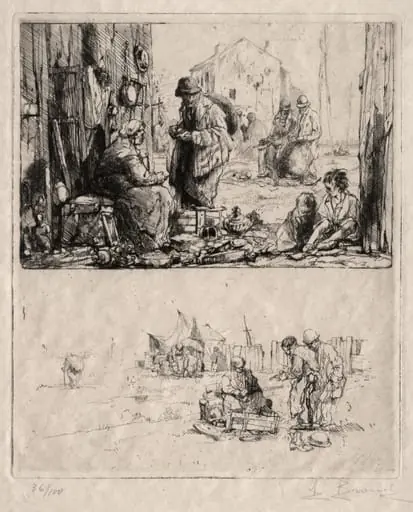
Au Maroc is a 1914 drawing by Auguste Louis Lepère, a French artist known for reviving wood engraving in Europe. The work comprises three sketches of a man in front of a building, showcasing Lepère's experimentation with techniques and compositions.
Subject & Meaning
The drawing depicts a man wearing a robe and holding a staff, set against a background of a building and people. The scene is likely inspired by Lepère's observations during his time in Morocco, reflecting his interest in capturing contemporary subjects.
Technique & Style
The three sketches exhibit distinct styles, with varying levels of detail and shading in black and white. The use of chiaroscuro creates contrast, emphasizing textures and forms. The differing treatments suggest Lepère was exploring different approaches to representing his subject.
History & Provenance
Created in 1914, Au Maroc dates to the later part of Lepère's career, just before his death in 1918. It reflects his ongoing engagement with printmaking techniques and his practice of combining traditional craftsmanship with modern subjects.
Artist & collection
Artist
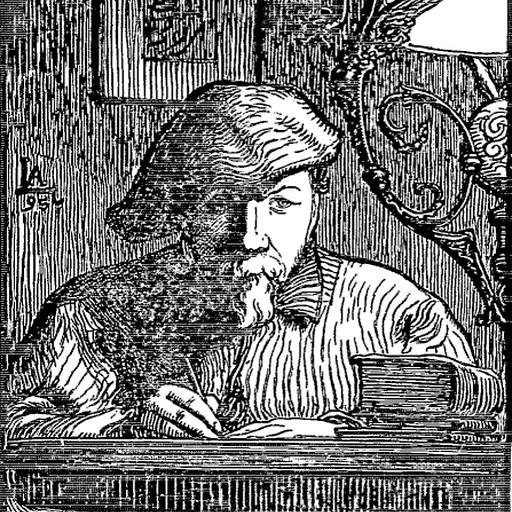
Louis-Auguste Lepère (30 November 1849 – 20 November 1918) was a French painter and etcher. Lepère is also considered a leader in the creative revival of wood engraving in Europe.

 On the Fortifications at Saint-Ouen
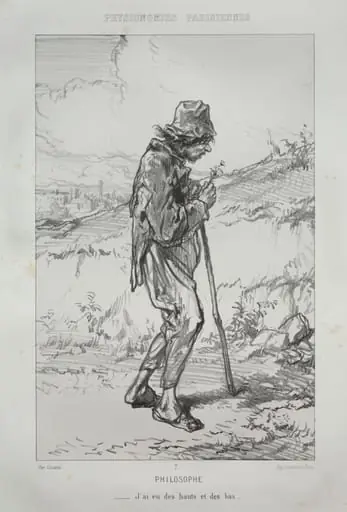 Philosophe
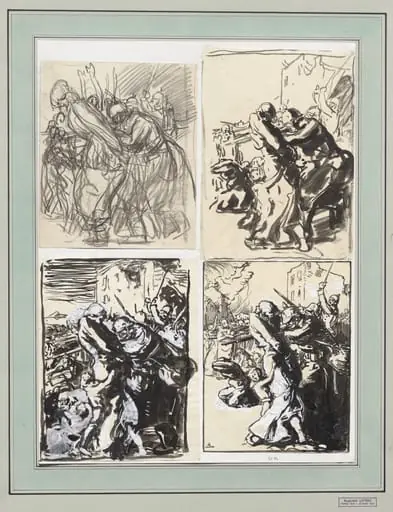 Fusilade dans une rue
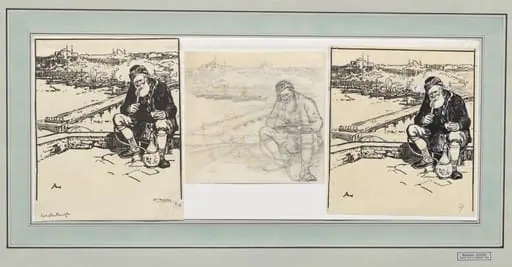 Constantinople
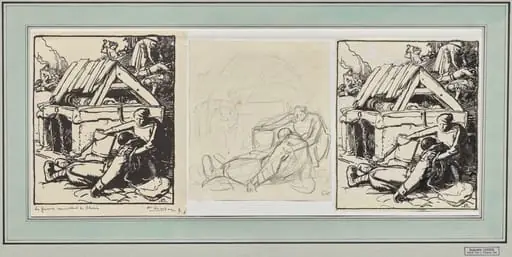 Les Femmes receuillant les blesses
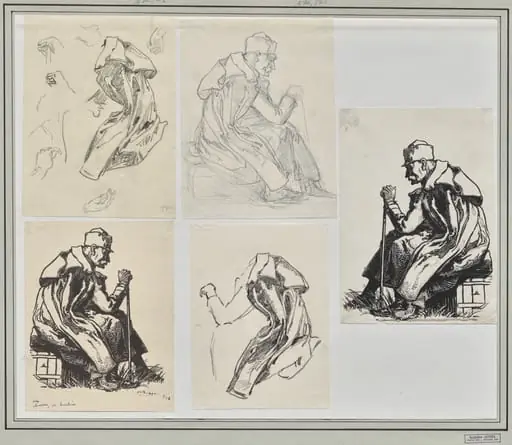 Le roi Pierre de Serbie
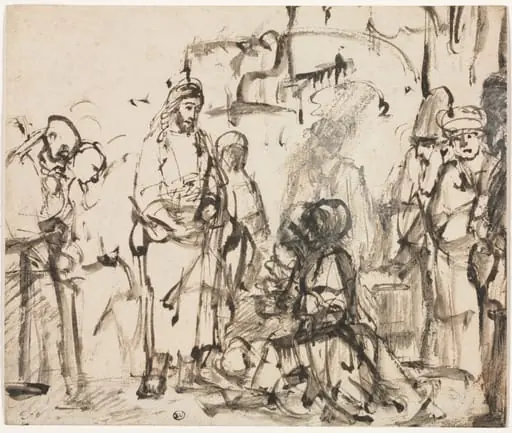 The Meeting of Christ with Martha and Mary after the Death of Lazarus
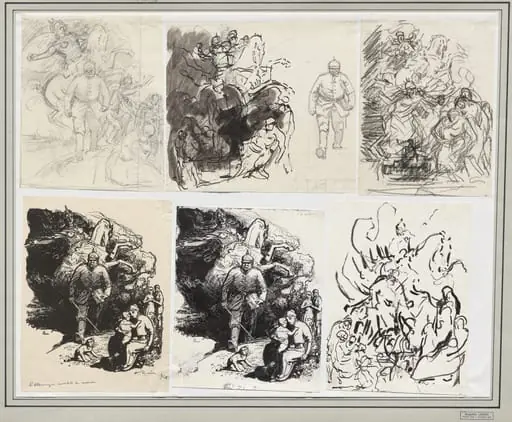 L'Allemagne envahit le monde
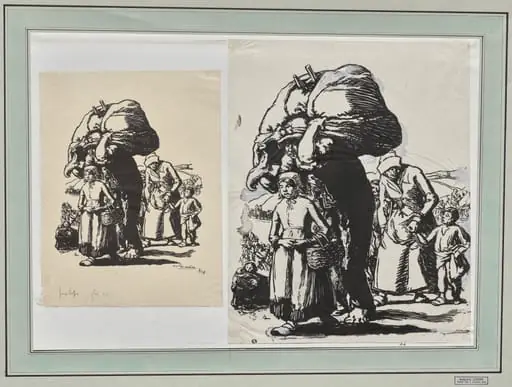 Fugitifs
![A Village Scene in India [verso], by George Chinnery](https://artifactworldgallery.com/img/george-chinnery--a-village-scene-in-india-verso--a3b8d6327e2fa0d5-w320.webp) A Village Scene in India [verso]
A Village Scene in India [verso]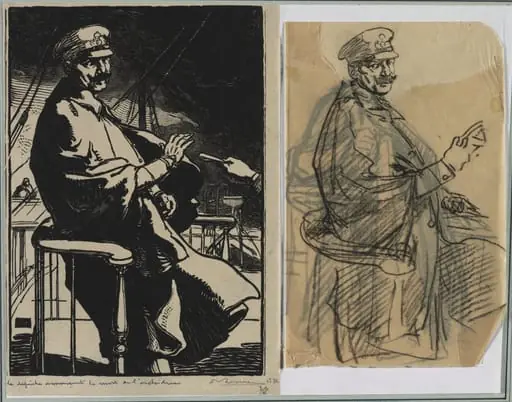 La Dépèche annoncant la mort de l'archiduc
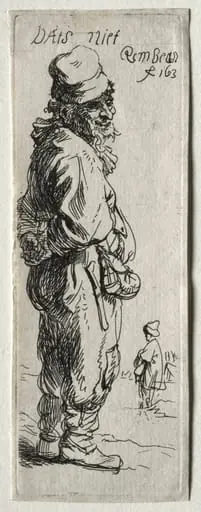 A Peasant Replying: "that's nothing"