Artwork
Faunesse
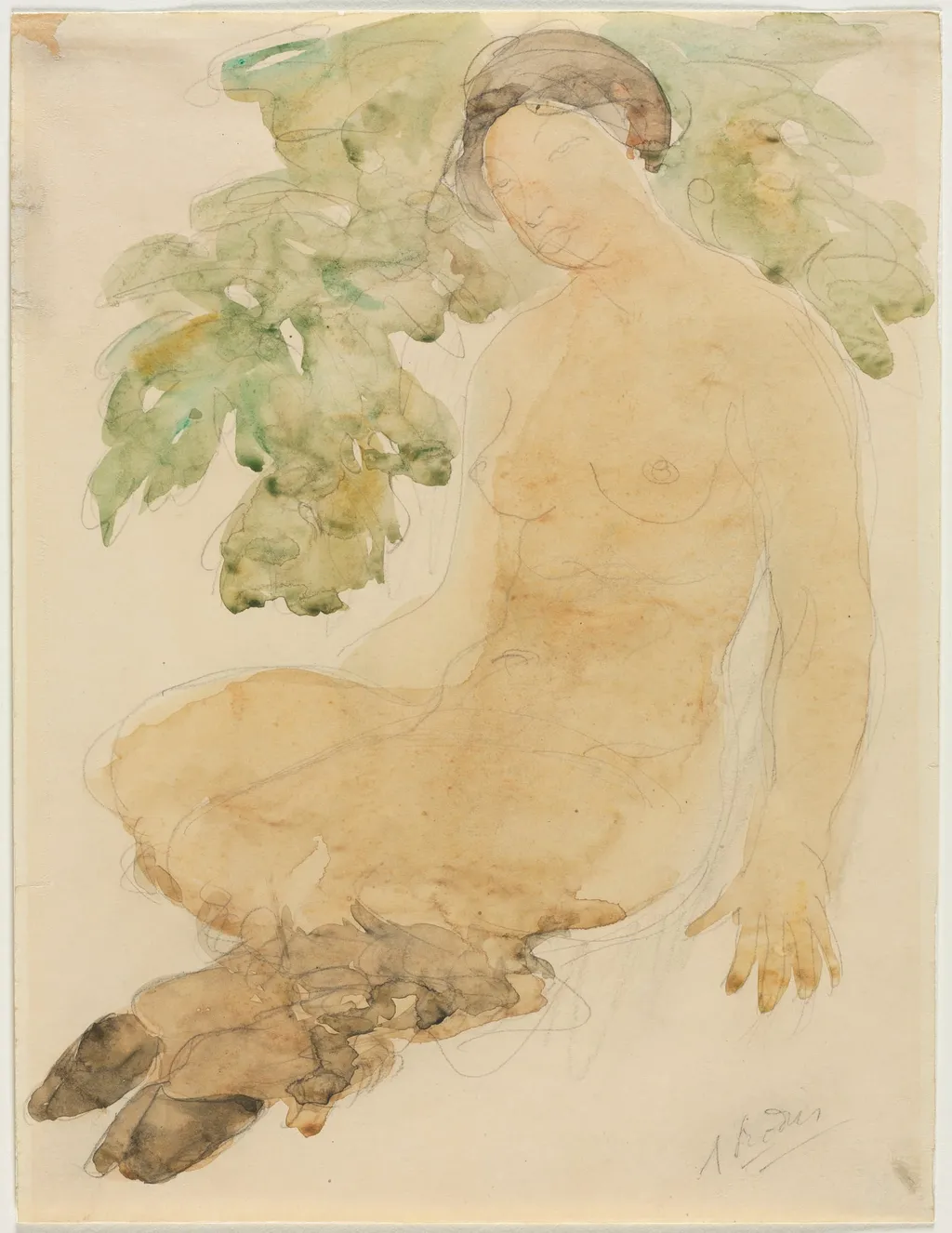
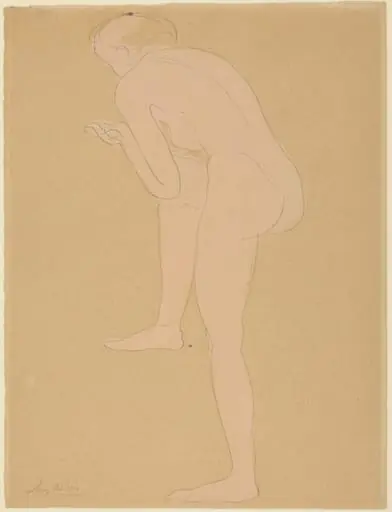
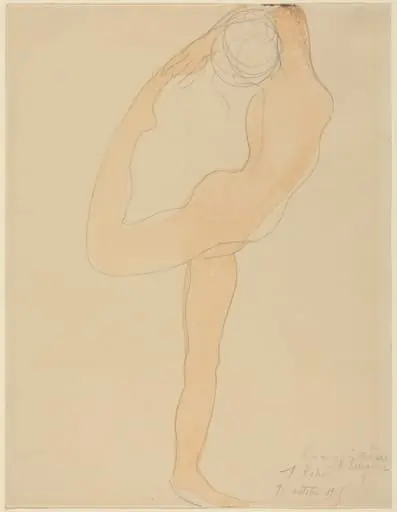
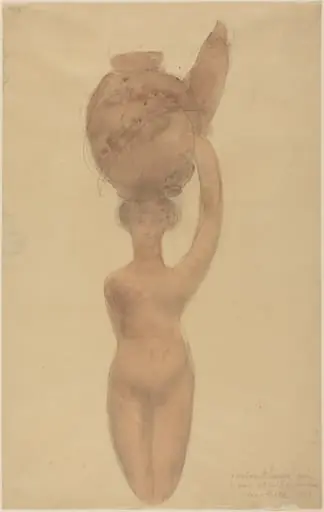
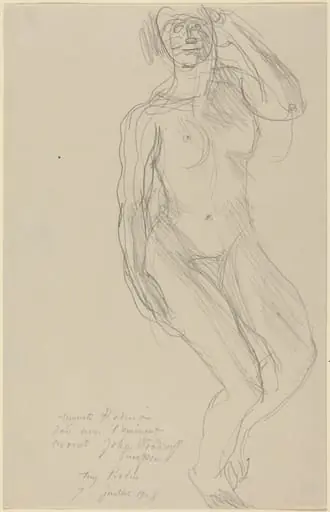
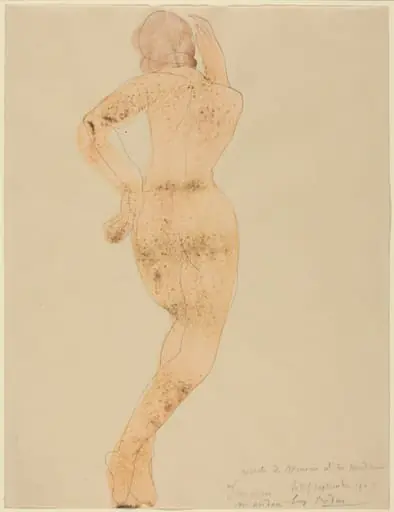
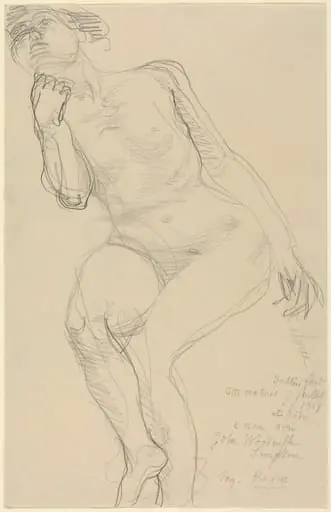
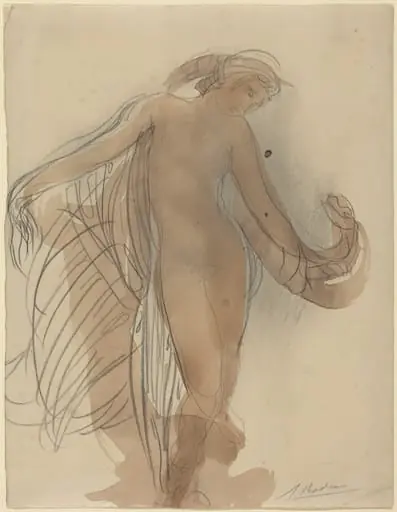
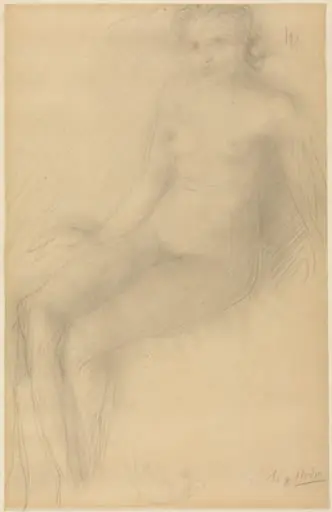
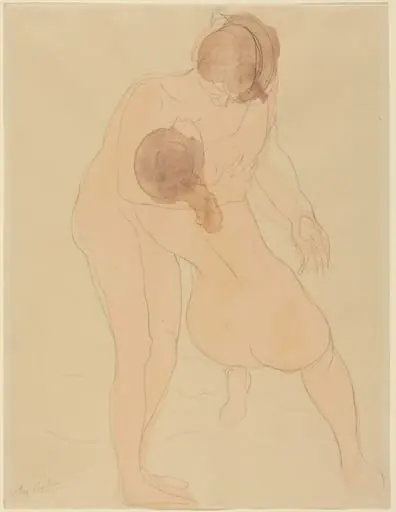
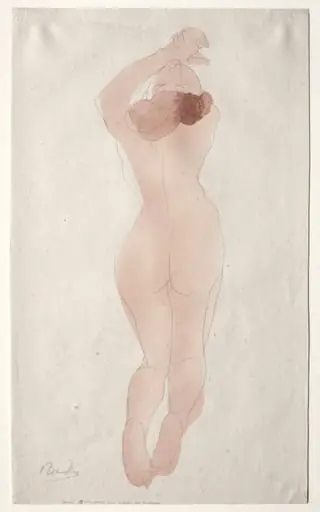
Faunesse is a drawing by Auguste Rodin. It dates from 1905 and is held in the collection of the Cleveland Museum of Art.
About this work
Overview
Though primarily known for three-dimensional work, Rodin used drawing as a means to study movement and texture.
Created around 1905, *Faunesse* is a graphite and wash drawing by Auguste Rodin, reflecting his ongoing exploration of the human form beyond monumental sculpture. Though primarily known for three-dimensional work, Rodin used drawing as a means to study movement and texture. This piece captures a moment of quiet repose, emphasizing tactile sensation over narrative clarity. Its intimate scale and unfinished quality align with Rodin’s broader interest in process and impermanence.
Subject & Meaning
The figure is a reclining female nude, rendered without defined facial features, directing attention to the contours of her body and the rhythm of her posture. The absence of identity transforms her into a universal form, evoking natural ease rather than idealized beauty. The surrounding foliage suggests an outdoor setting, yet remains suggestive rather than descriptive. Rodin’s focus on the body’s organic curves implies a connection between human form and the fluidity of nature.
Technique & Style
Rodin employed loose washes and soft graphite strokes to model the figure’s skin, creating a sense of warmth and subtle gradation. The background is rendered with rapid, uneven brushwork, blurring the boundary between figure and environment. Facial details are omitted, and contours are deliberately indistinct, enhancing the impression of light playing across surfaces. This approach echoes the atmospheric softness of sfumato, though executed with the immediacy of a sketch.
History & Provenance
The drawing entered the collection of The Cleveland Museum of Art through documented acquisition, though its earlier ownership remains unrecorded in public sources. It was likely produced during a period when Rodin was intensively sketching from life, often in private settings. Unlike his finished sculptures, many of these drawings were personal studies, not intended for public display, making their survival and preservation significant.
Context
Around 1905, Rodin was increasingly focused on the expressive potential of the unidealized body, moving away from classical norms. While contemporaries pursued geometric abstraction or symbolic allegory, he returned to the physicality of flesh and gesture. His drawings from this time reveal a quiet rebellion against polished finish, valuing spontaneity and sensory truth over conventional completion.
Legacy
*Faunesse* exemplifies how Rodin’s drawings expanded the role of sketching in modern art—not as preparatory work, but as autonomous expressions of perception. Its emphasis on process, ambiguity, and tactile form influenced later artists who sought to capture presence over precision. The work remains a quiet testament to his belief that the body, in its most unguarded state, holds profound artistic resonance.
Artist & collection
Artist
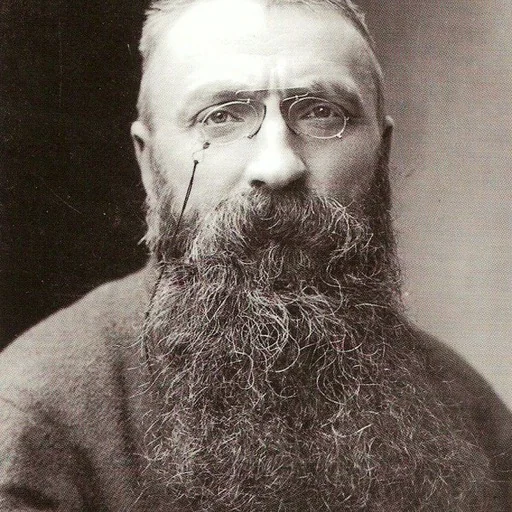
François Auguste René Rodin (; French: ; 12 November 1840 – 17 November 1917) was a French sculptor generally considered the founder of modern sculpture.