Artwork
Madonna and Child with Angels
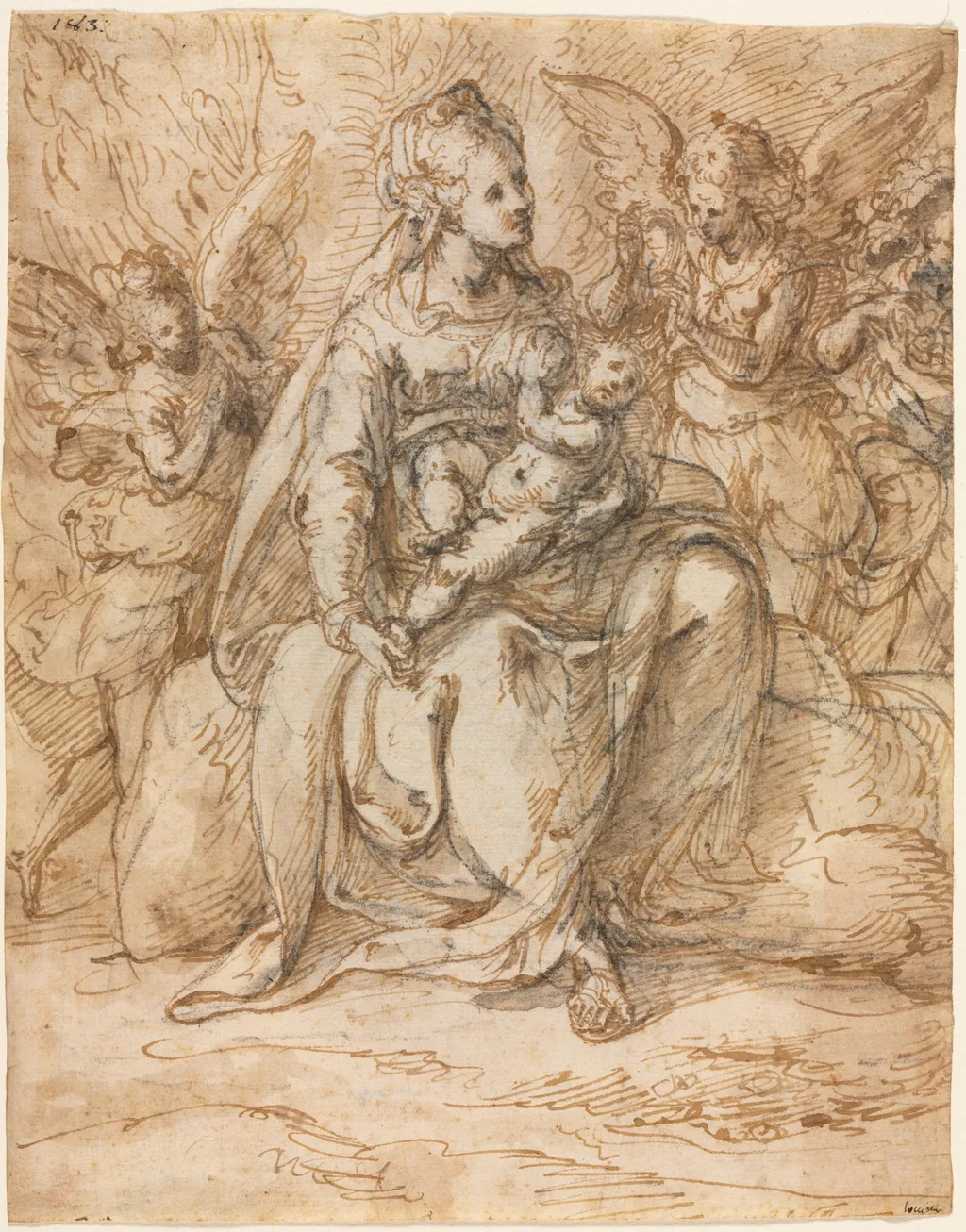
Madonna and Child with Angels is a drawing by the Renaissance artist Aurelio Luini. It dates from 1504 and is held in the collection of the Cleveland Museum of Art.
About this work
Overview
This ink drawing, dated circa 1504, is attributed to Aurelio Luini, a Milanese artist active in the early 16th century. Executed in a fluid, spontaneous manner, it presents a devotional subject with the Virgin and Child attended by two angels. Unlike a polished altarpiece, the work reads as a preparatory study, its unfinished quality revealing the artist’s process rather than a final commission.
Subject & Meaning
The composition centers on the Virgin Mary cradling the infant Jesus, flanked by two small angelic figures. The grouping follows traditional Marian iconography, emphasizing tenderness and divine presence. The angels, hovering closely, suggest celestial guardianship. The lack of elaborate symbolism or narrative context points to an intimate, meditative focus rather than doctrinal instruction.
Technique & Style
Rendered in ink with rapid, gestural strokes, the drawing emphasizes movement over detail. Facial features are lightly suggested, and the background is composed of loose, swirling lines that imply space without definition. Areas such as the Child’s face remain deliberately blank, indicating the artist’s working method—exploring form through incremental refinement rather than immediate completion.
History & Provenance
The drawing entered the Cleveland Museum of Art’s collection as part of its broader holdings of Renaissance works on paper. While its early ownership is undocumented, its style aligns with the artistic milieu of Milan around 1500, where Aurelio Luini, son of Bernardino Luini, was active alongside family members and collaborators on ecclesiastical fresco cycles.
Context
Aurelio Luini worked within a Lombard tradition that valued preparatory drawing as a means of refining composition before execution in paint. His practice reflects the broader Renaissance emphasis on study and experimentation, particularly in northern Italy, where artists often treated sketches as vital steps in the creative process rather than mere byproducts.
Legacy
This drawing exemplifies how Renaissance artists used informal media to explore sacred themes with immediacy. Its unfinished state preserves a moment of artistic inquiry, offering insight into the transition from concept to finished work. Such studies, though rarely displayed in their time, now serve as key evidence of creative methodology in early 16th-century Lombardy.
Own this work as a print
Artist & collection
Artist
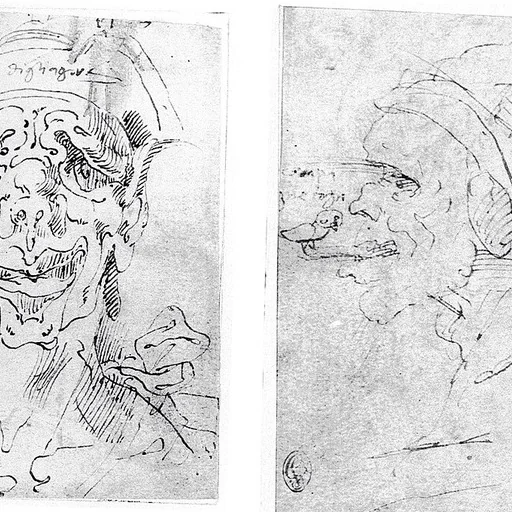
Aurelio Luini (c. 1530–1593) was an Italian painter and draughtsman from Milan, the fourth and last son of Bernardino Luini. A representative of late Lombard Mannerism, he was a friend of Gian Paolo Lomazzo. Together…

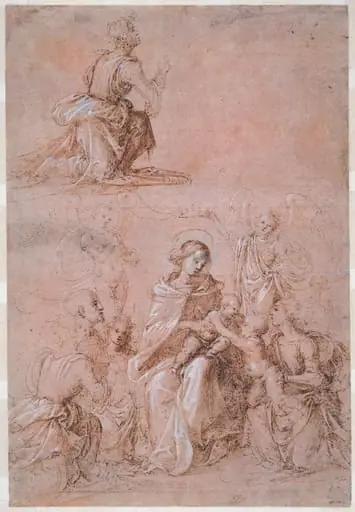 The Virgin and Child Surrounded by Saints and Angels
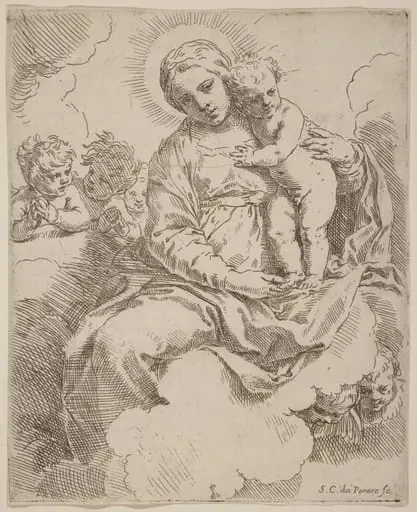 The Virgin and Child
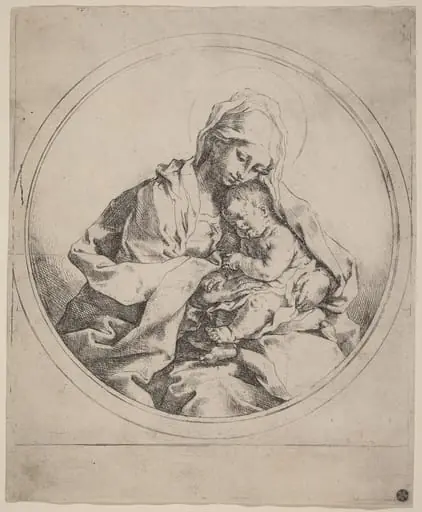 Virgin and Child
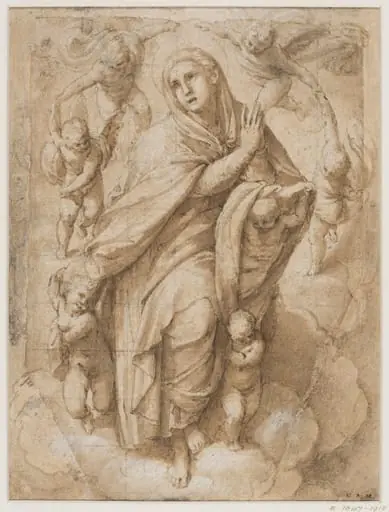 A female saint surrounded by cherubs
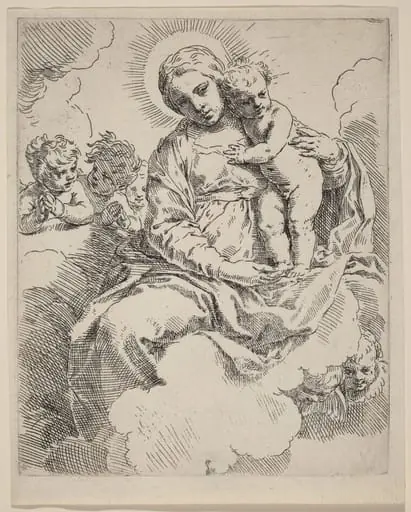 The Virgin and Child
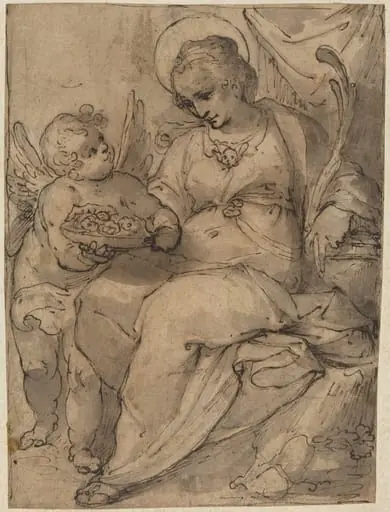 Martyr with an Angel
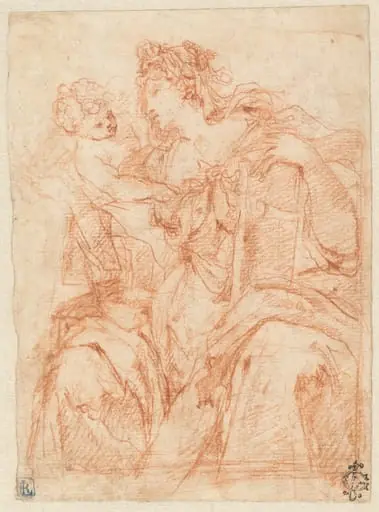 Study for the Sibyl of the Casa Budrioli
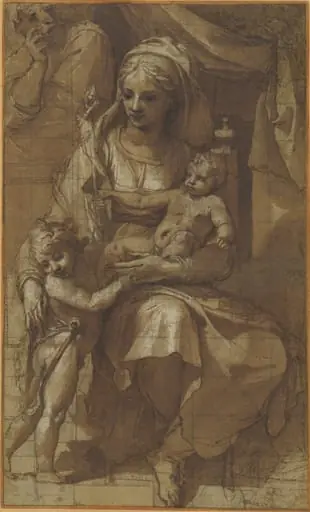 The Holy Family with the Infant John the Baptist
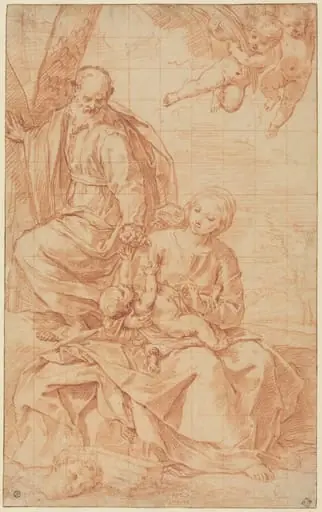 The Rest on the Flight into Egypt, or The Miracle of the Palm Tree
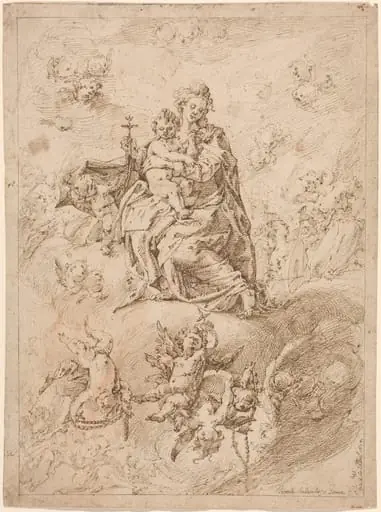 The Madonna of the Rosary