Artwork
The Madonna of the Rosary
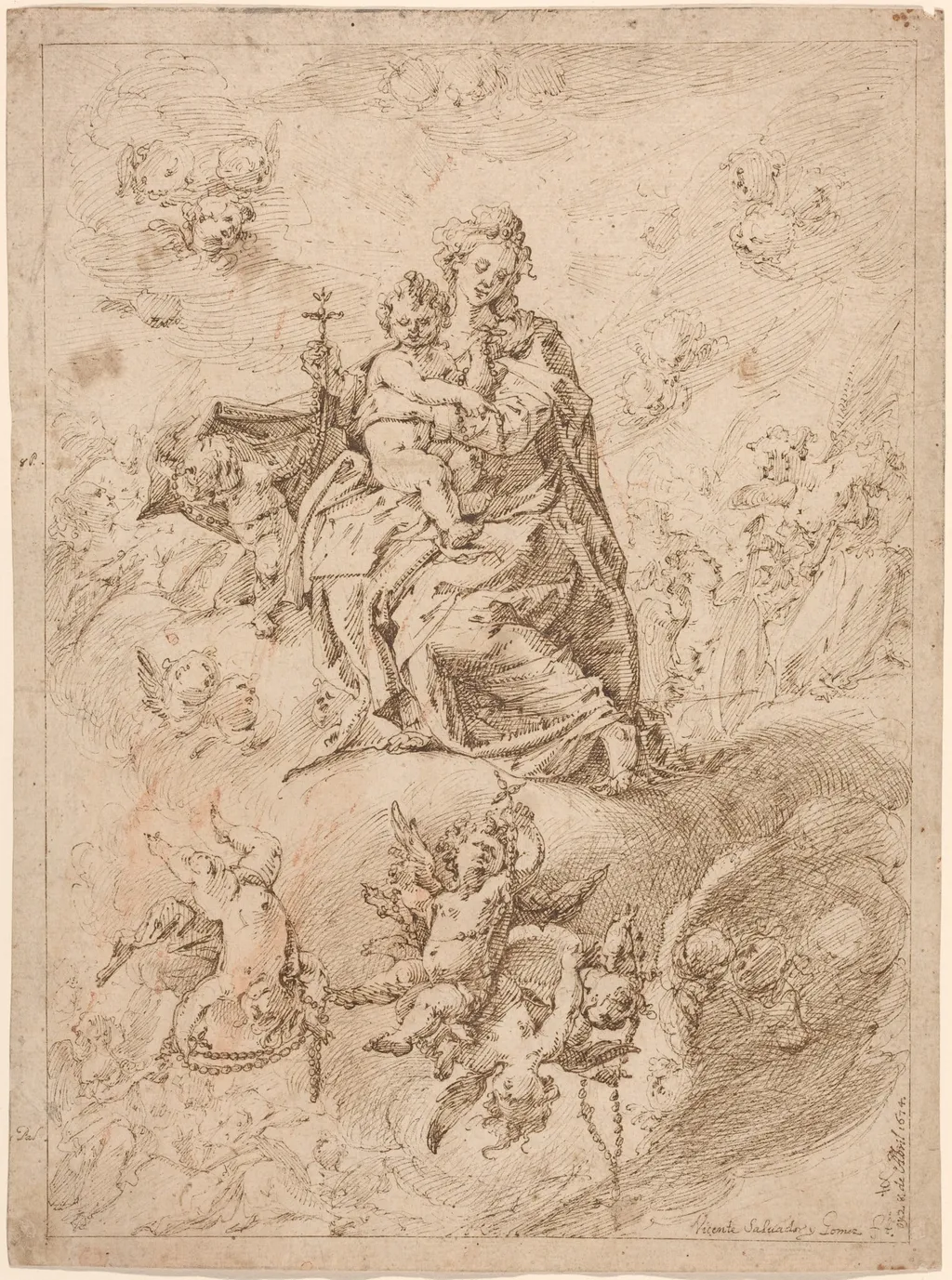
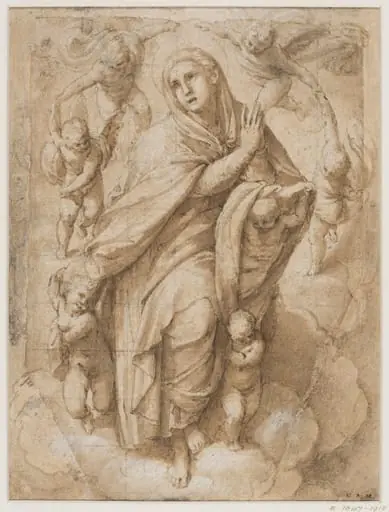
The Madonna of the Rosary is an ink drawing by the Baroque artist Vicente Salvador Gómez. It dates from 1674 and is held in the collection of the National Gallery of Art.
About this work
Overview
The textured surface of the paper enhances the tactile quality of the inkwork, reinforcing its intimate, preparatory character.
This ink drawing by Vicente Salvador Gómez, dated 1674, presents a devotional scene of the Madonna of the Rosary. Executed in pen and brown ink on laid paper, it captures a moment of spiritual gathering rather than a formal altarpiece. The composition is dynamic and loosely structured, emphasizing gesture and motion over idealized form. The textured surface of the paper enhances the tactile quality of the inkwork, reinforcing its intimate, preparatory character.
Subject & Meaning
The central figure is the Virgin Mary holding the Christ Child, surrounded by kneeling devotees and angels, all engaged in the veneration of the rosary. The grouping suggests a communal act of prayer, with figures overlapping and turning toward the central pair. The subject reflects Counter-Reformation piety, promoting the rosary as a devotional practice. The lack of rigid hierarchy among the figures implies spiritual equality before the divine.
Technique & Style
Gómez employs rapid, overlapping pen strokes to model form and suggest volume, avoiding smooth gradients. Cross-hatching builds shadow through dense, irregular lines, creating a sense of movement and energy. The paper’s laid texture interacts with the ink, adding grain and rhythm to the surface. Figures appear entangled, not through error, but as a deliberate expression of spiritual fervor—intensity prioritized over anatomical precision.
History & Provenance
Created in 1674 during Gómez’s active period in Valencia, this drawing likely served as a study for a larger altarpiece or devotional panel. Its survival suggests it was valued as an autonomous work, possibly retained by the artist or a close associate. No documented early ownership exists, but its condition and medium align with private ecclesiastical sketchbooks of the period, indicating its role in artistic preparation rather than public display.
Context
In late 17th-century Spain, religious imagery was central to both public worship and private devotion. The rosary, promoted by the Dominicans and endorsed by the Church, was a key focus of visual piety. Gómez’s sketch reflects this cultural emphasis, using expressive line to convey emotional immediacy. Unlike grander painted altarpieces, this drawing reveals the artist’s process—raw, responsive, and grounded in the tactile act of drawing.
Legacy
This drawing stands as a testament to the vitality of preparatory work in Spanish Baroque art. While not widely exhibited, it offers insight into how artists translated devotional themes into visual form through direct, unpolished means. Its survival underscores the value placed on the artist’s hand in religious contexts, preserving a moment of creative thought that might otherwise have been lost to time.
Own this work as a print
Artist & collection


 The Virgin and Child
 The Virgin of the Immaculate Conception
 Charity with Faith and Hope
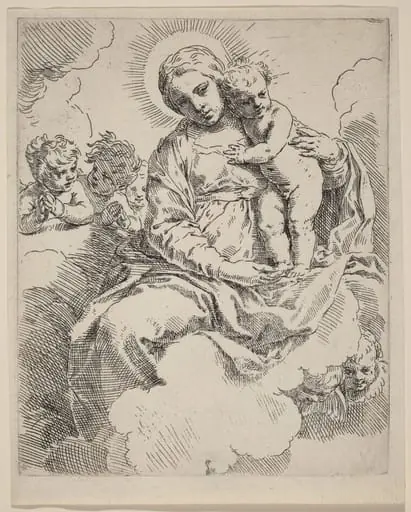 The Virgin and Child
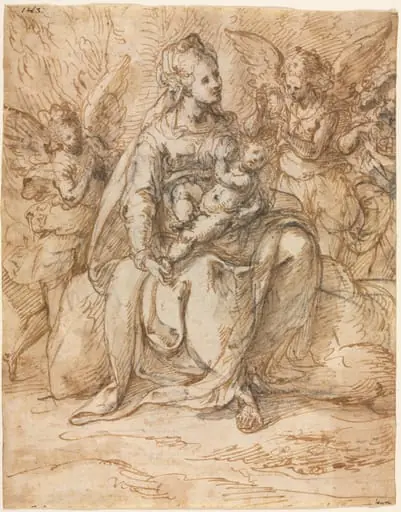 Madonna and Child with Angels
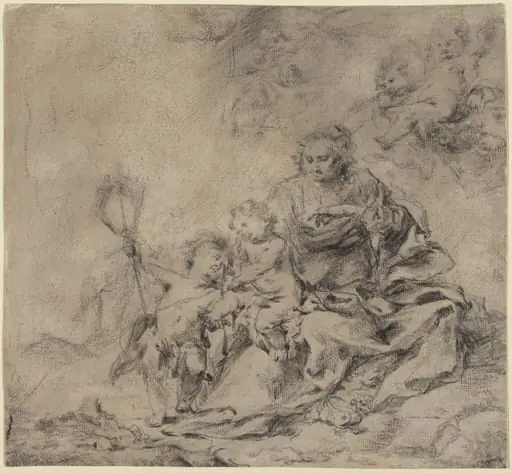 The Virgin and Child with John the Baptist
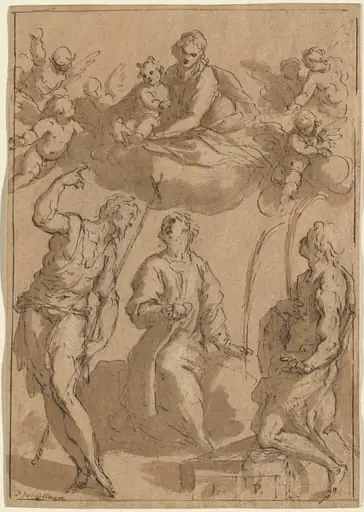 Madonna and Child in Glory with Saints John the Baptist, Stephen, and Lawrence
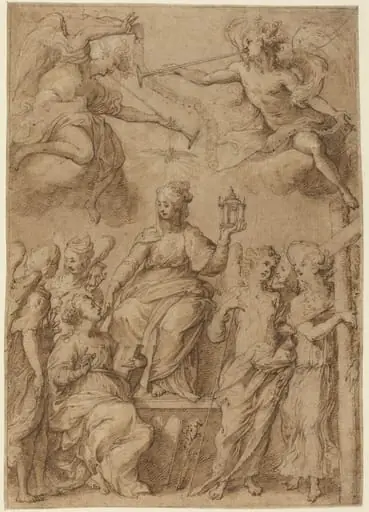 Ecclesia Surrounded by Angels Holding the Instruments of the Passion
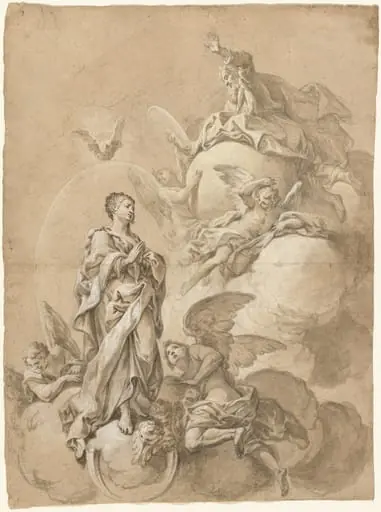 Vision of the Immaculate Conception
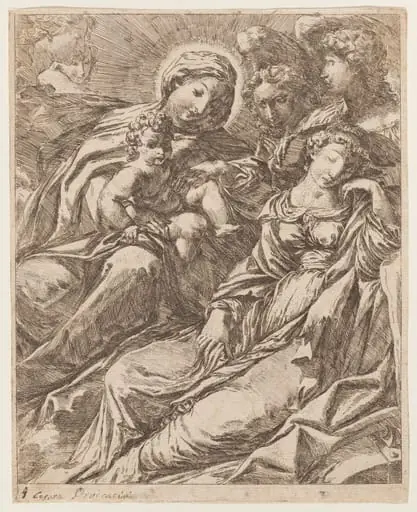 Vision of Saint Catherine of Alexandria
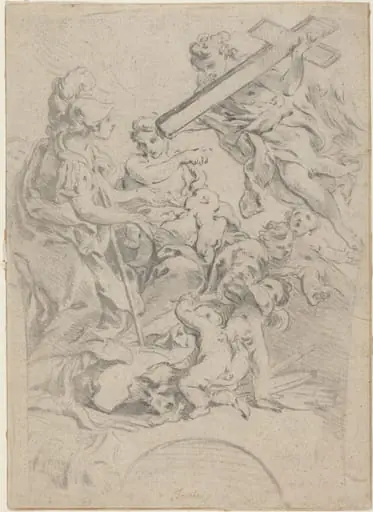 Faith and Charity
 A female saint surrounded by cherubs