Artwork
Natură moartă cu rodie
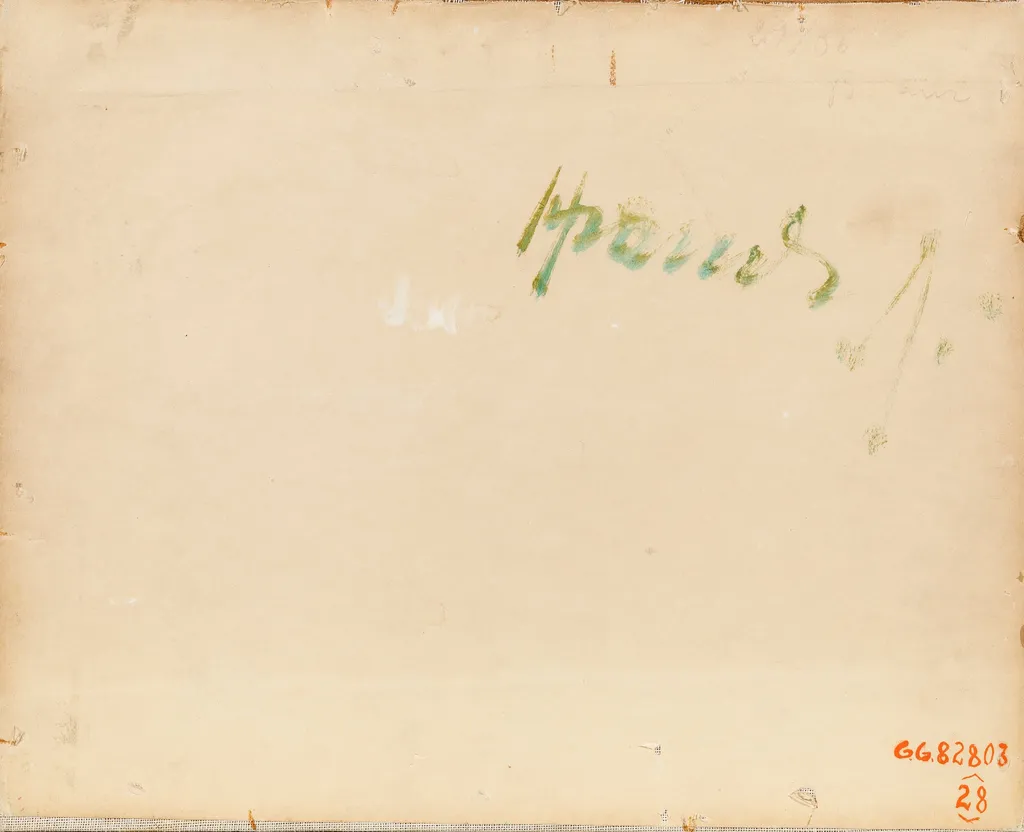
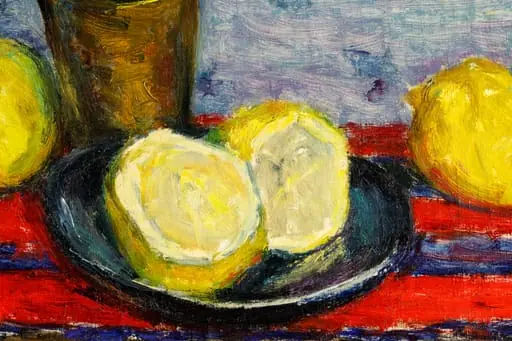
Natură moartă cu rodie is an unspecified painting by Hrandt Avakian. It dates from 1850 and is held in the collection of the National Museum of Art of Romania.
About this work
Overview
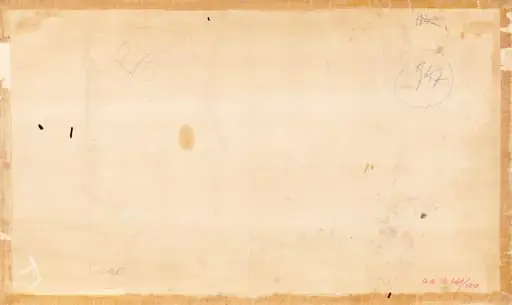
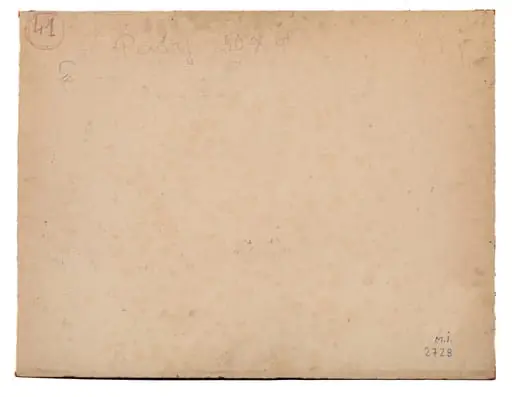
Instead, it presents a nearly empty surface with minimal brushwork, suggesting an abandoned composition or a deliberate reduction of form.
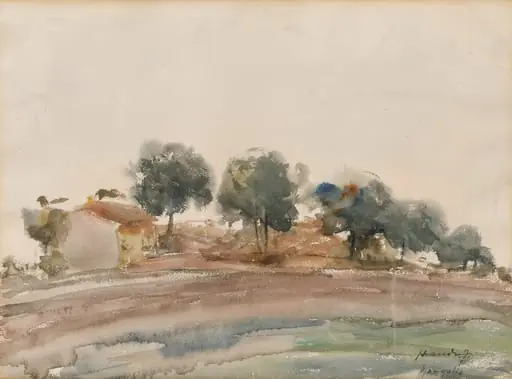
Hrandt Avakian created this work around 1850, titled *Natură moartă cu rodie*, which translates to 'Still Life with Pomegranate.' Yet the canvas holds no fruit, no vessels, no traditional still-life elements. Instead, it presents a nearly empty surface with minimal brushwork, suggesting an abandoned composition or a deliberate reduction of form. The title implies expectation, but the image resists it.
Subject & Meaning
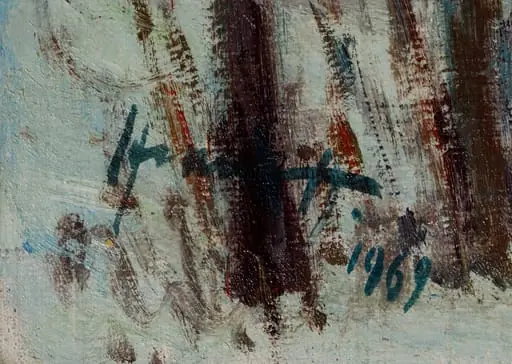
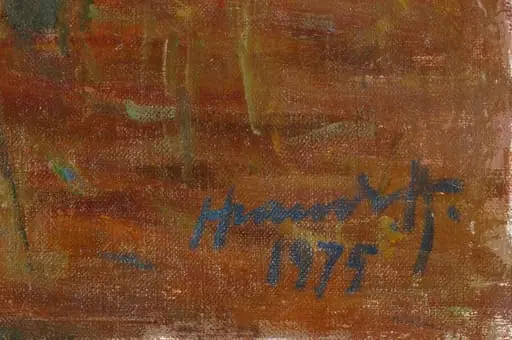
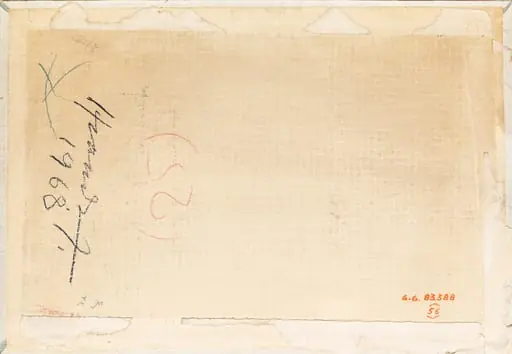
The painting’s title points to a pomegranate, a symbol often associated with abundance or decay in still-life traditions. But the subject is absent. Only a faint, greenish word—possibly 'rodie,' the Romanian term for pomegranate—is visible in the upper right, scrawled loosely as if an afterthought. The absence may signal a meditation on void, memory, or the failure of representation.
Technique & Style
The surface is dominated by a pale, washed-out background with negligible pigment application. The single word is rendered in uneven, almost casual strokes, contrasting with the precision expected in academic still-life painting. The lack of structure, shadow, or detail suggests either deliberate minimalism or an incomplete state, challenging conventions of finish and composition.
History & Provenance
Little is documented about Hrandt Avakian or the painting’s early ownership. Its survival suggests it was preserved despite its unconventional appearance, possibly by a collector drawn to its enigmatic quality. No exhibition history or contemporary reviews are known, leaving its reception and intent largely speculative.
Context
In mid-19th-century Eastern Europe, still-life painting typically emphasized detail and symbolic richness. Avakian’s work diverges sharply from this norm, appearing almost anachronistic. Its emptiness may reflect personal experimentation, a reaction to academic rigidity, or the influence of emerging ideas about art as process rather than product.
Legacy
The painting has no known direct influence on later movements, but its radical simplicity invites reinterpretation through modern lenses of conceptual art. It endures not as a completed object but as a fragment—prompting questions about intention, completion, and the boundaries of what constitutes a work of art.
Artist & collection