Artwork
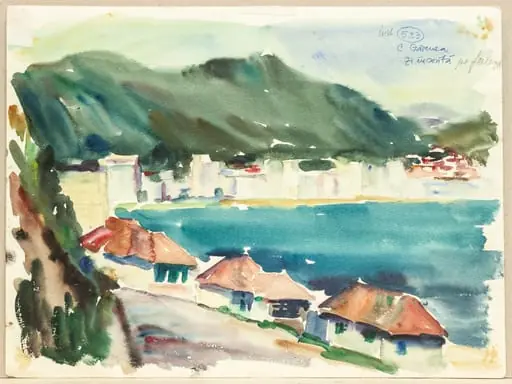
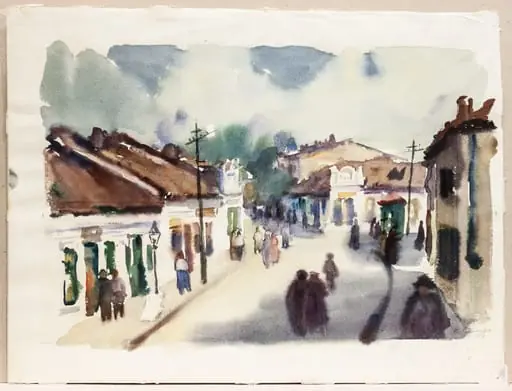
Casă veche din Tulcea
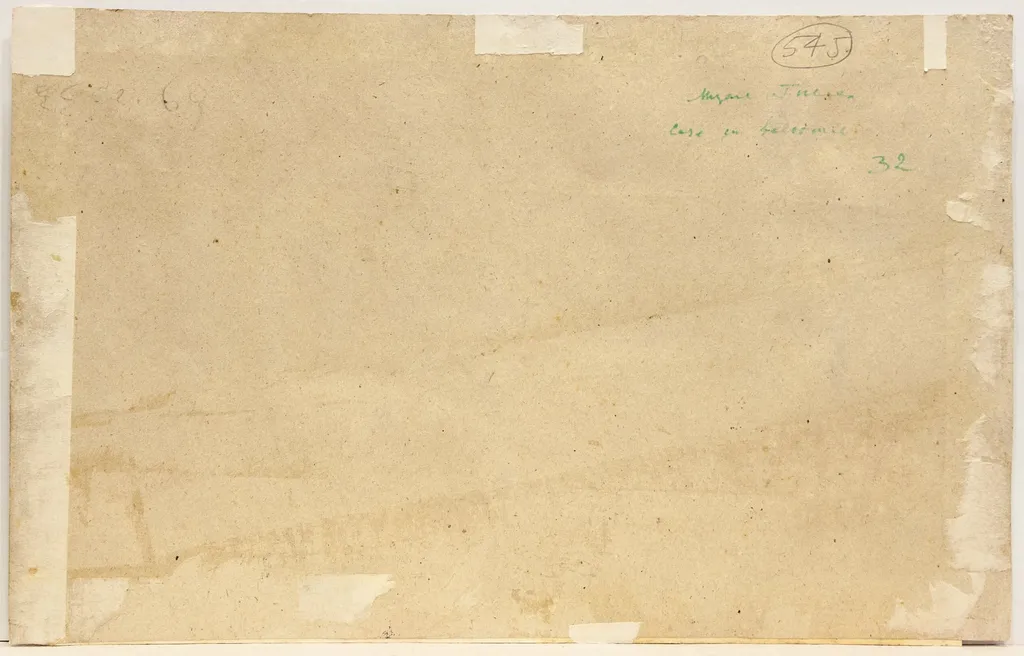
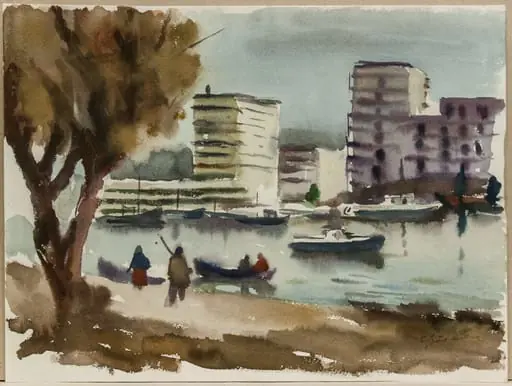
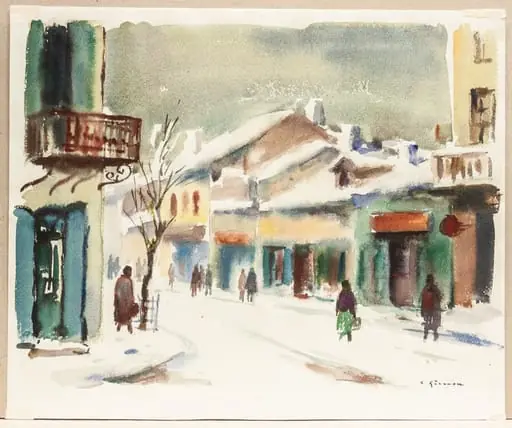
Casă veche din Tulcea is a print by Constantin Găvenea. It dates from 1950 and is held in the collection of the Gavrila Simion Eco-Museum Research Institute Tulcea.
About this work
Overview
It is preserved in the Museum of Ethnography, where its condition reflects decades of handling and environmental exposure.
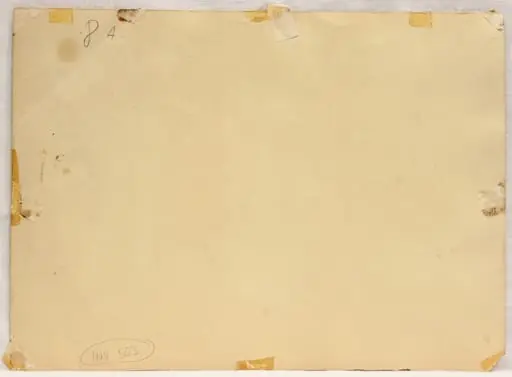
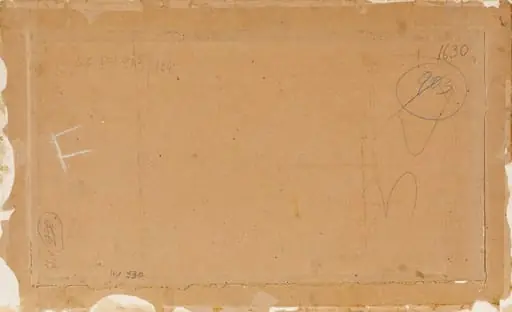
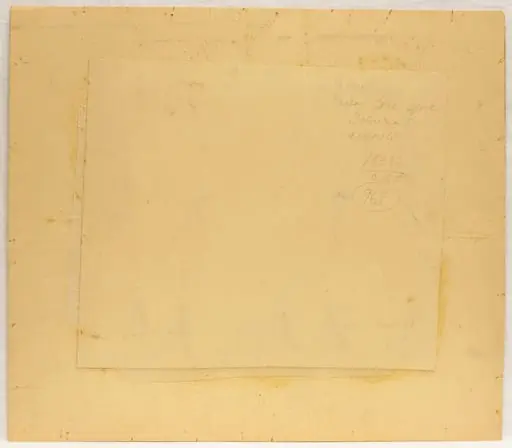
Casă veche din Tulcea is a fragile paper fragment attributed to Romanian artist Constantin Găvenea, dated around 1950. It is preserved in the Museum of Ethnography, where its condition reflects decades of handling and environmental exposure. The surface is worn, with faded edges, minor tears, and visible tape repairs. No image remains—only the faint trace of a title, written in pencil or ink, suggests its original subject.
Subject & Meaning
The title, barely legible, references an old house in Tulcea, a port town on the Danube. Though the visual content is lost, the notation implies a focus on vernacular architecture, likely recorded during fieldwork. Găvenea’s interest in regional structures may have driven this study, part of a broader effort to document everyday Romanian life in the mid-20th century.
Technique & Style
The work appears to be a preliminary sketch or note, executed on thin paper with minimal materials. The presence of handwritten annotations in green and black ink suggests it was used for documentation rather than display. The absence of a finished image points to its function as an observational aid, possibly part of a larger, now-missing portfolio.
History & Provenance
The object entered the Museum of Ethnography’s collection without detailed provenance. Its deteriorated state indicates prolonged storage or use in unstable conditions. The tape repairs and faded script suggest it was handled by researchers or students, possibly during ethnographic surveys in the 1950s. Its survival is likely accidental, preserved as a fragment among other field materials.
Context
In postwar Romania, ethnographic documentation was actively pursued by state-supported institutions. Artists and anthropologists often recorded rural and urban architecture as cultural heritage. Găvenea’s work, though unremarkable in appearance, aligns with this effort—capturing transient structures before they disappeared amid rapid modernization.
Legacy
As a fragmentary artifact, Casă veche din Tulcea offers little in terms of visual detail but serves as a quiet testament to the material practices of mid-century ethnographic work. Its decay mirrors the impermanence of the subjects it once sought to record. It remains in the collection not for its aesthetic value, but as evidence of a method now largely abandoned.
Artist & collection
Museum
Gavrila Simion Eco-Museum Research Institute Tulcea
Continue through works from the same source collection.