Artwork
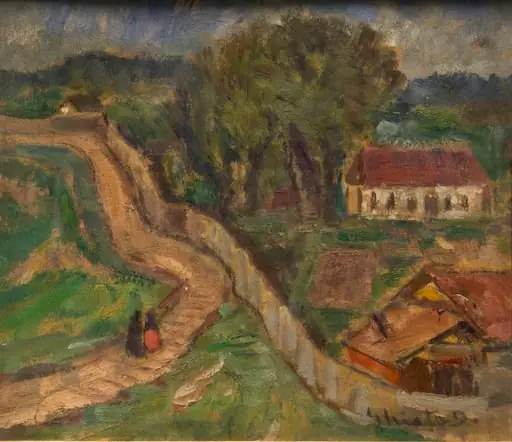
Seară de toamnă (Împrejurimile Buzăului)
Seară de toamnă (Împrejurimile Buzăului) is an unspecified painting by Adam Bălțatu. It dates from 1930 and is held in the collection of the National Museum of Romanian Literature.
About this work
Overview
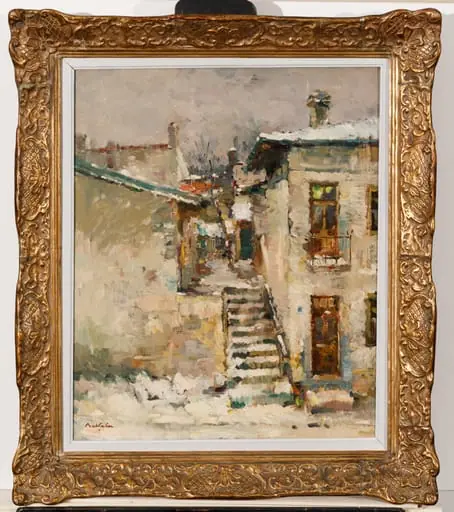
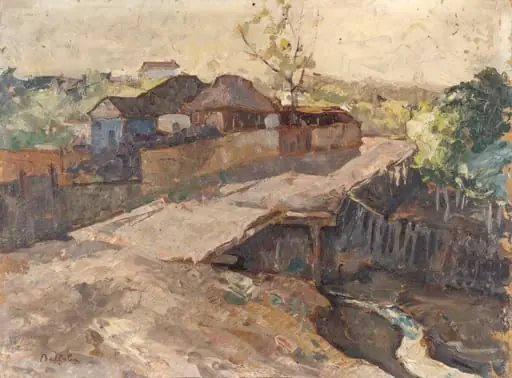
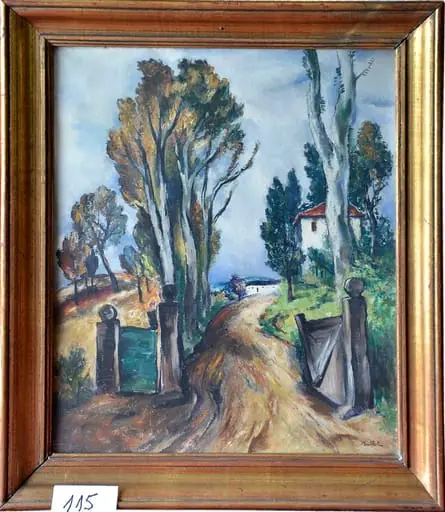
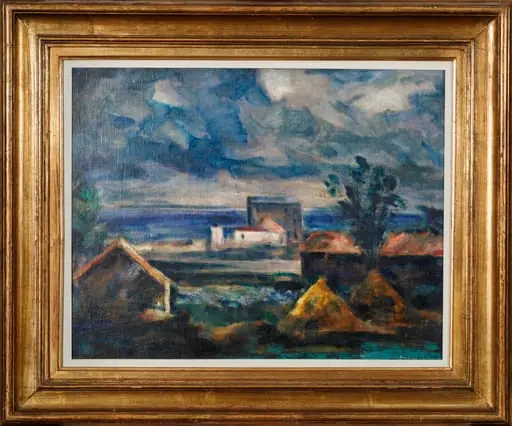
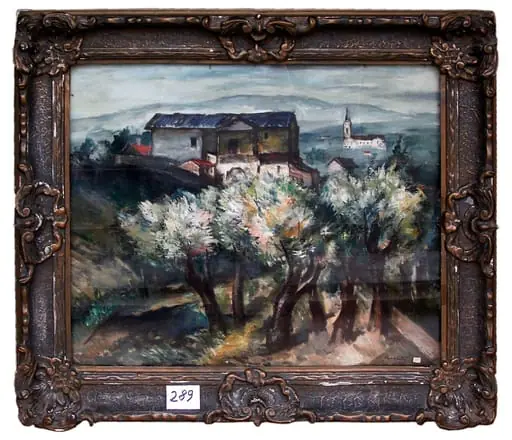
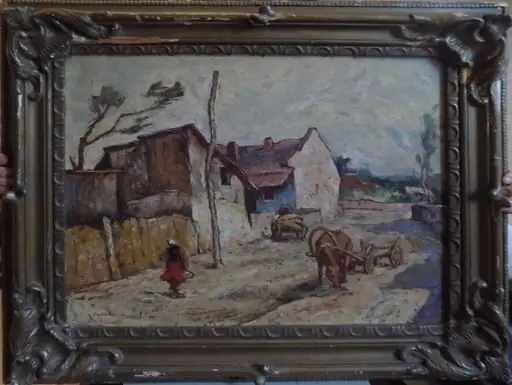
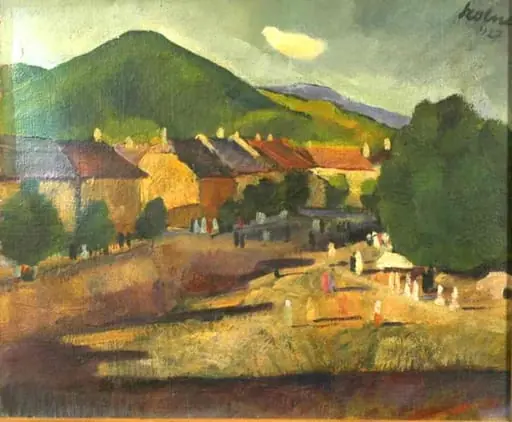
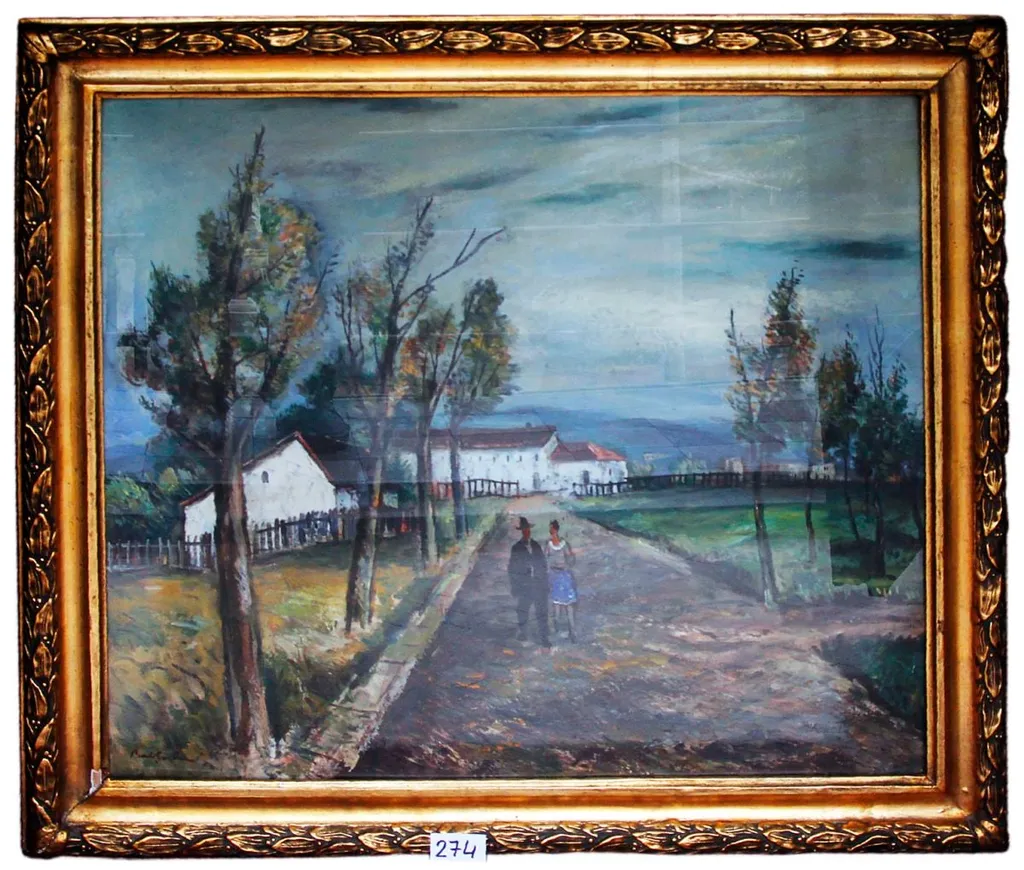
Painted in 1930 by Adam Bălțatu, Seară de toamnă (Împrejurimile Buzăului) depicts a quiet autumnal landscape near the Buzău River.
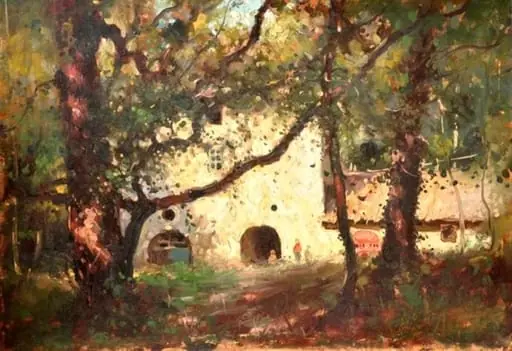
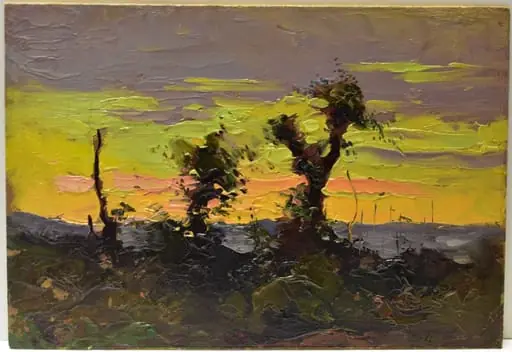
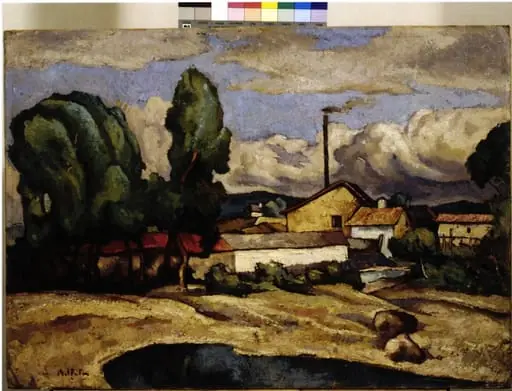
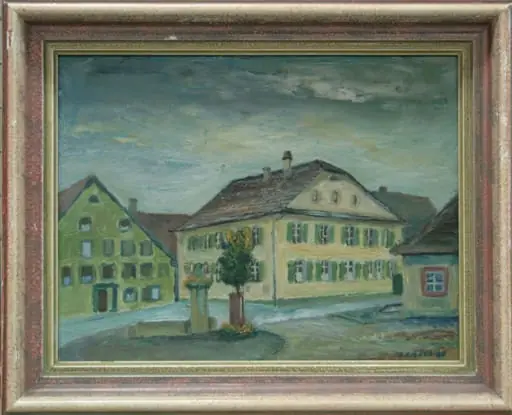
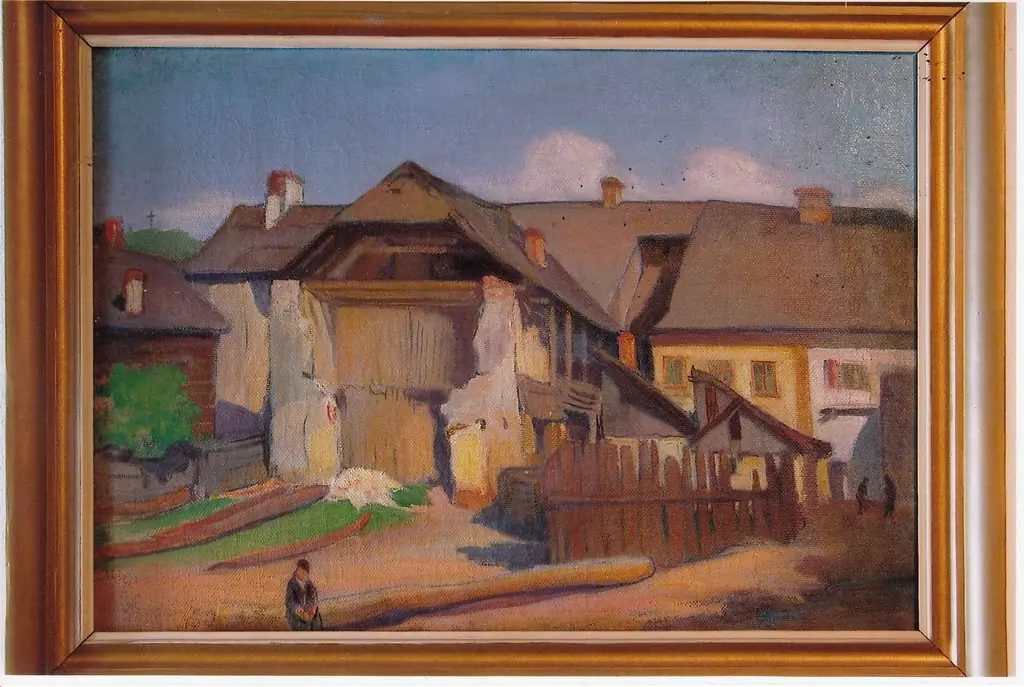
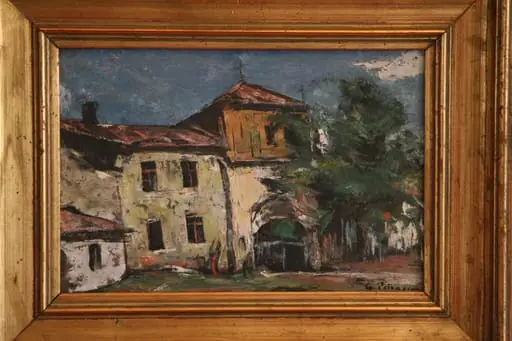
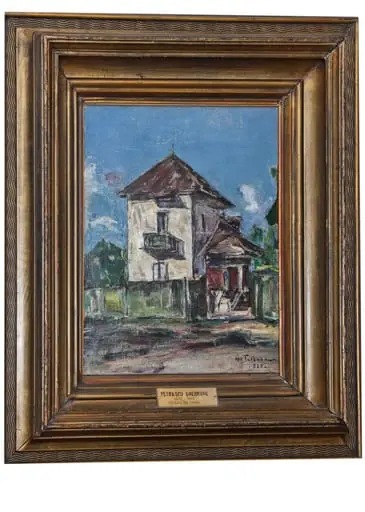
Painted in 1930 by Adam Bălțatu, Seară de toamnă (Împrejurimile Buzăului) depicts a quiet autumnal landscape near the Buzău River. The scene unfolds with calm precision, focusing on a rural path where two figures move slowly under a pale sky. The composition balances open space with grounded elements, evoking stillness without narrative urgency. Bălțatu’s approach favors observation over drama, anchoring the work in the quiet rhythms of everyday rural life.
Subject & Meaning
A man and woman walk side by side along a tree-lined road, their forms small yet deliberate against the landscape. Their presence suggests a moment of shared solitude, unremarkable yet intimate. The autumn setting—bare branches, fading light—hints at transition, not decay. The white buildings in the distance imply habitation, but remain distant, reinforcing the sense of quiet isolation. The scene holds no overt symbolism; its meaning lies in its restraint and attentiveness to ordinary experience.
Technique & Style
Bălțatu employs soft, muted tones to render the autumn atmosphere—pale blues, ochres, and greys dominate. Brushwork is controlled but not rigid, allowing subtle shifts in light to define form. Depth is achieved through atmospheric perspective: foreground details are slightly sharper, while distant structures fade into hazy horizons. Shadows are gentle, never harsh, enhancing the evening’s tranquility. The painting avoids dramatic contrasts, favoring tonal harmony over bold effects.
History & Provenance
Created in 1930, the painting emerged during a period when Romanian artists were increasingly turning to local landscapes as subjects of serious study. Bălțatu, active in the interwar years, was part of this regionalist current. While specific ownership records are limited, the work has remained within Romanian collections, reflecting its recognition as a representative example of early 20th-century Romanian landscape painting. It has been exhibited in regional museums but never gained widespread national prominence.
Context
In the 1930s, Romanian art saw a shift away from urban themes toward rural and natural subjects, influenced by both nationalist sentiment and European realism. Bălțatu’s work aligns with this trend, echoing the quiet lyricism found in the paintings of his contemporaries like Ștefan Dimitrescu. Unlike more stylized modernists, he favored direct observation, grounding his scenes in the specific topography and light of eastern Romania. This painting reflects a broader cultural interest in preserving the visual identity of the countryside.
Legacy
Seară de toamnă remains a modest but enduring example of interwar Romanian landscape painting. It has not been widely reproduced or studied internationally, but within Romania, it is acknowledged for its sensitivity to light and place. Bălțatu’s restrained style, free from overt sentimentality, offers a quiet counterpoint to more dramatic or symbolic works of the era. The painting endures as a record of a specific time and place, valued for its honesty rather than its innovation.
Artist & collection

Museum
National Museum of Romanian Literature
Continue through works from the same source collection.