Artwork
Nud în fotoliu roșu
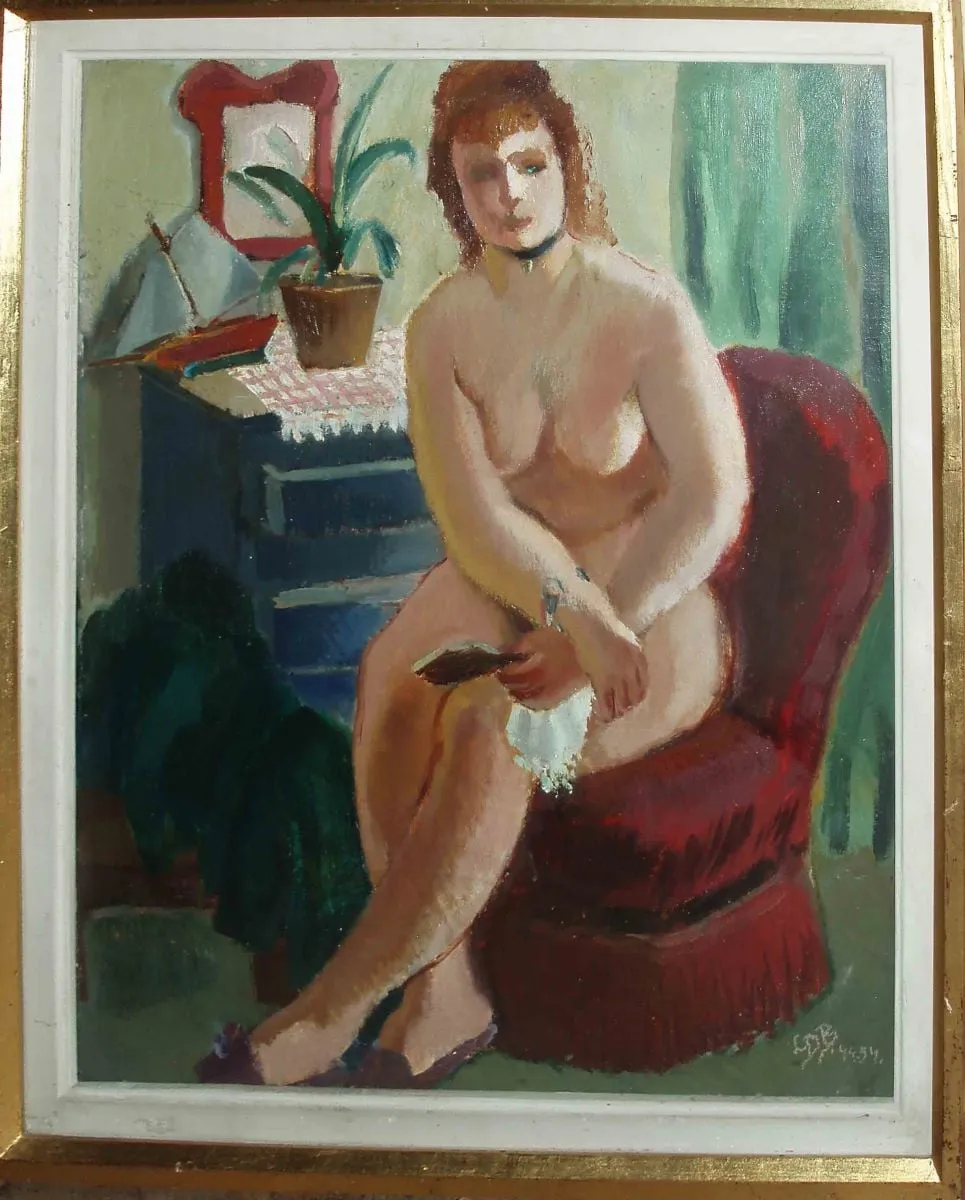
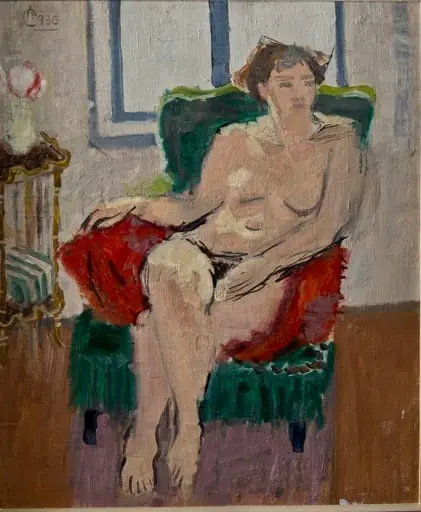
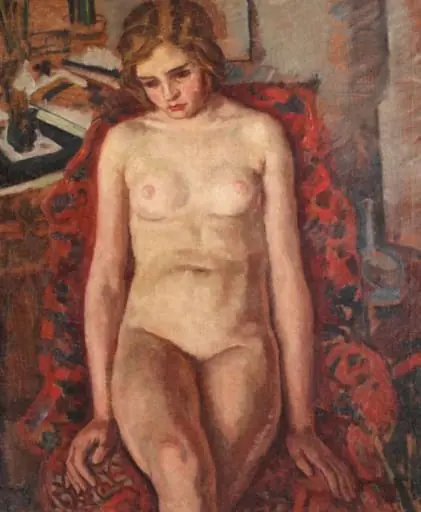
Nud în fotoliu roșu is an unspecified painting by Lucia Dem-Bălăcescu. It is held in the collection of the Bucharest Municipality Museum. This painting presents a seated nude woman in a red armchair, gazing directly at the viewer.
About this work
Overview
Warm tones dominate the palette, particularly the rich red of the chair, which enhances the quiet intimacy of the scene.
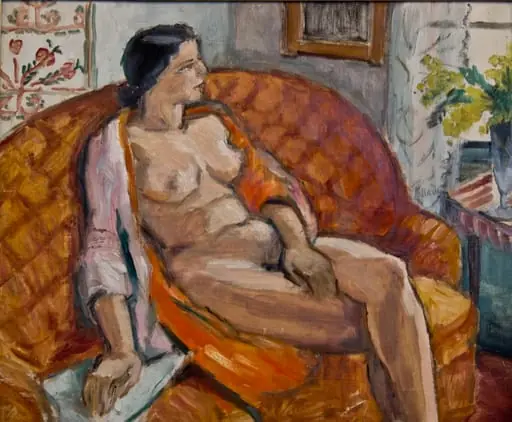
This painting presents a seated nude woman in a red armchair, gazing directly at the viewer. The setting is a modest interior with a dresser, a potted plant, and a wall mirror. Warm tones dominate the palette, particularly the rich red of the chair, which enhances the quiet intimacy of the scene. Her posture is relaxed, hands resting on a closed book, suggesting a moment of stillness rather than performance.
Subject & Meaning
The figure is neither idealized nor eroticized; she appears self-possessed, engaged in private contemplation. The book in her hands implies intellectual presence, countering traditional passive depictions of the female nude. Her direct gaze invites the viewer into a space of mutual recognition, not objectification. The domestic setting grounds the figure in everyday reality, emphasizing dignity over spectacle.
Technique & Style
Brushwork is restrained and smooth, favoring soft transitions over dramatic contrast. The red chair is rendered with subtle variations in hue, creating depth without harsh highlights. Skin tones are warm and naturalistic, harmonizing with the surrounding furnishings. The mirror reflects partial background elements, adding spatial complexity without distracting from the central figure.
History & Provenance
The painting’s origin and artist remain undocumented in available records. No exhibition history or collector lineage is publicly verified. It appears to be a 20th-century work, likely created in a context where domestic interiors and unidealized nudes were gaining artistic legitimacy, though it lacks association with major movements or known artists.
Context
In early-to-mid 20th-century art, depictions of women in private, non-mythological settings became more common, reflecting shifting social norms. This work aligns with a quiet trend toward realism and psychological presence in female portraiture, distinct from academic nudes or modernist abstraction. The inclusion of everyday objects signals a move toward authenticity in representation.
Legacy
Though not widely exhibited or reproduced, the painting contributes to a broader, understudied body of work that reimagines the nude as a subject of quiet autonomy. Its emphasis on calmness and domesticity offers a counterpoint to more sensationalized portrayals, quietly expanding the possibilities of how the female form can be represented in interior spaces.