Artwork
Vara
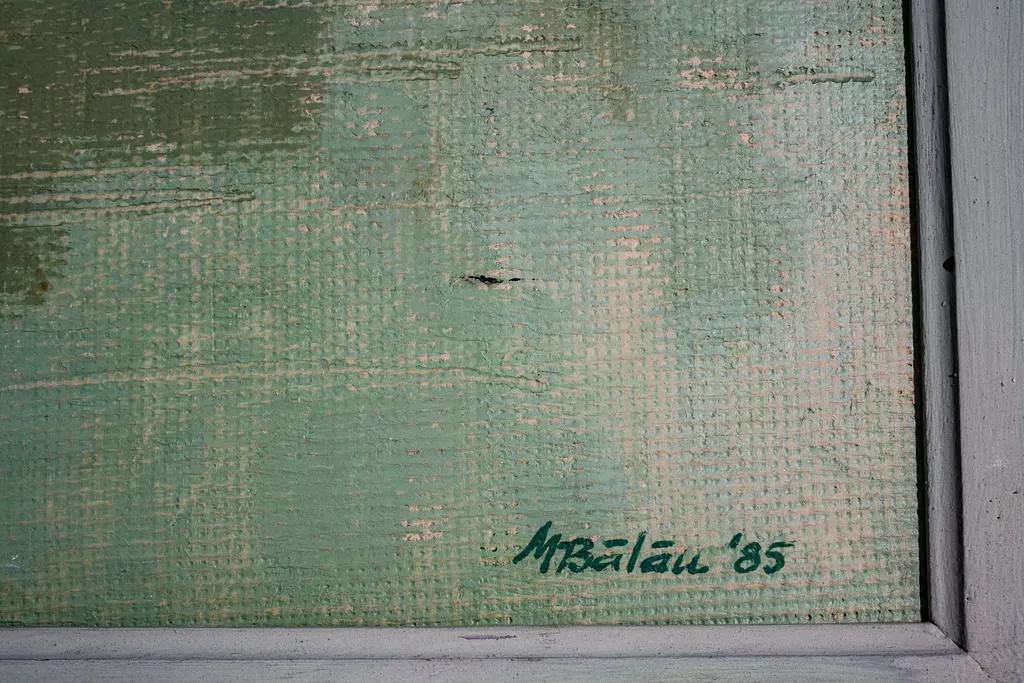
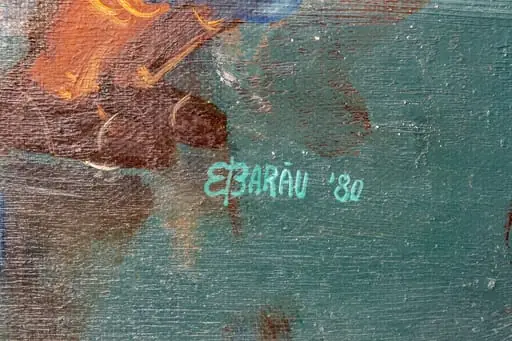
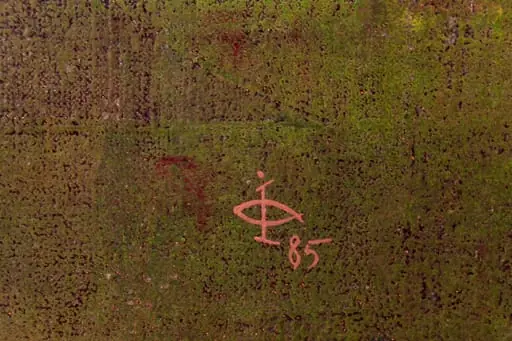
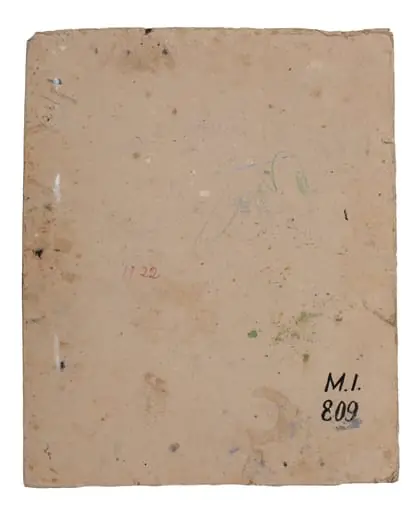
Vara is a print by Mircea Bălău. It is held in the collection of the Gavrila Simion Eco-Museum Research Institute Tulcea. This small-scale work presents a fragmented surface of aged green pigment, its layers visibly degraded through time.
About this work
Overview
The texture suggests repeated physical handling or environmental exposure, with flakes and fissures revealing underlying substrates.
This small-scale work presents a fragmented surface of aged green pigment, its layers visibly degraded through time. The texture suggests repeated physical handling or environmental exposure, with flakes and fissures revealing underlying substrates. A handwritten signature in blue ink, dated 1985, appears in the lower right corner, identifying the artist as M. Bălău. The format and condition imply it may be a printed or drawn study rather than a finished painting.
Subject & Meaning
No figurative or symbolic imagery is present; the subject is the material itself—the decay of paint over time. The work emphasizes transience and the physicality of artistic surfaces, inviting attention to erosion as a form of record. The signature anchors the piece to a specific maker and moment, contrasting the passage of time with the permanence of authorship.
Technique & Style
The surface shows signs of layered application and subsequent flaking, suggesting the use of oil or acrylic paint applied unevenly, possibly over a paper or cardboard support. The deliberate exposure of underlying layers indicates an interest in material history rather than aesthetic finish. The hand-signed mark aligns with informal or experimental practices common in post-1970s Romanian art circles.
History & Provenance
The signature and date point to creation in 1985 by M. Bălău, likely during a period of artistic experimentation under Romania’s communist regime, when access to materials was limited. The work’s fragile state suggests it was not preserved in a controlled environment, possibly kept in a studio or private collection. Its survival as a fragment implies informal circulation rather than institutional acquisition.
Context
In 1980s Romania, many artists turned to humble materials and process-driven methods due to scarcity and censorship. Works like this, focused on texture and decay, subtly resisted official aesthetics by valuing imperfection and personal gesture. The absence of political imagery does not imply neutrality; the very act of documenting wear became a quiet act of authenticity.
Legacy
This fragment exemplifies a broader tendency in late socialist-era Romanian art to prioritize material truth over representation. Though not widely exhibited, such works inform contemporary discussions on ephemerality and the archive. Its survival as a weathered object, rather than a polished artifact, continues to challenge conventional notions of artistic value.
Artist & collection
Artist
Romanian artist Mircea Bălău made expressive scenes of everyday life in the 1920s–40s, blending folk detail with bold shapes.
Museum
Gavrila Simion Eco-Museum Research Institute Tulcea
Continue through works from the same source collection.