Artwork
Motiv decorativ I
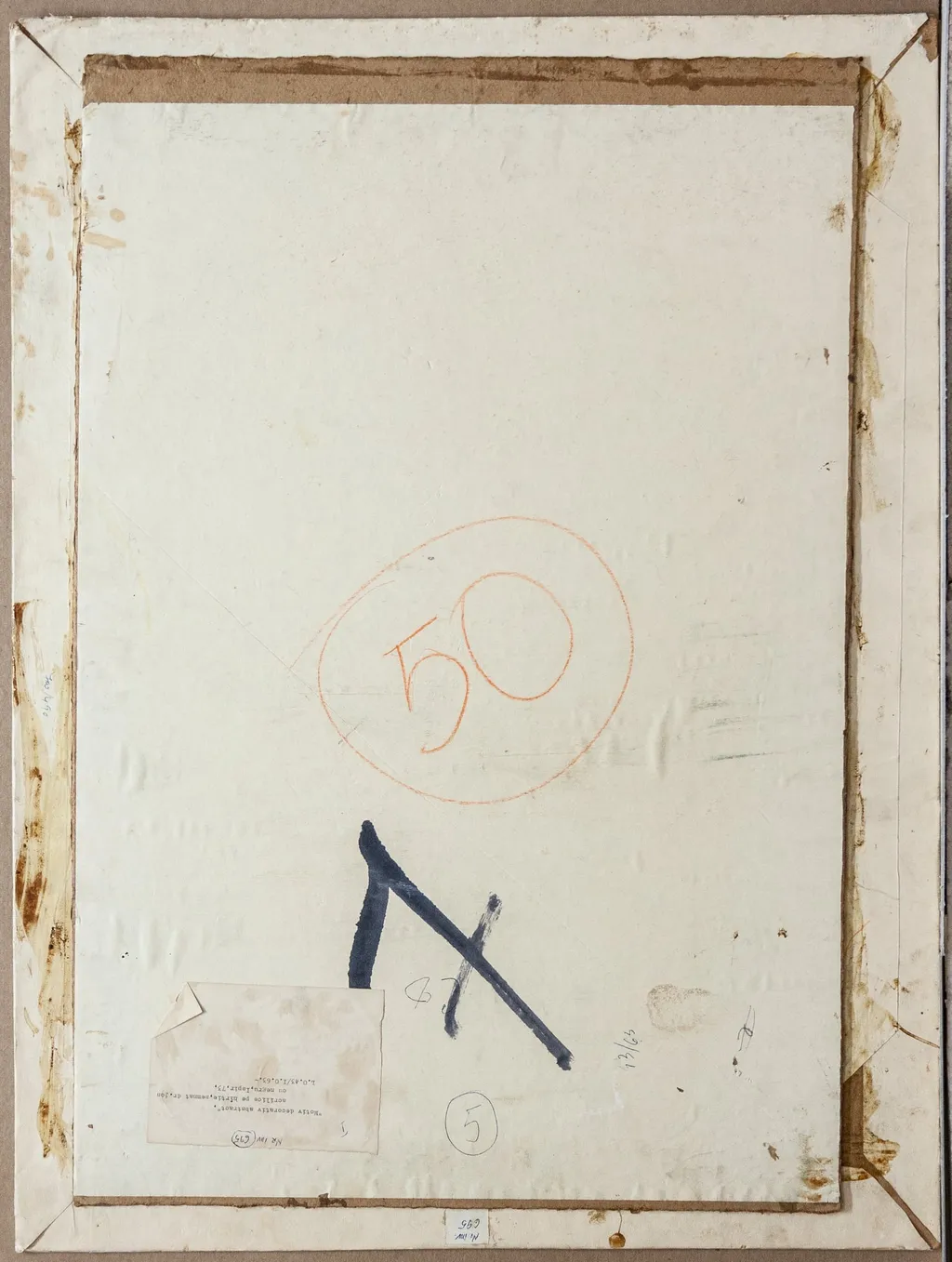
Motiv decorativ I is a print by Eugen Ispir. It dates from 1950 and is held in the collection of the Gavrila Simion Eco-Museum Research Institute Tulcea.
About this work
Overview
It is part of the Museum of Ethnography’s collection, where it is stored as a study or fragment rather than a finished composition.
Motiv decorativ I is a small, minimally marked canvas from around 1950, attributed to Romanian artist Eugen Ispir. It is part of the Museum of Ethnography’s collection, where it is stored as a study or fragment rather than a finished composition. The surface is largely blank, with only faint traces of pigment and a handwritten label, suggesting its role in documentation or cataloging rather than public display.
Subject & Meaning
The work contains no representational imagery. A faded orange circle bearing the number '159' and a crude black X are the only deliberate marks. These may serve as identifiers or annotations within a broader system of classification, possibly linked to folk motifs collected by Ispir. The absence of decorative patterns implies the piece functions as a record, not an artistic statement.
Technique & Style
The canvas is treated with restraint: thin washes of orange pigment and a single bold black stroke dominate. The edges show signs of age—brown discoloration, minor abrasions, and incidental scribbles. The label affixed to the surface, handwritten in small script, indicates a methodical, archival approach. The style reflects utility over aesthetics, prioritizing clarity and cataloging over visual impact.
History & Provenance
The work entered the Museum of Ethnography’s holdings as part of Eugen Ispir’s personal archive, likely collected during his fieldwork in Romanian rural communities. Its condition—worn edges, faded markings, and attached label—suggests it was handled frequently, possibly used as a reference during research. No other works from this series are publicly documented, leaving its original context incomplete.
Context
In the early 1950s, Ispir was engaged in documenting traditional Romanian decorative patterns, often under state-sponsored ethnographic initiatives. This fragment may have been one of many used to catalog motifs from textiles or woodcarvings. Its minimalism reflects the practical needs of fieldwork: quick notation, identification, and comparison rather than artistic expression.
Legacy
Motiv decorativ I survives as a quiet artifact of mid-century ethnographic practice. It offers insight into the methods used to systematize folk art, revealing how cultural records were compiled through annotation and abstraction. Though unassuming, it preserves the procedural rigor behind the preservation of heritage, now visible only in its sparse traces.
Artist & collection
Artist
Eugen Ispir painted quiet scenes of places: orchards, riverbanks, Paris streets, and Split’s harbor.
Museum
Gavrila Simion Eco-Museum Research Institute Tulcea
Continue through works from the same source collection.
 Tema este redată sub forma "Ospitalității lui Avraam", care se petrece în fața cortului lui Avraam. În prim plan cei trei îngeri așezați la o masă semicirculară. În planul doi, Avraam și Sara îi slujesc. Pe masă se află câte o azimă în fața tinerilor, în centru un potir. Îngerii sunt așezați simetric, unul în stânga, altul în dreapta, celălalt în spatele mesei. Înveșmântați cu chiton și himation, în culori complementare(roșu și bleumarin cei din față, posibil repictare, nuanțe mai deschise). Chipurile copilărești, asemănătoare, privirea melancolică, plete castanii lăsate pe spate. Aripi mari și aureole mărginite cu alb.Îngerii din față cu picioarele goale pe un subpedum. În planul doi Avraam,(în vârstă, cu chiton roșu și himation albastru) și Sara înveșmântată cu maforion roșu stins. Scena se proiectează pe fondul bleu(cerul) completat cu elemente de arhitectură. Tehnica picturală - iluminare treptată, chipurile expresive, proporțiile respectate. Compoziție echilibrată, cromatica dominată de culorile reci, cu nuanțe accentuate de culorile pe bază de ulei. Chenar lat de culoare brun roșcat, care se regăsește și pe spatele icoanei. Această culoare ulterioară a acoperit urmele de flacără de lumânare sau candelă de pe fața icoanei. După înlocuirea "e"-ului final cu "i" ar putea fi atribuită spațiului Moldovei.
 Compoziție cu ruine și păsări
 Pasăre
 Icoana îi redă 1/1 pe sfinții Nicolae și pe arhidiaconul Ștefan, în picioare, ușor semiprofil. Asocierea celor doi sfinți nu are o motivație iconografică, probabil a fost dorința comanditarului. Sfântul Nicoale este reprezentat în veșminte arhierești, fără mitră pe cap(ipostaza de vară), binecuvântând cu mâna dreaptă, în stânga ținând Evanghelia închisă. Are părul și barba cărunte, ondulate, fruntea înaltă, trăsăturile fine. Înveșmântat cu sacos auriu tivit cu galon cu șir de perle și pietre scumpe, mânecuțe și galon la gât . Epitrahil alb, cu cruci drepte și motiv scalariform în partea de jos.Omoforul mare, de culoare roșie și bedernița romboidală atârnată de mâna stângă. Aureole trasate cu o linie albă îngustă. În pandant, arhidiaconul Ștefan, primul dintre martiri, ușor întors către sfântul Nicoale, cădelnițând cu o mână, cu cealaltă ținând la piept o biserică având trei turle înalte. Redat tânăr, fără barbă, în veșminte diaconești:stihar lung, bogat ornamentat cu motive florale mari, pe fond alb-albăstrui. Fondul icoanei auriu pal, cu irizări. Median, pe latura de sus, soarele?(sau mandorla de raze a Duhului Sfânt) Paleta cromatică dominată de nuanțele de auriu, restul culorilor(verde, cafeniu, negru, alb, fiind în armonie cu acest fond. Desenul este fin, proporțiile bizantine respectate, compoziția echilibrată, armonioasă. Inscripția în partea de sus, cu chirilice cu caractere specifice Munteniei.
 Spațiul icoanei este împărțit în 13 casete dreptunghiulare cu scene din viața celor doi sfinți. Scena centrală, cu inscripție de culoare roșie indicând tema, mai mare ca dimensiuni, o reprezintă pe Sfânta Ulita cu o cruce în mâna dreaptă și un rotulus desfășurat în stânga, împreună cu fiul ei Kirik, de asemenea purtând o cruce. Începând din colțul stânga sus, în ordinea narațiunii, sunt reprezentate secvențe din viața sfintei de la nașterea și botezul fiului ei Kirik, trecând prin momentul Judecății în fața ighemonului Alexandru, moartea lui Kirik și diferitele episoade de martiraj până la decapitarea Sf. Ulita. Fiecare scenă reprezentată abundă de inscripții, litere negre pe fond auriu. Cromatica: Fond auriu, desen cu roșu, verde, ocru-galben, alb, negru; Spatele icoanei vopsit cu verde; Prezintă exfolieri, arsuri, zgârieturi a stratului pictural.
 Reproducere pe lemn, reprezentând pe Taras Sevcenko (1814-1861), poetul național al Ucrainei, Moscova, 1985
 Peisaj citadin
 Flori albastre și albe pe fond galben
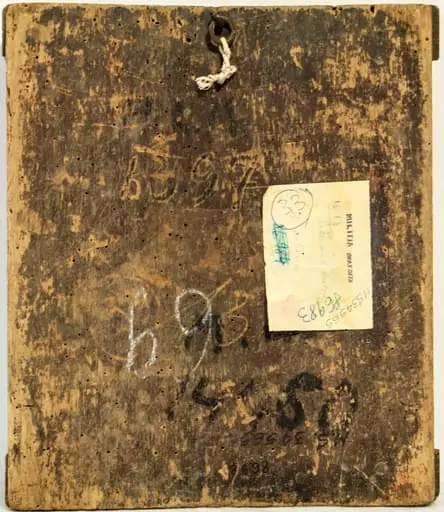 Icoana este încadrată de un chenar lat (ocru, delimitat de o linie grena). În centrul spațiului pictural sfântul în picioare, ținând un rotulus cu inscripții în limba slavonă în mâna stângă, cu dreapta binecuvântează într-un gest amplu, lateral. Maniera bizantină a redării personajului se completează cu peisajul în manieră romantică ce îl încadrează(un râu lat curgând în meandre printre coline înverzite, o luntre cu un vâslaș în josul râului, creste muntoase în depărtare). Chipul grav, redat cu minuțiozitate, cu multiple riduri sub ochi și pe fruntea înaltă, nas subțire și fin, mustață și barbă lungă până la brâu, executat cu multă migală în mici bucle, carnația măslinie, gura mică cu buze roșii. Înveșmântat cu cămașă grena cu drapaj, aurie, epitrahilul arhieresc negru cu motive roșii, felon vișiniu. Deasupra capului Arhiereului, depășind chenarul, este reprezentat Iisus Hristos cu nimb cruciger(mahrama Veronicăi, sfântul Keramion) Inscripția de pe rotulus scrisă în limba slavă veche are prima literă de culoare roșie, restul cu negru: "Nu vă întristați voi toți frații mei, să ne dea Domul Dumnezeu înțelepciune și vom găsi în El mântuirea", Pe spatele icoanei sunt incizate prin scobire cu dalta cifre arabe 1397 (?). Icoana prezintă strat de pictură și foița de fondul icoanei și a aureolei sfântului exfoliate, zgârieturi, porțiuni de pictură, pânză și grund lipsă (chenarul este distrus în proporție de 80 %), două găuri în zona capului unde ar fi trebuit să fie urechile.
 FAMILIE DE ROMÂNI MACEDONENI
 Canal la Calica
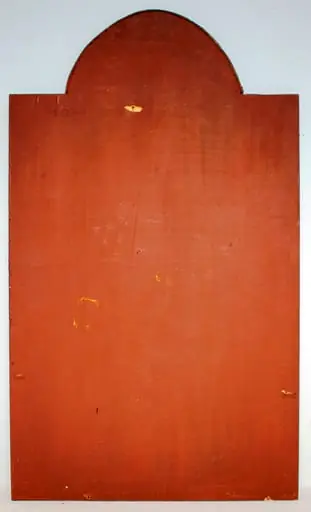 Piesa este o icoană împărătească ce a fost amplasată în biserică, în cadrul iconostasului sau în interiorul unuei troițe. Sunt redați, conform canoanelor bizantine, sfinții împărați Constatin și Elena, în picioare, sub brațele crucii Răstignirii descoperită de împărăteasa Elena la Ierusalim. Cei doi împărați sunt îmbrăcați în veșminte împărătești, cu coroane pe cap. Împăratul tânăr, cu părul castaniu, ondulat, înveșmântat cu mantie roșie decorată cu motive fitomorfe stilizate, tunică bleu cu galon lat, decorat cu motive fitomorfe. În mâna dreaptă ține un sceptru. Împărăteasa poartă mantie verde și tunica roșie, pe sub coroană o eșarfă albă.În mâna stângă ține cuiele Răstignirii. Pe capătul crucii se află inscripția INRI, iar peste brațele orizontale o eșarfă albă pe care este scris textul "Prin acest semn vei învinge", care i s-a revelat împăratului Constantin. Fond bleu închis, cu o linie de chenar albă, subțire, la fel cu inscripția scrisă în partea de sus. Paleta cromatică este variată, dar nu foarte armonioasă, culorile reci. Pictura este realizată de un pictor contemporan cu școală, autorul picturii unor biserici și icoane. Rama este profilată, lată, alcătuită din patru stinghii îmbinate oblic la colțuri, bătută în cuie metalice,culoare brun roșcat. În partea de sus este adăugată o porțiune semicirculară, cu margine din placaj îngust, montat transversal. Pe fondul bleu închis al acesteia este pictat un heruvim cu aripile întinse, chip sobru, cu păr blond, ochi negri, gura roșie. În partea de jos a piesei, două cuie mari de fier cu care era fixată. Face parte din același iconostas sau troiță cu nr. 50546.