Artwork
Apus în Deltă
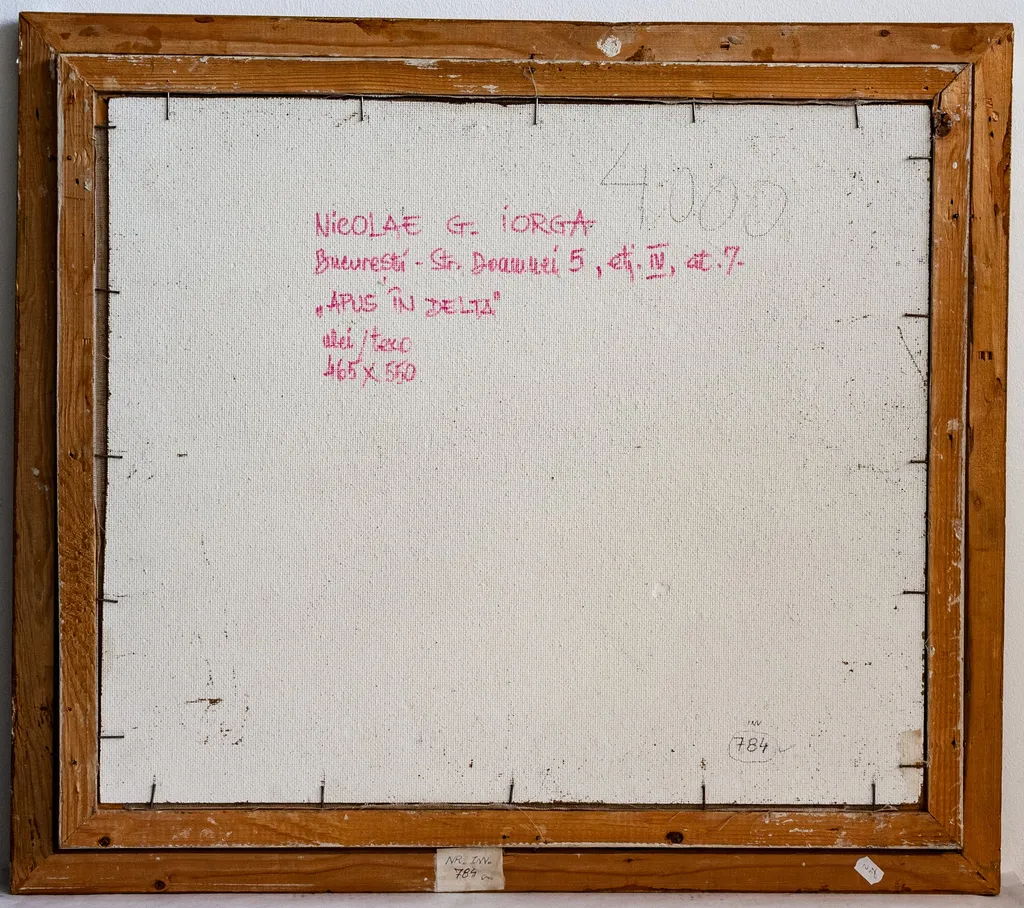
Apus în Deltă is a print by Nicolae Iorga. It dates from 1915 and is held in the collection of the Gavrila Simion Eco-Museum Research Institute Tulcea.
About this work
Overview
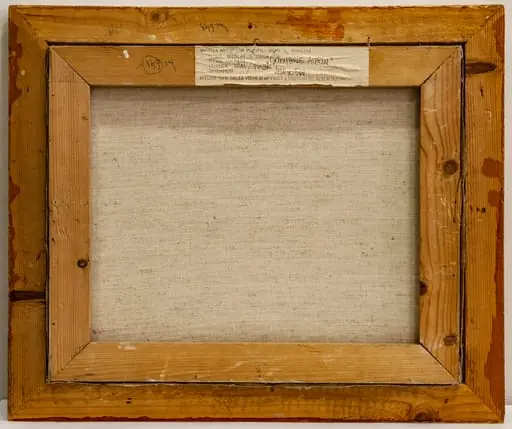
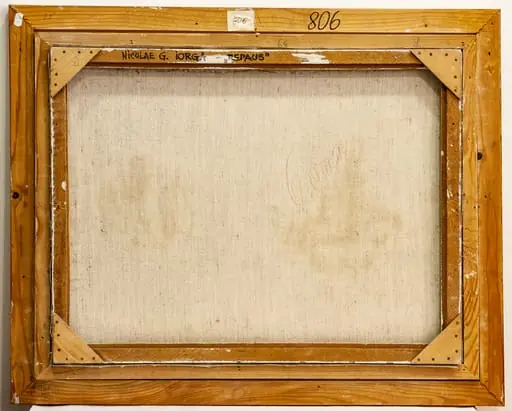
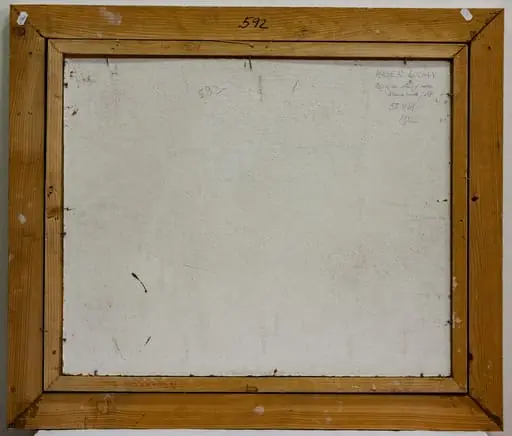
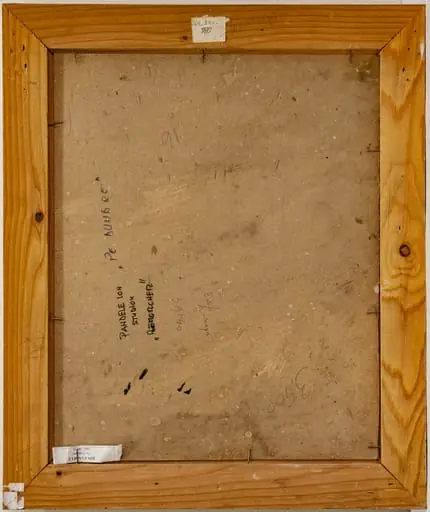
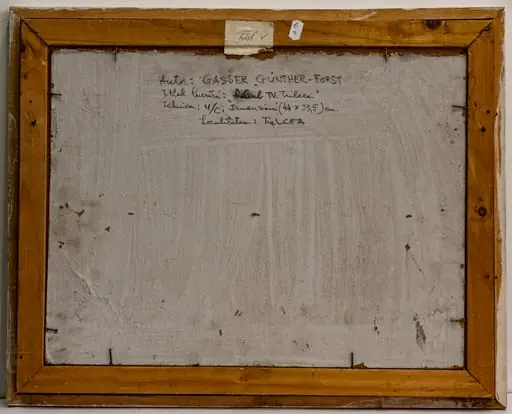
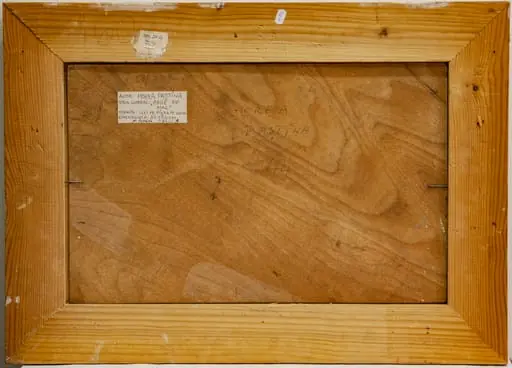
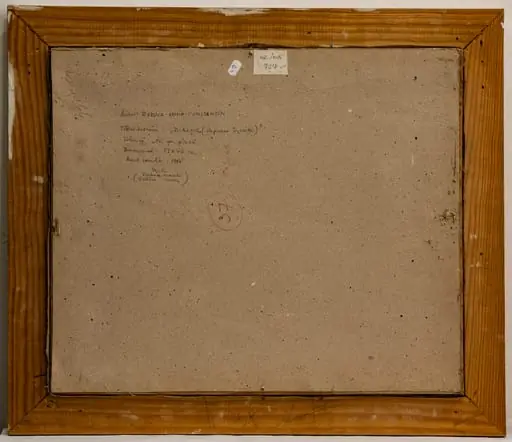
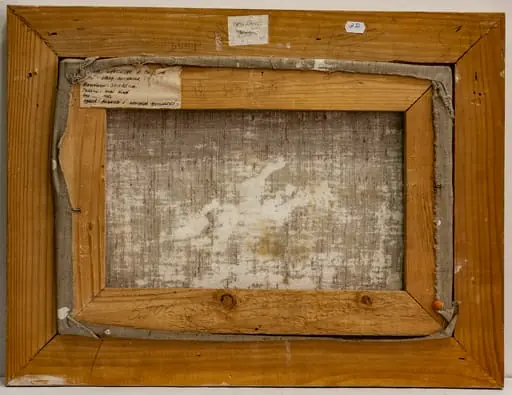
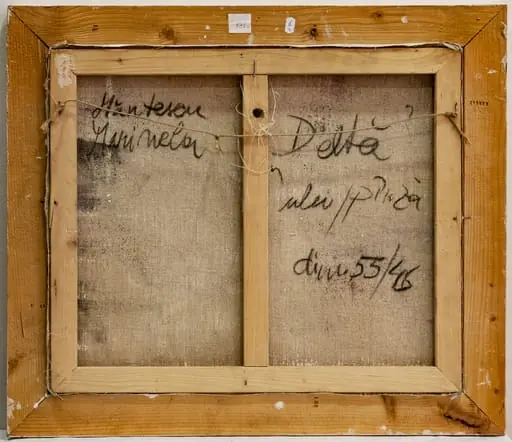
Created around 1915 by Nicolae Iorga, this work consists of an unmarked white canvas within a modest, lightly worn wooden frame. No paint or image appears on the surface. Handwritten annotations in red ink on the reverse identify the artist and title, indicating the piece was intended as a finished work but remained incomplete, leaving its purpose and meaning unresolved.
Subject & Meaning
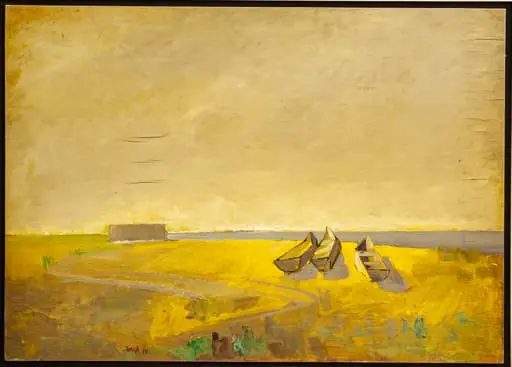
The title, meaning 'Sunset in the Delta,' suggests a landscape theme, yet the canvas holds no trace of it.
The absence of visual content challenges conventional expectations of representation. The title, meaning 'Sunset in the Delta,' suggests a landscape theme, yet the canvas holds no trace of it. This void may reflect artistic hesitation, material constraints, or a deliberate act of subtraction—inviting speculation about intention, absence, or the limits of expression in early 20th-century Romanian art.
Technique & Style
No painting technique is evident on the surface. The work’s materiality is defined by its raw canvas and simple frame, with no brushwork, composition, or color to analyze. The handwritten notes on the reverse, in red ink, are the only marks of authorship, functioning more as documentation than artistic expression, shifting focus from visual form to process and intent.
History & Provenance
The work resides in the Museum of Ethnography, suggesting its significance lies beyond aesthetics—perhaps as a record of artistic practice or personal history. Its preservation implies recognition of its evidentiary value: as an unfinished artifact, it offers insight into Iorga’s working methods, though no record exists of its creation or abandonment.
Context
In early 20th-century Romania, artists often engaged with national identity and rural life, themes reflected in Iorga’s known writings. This unexecuted canvas may relate to those interests, yet its emptiness contrasts with his documented productivity. It stands as a quiet counterpoint to the era’s vibrant visual culture, hinting at personal or external interruptions in creative workflow.
Legacy
As an artifact of incompleteness, the work resists traditional artistic evaluation. Its legacy lies in its silence—prompting questions about authorship, intention, and the boundaries of art. Preserved as part of a museum collection, it functions less as a finished piece and more as a fragment of an unseen process, offering a rare glimpse into an artist’s unfulfilled vision.
Artist & collection

Artist
Nicolae Iorga was a Romanian historian, politician, literary critic, memoirist, albanologist, poet and playwright.
Museum
Gavrila Simion Eco-Museum Research Institute Tulcea
Continue through works from the same source collection.