Artwork
Tăietor de lemne
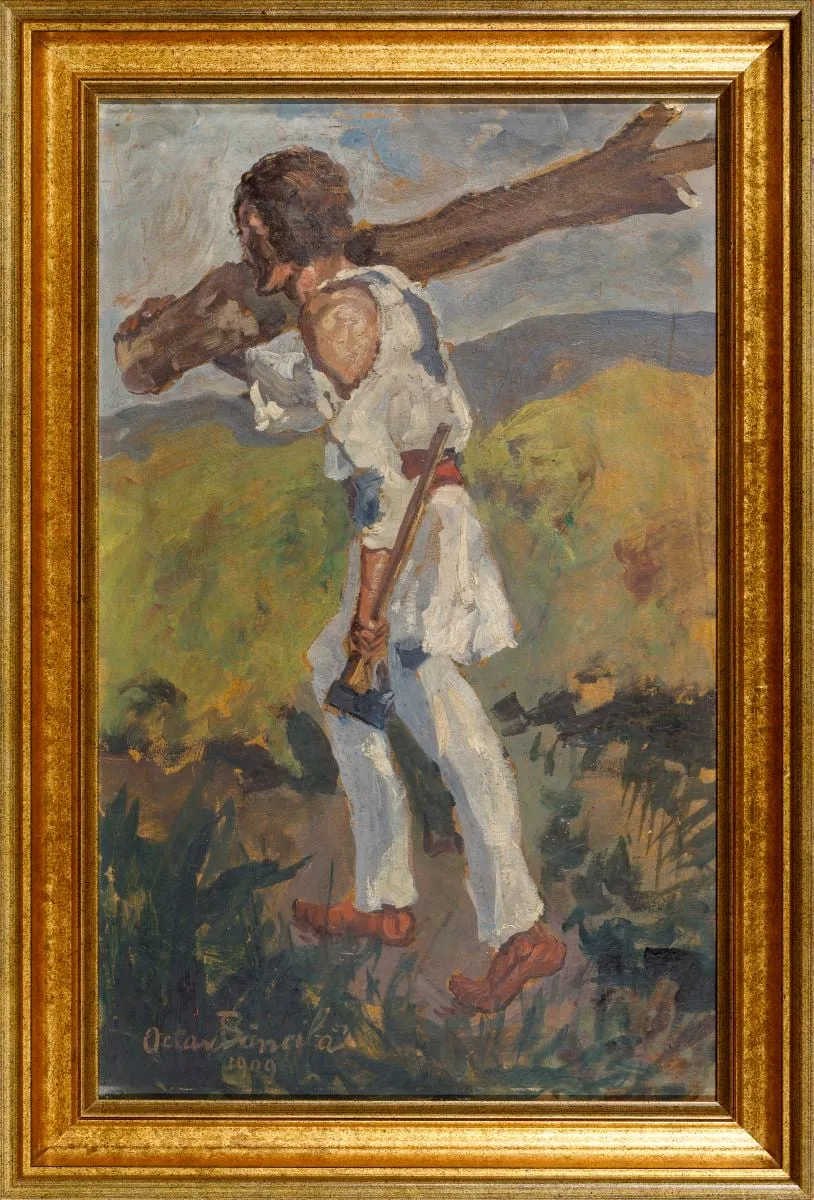
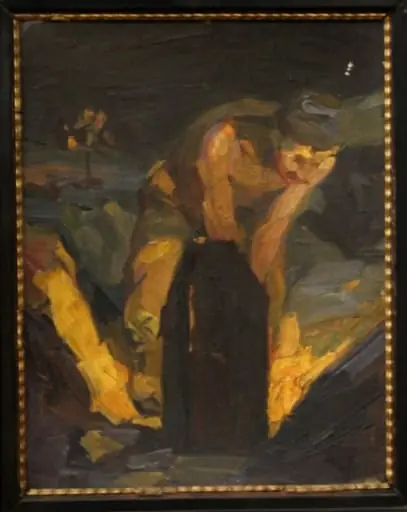
Tăietor de lemne is a print by Octav Băncilă. It dates from 1909 and is held in the collection of the National Museum of Art of Romania.
About this work
Overview
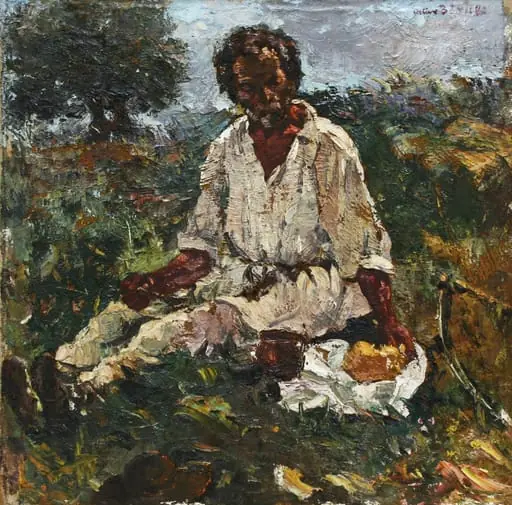
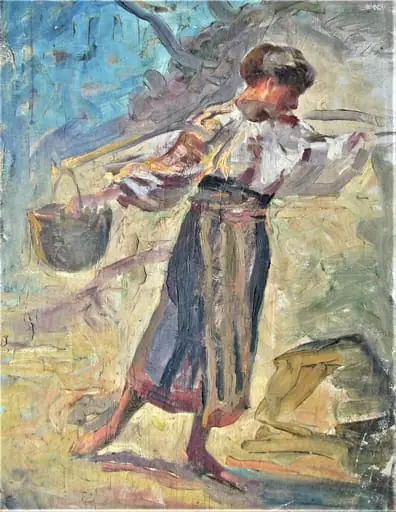
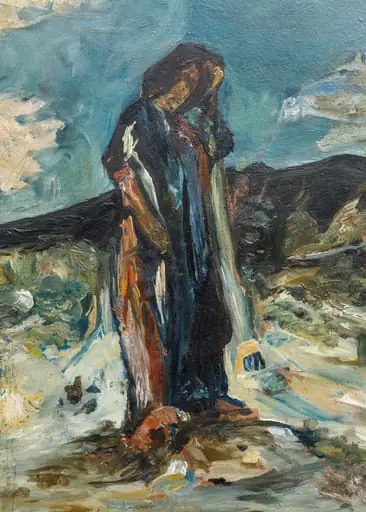
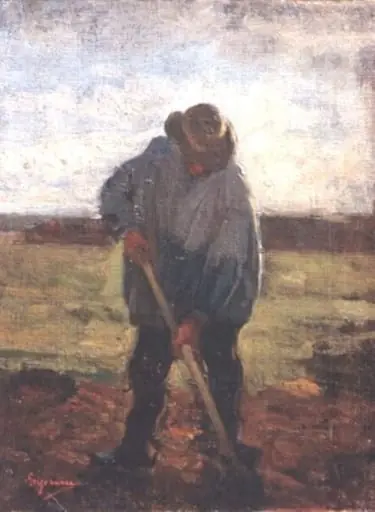
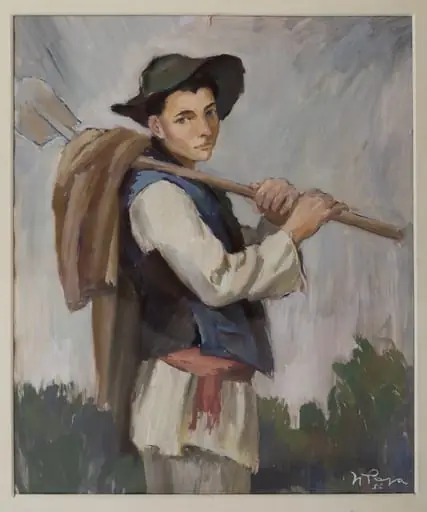
Tăietor de lemne, painted by Octav Băncilă in 1909, depicts a laborer transporting a felled log across a rural landscape. Rendered with energetic brushwork and a muted palette, the scene captures a moment of physical toil without idealization. The figure’s posture and the weight of the timber convey endurance, while the surrounding terrain suggests the quiet vastness of the Romanian countryside.
Subject & Meaning
The central figure, a woodcutter in simple attire, embodies rural labor with dignity rather than sentimentality.
The central figure, a woodcutter in simple attire, embodies rural labor with dignity rather than sentimentality. His red shoes stand out against the earthy tones, drawing attention to the human element amid nature. The heavy log, balanced precariously over the shoulder, underscores the physical burden of daily survival. The work avoids narrative drama, instead presenting work as an unadorned fact of life.
Technique & Style
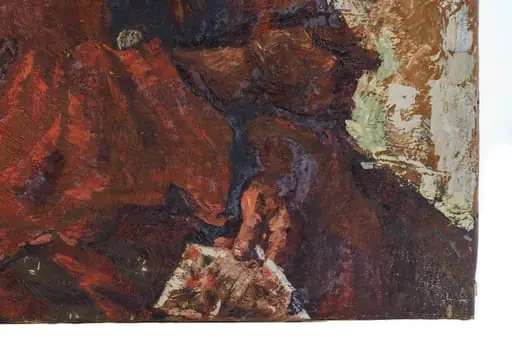
Băncilă employed thick, textured brushstrokes to build form and atmosphere, a technique associated with impasto. The paint is applied with urgency, leaving visible ridges and layers that enhance the sense of rawness. The sky and grass are rendered with loose, directional strokes, avoiding fine detail. This approach prioritizes emotional resonance over polished finish, aligning with realist traditions of the period.
History & Provenance
Created during a period of growing interest in peasant life among Romanian artists, the painting emerged from Băncilă’s engagement with social realism. It was likely painted en plein air, reflecting direct observation of rural labor. The work remained in private collections in Romania before entering public institutional holdings, where it continues to be studied as an example of early 20th-century national art.
Context
In early 1900s Romania, artists increasingly turned to rural subjects as symbols of national identity. Băncilă’s depiction of the woodcutter aligns with broader movements rejecting academic idealism in favor of authentic, everyday scenes. The painting reflects both artistic trends and sociopolitical currents, where laborers were seen as foundational to cultural authenticity, though rarely portrayed with overt political intent.
Legacy
Tăietor de lemne endures as a quiet testament to the dignity of manual labor in Romanian art. While not widely exhibited internationally, it holds significance within national collections for its unembellished portrayal of rural existence. Its influence is seen in later generations of artists who favored emotional honesty over technical refinement, preserving a visual record of a vanishing way of life.
Artist & collection

Artist
Octav Băncilă was a Romanian realist painter and left-wing activist. He was the brother of Sofia Nădejde, a feminist journalist, and the brother-in-law of Ioan Nădejde.