Artwork
Satyr and Bacchante
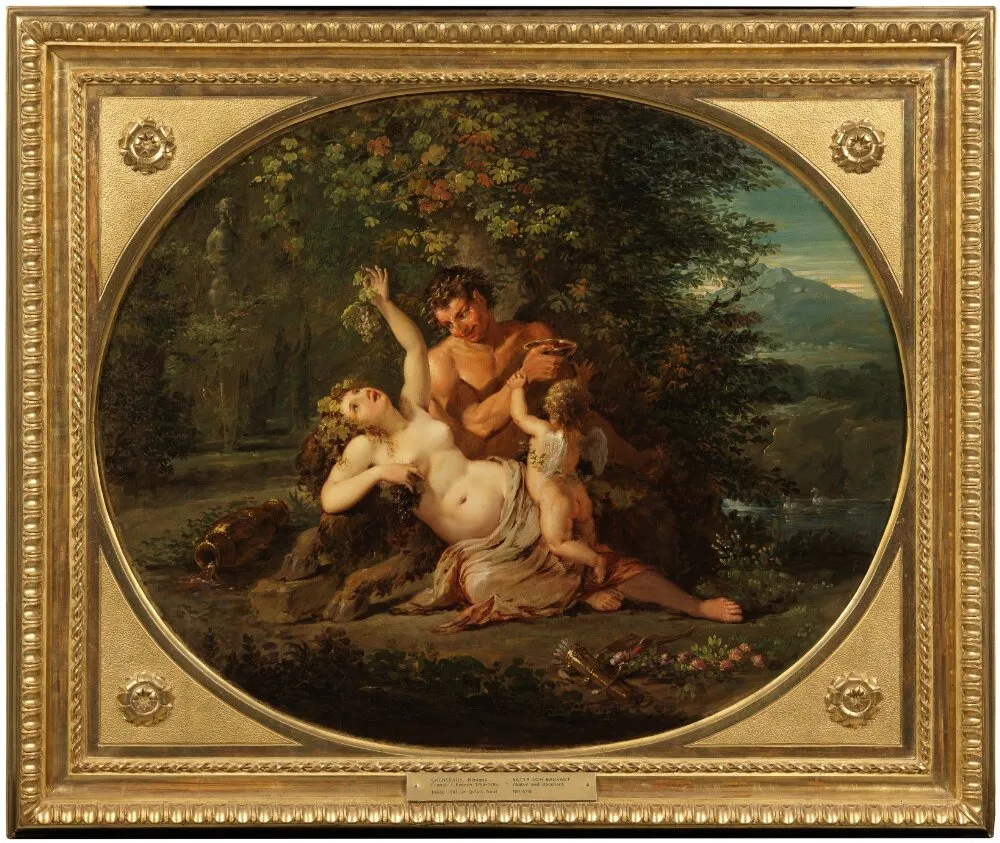
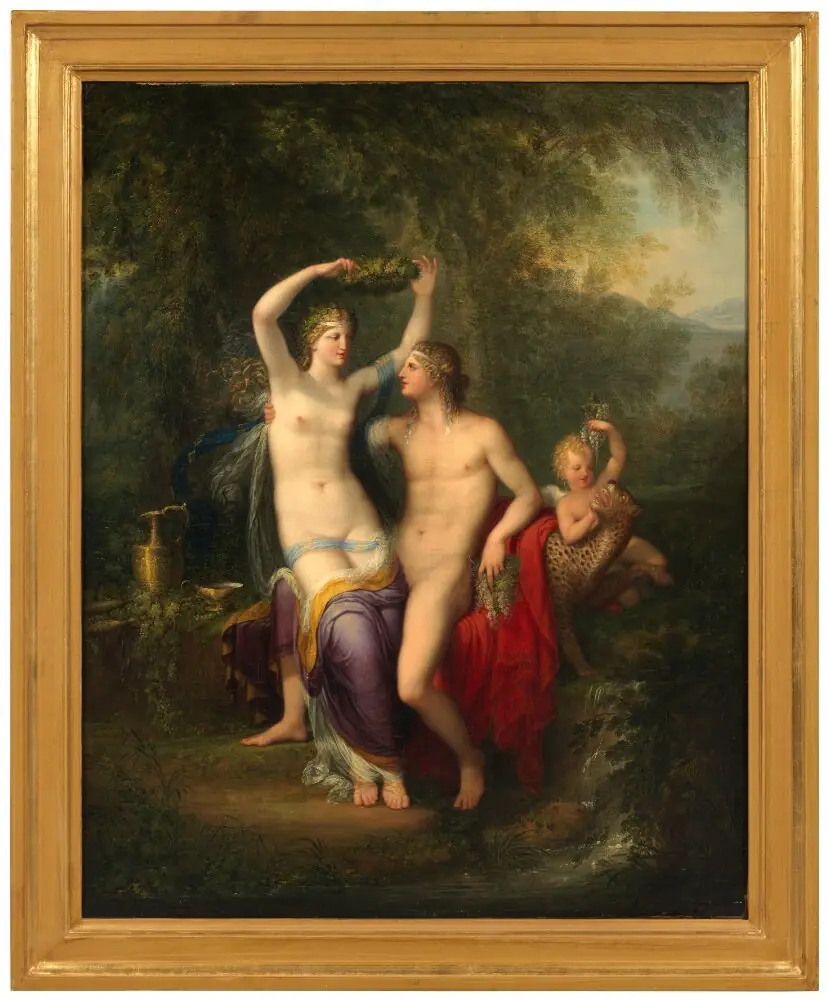
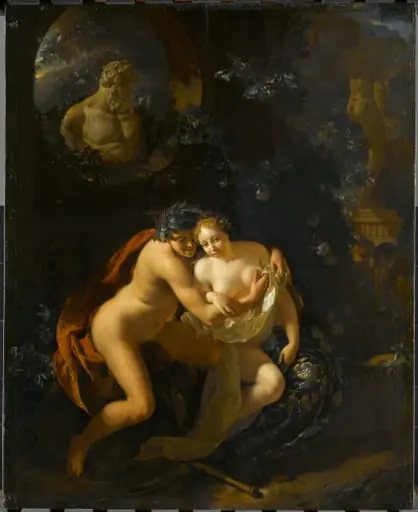
Satyr and Bacchante is an oil painting by the Rococo painting artist Bénigne Gagneraux. It dates from 1792 and is held in the collection of the Nationalmuseum.
About this work
Overview
Satyr and Bacchante is a painting completed in 1792 by French artist Bénigne Gagneraux, who worked in the Rococo style. The oil-on-canvas work is part of the Nationalmuseum's collection.
Subject & Meaning
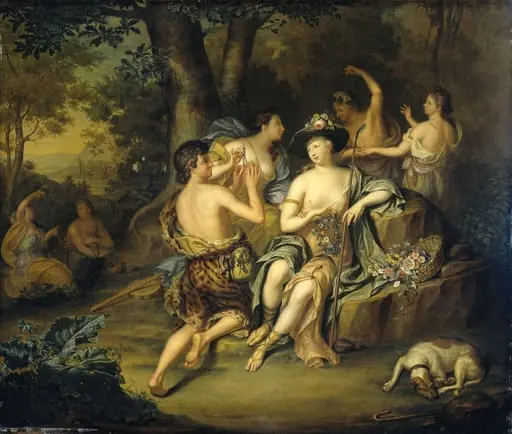
The painting depicts a mythological scene featuring a satyr and a bacchante in a lush outdoor setting, conveying a sense of joy and revelry. The satyr, a horned and bearded figure, stands behind the reclining bacchante, surrounded by foliage and vines.
Technique & Style
Gagneraux employed chiaroscuro, using strong contrasts between light and dark, to create depth and dimension in the scene. The work is characteristic of the Rococo movement, known for its lighthearted and ornate qualities.
History & Provenance
Gagneraux, trained in Dijon and active in Rome and Florence, was known for his historical and mythological subjects. Satyr and Bacchante is one of his works held in a prominent collection, alongside other paintings such as The Meeting of Gustavus III of Sweden with Pope Pius VI.
Artist & collection
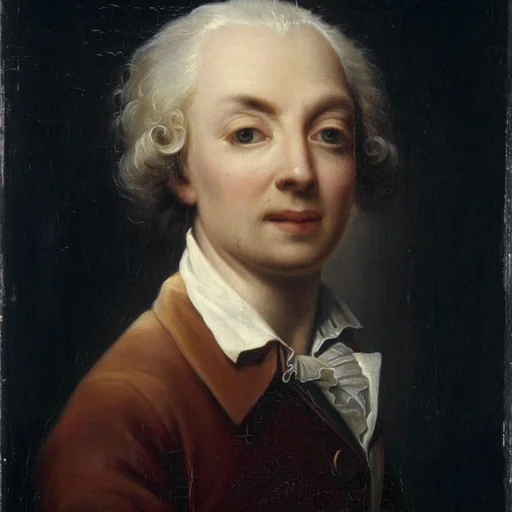
Artist
Bénigne Gagneraux (1756 at Dijon – 1795), was first instructed in the school at Dijon under François Devosge, from whence he proceeded to Rome, where he acquired a reputation by his picture of the Meeting of Gustavus III.