Artwork
Leda and the Swan
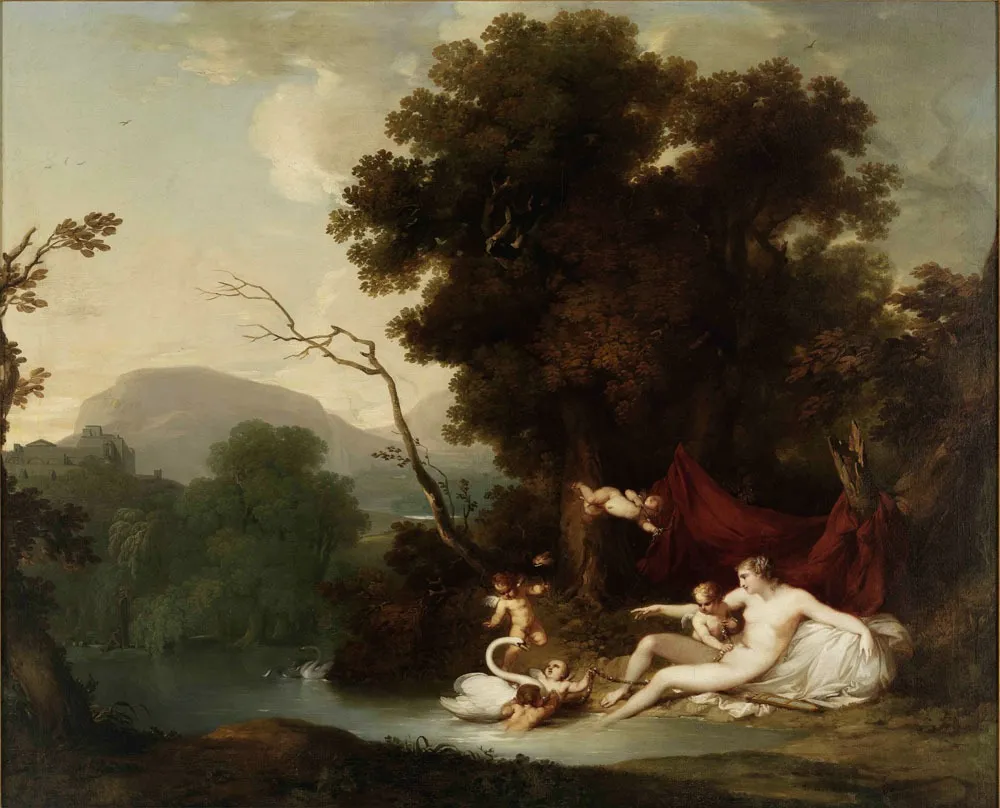
Leda and the Swan is an oil painting by Vieira Portuense. It dates from 1800 and is held in the collection of the National Museum of Ancient Art.
About this work
Overview
As one of the earliest Portuguese artists to embrace Neoclassical ideals, Vieira Portuense aligned his approach with broader European trends of the time.
Painted in 1800 by Francisco Vieira, known as Vieira Portuense, this oil-on-canvas work illustrates a scene from Greek mythology. As one of the earliest Portuguese artists to embrace Neoclassical ideals, Vieira Portuense aligned his approach with broader European trends of the time. The painting is part of the collection at the National Museum of Ancient Art in Lisbon, where it remains a key example of early 19th-century Portuguese academic painting.
Subject & Meaning
The painting portrays Leda, a queen of Sparta, in a moment of encounter with Zeus, who has taken the form of a swan. Surrounding her are their four children, born from two eggs, symbolizing the divine origin of heroic lineages. The composition emphasizes tenderness rather than violence, reflecting Neoclassical preferences for idealized narratives. The inclusion of the infants underscores themes of fertility and mythic ancestry, central to classical storytelling.
Technique & Style
Vieira Portuense employed fine brushwork to render the swan’s plumage and Leda’s facial expression with quiet precision. The figures are modeled with soft chiaroscuro, grounded in a restrained palette of earth tones, while the sky and fabric introduce subtle contrasts. The landscape background, with distant architecture and rolling hills, frames the scene without distraction. The overall effect is one of calm order, characteristic of Neoclassical aesthetics prioritizing clarity and harmony.
History & Provenance
Created during Vieira Portuense’s mature period, the painting reflects his training in Lisbon and exposure to European academic traditions. It entered the collection of the National Museum of Ancient Art in the 19th century, likely through state acquisition or donation. Its preservation reflects its recognition as a significant work by a foundational figure in Portuguese Neoclassicism, though it has received limited scholarly attention outside Portugal.
Context
In early 1800s Portugal, Neoclassicism was emerging as a dominant style, replacing Baroque ornamentation with ideals of reason and antiquity. Vieira Portuense, alongside contemporaries like Domingos Sequeira, helped establish this shift through mythological and historical subjects. This painting aligns with broader European efforts to revive classical themes, adapted to local artistic sensibilities and institutional patronage under the Portuguese court.
Legacy
Though not widely reproduced internationally, the painting remains a touchstone in Portuguese art history for its early adoption of Neoclassical principles. It exemplifies how local artists engaged with continental trends while maintaining a distinct visual language. Vieira Portuense’s influence extended through his teaching and institutional roles, helping shape the trajectory of Portuguese academic painting in the decades that followed.
Artist & collection
Artist
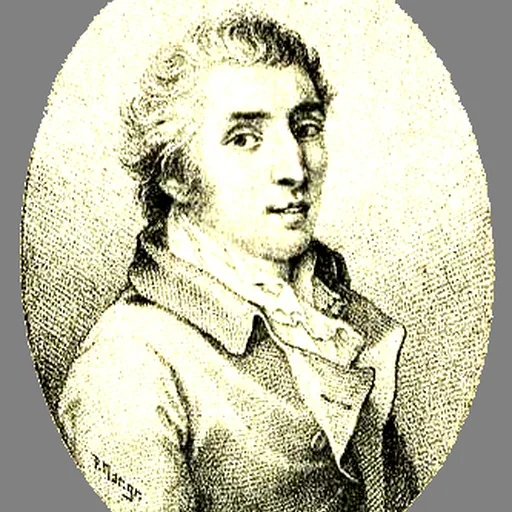
Francisco Vieira (13 May 1765 – 2 May 1805), who chose the artistic name of Vieira Portuense, was a Portuguese painter, one of the introducers of Neoclassicism in Portuguese painting.