Artwork
Familie
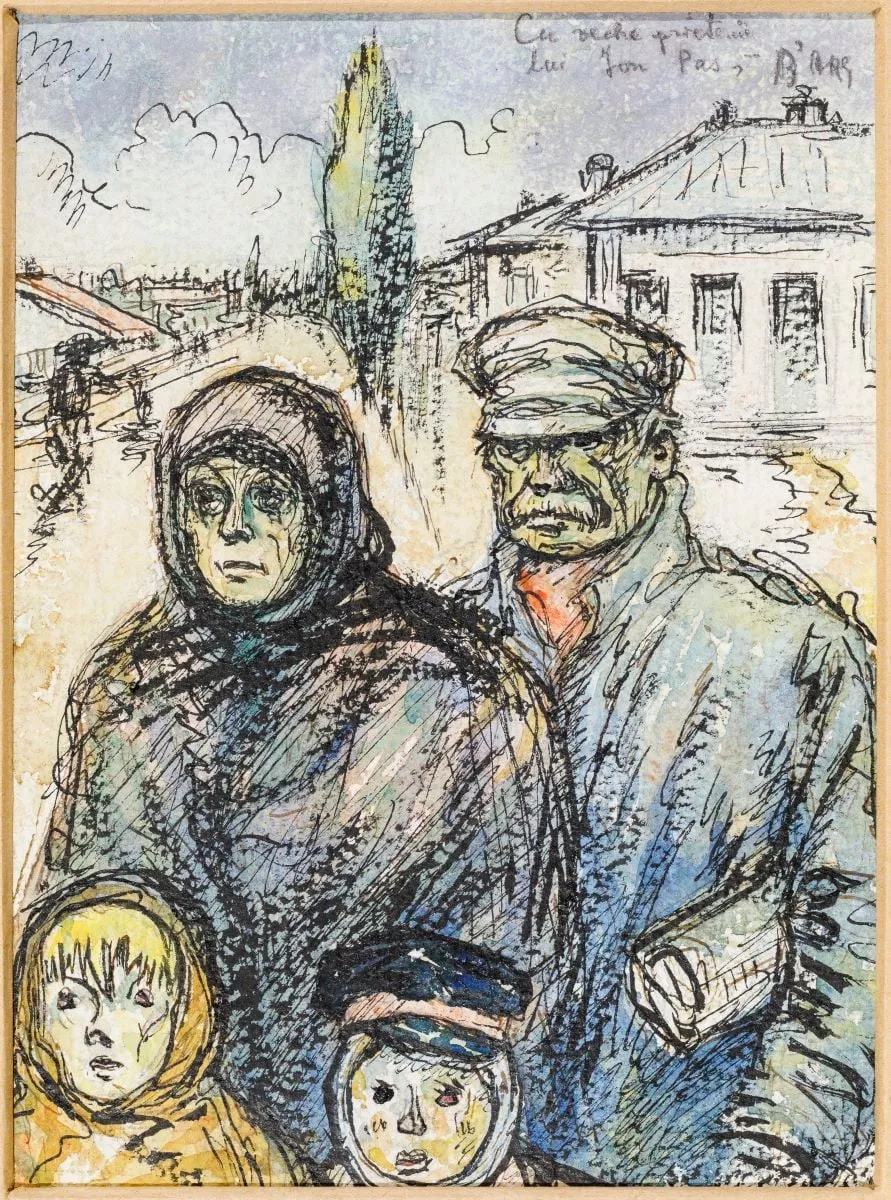
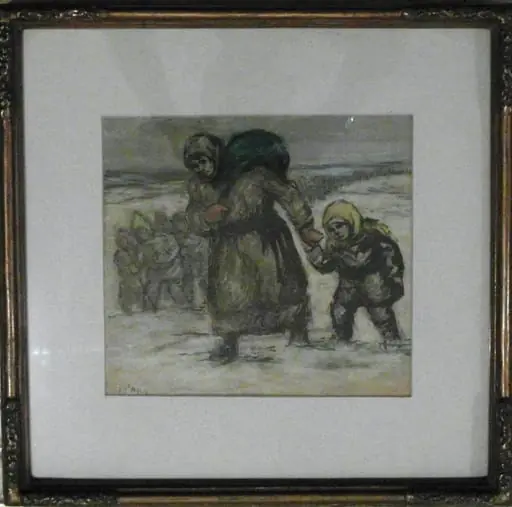
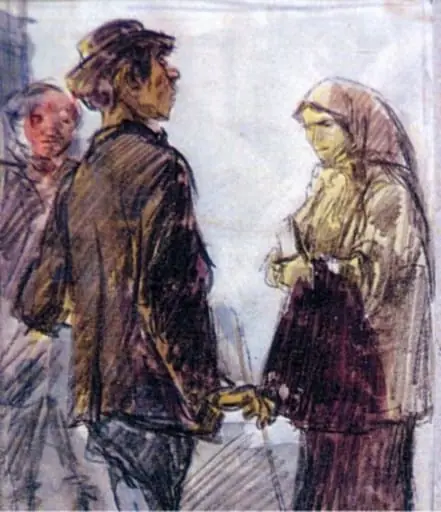
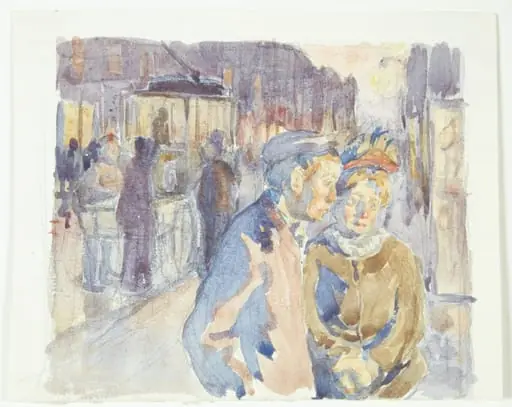
Familie is a drawing by Ion Bărbulescu. It dates from 1947 and is held in the collection of the National Museum of Art of Romania.
About this work
Overview
The setting suggests a modest urban or rural environment, with faint architectural forms and an overcast sky framing the group.
Created around 1947 by Ion Bărbulescu, this ink or pencil drawing depicts a nuclear family in a quiet, grounded composition. The figures are arranged in a vertical hierarchy, with adults standing behind two children, all rendered in restrained lines. The setting suggests a modest urban or rural environment, with faint architectural forms and an overcast sky framing the group. The tone is deliberate and unadorned, emphasizing presence over narrative.
Subject & Meaning
The family unit is portrayed without idealization, their postures and expressions conveying quiet endurance rather than joy or celebration. The man’s hat and the woman’s headscarf indicate regional dress, possibly rural Romanian, grounding them in a specific social context. Their stillness and lack of interaction suggest the weight of postwar hardship, where familial stability was both a necessity and a quiet act of resilience.
Technique & Style
Bărbulescu employs a linear, economical draftsmanship, using minimal shading to define form and volume. The figures are outlined with firm, clear strokes, while the background remains loosely suggested—buildings reduced to simplified silhouettes, the sky left mostly blank except for faint cloud marks. This restraint aligns with a tradition of character-focused drawing, prioritizing emotional gravity over decorative detail.
History & Provenance
The work originates from the immediate postwar period in Romania, a time of economic strain and cultural reorientation. While specific ownership history is not documented, its style and subject align with Bărbulescu’s broader practice of documenting everyday life during a period of national reconstruction. It likely circulated within artistic or educational circles before entering institutional or private collections.
Context
In late 1940s Romania, art often served as a quiet record of civilian life under shifting political conditions. Bărbulescu’s focus on ordinary families reflects a broader trend among local artists who avoided grand propaganda in favor of intimate, human-scale observations. This drawing stands as a subtle counterpoint to state-sanctioned imagery, valuing authenticity over ideological messaging.
Legacy
Though not widely exhibited internationally, the work contributes to a lesser-known but significant body of Romanian mid-century graphic art that emphasized human dignity through restraint. It remains a reference point for scholars studying how artists navigated personal expression under constrained cultural conditions, preserving the quiet dignity of ordinary lives.
Artist & collection
Artist
Ion Bărbulescu left behind a handful of ink-on-paper drawings. Five survive in this set, from the mid-20th-century daily life sketches to a sheet called “La Geneva.” His lines trace wages, kids, fruit bowls, and small…

 Ilustrație la romanul „Baltagul” de Mihail Sadoveanu
 Untitled
 Bettelnde (Begging)
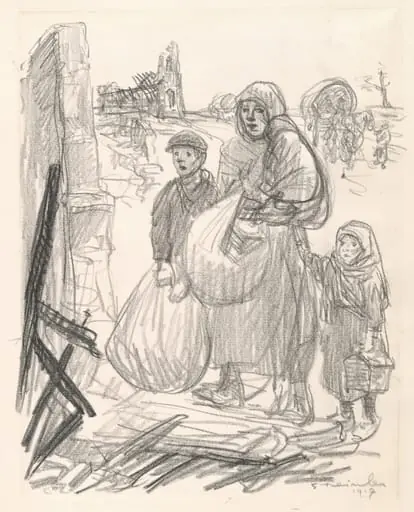 C'est ici, chez nous!
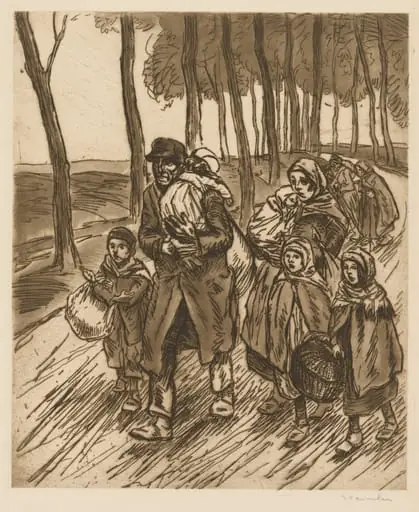 Refugee Family
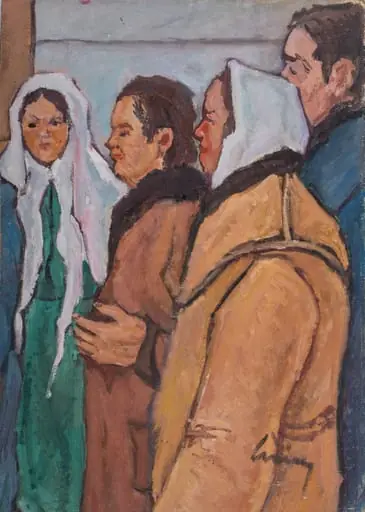 Compoziție cu patru personaje; în prim-plan, dreapta, o femeie și, în spatele ei, doi bărbați priviți din profil până la jumătate. Sunt îmbrăcați cu haine groase de iarnă ocru-brun și albastru; femeia poartă pe cap un batic alb. În plan secund stânga, o femeie văzută din față, 3/4, cu batic și șal alb, rochie verde și haină albastră. Semnat dreapta jos, cu negru: Craiu.
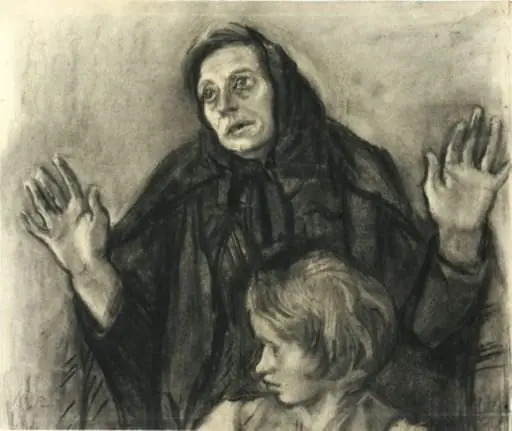 Ajunge! Temă moralizatoare
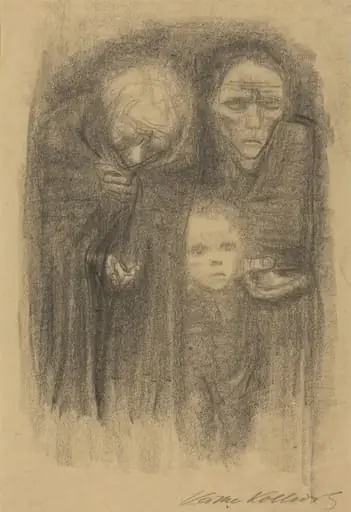 Beggars
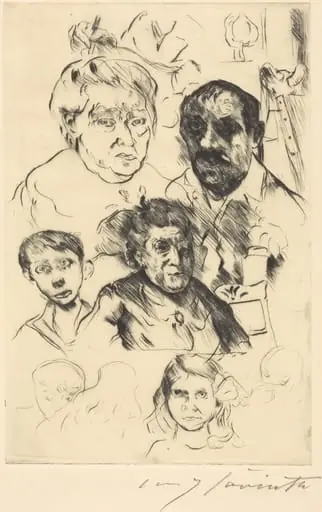 Verschiedene Köpfe und Selbstbildnis (Assorted Heads and Self-Portrait)
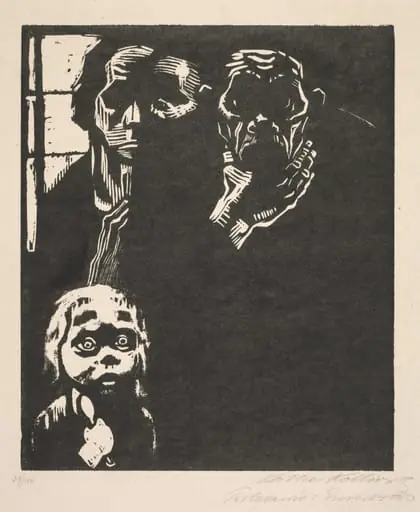 Proletariat: No. 1 Out of Work
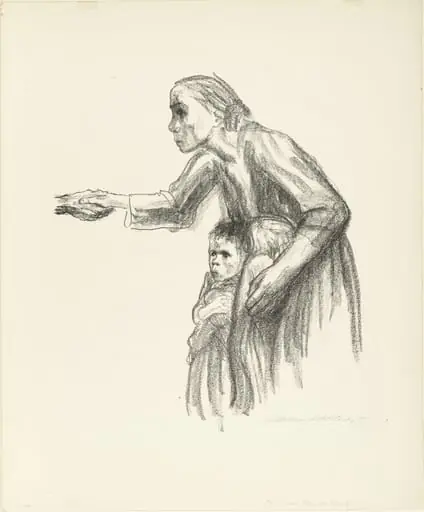 Untitled
 Fra Enghavevej. Aften