Artwork
Shipping on the Oresund with Helsingor and Kronborg Castle in the Distance
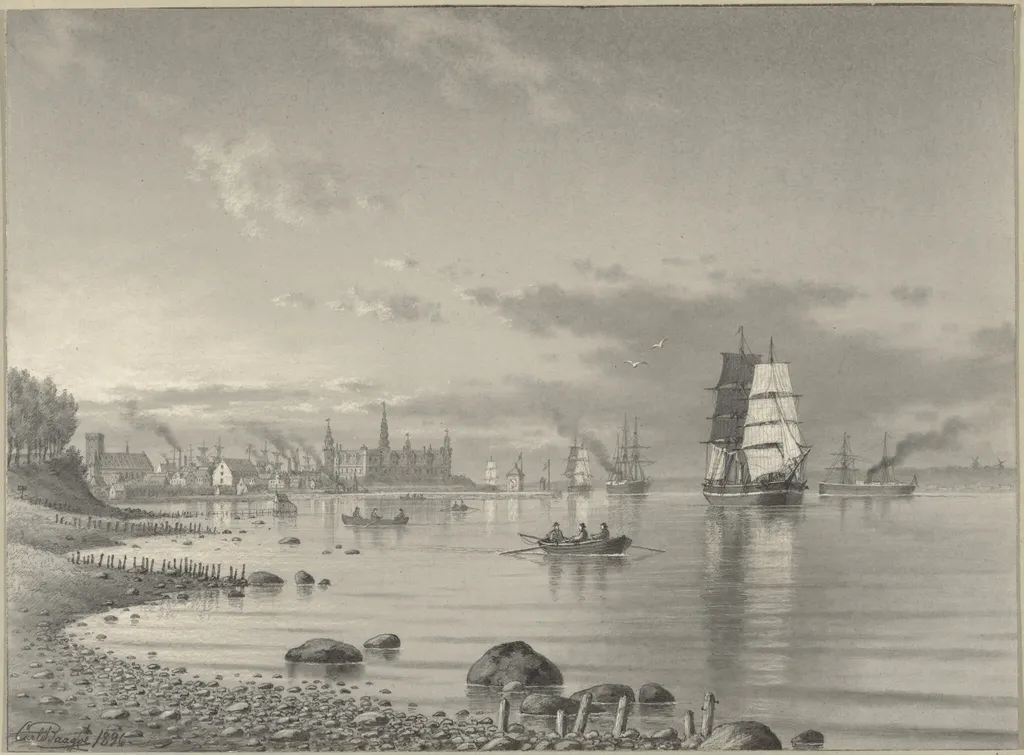
Shipping on the Oresund with Helsingor and Kronborg Castle in the Distance is a graphite drawing by the Impressionist artist Carl Emil Baagöe. It dates from 1896 and is held in the collection of the National Gallery of Art.
About this work
The artist used a mix of techniques, including graphite and scratching out, on a special paper called papier pellee.
The painting is titled Shipping on the Oresund with Helsingor and Kronborg Castle in the Distance.
It was created in 1896 by Carl Emil Baagöe.
The artist used a mix of techniques, including graphite and scratching out, on a special paper called papier pellee.
This paper has a gray tint, which might have helped Baagöe create a sense of depth.
The painting is part of the National Gallery of Art, Washington, and you can learn more about Impressionism there.
Overview
Created in 1896 by Danish artist Carl Emil Baagöe, this drawing depicts vessels navigating the Oresund Strait with Helsingør and Kronborg Castle visible on the horizon. Executed in graphite on papier Pellee—a thick, gray-tinted paper with a white ground—it reflects the artist’s interest in subtle tonal transitions and atmospheric effects. The work resides in the National Gallery of Art, Washington, D.C.
Subject & Meaning
The scene captures maritime activity in a strategically significant waterway between Denmark and Sweden. Kronborg Castle, a historic fortress tied to Danish sovereignty and Shakespeare’s Hamlet, anchors the composition as a silent witness to centuries of trade and naval movement. The ships, rendered with minimal detail, suggest routine commerce rather than dramatic event, emphasizing quiet continuity over spectacle.
Technique & Style
Baagöe employed graphite with stumping to soften gradients and scratching out to reveal the paper’s white ground, creating highlights and texture. The gray-tinted surface of papier Pellee provided a mid-tone foundation, allowing the artist to build contrast with precision. This method prioritizes atmospheric nuance over linear definition, aligning with late 19th-century Scandinavian tendencies toward restrained realism.
History & Provenance
The drawing entered the National Gallery of Art’s collection as part of its broader acquisition of Nordic works from the late 19th century. While little is documented about its early ownership, its preservation in a major American institution reflects growing international interest in Danish draftsmanship during the early 20th century. Its material integrity has been maintained without significant restoration.
Context
In the 1890s, Danish artists increasingly turned to landscape and marine subjects as expressions of national identity, often avoiding overt romanticism. Baagöe’s focus on the Oresund—a vital shipping lane—echoed broader cultural attention to Denmark’s maritime heritage. The use of specialized paper and controlled graphite techniques positioned his work between traditional draftsmanship and emerging modernist sensibilities.
Legacy
Baagöe’s drawing exemplifies a quiet, observational approach to landscape that influenced later Nordic artists interested in tonal harmony and material subtlety. Though not widely exhibited, its presence in the National Gallery of Art ensures continued access for scholars studying Scandinavian graphic arts. The work remains a testament to the expressive potential of restrained media in capturing place and atmosphere.
Artist & collection


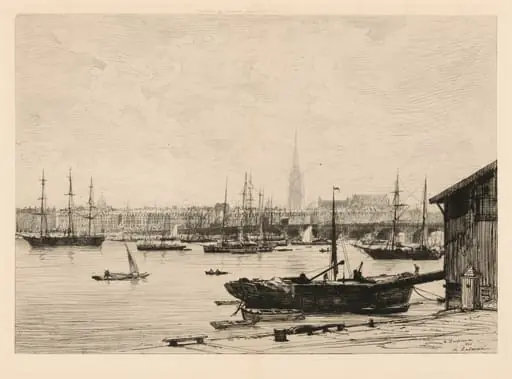 À Bordeaux (At Bordeaux)
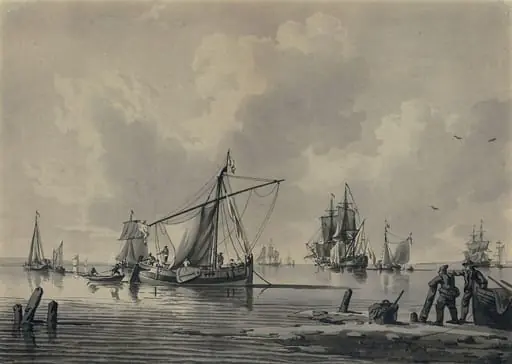 River with Shipping
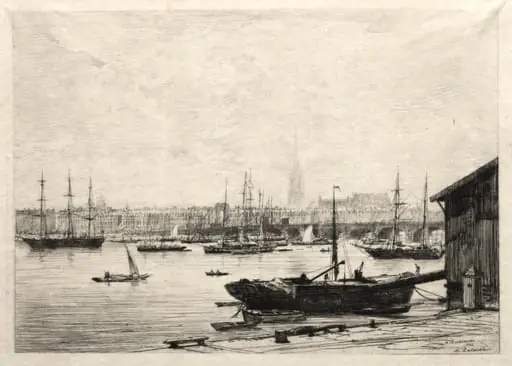 Bordeaux
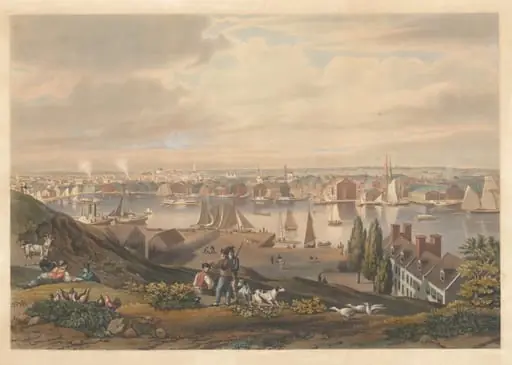 Baltimore from Federal Hill
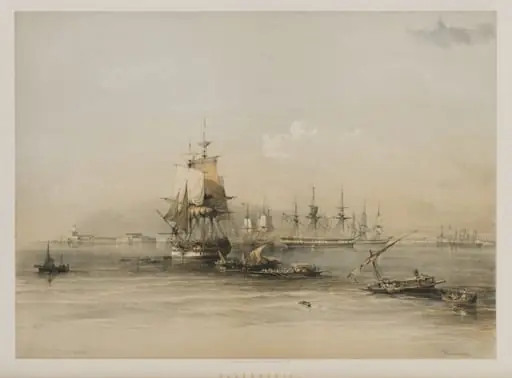 Egypt and Nubia, Volume III: Alexandria
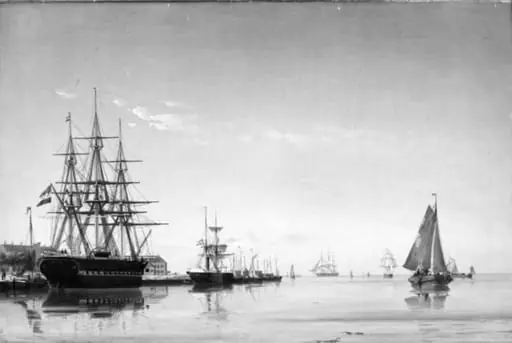 The Harbour at Nieuwe Diep in North Holland
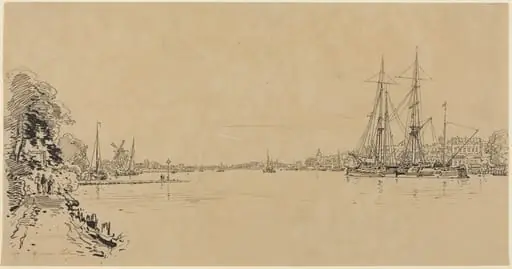 Dutch View
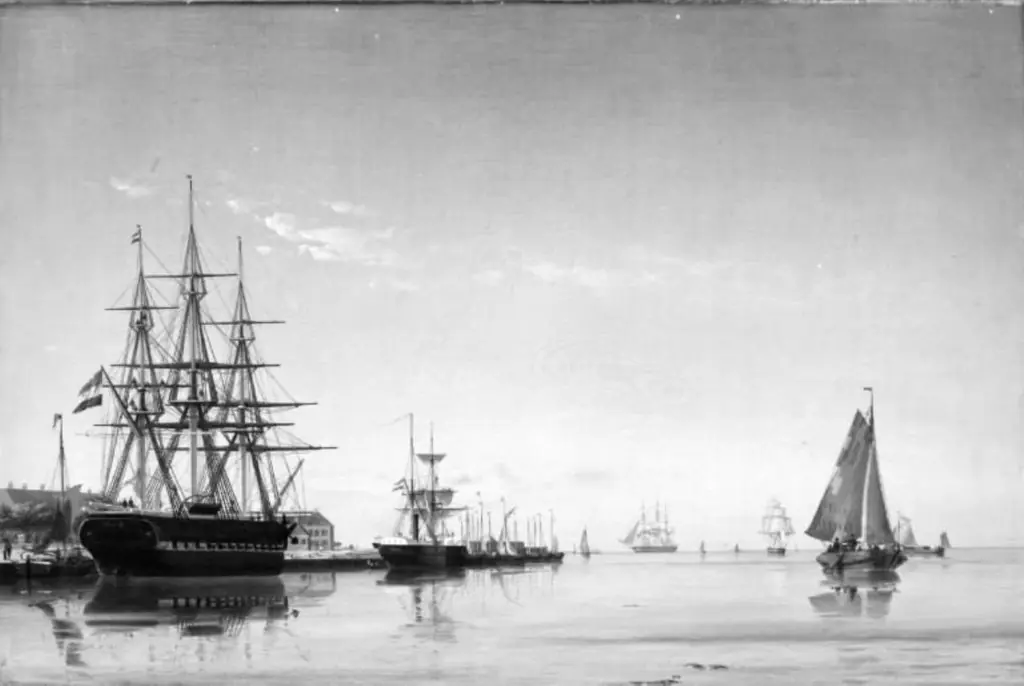 The Harbour at Nieuwe Diep in North Holland
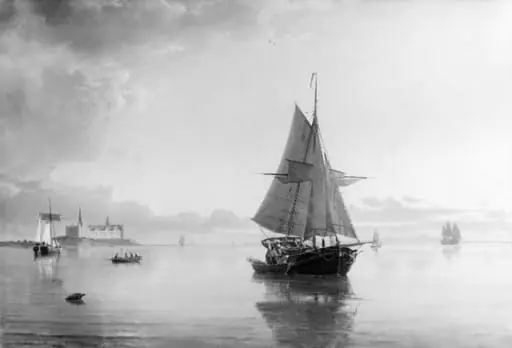 An Early Summer Morning in the Roads of Elsinore
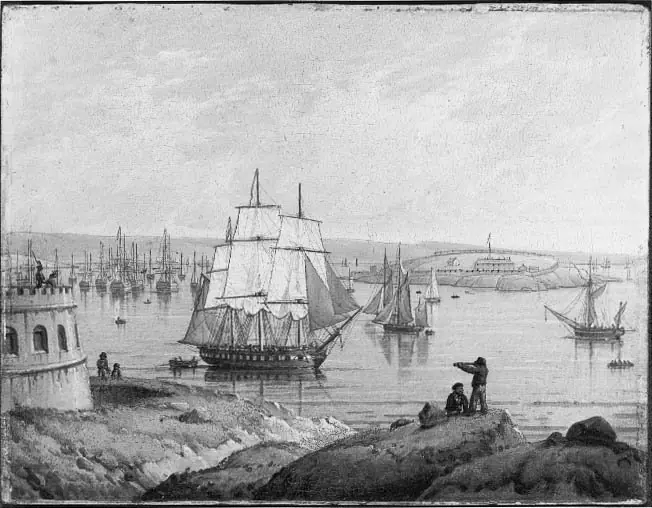 Plimouth Sound
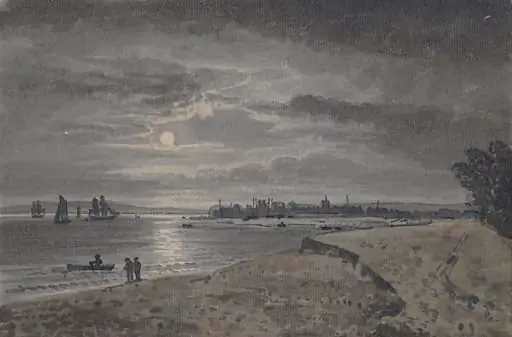 River scene
 Boston: From City Point near Sea Street