Artwork
Omul care râde (interpretare după Rembrandt)
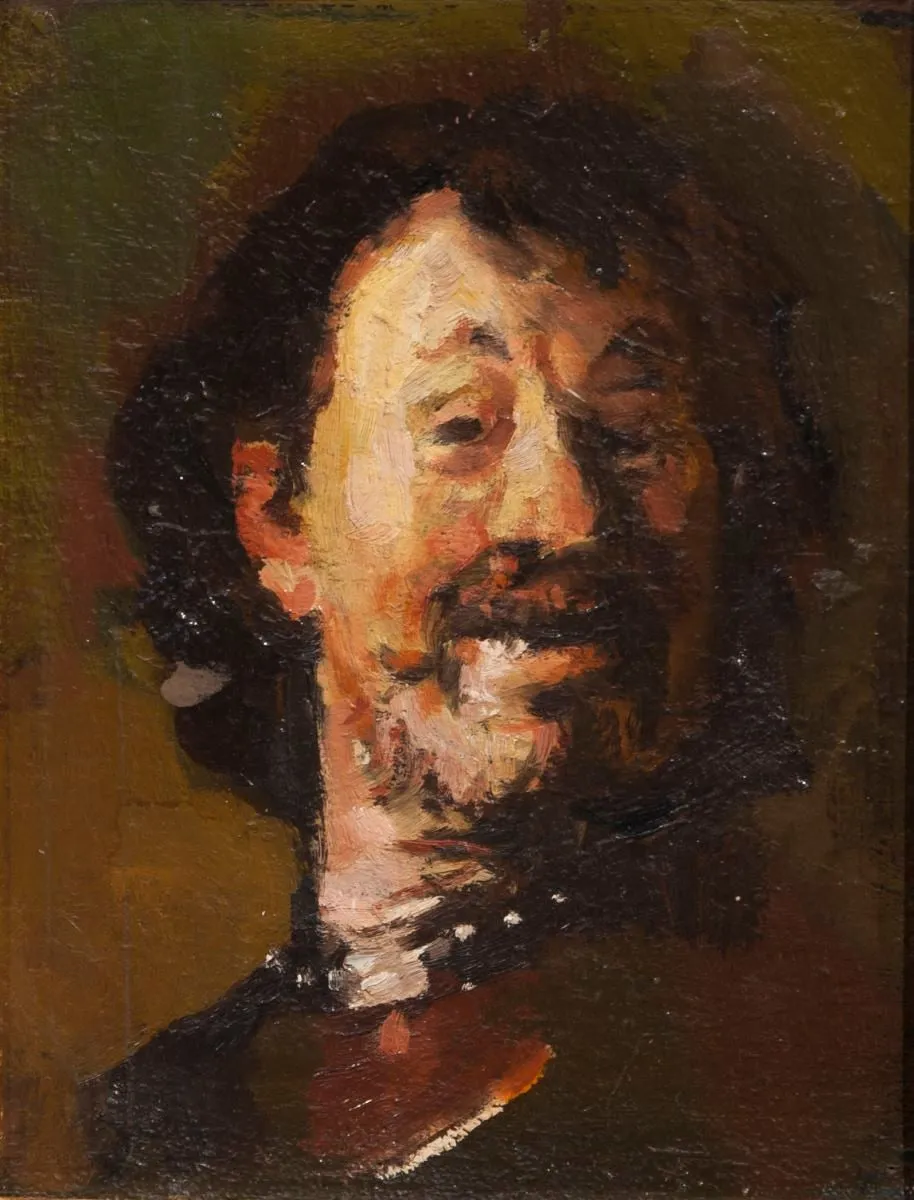
Omul care râde (interpretare după Rembrandt) is a print by Corneliu Baba. It dates from 1986 and is held in the collection of the National Museum of Art of Romania.
About this work
Overview
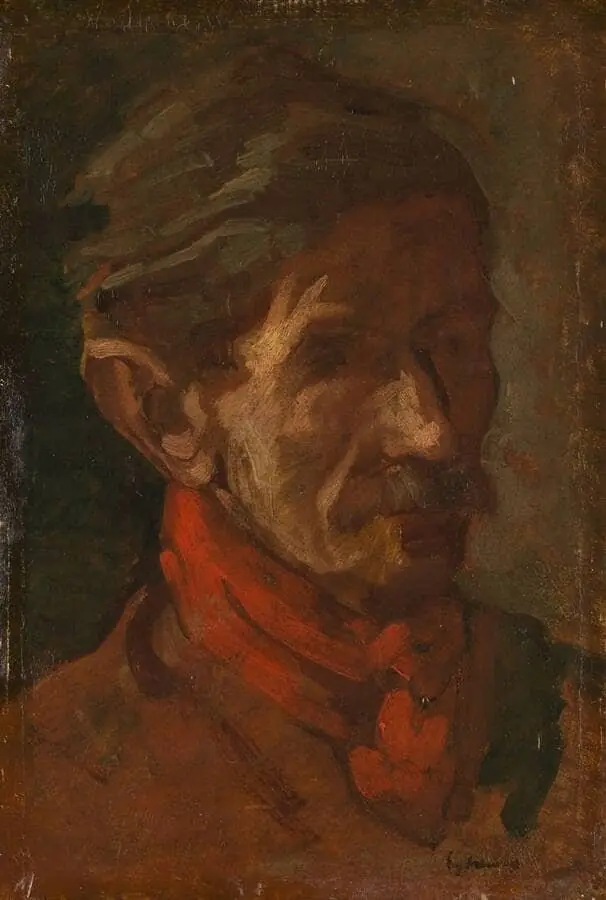
Painted in 1986 by Corneliu Baba, this portrait reinterprets a theme associated with Rembrandt’s expressive physiognomies.
Painted in 1986 by Corneliu Baba, this portrait reinterprets a theme associated with Rembrandt’s expressive physiognomies. It presents a tightly framed view of a man’s face and upper neck, rendered with urgent, tactile brushwork. The composition avoids idealization, focusing instead on the physicality of aging and emotion, captured through dense pigment and irregular edges that suggest spontaneity rather than polish.
Subject & Meaning
The subject is a man caught in a moment of laughter, though the expression is not joyful but strained, almost weary. The heavy shadows and flushed skin suggest inner tension beneath the surface gesture. Baba’s portrayal resists easy interpretation, evoking resilience or existential fatigue rather than mirth. The absence of context isolates the figure, making the face the sole vessel of psychological weight.
Technique & Style
Baba employs thick, layered brushstrokes to build the skin’s texture, using warm ochres and crimson tones against deep browns and blacks. The chiaroscuro technique intensifies the three-dimensionality of the face, with light carving out the brow, nose, and chin while shadows swallow the surrounding areas. The uneven borders and unrefined edges convey immediacy, as if the painting was executed in a single, concentrated session.
History & Provenance
Created late in Baba’s career, this work reflects his sustained engagement with Old Master traditions, particularly Rembrandt’s psychological portraiture. It was produced during a period when Romanian artists navigated state-imposed aesthetic constraints, yet Baba maintained a personal, expressive language. The painting remains in private collections, with no public exhibition history widely documented.
Context
In 1980s Romania, official art favored socialist realism, but Baba pursued introspective, emotionally charged imagery. His reinterpretation of Rembrandt was not homage but dialogue—using historical techniques to express contemporary inner life under repression. This work aligns with his broader practice of distilling human experience through raw, unadorned form, resisting both state ideology and Western modernist trends.
Legacy
Baba’s reinterpretation stands as a quiet testament to the endurance of expressive portraiture under political constraint. While not widely exhibited, it influenced a generation of Romanian artists seeking to reclaim emotional depth in figurative work. The painting’s unpolished intensity continues to resonate as an example of how traditional methods can be repurposed to convey modern alienation and resilience.
Artist & collection

Artist
Corneliu Baba was a Romanian painter, primarily a portraitist, but also known as a genre painter and an illustrator of books.

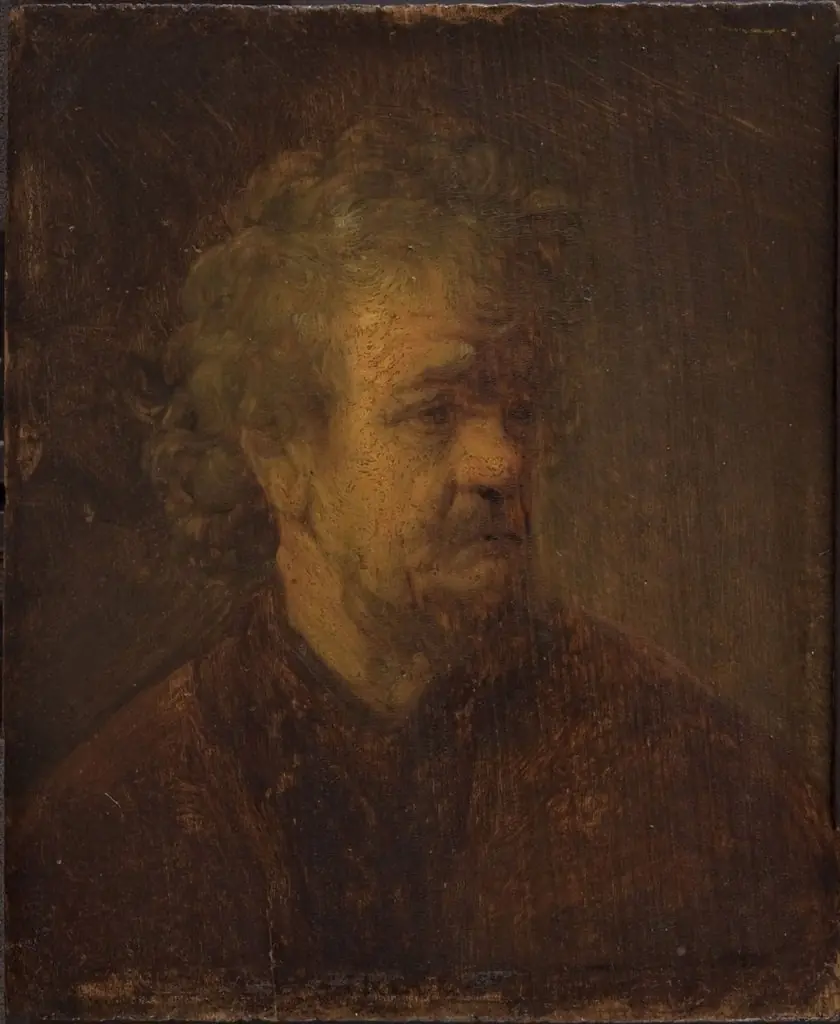 Head of an Old Man
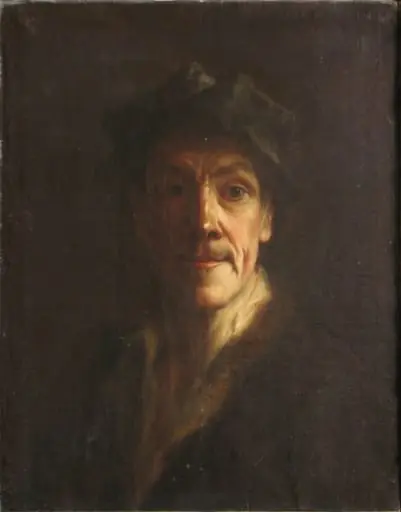 Autoportret
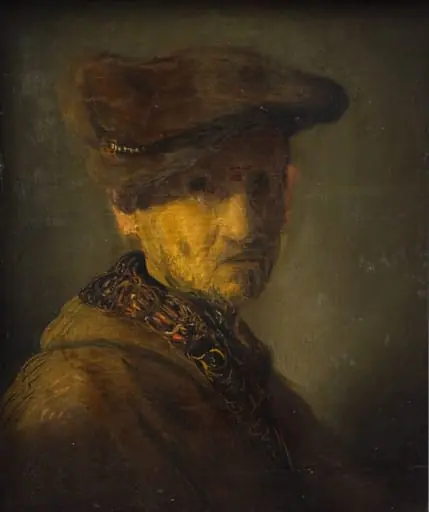 Man with a Hat. (Portrait of Rembrandt's Father)
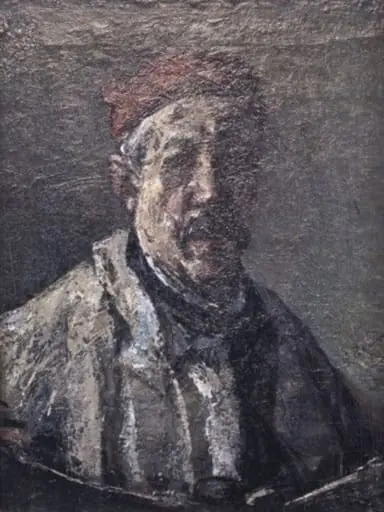 Autoportret cu beretă roșie
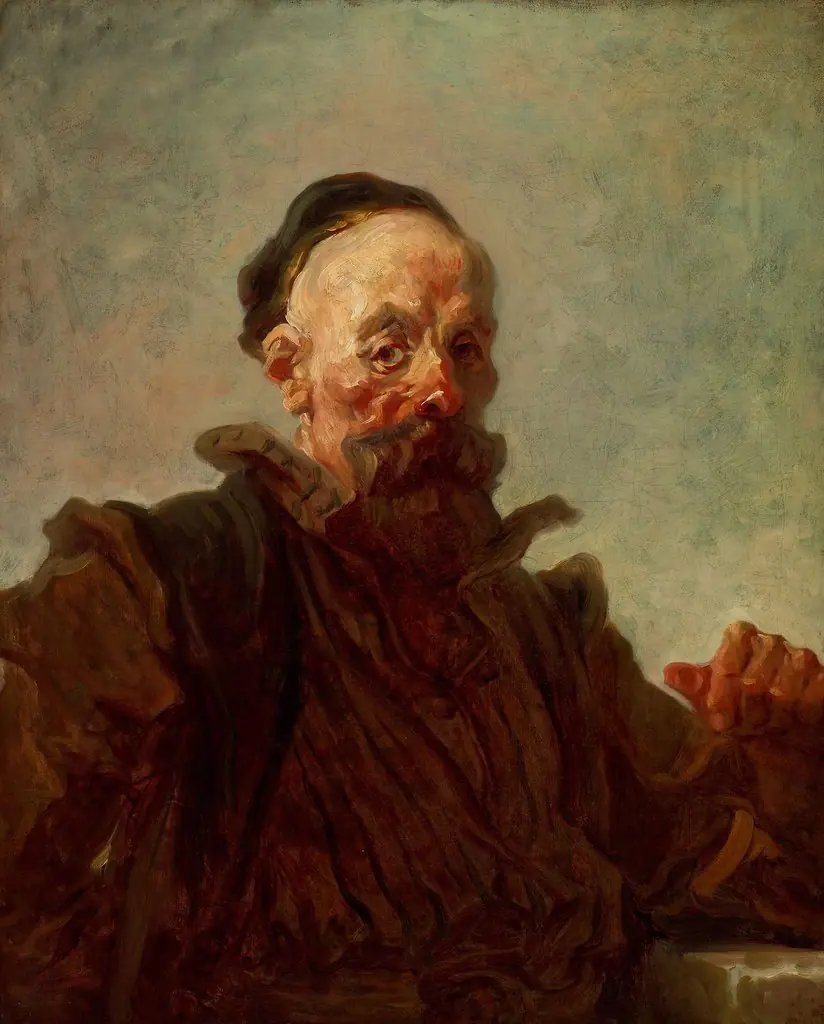 Portrait of a Man in Spanish Costume
 Portrait of a Man in Costume
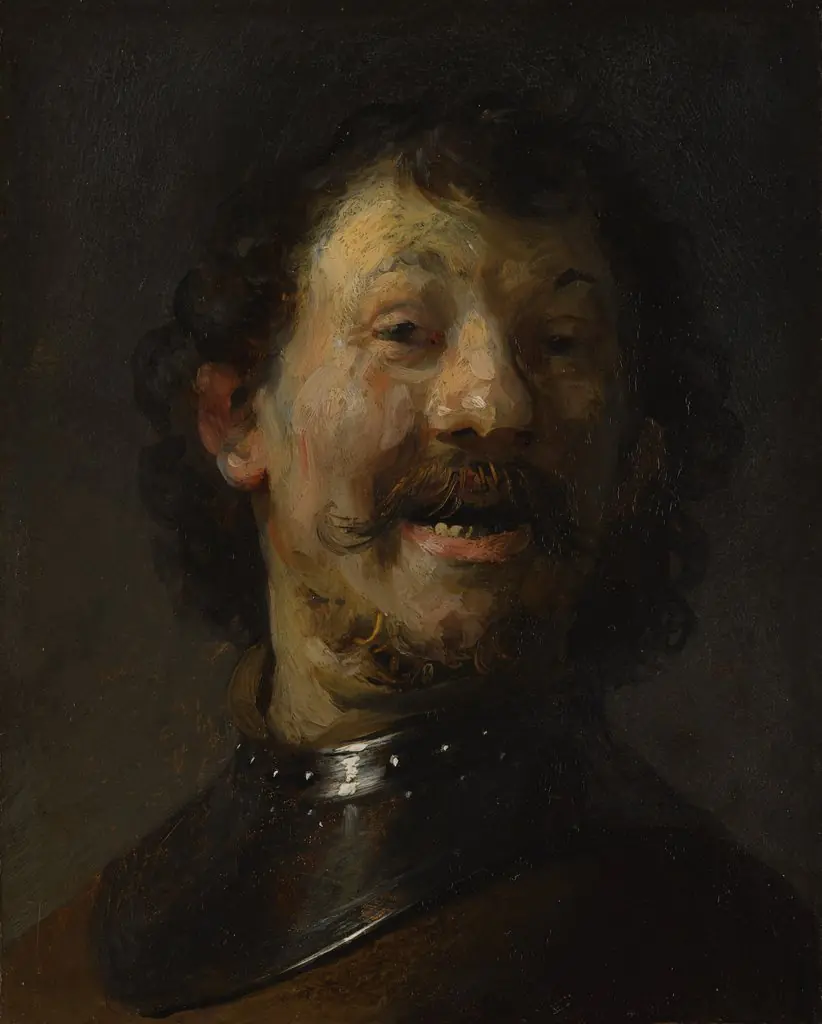 The Laughing Man
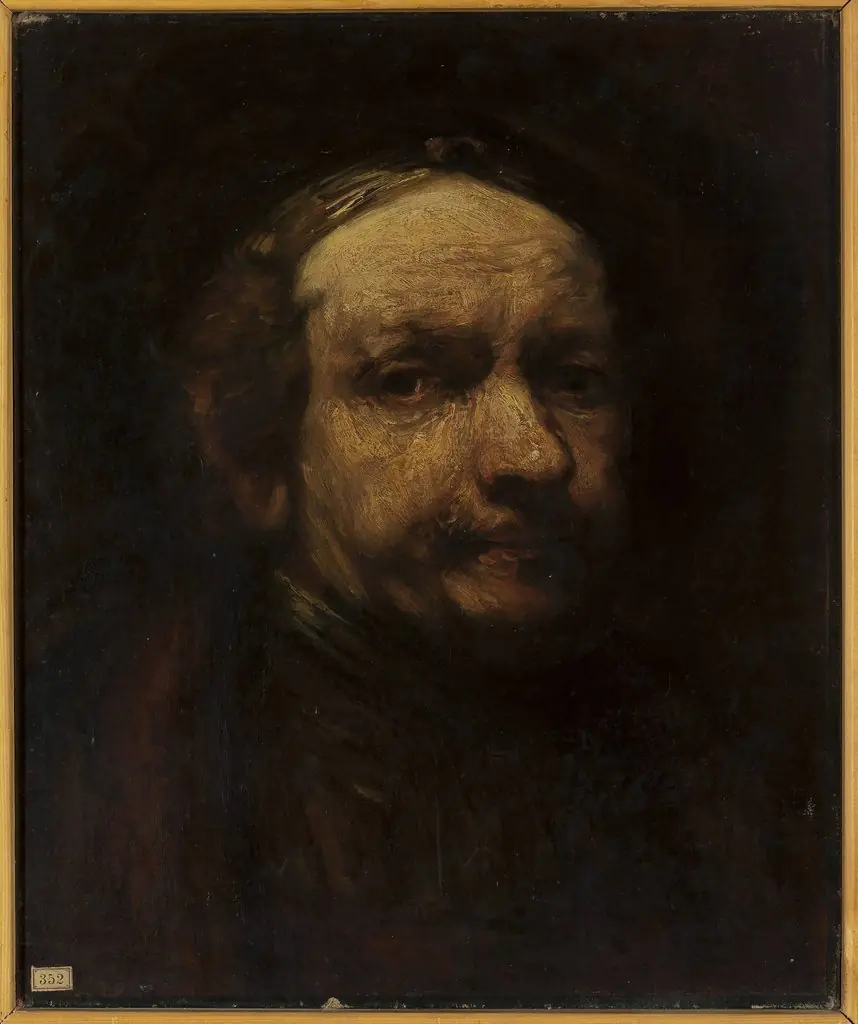 Copy of Rembrandt's “Self-portrait”
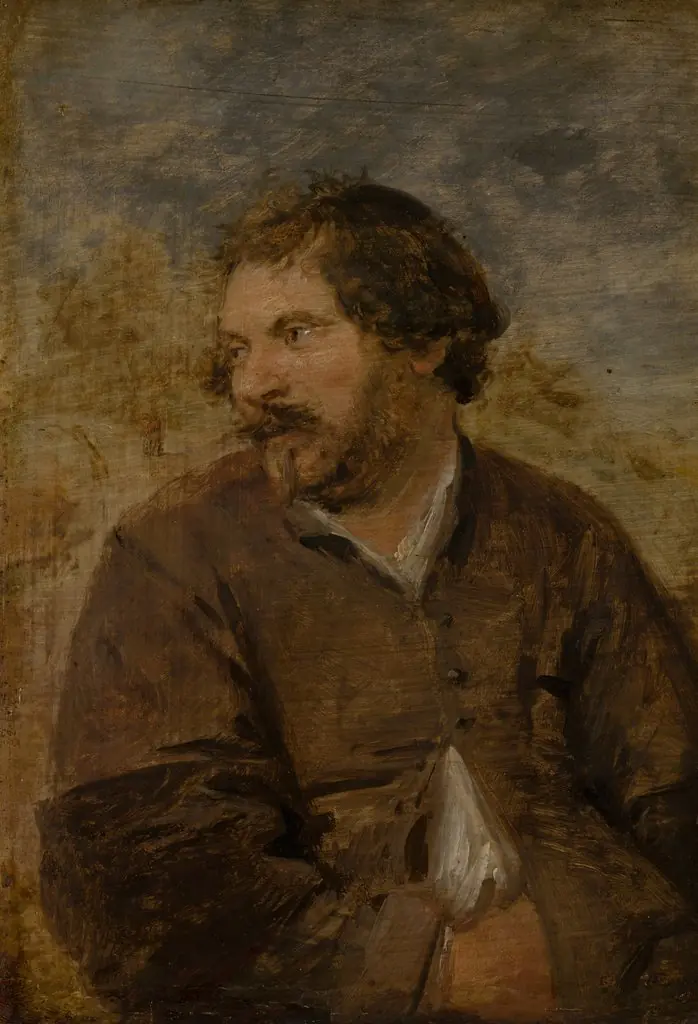 A Fat Man
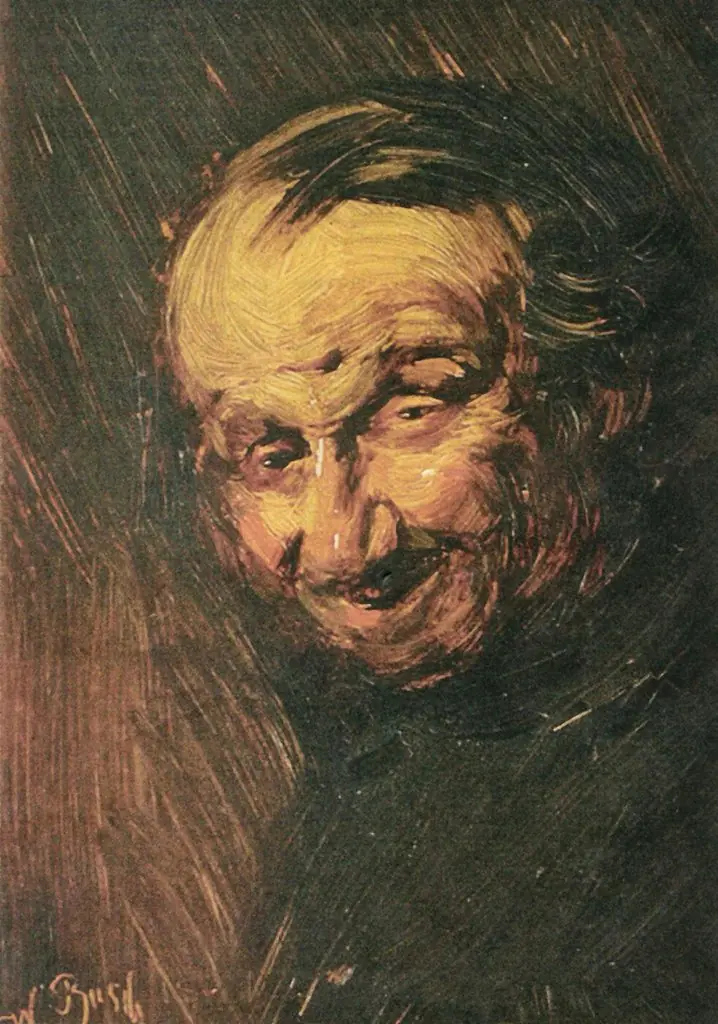 Das Knochenmännchen, Kopf eines alten Mannes
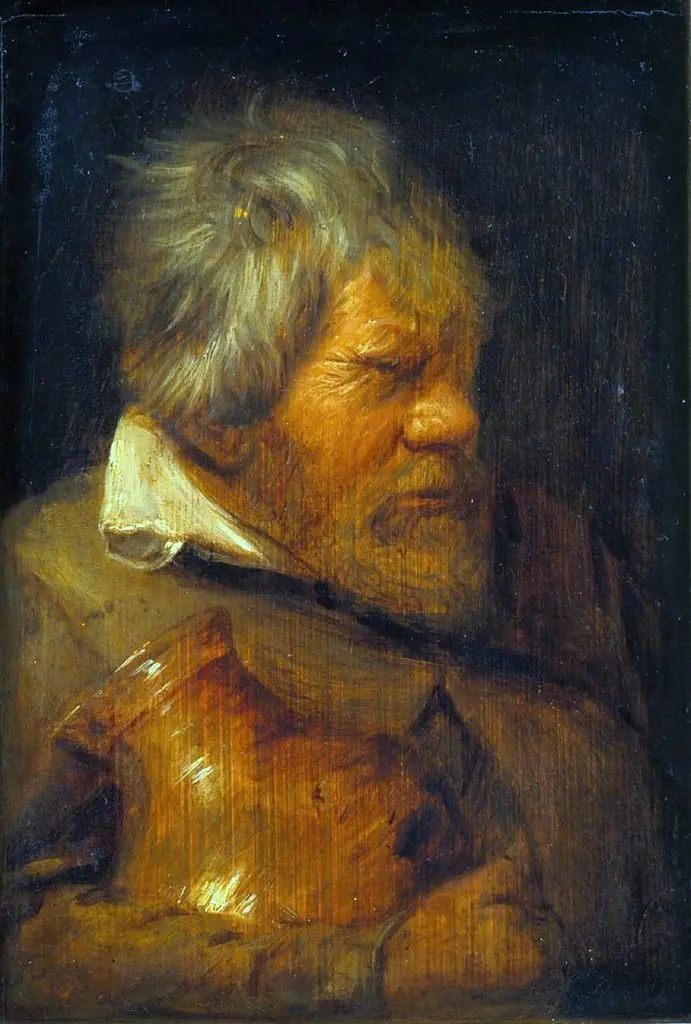 Old man with a beard
 Studiekop van een blinde man