Artwork
Bathers
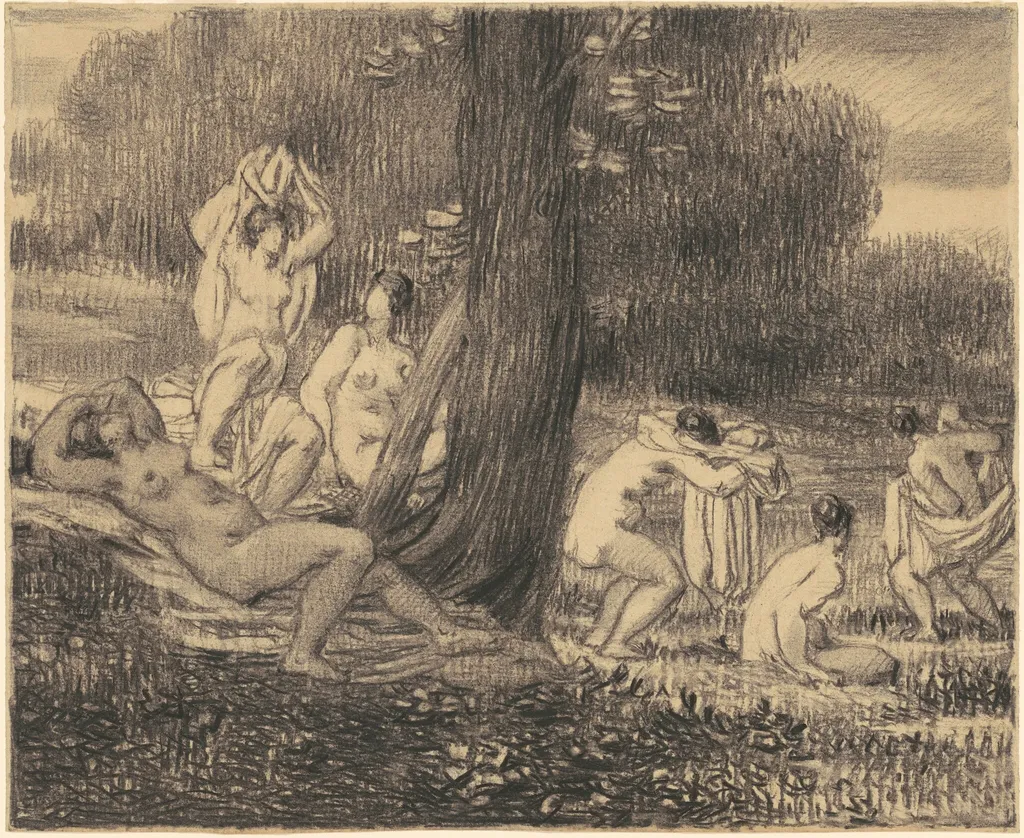
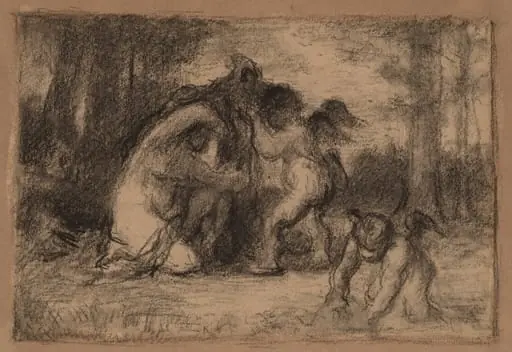
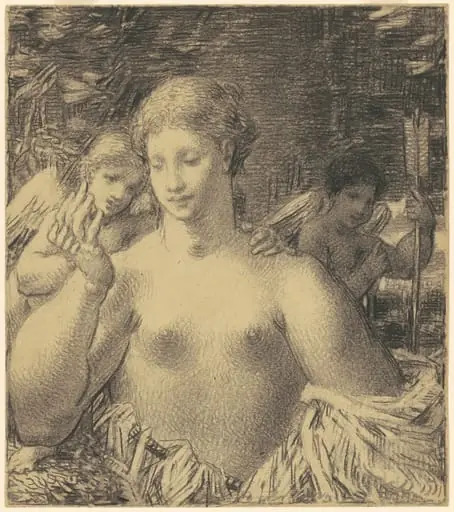
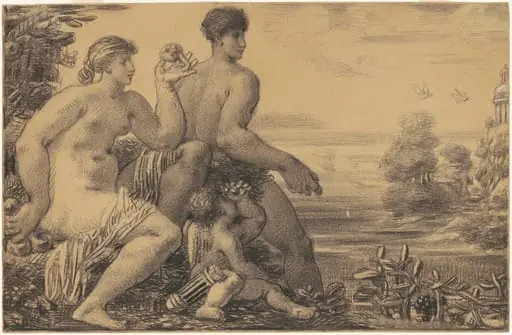
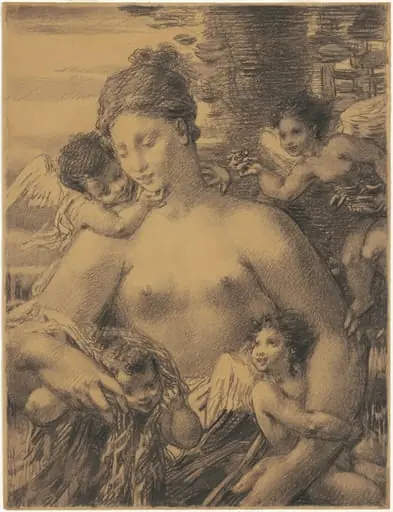
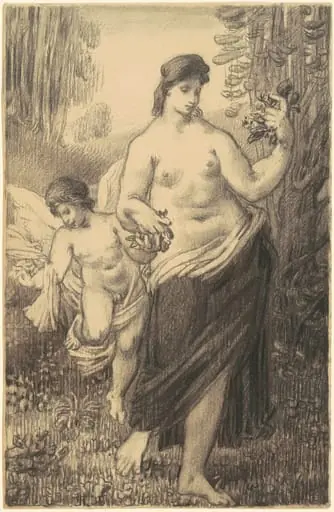
Bathers is a charcoal drawing by the Impressionist artist William Perkins Babcock. It dates from 1870 and is held in the collection of the National Gallery of Art.
About this work
Overview
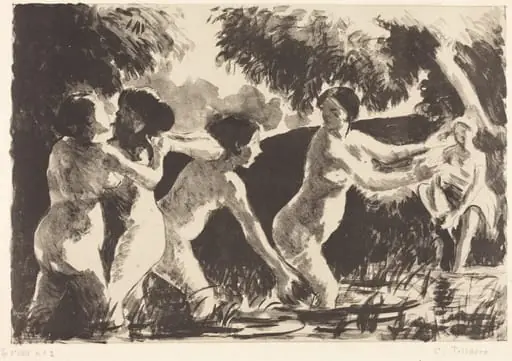
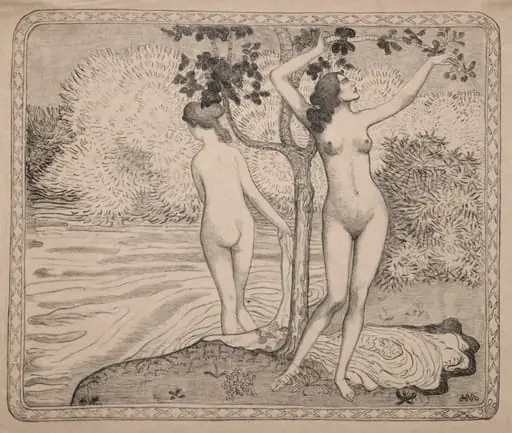
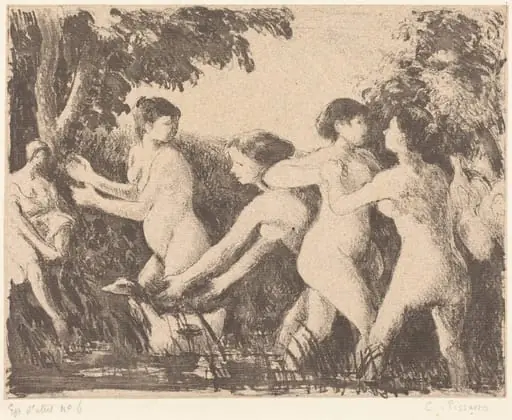
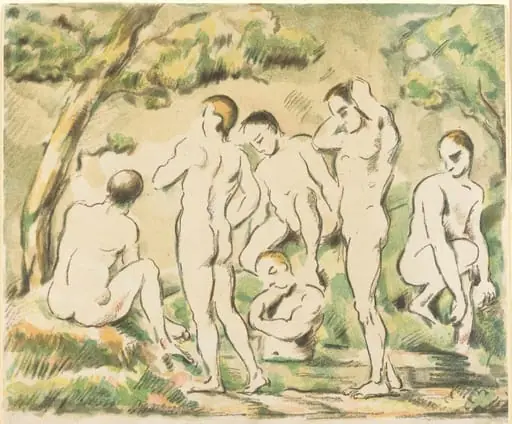
Created around 1870, this charcoal drawing by William Perkins Babcock depicts three nude women in a natural setting. Rendered on wove paper with a coarse, fibrous surface, the work captures a quiet moment of daily ritual. The figures are arranged in a loose, informal grouping, suggesting intimacy and spontaneity rather than staged composition.
Subject & Meaning
The scene portrays women bathing in a shallow stream, their clothing gathered at their ankles, indicating a private, unguarded moment. One figure bends to wash her arm, while the others remain still, engaged in quiet motion. The absence of idealization or narrative suggests an interest in ordinary life, emphasizing physical presence over symbolic meaning.
Technique & Style
Babcock employed charcoal to create a range of tonal effects, from soft gradients to crisp outlines. He incised lines into the paper’s surface to suggest water’s movement, a technique known as scumbling. The rough texture of the wove paper enhances the tactile quality of the drawing, allowing the medium to catch and hold light in subtle, uneven ways.
History & Provenance
The drawing is attributed to William Perkins Babcock, an American artist active in the mid-to-late 19th century. While little is documented about its early ownership, it remains a rare surviving example of his work in drawing, distinct from his more widely known paintings. Its preservation offers insight into his practice beyond finished compositions.
Context
In the 1870s, American artists increasingly turned to natural settings and everyday subjects, moving away from academic conventions. Babcock’s focus on unidealized nudes in a rural stream aligns with this shift, reflecting broader interests in realism and the quiet dignity of private moments, though his work remained on the margins of mainstream art circles.
Legacy
Bathers stands as a modest but significant example of Babcock’s draftsmanship and his engagement with intimate, unadorned scenes. Though not widely exhibited or reproduced, it contributes to understanding the breadth of 19th-century American drawing practices, particularly the use of charcoal to capture transient, naturalistic moments.
Artist & collection