Artwork
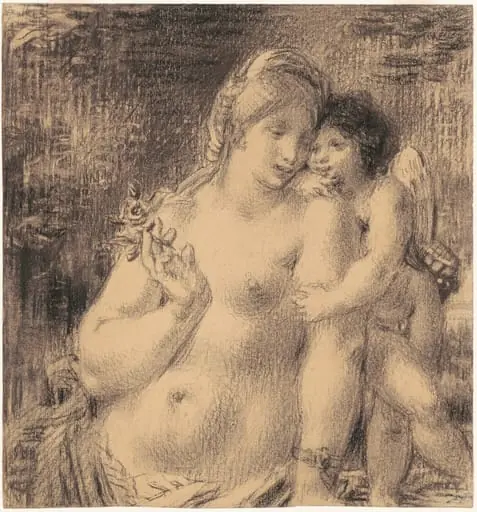
Nude with Cherubim
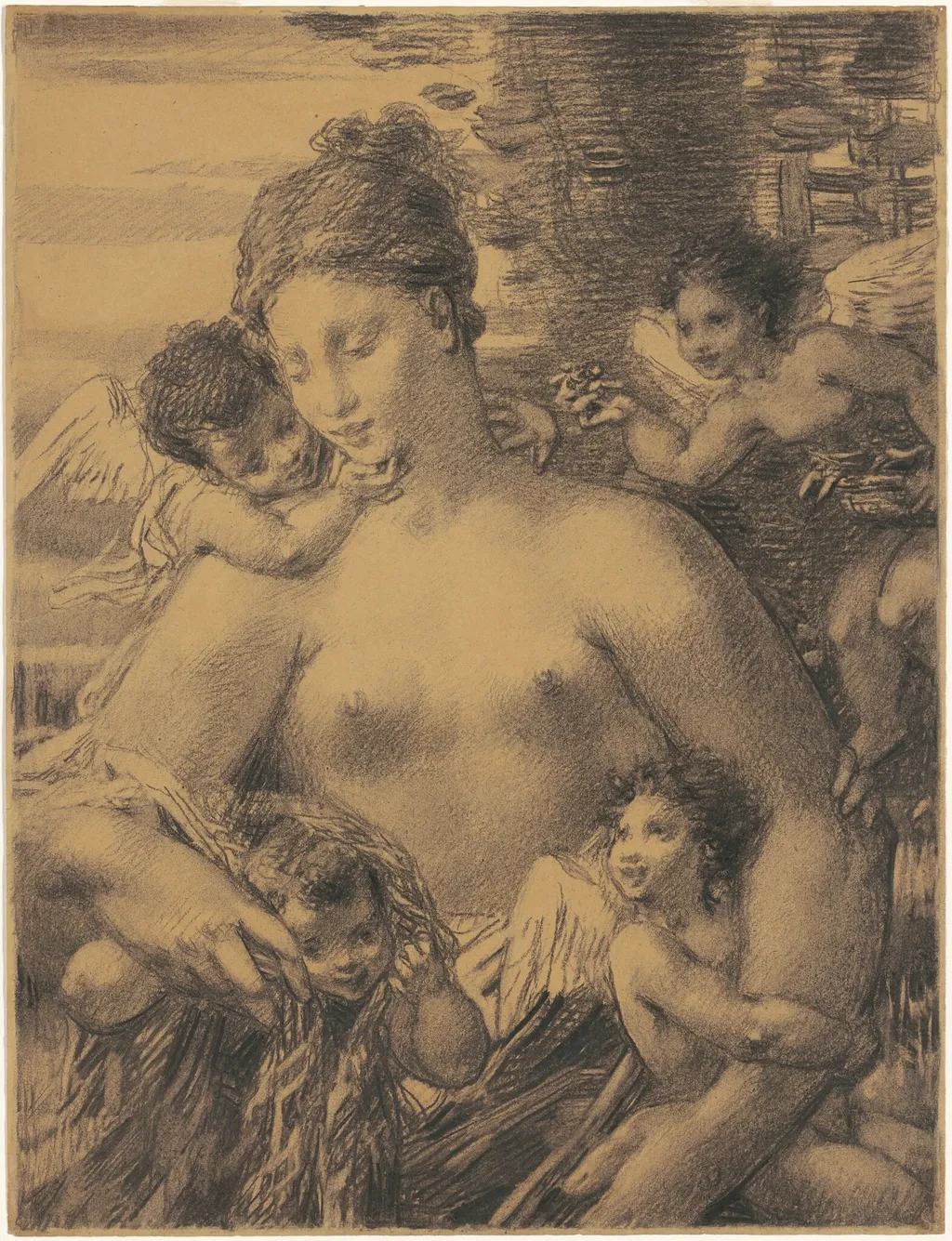
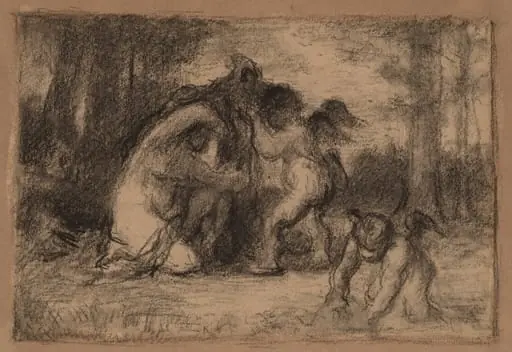
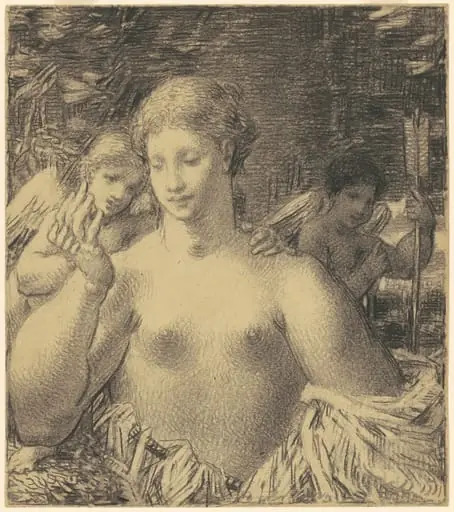
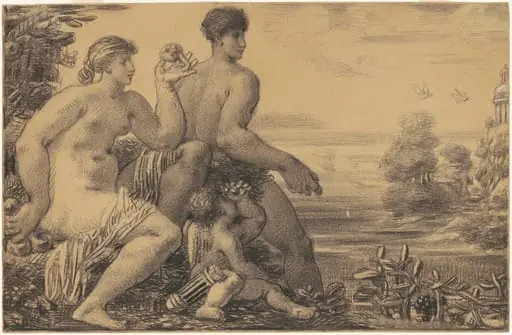
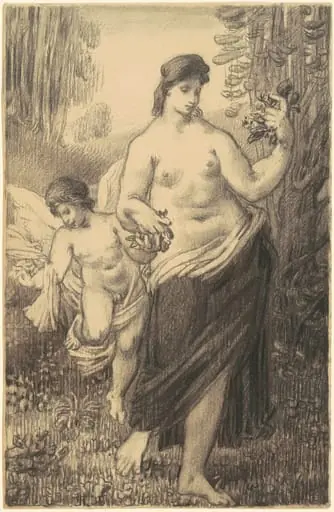
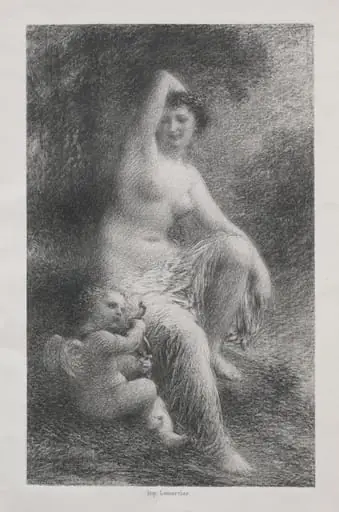
Nude with Cherubim is a charcoal drawing by the Impressionist artist William Perkins Babcock. It dates from 1870 and is held in the collection of the National Gallery of Art.
About this work
Overview
Created around 1870, this charcoal drawing by William Perkins Babcock depicts a reclining female figure in a contemplative pose.
Created around 1870, this charcoal drawing by William Perkins Babcock depicts a reclining female figure in a contemplative pose. Executed on wove paper, the work exemplifies the artist’s interest in the interplay of light and form. The medium’s versatility allows for both bold, expressive strokes and delicate tonal transitions, capturing a quiet intimacy between the figure and the surrounding space.
Subject & Meaning
The figure, viewed from behind with one arm raised, is rendered without narrative context, inviting a focus on physical presence rather than story. The inclusion of cherubim—small, ethereal figures—suggests a spiritual or allegorical dimension, though their role remains ambiguous. Their delicate forms contrast with the solidity of the nude, hinting at a tension between earthly and celestial realms.
Technique & Style
Babcock employed charcoal with a tactile sensitivity, using thick, gestural lines to define contours and smudged areas to model soft gradations of light. The rough texture of the paper interacts with the medium, enhancing the sense of immediacy. The effect is neither fully realistic nor abstract, but rather a meditative balance between structure and atmosphere, emphasizing mood over detail.
History & Provenance
The drawing’s early history is not well documented, but it likely originated within Babcock’s personal studio practice during the 1870s. It remained in private hands for much of the 20th century before entering a public collection. Its survival reflects its status as a study or intimate work, rather than a commissioned piece, preserving the artist’s experimental approach to figure drawing.
Context
Produced during a period when American artists were increasingly engaging with European academic traditions, Babcock’s work aligns with the revival of figure studies in the post-Civil War era. While not part of a major movement, his use of charcoal reflects broader trends in drawing as a medium for exploring form and light, distinct from the more polished oil paintings of the time.
Legacy
Though Babcock is not widely known today, this drawing stands as a quiet example of 19th-century American figure study. Its emphasis on tonal nuance and emotional restraint distinguishes it from more theatrical contemporaries. The work continues to be referenced in academic circles for its sensitive handling of light and the understated dignity of its subject.
Artist & collection