Artwork
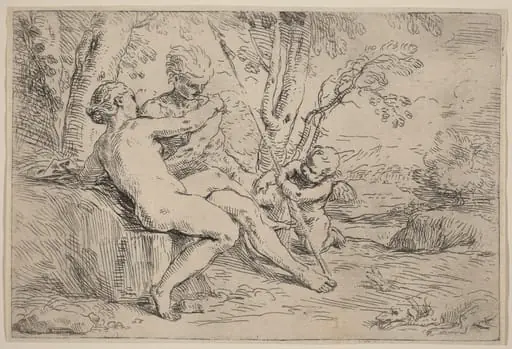
Venus, Mars, and Cupid
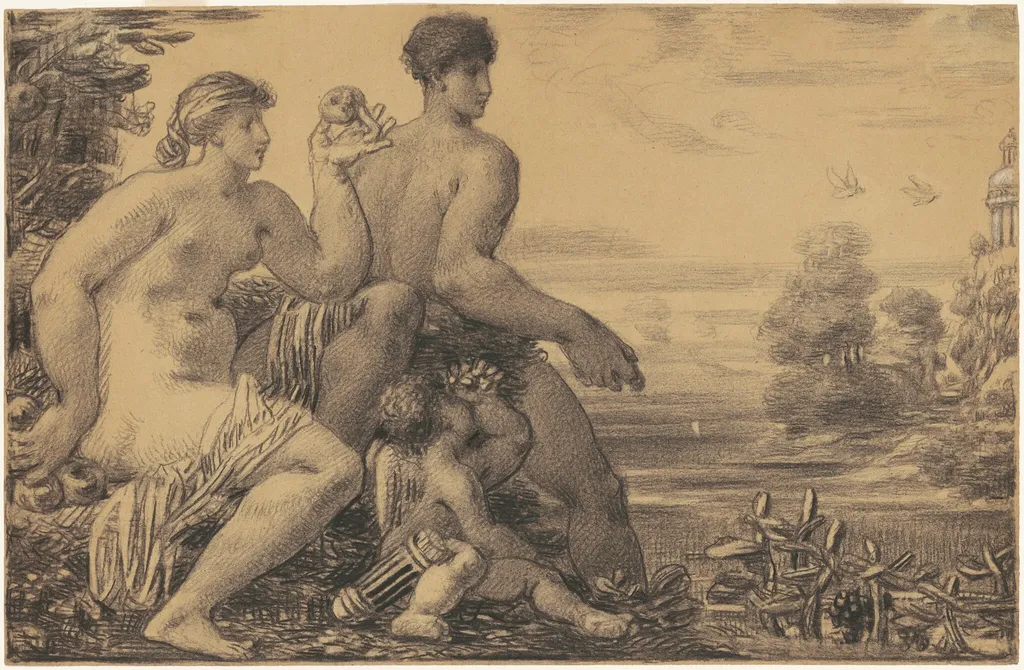
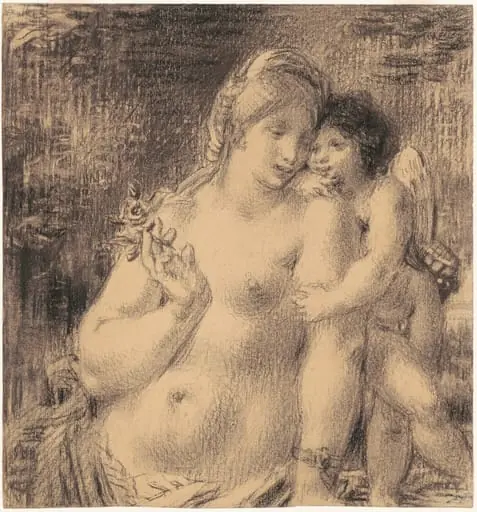
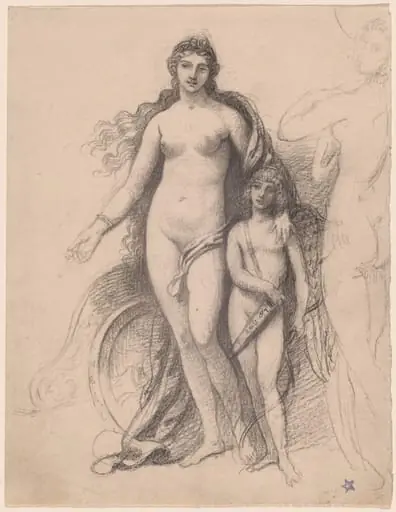
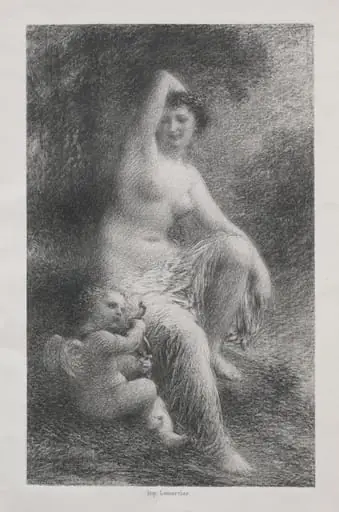
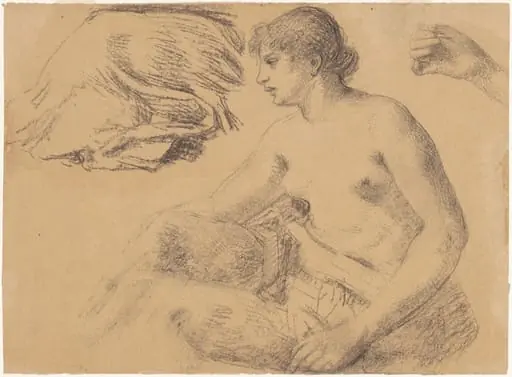
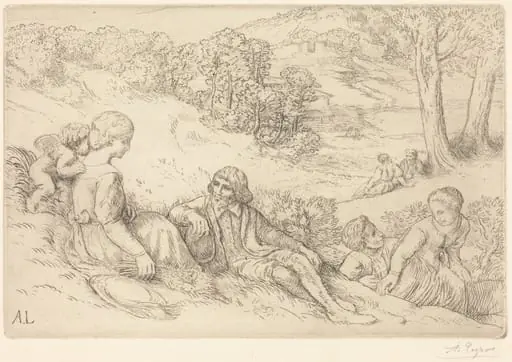
Venus, Mars, and Cupid is a charcoal drawing by the Impressionist artist William Perkins Babcock. It dates from 1870 and is held in the collection of the National Gallery of Art.
About this work
Overview
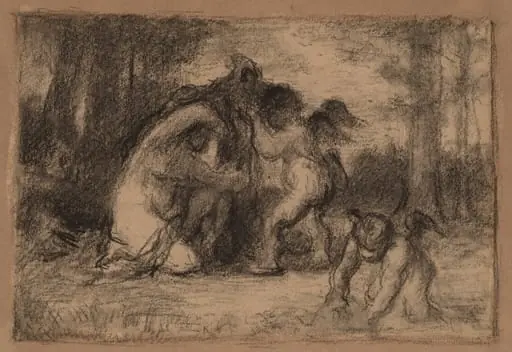
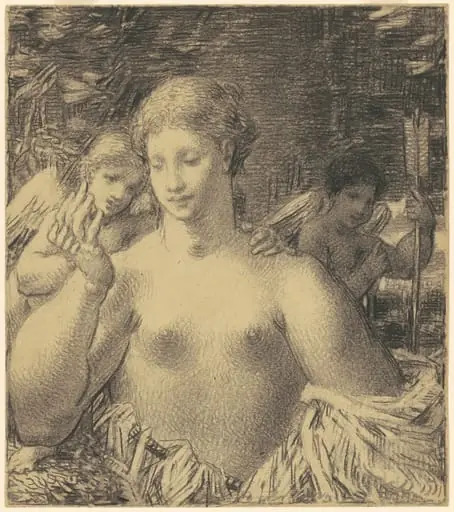
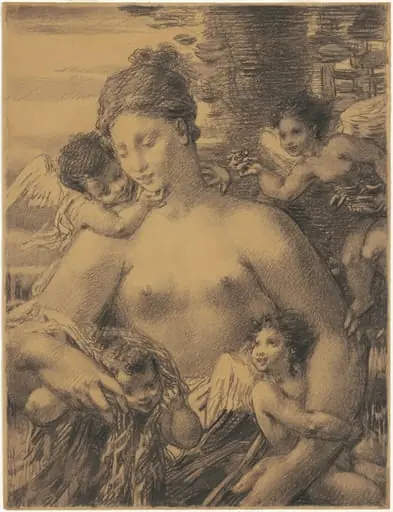
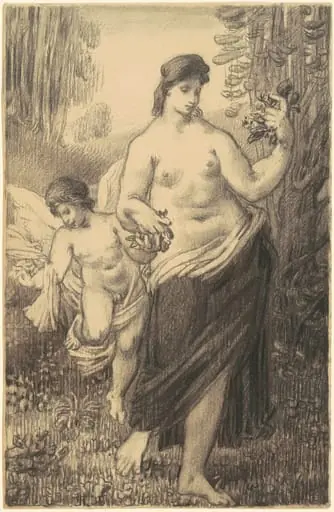
Created around 1870, this drawing by American artist William Perkins Babcock depicts a mythological scene titled Venus, Mars, and Cupid. Executed in charcoal with white chalk on wove paper, the work presents a loosely rendered tableau that blends classical subject matter with a 19th‑century sensibility.
Subject & Meaning
The composition gathers three figures from Roman mythology: a seated female figure, identified as Venus, holds a shell to her ear; a muscular male, Mars, reclines behind her with a spear; and a small child, Cupid, frolics nearby. The inclusion of birds and fish in the watery setting suggests a harmonious natural world surrounding the deities.
Technique & Style
Babcock employs soft charcoal to soften outlines, allowing forms to merge into the surrounding landscape. White chalk highlights the shell, the spear, and the water’s surface, creating a subtle contrast. The overall effect is dreamlike, with blurred edges that convey movement and atmosphere rather than precise detail.
History & Provenance
The drawing originates from the late 19th century, a period when American artists often revisited classical themes for academic study and exhibition. While specific ownership records are limited, the work is attributed to Babcock’s mature period, reflecting his interest in mythological subjects.
Context
During the 1870s, American art schools emphasized drawing from the human figure and classical narratives. Babcock’s choice of charcoal and chalk aligns with contemporary pedagogical practices, allowing rapid exploration of composition and tonal values without the permanence of oil.
Legacy
Although not a widely reproduced image, the piece illustrates Babcock’s ability to merge academic subject matter with a freer, more atmospheric approach. It contributes to a broader understanding of how 19th‑century American artists engaged with antiquity through drawing rather than painting.
Artist & collection