Artwork
The monumenr of Ann, wife of Francis Waring
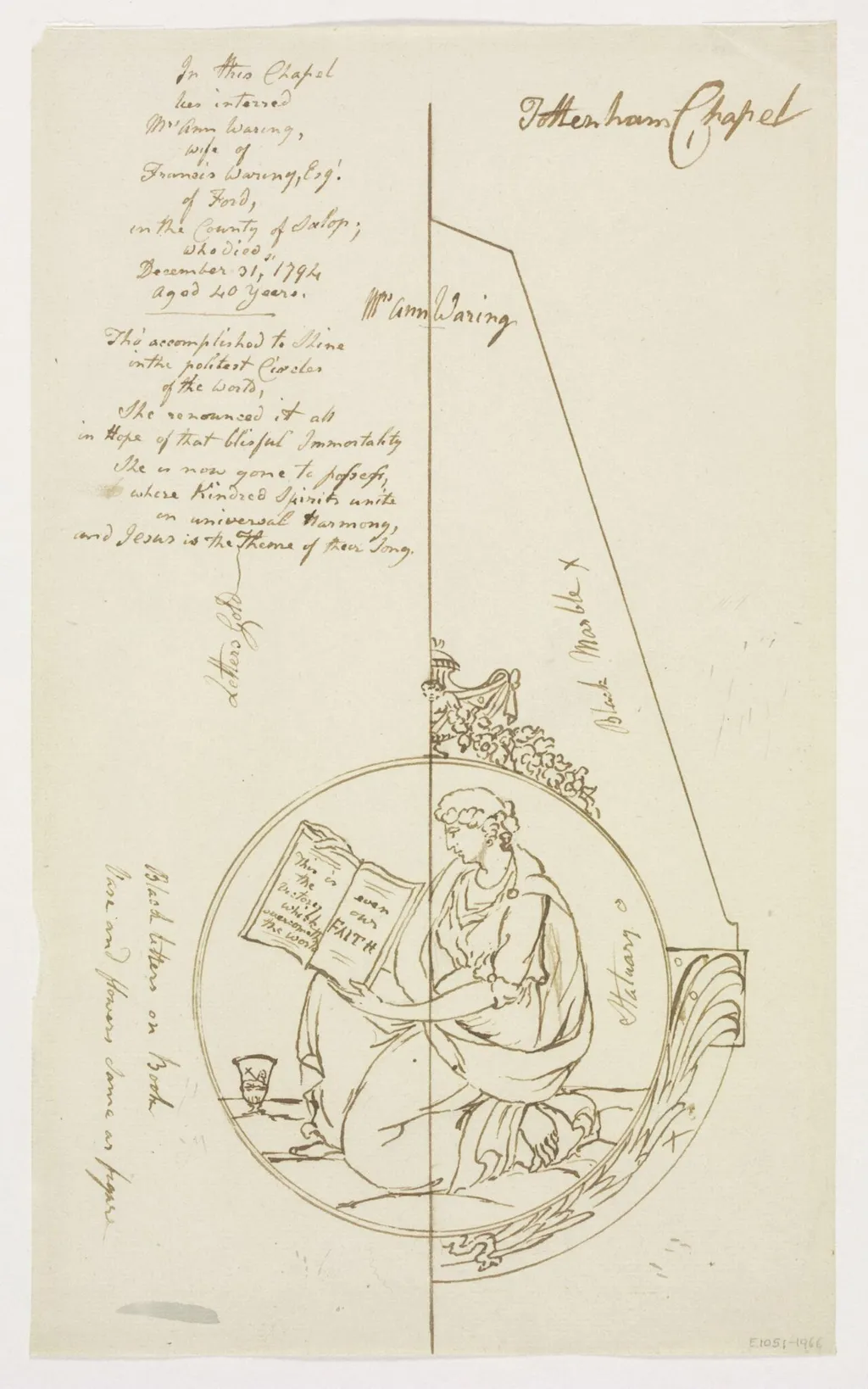
The monumenr of Ann, wife of Francis Waring is a drawing by John Bacon. It dates from 1750 and is held in the collection of the Victoria and Albert Museum. This paper drawing documents a funerary monument commissioned for Ann Waring, the spouse of Francis Waring.
About this work
The drawing is split down the middle by a vertical line, with handwritten notes around the edges in looping script.
This sketch shows a woman sitting and reading a book, her hand resting on her chin. Behind her, a small table holds a cup and a book with text visible. The drawing is split down the middle by a vertical line, with handwritten notes around the edges in looping script.
The notes mention a woman named Ann Waring, who died in 1794. The text talks about her life and beliefs, hinting at a memorial purpose for this sketch.
Look up cross-hatching to see how artists like Bacon built up shading with lines.
Overview
This paper drawing documents a funerary monument commissioned for Ann Waring, the spouse of Francis Waring. The original monument was sculpted by John Bacon the Elder in 1750, and the sketch captures its composition for archival or memorial purposes. The work functions as a visual record rather than a finished artwork, preserving the design of the commemorative piece.
Subject & Meaning
The image portrays a seated woman absorbed in reading, her hand supporting her chin, while a modest table nearby holds a cup and an open book displaying legible text. The composition underscores themes of piety, education, and contemplation, reflecting the values attributed to Ann Waring in the accompanying handwritten commentary that outlines her life and beliefs.
Technique & Style
Rendered with fine cross‑hatching, the artist builds tonal depth through intersecting lines, a method common among 18th‑century draftsmen. A vertical central line bisects the sheet, organizing the composition, while looping script surrounds the margins, integrating textual notes with the visual study. The restrained line work emphasizes form and surface without resorting to heavy shading.
History & Provenance
The sketch references Ann Waring, who died in 1794, and appears to have been produced shortly after her death as part of a memorial project. The drawing likely remained within the Waring family or associated archives, serving as a reference for the monument’s design and as a personal tribute to the deceased.
Context
John Bacon the Elder, a prominent sculptor of mid‑century Britain, created many commemorative monuments for the gentry. This drawing reflects the period’s practice of producing preparatory studies for stone monuments, allowing patrons to visualize the intended tribute before execution. The inclusion of literary elements aligns with Enlightenment ideals that prized learning and moral virtue.
Artist & collection
Artist
John Bacon carved smooth, dignified marble busts and drawings in late 1700s London, where he turned commissions into quiet intimacy—his Unknown elderly man (ca.

 Untitled
![Sketch of a Couple Seated with Cloud Studies [verso], by Walter Crane](https://artifactworldgallery.com/img/walter-crane--sketch-of-a-couple-seated-with-cloud-studies-verso--bd0c5f7cb1d389b6-w320.webp) Sketch of a Couple Seated with Cloud Studies [verso]
Sketch of a Couple Seated with Cloud Studies [verso]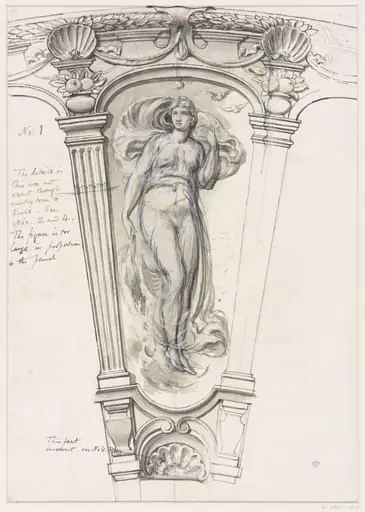 Measured drawing of a section of the design, E. 5303-1919
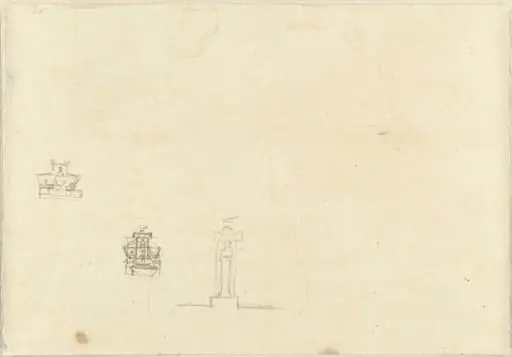 Sketches of Tombs
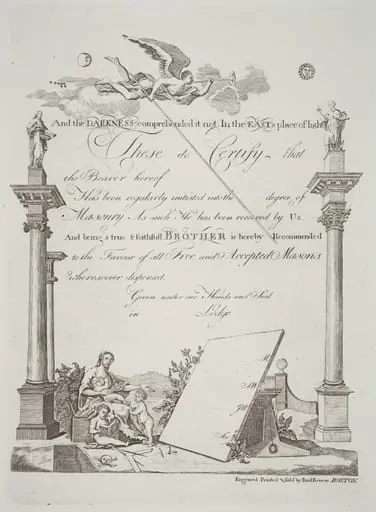 Masonic Certificate
 Original cartoon for the decoration of panels in the Grill Room of the Victoria and Albert Museum; "January."
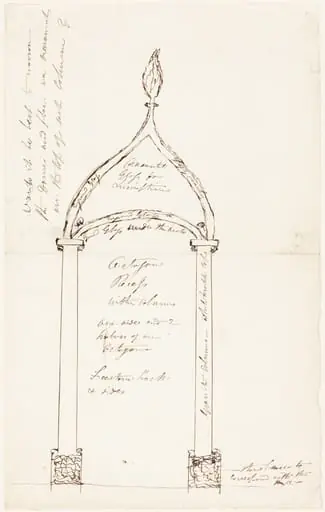 Sketch of Octagon Recess with Columns
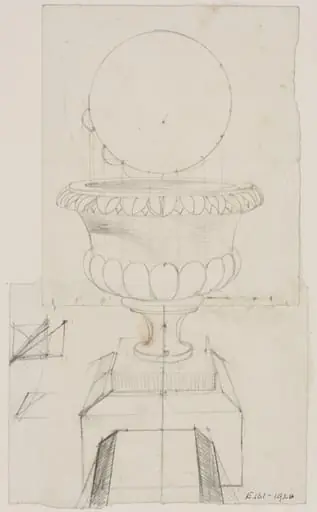 Drawing illustrating the theory of perspective
 King's Theatre Pantheon
 Studies of Classical Women, with Eros
 The Proposal
 Drawing of a fountain