Artwork
Original cartoon for the decoration of panels in the Grill Room of the Victoria and Albert Museum; "January."
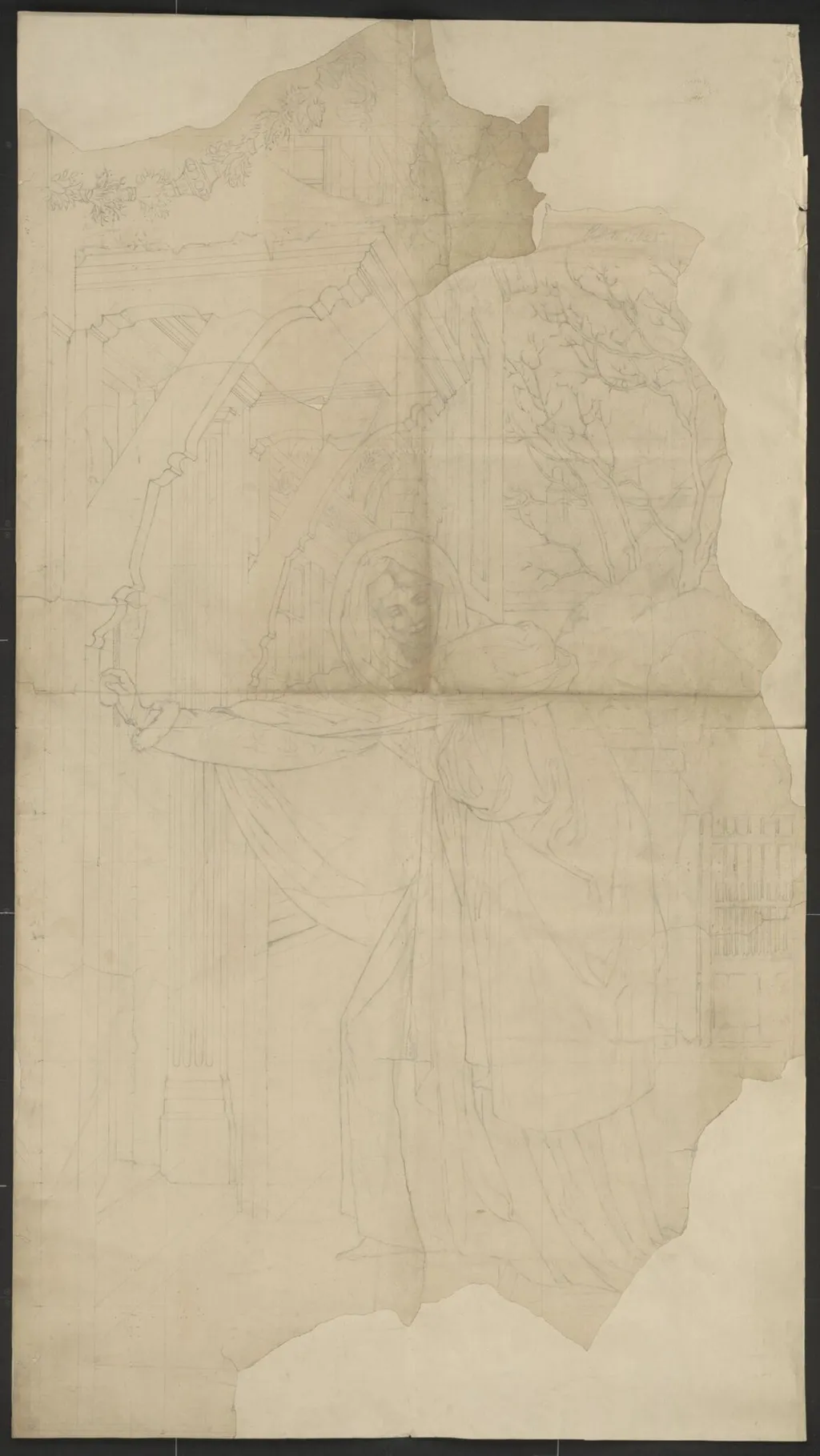
Original cartoon for the decoration of panels in the Grill Room of the Victoria and Albert Museum; "January." is a drawing by Edward John, Sir Poynter. It dates from 1886 and is held in the collection of the Victoria and Albert Museum.
About this work
Overview
It was one of twelve monthly themes commissioned for the space, with this piece representing January.
Created in 1886 by Edward John Poynter, this pencil and chalk drawing served as a full-scale preparatory design for a tile panel in the Grill Room of the Victoria and Albert Museum. It was one of twelve monthly themes commissioned for the space, with this piece representing January. The work retains visible signs of use, including tears and faded lines, reflecting its function as a working model for craftsmen translating the design into ceramic form.
Subject & Meaning
The figure is a cloaked woman approaching a doorway, her face intentionally indistinct, suggesting anonymity or symbolic representation rather than portraiture. The scene evokes a quiet transition—perhaps the passage from winter’s chill into shelter. The distant landscape behind her, with trees and a building, implies an external world, while the architectural frame grounds the figure in a timeless, interior space associated with contemplation and seasonal change.
Technique & Style
Poynter employed delicate pencil strokes and soft chalk to model form and texture, particularly in the voluminous folds of the robe. The architecture is rendered with clean, simplified lines, evoking classical or early Renaissance motifs. Subtle shading creates depth without heavy contrast, and the blurred facial features direct focus to posture and movement. The paper’s physical damage and faint lines underscore its role as a practical guide, not a finished artwork.
History & Provenance
Commissioned as part of a decorative program for the V&A’s Grill Room, the drawing was produced during a period when the museum sought to integrate fine art with applied design. Poynter, then president of the Royal Academy, was entrusted with overseeing the project. The cartoon remained in the museum’s collection after the panels were installed, preserved as a record of the design process and the collaborative nature of Victorian decorative arts.
Context
The Grill Room’s decoration reflected late 19th-century interests in reviving historical styles and uniting art with everyday function. Poynter’s monthly themes aligned with a broader trend in British design that drew from medieval and Renaissance precedents. The choice of allegorical figures for each month echoed classical traditions, while the use of tile panels connected the interior to the museum’s mission of showcasing craftsmanship across cultures and eras.
Legacy
Though the tile panels themselves have undergone conservation and occasional reconfiguration, Poynter’s original cartoons remain vital documents of Victorian decorative practice. They illustrate how fine artists contributed to public interiors through meticulous preparatory work, bridging the gap between studio art and industrial production. Today, they are studied for their technical precision and their role in shaping the aesthetic identity of a major cultural institution.
Artist & collection
Artist
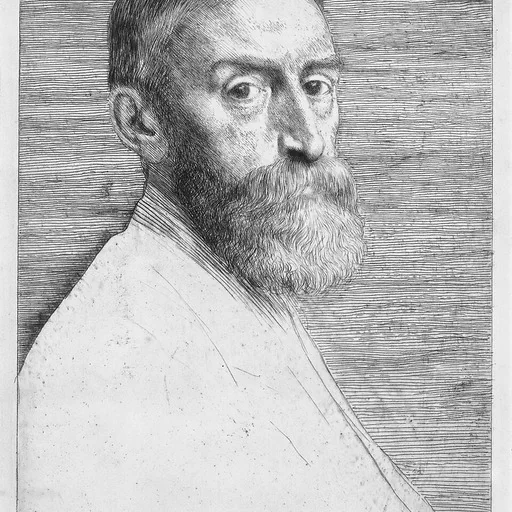
Sir Edward John Poynter, 1st Baronet (20 March 1836 – 26 July 1919) was an English painter, designer, and draughtsman, who served as President of the Royal Academy.

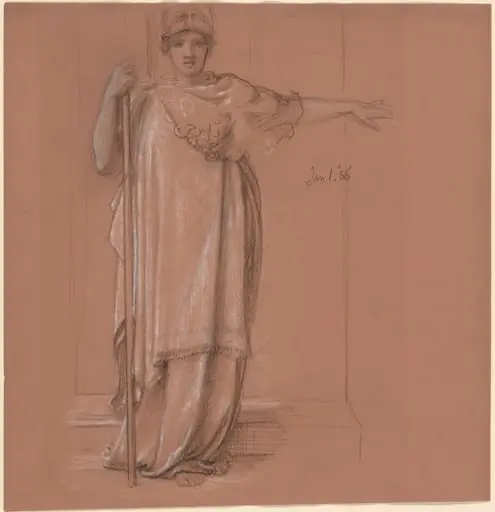
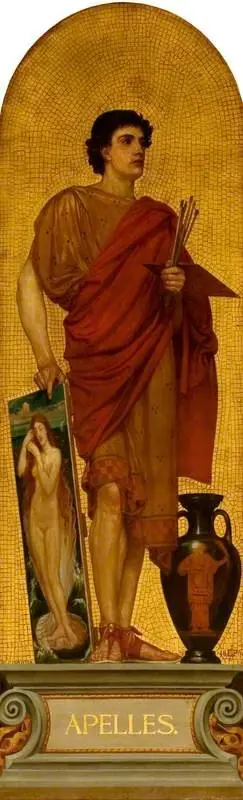
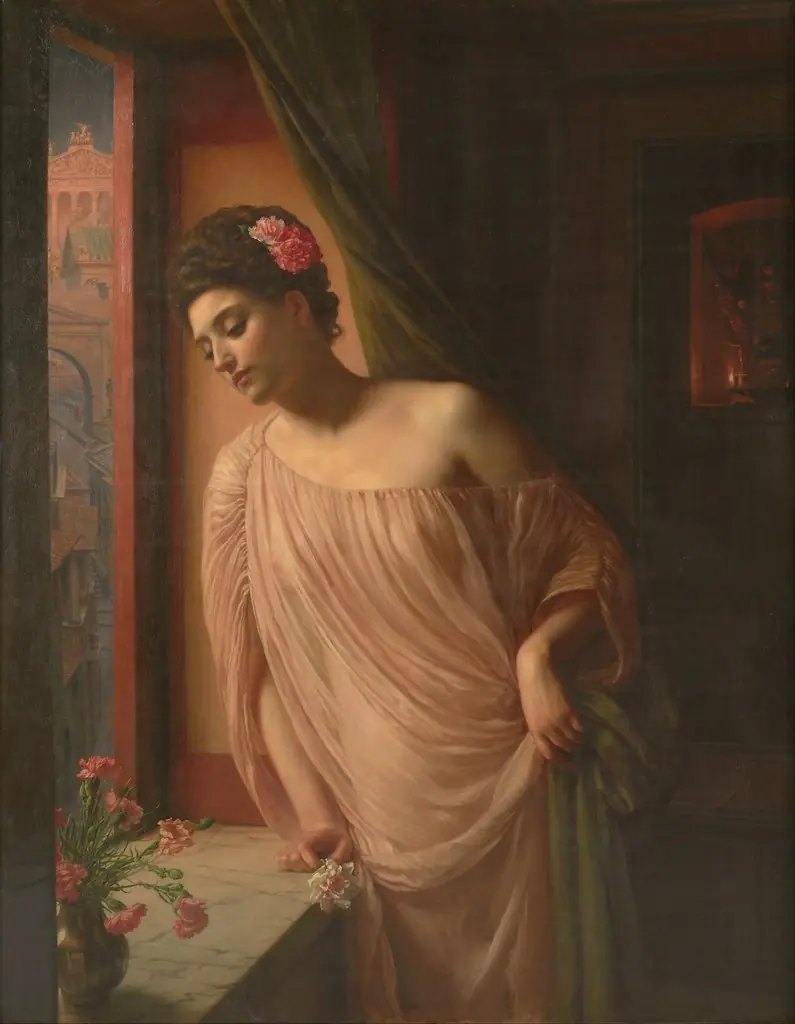
 Figure Studies
 Two Architectural Studies
 The Head of Saint George and Architectural Plans (verso)
![Figure Studies [verso], by Thomas Sully](https://artifactworldgallery.com/img/thomas-sully--figure-studies-verso--951eb42592bb5e4f-w320.webp) Figure Studies [verso]
Figure Studies [verso] Sketch for San Giovanni in Laterano (verso)
![Study of an Interior [verso], by Walter Shirlaw](https://artifactworldgallery.com/img/walter-shirlaw--study-of-an-interior-verso--ae90136ae4907dbf-w320.webp) Study of an Interior [verso]
Study of an Interior [verso] Studies of Hands Playing Instruments (verso)
 Untitled
 Nude and Fish with Flowers (Study for etched bathroom window)
 Untitled
 Gothic Ornament with a Lady and a Parrot
 Cartoon for The Opinion of the Model