Artwork
Masonic Certificate
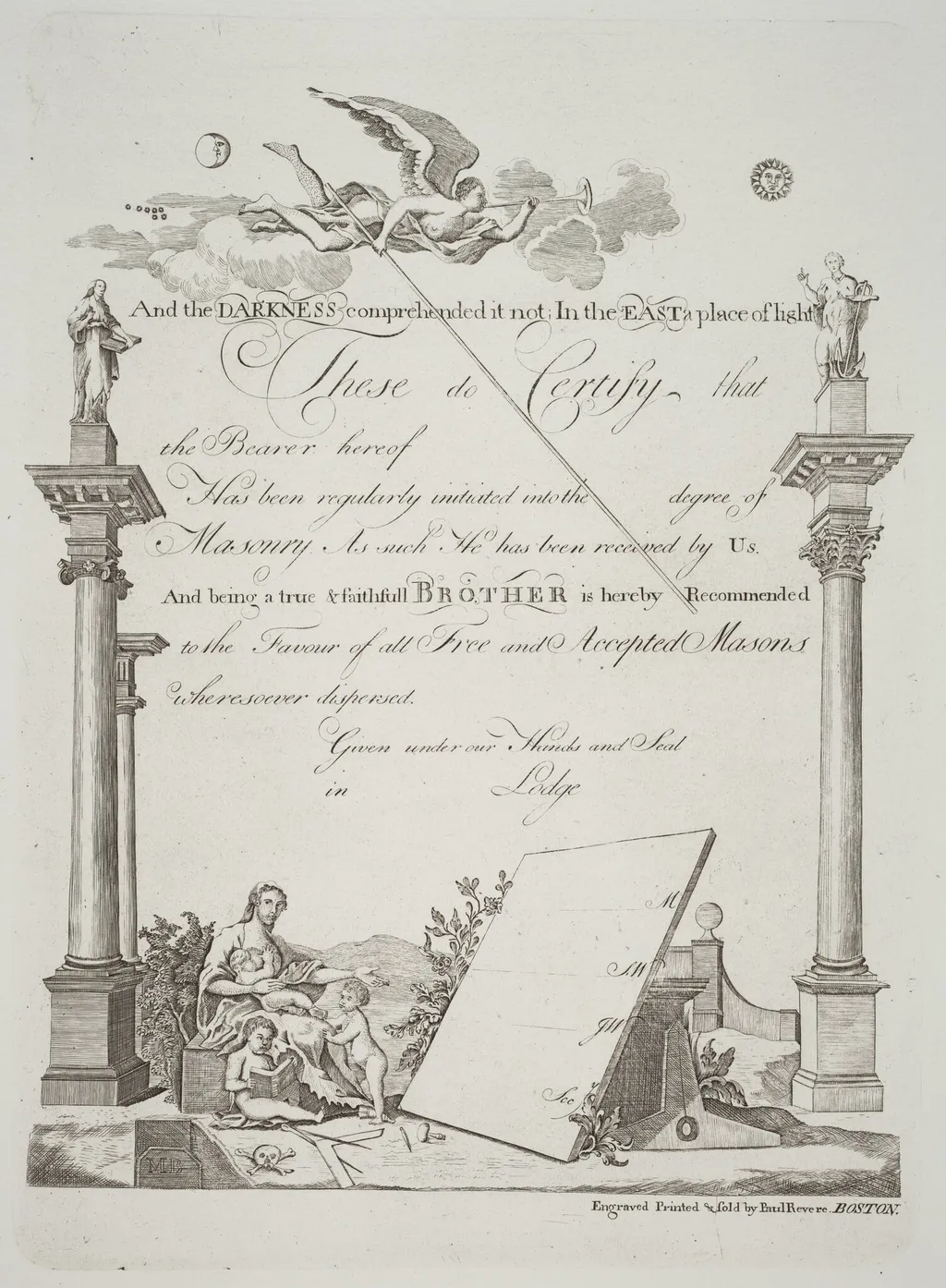
Masonic Certificate is an ink print by the Romanticist artist Paul Revere. It dates from 1796 and is held in the collection of the National Gallery of Art.
About this work
" The print mixes symbols—like the sun, moon, and pillars—to mean something special.
This print shows a fancy certificate for a Masonic lodge. At the top, two angels float above pillars, holding a moon and sun. Below, a man sits with two kids, one reading a book. The text is in old-style writing, saying the man is a "true & faithful BROTHER."
The print mixes symbols—like the sun, moon, and pillars—to mean something special. It was made by a printer in 1954, but the design is from 1796.
Check out how this uses engraving to create the detailed lines.
Overview
The work is an engraved representation of a Masonic certificate, originally designed by Paul Revere in 1796 and later reproduced on wove paper by printer Herbert Pasternack in 1954. The composition features allegorical figures, architectural elements, and a domestic scene, all arranged around a central inscription that affirms the recipient’s fidelity to the fraternity.
Subject & Meaning
At the upper edge, two winged angels hover beside classical pillars, each bearing a celestial body—the sun and the moon—symbols often associated with enlightenment and balance in Masonic iconography. Beneath them, a seated man is accompanied by two children, one engaged with a book, suggesting the transmission of knowledge and moral instruction within the brotherhood.
Technique & Style
Revere’s original line work, rendered through fine engraving, translates into a crisp, high‑contrast image when printed. The technique allows for intricate detailing of the figures, drapery, and architectural motifs, while the wove paper provides a smooth surface that enhances the clarity of the incised lines, preserving the delicate balance between text and illustration.
History & Provenance
Although the design dates to the late eighteenth century, the surviving impression was produced in the mid‑twentieth century by Herbert Pasternack, a specialist printer known for reviving historic engravings. This later printing demonstrates the continued interest in Masonic visual culture and the preservation of Revere’s graphic legacy.
Context
Masonic certificates of the Revolutionary era often combined esoteric symbolism with personal portraiture to affirm membership and moral standing. The inclusion of celestial bodies, pillars, and familial scenes reflects the Enlightenment ideals that shaped early American Freemasonry, linking individual virtue to broader philosophical principles.
Artist & collection


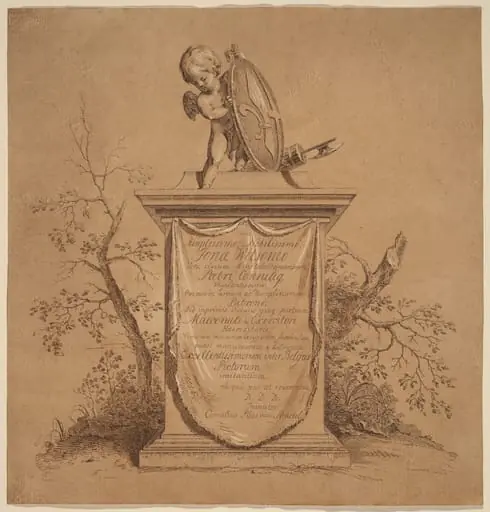 Title Page
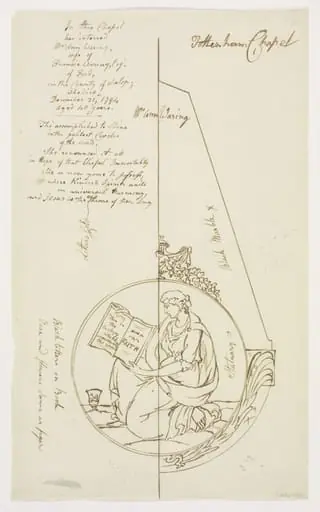 The monumenr of Ann, wife of Francis Waring
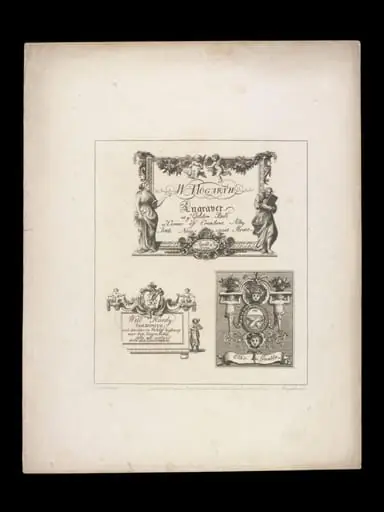 H Beard Print Collection
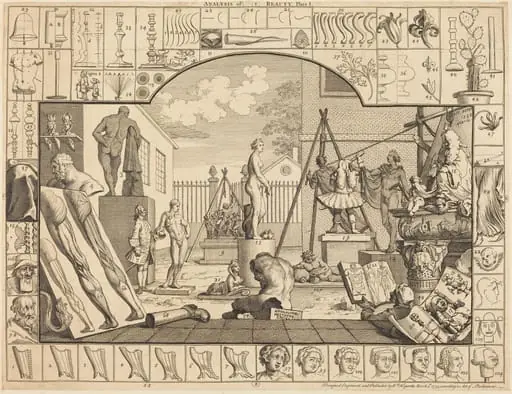 Analysis of Beauty: pl.1
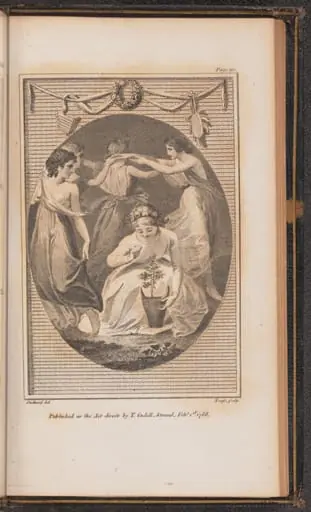 Illustration for Canto V
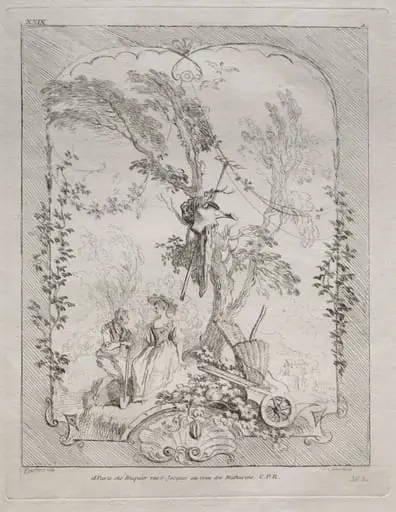 The Proposal
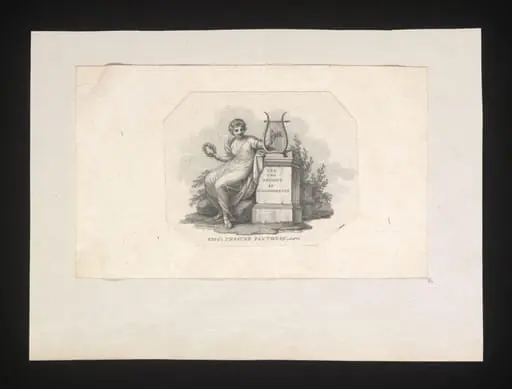 King's Theatre Pantheon
 Untitled
 Programme de la représentation du 3 février 1878, salle Ventadour
 Tomb of Nero
 Cartouche Moderne with Emblems of Death
 Coat of Arms with Three Putti