Artwork
Chancery Lane, Thrapston
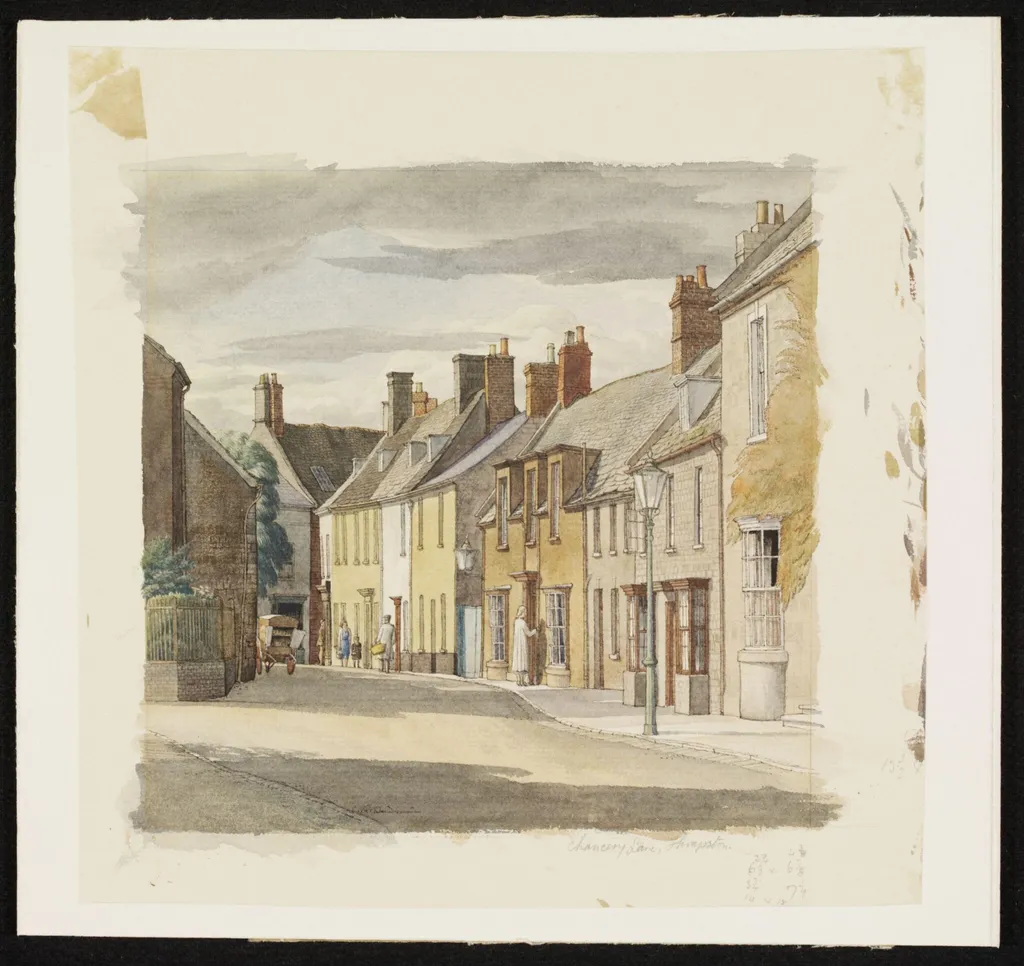
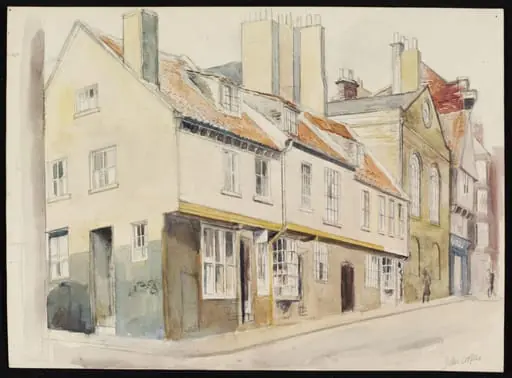
Chancery Lane, Thrapston is a watercolor work on paper by Badmin. It dates from 1940 and is held in the collection of the Victoria and Albert Museum. This watercolour, painted in 1940, captures a quiet stretch of Chancery Lane in the Northamptonshire village of Thrapston.
About this work
Overview
The work reflects a broader effort to preserve visual records of everyday English landscapes before they might be lost to war or modernization.
This watercolour, painted in 1940, captures a quiet stretch of Chancery Lane in the Northamptonshire village of Thrapston. Created as part of the Recording Britain initiative, it documents a modest urban lane during a time of national anxiety. The work reflects a broader effort to preserve visual records of everyday English landscapes before they might be lost to war or modernization. Its unassuming subject and restrained palette align with the project’s aim to record ordinary scenes with quiet precision.
Subject & Meaning
The scene portrays a typical working village street: terraced stone houses with steep roofs, small windows, and visible chimneys. A man pushes a cart toward the horizon, while a woman converses near a doorway. These fleeting moments of daily life—unremarkable yet intimate—emphasize the human scale of the environment. The composition avoids drama, instead honoring the quiet rhythm of rural existence, reinforcing the project’s goal to affirm cultural continuity amid uncertainty.
Technique & Style
Executed in watercolour, the painting employs loose, fluid brushwork and a muted palette of greys, browns, and soft blues. The artist avoids fine detail, using washes to suggest texture and form rather than define them. The sky is pale and open, allowing the buildings to dominate without competing for attention. This sketch-like approach conveys immediacy, as if the scene were observed and recorded in a single sitting, preserving a transient moment with sensitivity.
History & Provenance
Painted in 1940, this work was commissioned by the Recording Britain project, initiated by Sir Kenneth Clark to document vulnerable landscapes during wartime. Over 1,500 watercolours were produced by 97 artists across Britain, many of which were acquired by the Victoria and Albert Museum. This piece entered the museum’s collection as part of that effort, preserved not as art for art’s sake, but as a historical record of a nation’s changing environment during a critical period.
Context
Created during the early years of the Second World War, the Recording Britain project responded to fears of aerial bombardment and rapid urban change. Artists were sent to rural and small-town locations deemed at risk of disappearance. Chancery Lane, with its unaltered vernacular architecture, represented a vanishing way of life. The initiative sought to sustain morale by affirming the value of local heritage, even as the country faced upheaval.
Legacy
The Recording Britain collection remains a vital archive of mid-20th-century British topography and social life. Chancery Lane, like many works in the series, offers no grand narrative but instead a quiet testament to ordinary places. These watercolours continue to inform historical and architectural studies, providing visual evidence of pre-war village life. Their enduring value lies in their restraint, authenticity, and unembellished observation.
Artist & collection
Artist
Stanley Roy Badmin was an English painter and etcher particularly notable for his book illustrations and landscapes.

 Market Place, Poulton-le-fylde, near Blackpool
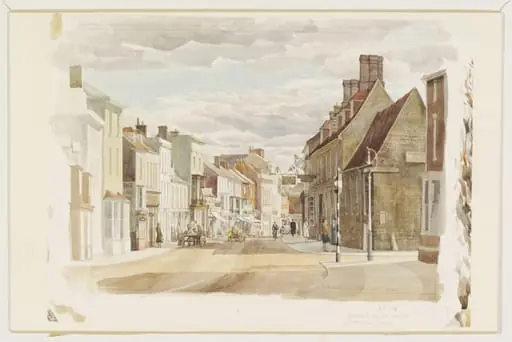 Towcester High Street from the Pomfret Arms Corner, Northamptonshire
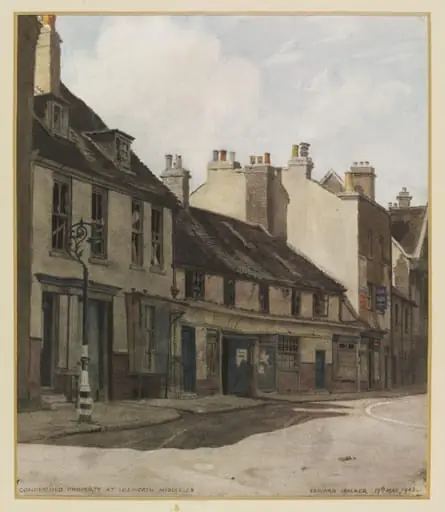 Condemned Property at Isleworth
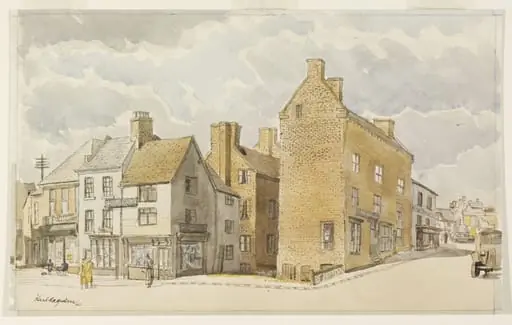 Ashbourne
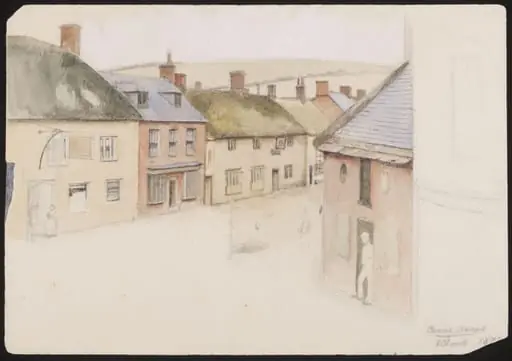 Cerne Abbas
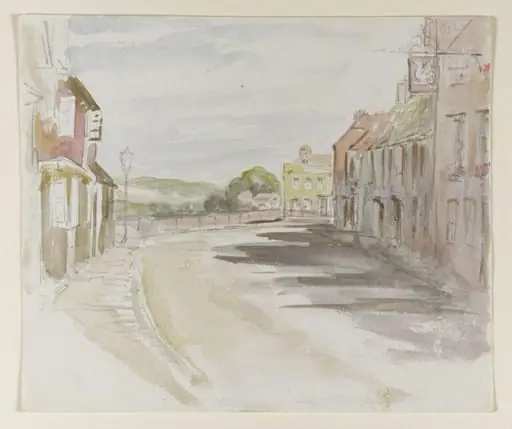 Bury St Edmunds
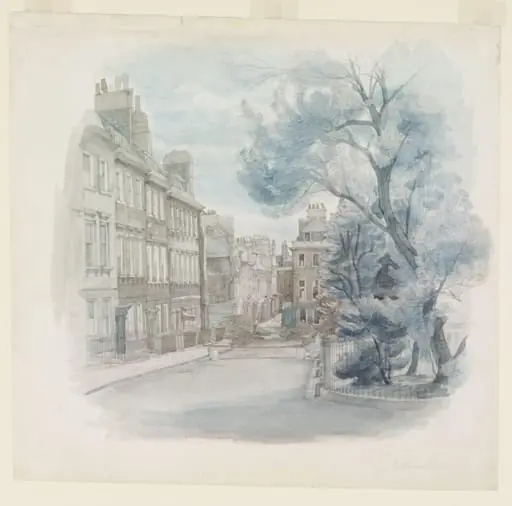 Catharine Place, Bath, Somerset
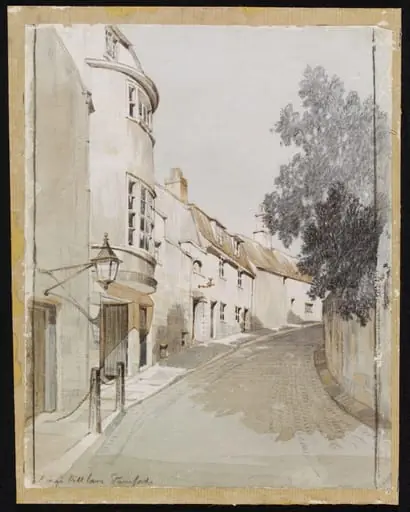 King's Mill Lane, Stamford, Rutlandshire
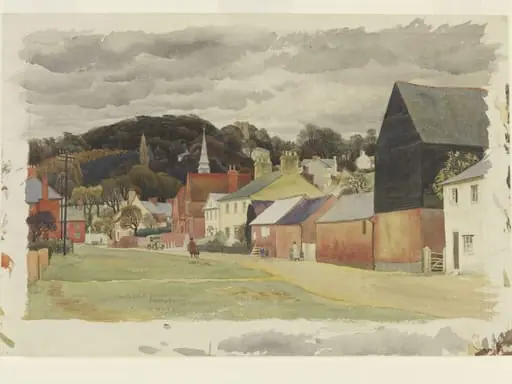 Bow Brickhill, Bletchley, Buckinghamshire
 Tudor Houses, Church Street, Whitby
 Cowbridge, Glamorganshire