Artwork
Adam and Eve with Serpent
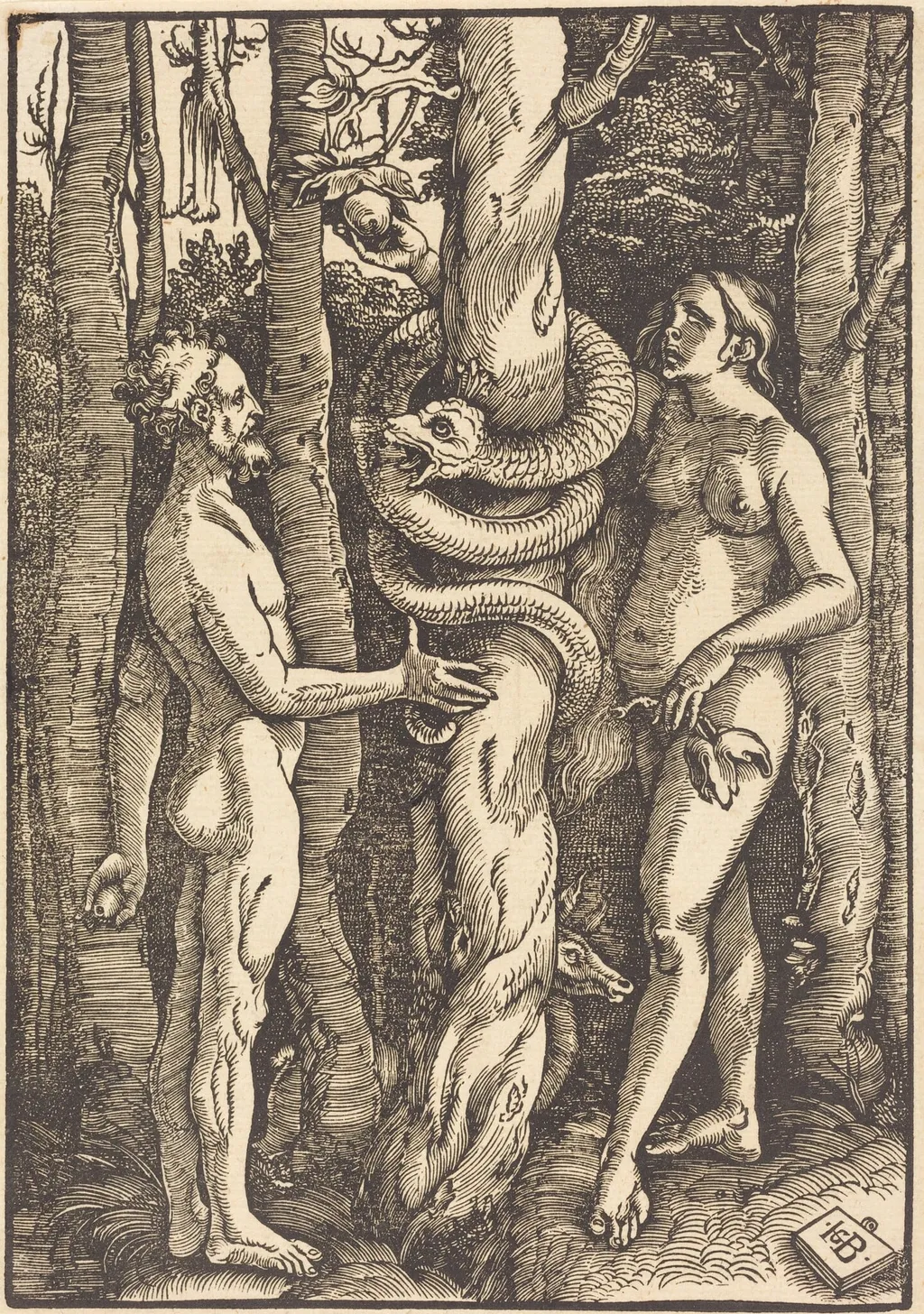
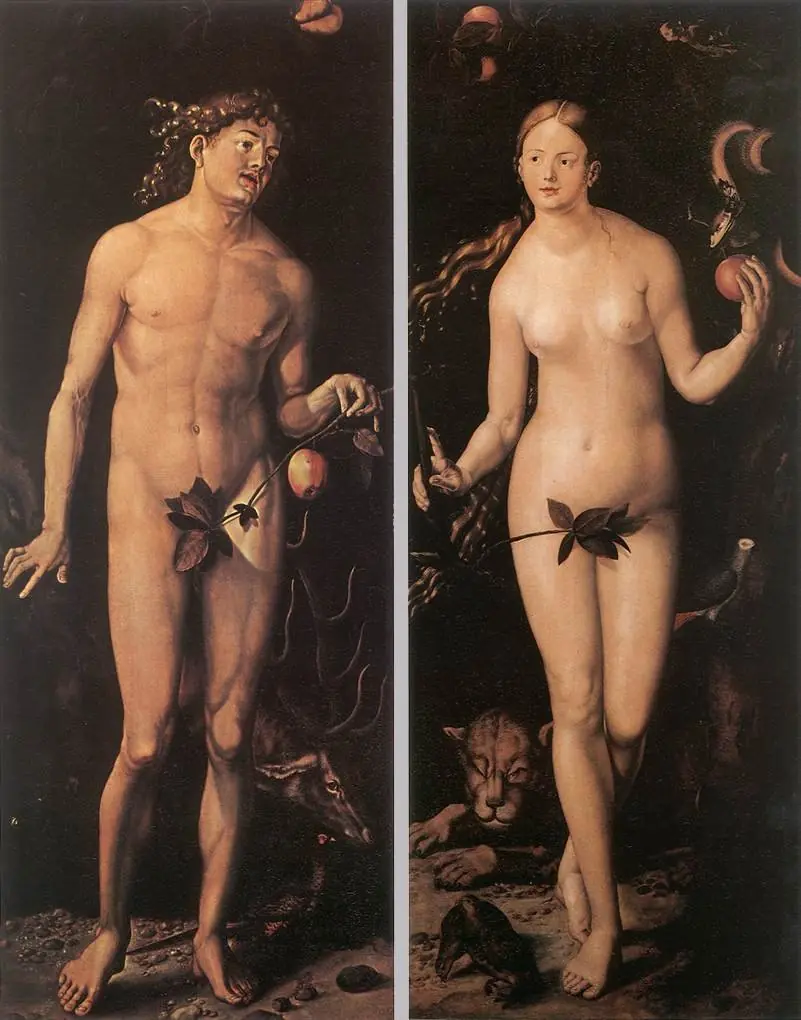
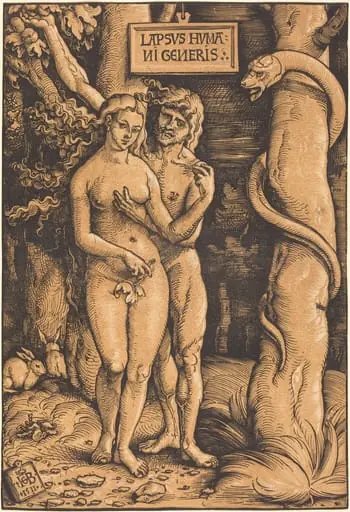
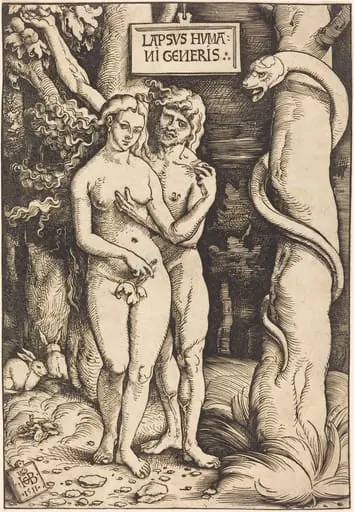
Adam and Eve with Serpent is an ink print by the Renaissance artist Hans Baldung Grien. It dates from 1514 and is held in the collection of the National Gallery of Art.
About this work
Overview
Hans Baldung Grien’s woodcut *Adam and Eve with Serpent* (1514) presents a compact, forested scene of the biblical Fall. A bearded, barefoot Adam holds a branch, while a naked Eve leans against a coiled serpent that dominates the central tree. Tall trunks frame the figures, creating a tense yet intimate tableau rendered in stark black‑and‑white lines.
Subject & Meaning
The print visualizes the moment of temptation, with the serpent’s forked tongue and Eve’s relaxed posture emphasizing the paradox of innocence and sin. By juxtaposing Adam’s defensive stance with Eve’s receptive pose, Baldung underscores the theological narrative of humanity’s fall and the ensuing moral conflict.
Technique & Style
Executed as a woodcut, the image was carved into a single block of wood, inked, and pressed onto paper, producing bold contrasts and crisp outlines. Baldung’s handling of line reflects Dürer’s influence, yet his composition displays a more expressive, Mannerist dynamism, evident in the exaggerated gestures and intricate foliage.
History & Provenance
Created during Baldung’s early career, the work aligns with his prolific output across painting, printmaking, and stained‑glass design. While specific ownership records are sparse, the print circulated among collectors of German Renaissance prints, contributing to the artist’s reputation for inventive biblical imagery.
Own this work as a print
Artist & collection
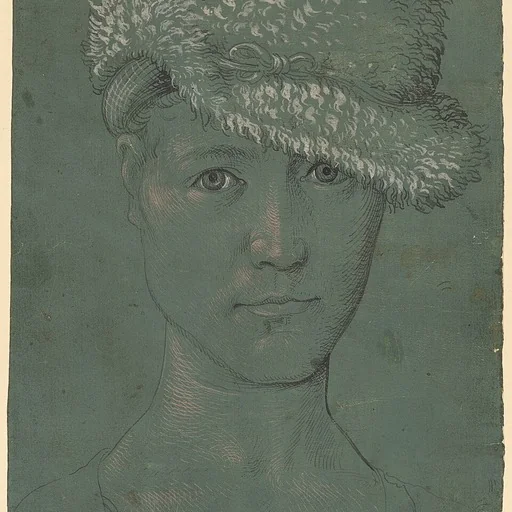
Artist
Hans Baldung (1484 or 1485 – September 1545), called Hans Baldung Grien, (being an early nickname, because of his predilection for the colour green), was a painter, printer, engraver, draftsman, and stained glass…