Artwork
The Conversion of Saint Paul
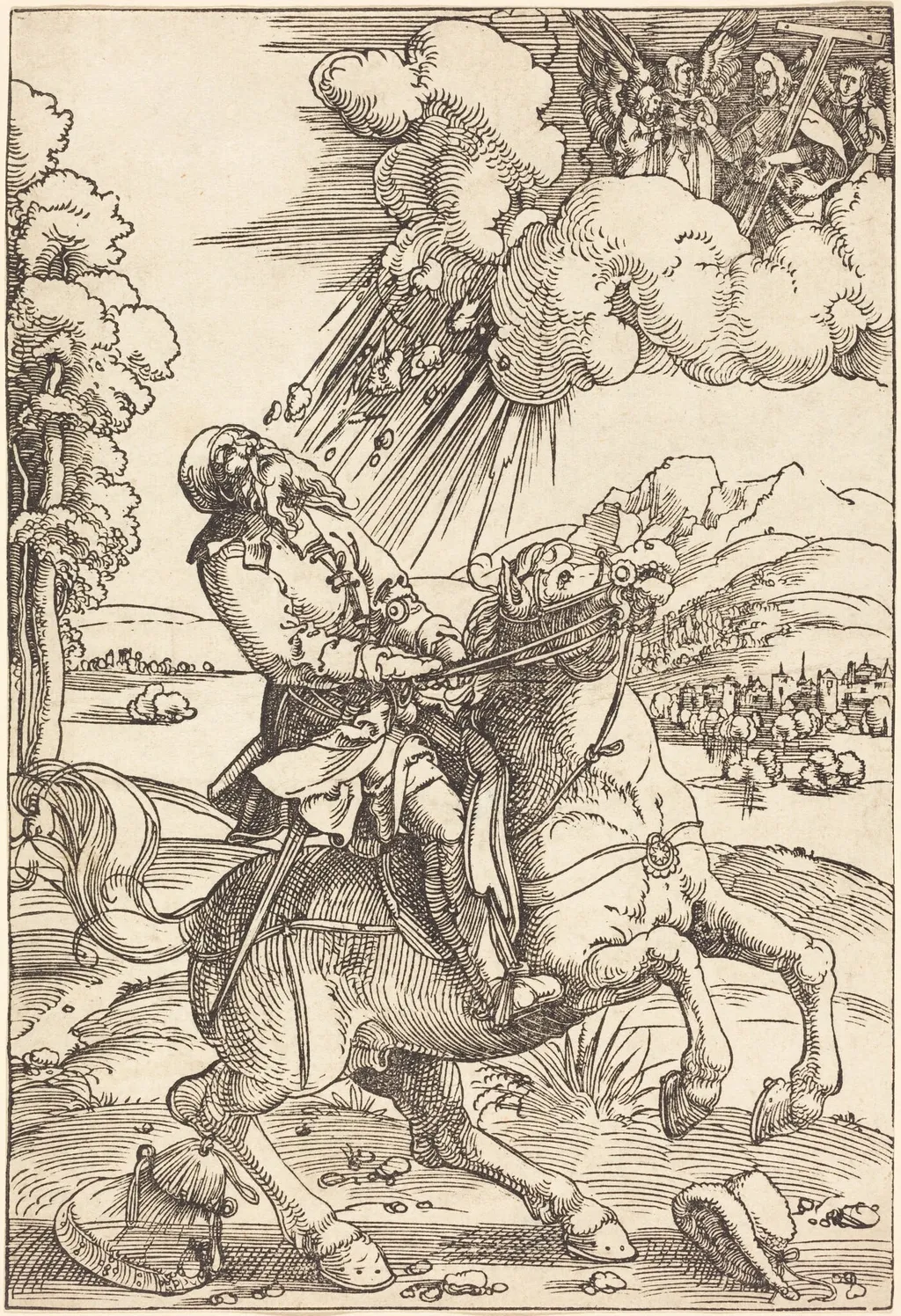
The Conversion of Saint Paul is an ink print by the Renaissance artist Hans Baldung Grien. It dates from 1508 and is held in the collection of the National Gallery of Art.
About this work
Overview
Created in 1508, Hans Baldung Grien’s woodcut illustrates the biblical event of Saul’s divine encounter on the road to Damascus.
Created in 1508, Hans Baldung Grien’s woodcut illustrates the biblical event of Saul’s divine encounter on the road to Damascus. Executed in the medium of woodcut, the print demonstrates Baldung’s command of line and contrast to convey spiritual upheaval. Though rooted in the German Renaissance, its dynamic composition anticipates Mannerist tendencies, distinguishing it from more restrained contemporary religious prints.
Subject & Meaning
The scene captures Saul, later Saint Paul, collapsed beneath a radiant, anthropomorphic light that seems to descend from the heavens. His outstretched hand and contorted posture suggest both surrender and awe. The surrounding chaos—swirling clouds, rearing horse—contrasts with the stillness of the landscape below, symbolizing the rupture of earthly order by divine intervention. The moment signifies spiritual awakening, a theme central to Reformation-era religious thought.
Technique & Style
Baldung employed sharp, incised lines and dense hatching to generate dramatic chiaroscuro, enhancing the sense of motion and emotional tension. The light is rendered not as a static form but as a fluid, almost sentient force, with radiating strokes that mimic fingers or flames. The horse’s strained musculature and the turbulent sky reveal his skill in translating movement into woodblock, pushing the expressive limits of the medium.
History & Provenance
Produced during Baldung’s early career, the woodcut reflects his apprenticeship under Albrecht Dürer and his immersion in Nuremberg’s printmaking culture. While no early ownership records are well documented, the print circulated widely in Protestant regions, aligning with the period’s growing demand for devotional imagery. Its survival in multiple institutional collections attests to its enduring presence in early 16th-century print networks.
Context
In the decade before the Reformation, religious imagery was undergoing transformation, shifting from ornate altarpieces to accessible prints for private devotion. Baldung’s work responded to this trend, blending traditional iconography with psychological intensity. The emphasis on personal revelation in this scene mirrors emerging theological currents that prioritized individual experience of the divine over institutional mediation.
Legacy
Though less celebrated than Dürer’s prints, Baldung’s *Conversion of Saint Paul* influenced later Northern artists in its bold use of emotional expression and dynamic composition within printmaking. Its departure from naturalistic calm toward expressive distortion marked a shift in how divine encounters were visually conceived, paving the way for more subjective interpretations in religious art of the 16th century.
Artist & collection
Artist
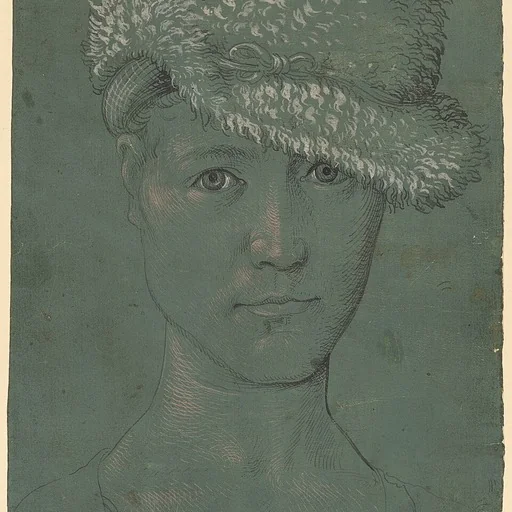
Hans Baldung (1484 or 1485 – September 1545), called Hans Baldung Grien, (being an early nickname, because of his predilection for the colour green), was a painter, printer, engraver, draftsman, and stained glass…