Artwork
Mănăstirea Bistrița
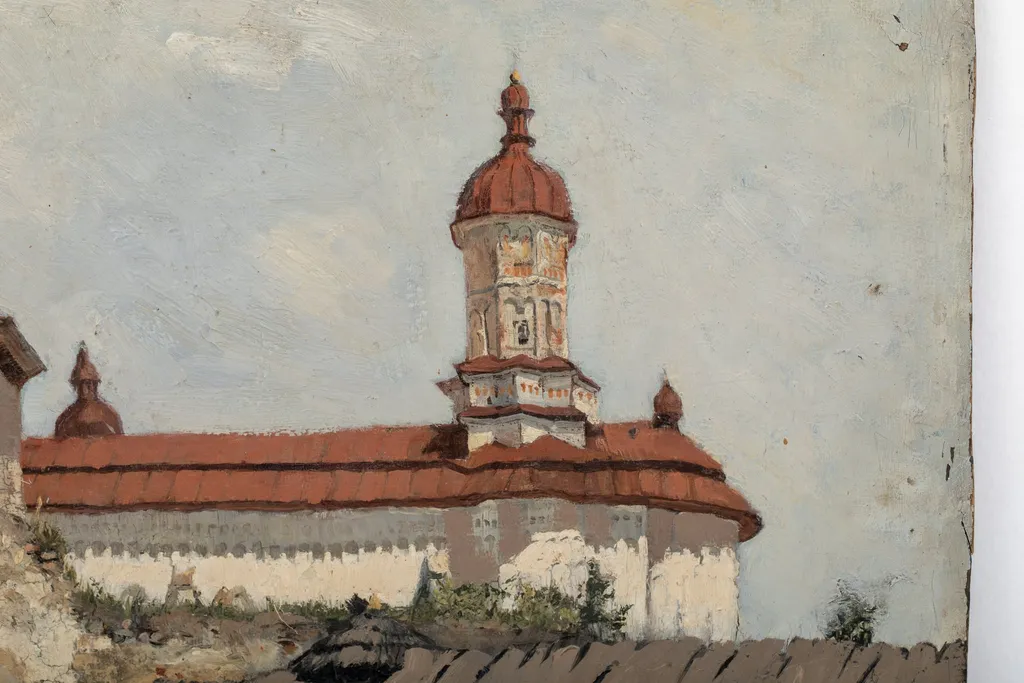
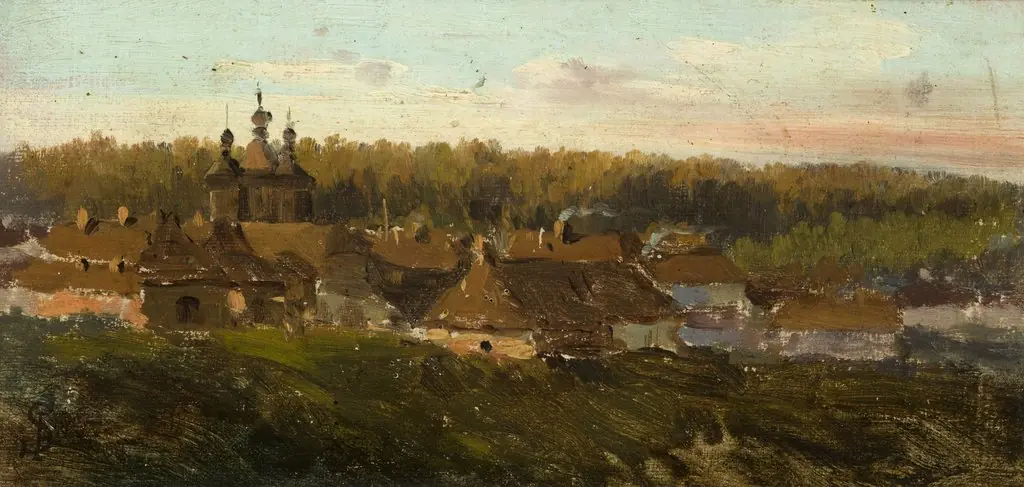
Mănăstirea Bistrița is an unspecified painting by Apcar Baltazar. It dates from 1894 and is held in the collection of the Moldova National Museum Complex.
About this work
Overview
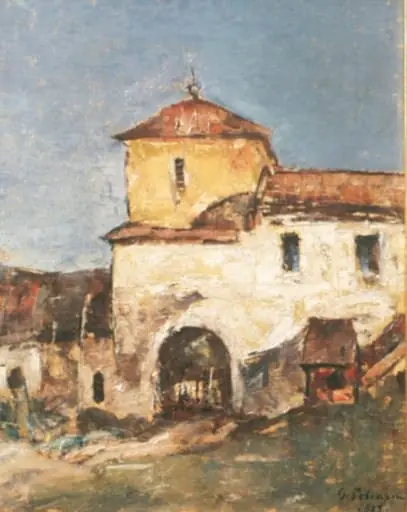
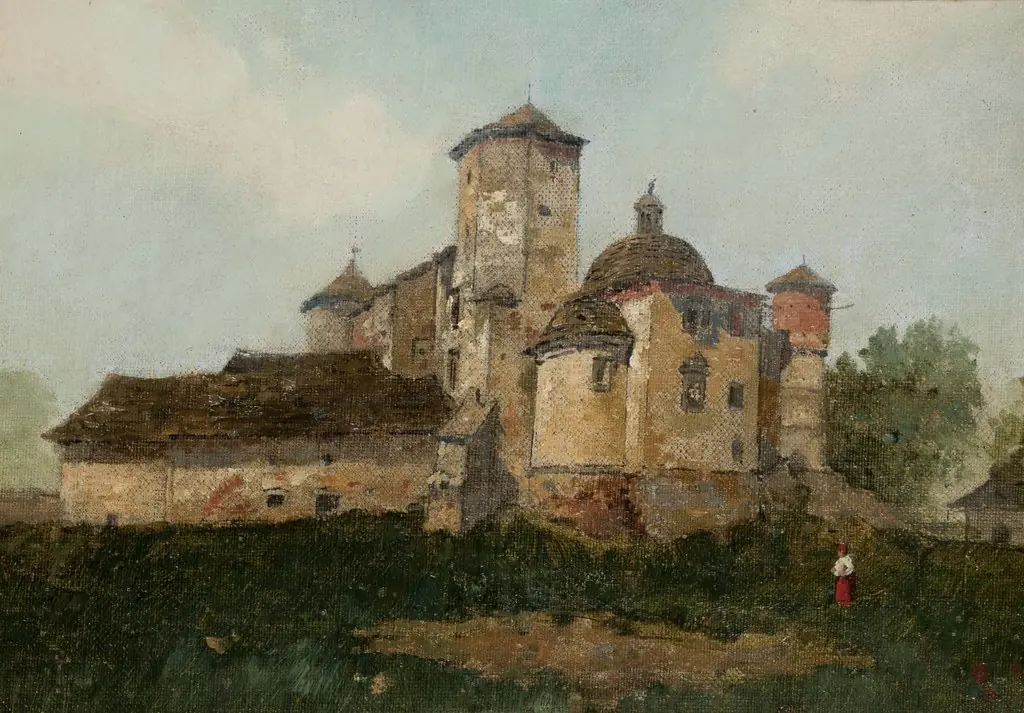
The composition centers on the monastery’s main structure, dominated by a red dome and smaller spires.
Painted around 1894 by Apcar Baltazar, this work depicts the Bistrița Monastery in Romania. The composition centers on the monastery’s main structure, dominated by a red dome and smaller spires. The building appears aged, its surfaces marked by time and weather. The surrounding terrain is uneven, with sparse vegetation suggesting neglect or isolation. The painting captures a quiet, contemplative mood through its restrained palette and textured surface.
Subject & Meaning
The Bistrița Monastery, a historic Orthodox religious site, is rendered not as a grand monument but as a weathered presence in the landscape. Baltazar emphasizes its endurance rather than its splendor, focusing on the effects of time and environment. The faded details on the dome and cracked walls suggest a quiet resilience, evoking themes of spiritual continuity amid physical decay. The scene avoids idealization, instead honoring the monastery’s quiet persistence.
Technique & Style
Baltazar employs impasto to build the monastery’s surfaces, applying paint thickly to suggest texture and erosion. The pale walls and red roof are rendered with visible brushwork, creating a tactile quality that enhances the sense of age. The ground is loosely suggested with dabs of earth tones and muted greens, avoiding sharp detail. This approach prioritizes atmosphere over precision, aligning with late 19th-century tendencies toward expressive realism over academic finish.
History & Provenance
The painting was created during a period of renewed interest in Romania’s religious architecture, following national unification and cultural revival efforts. Baltazar, an Armenian-Romanian artist, traveled extensively to document historic sites. This work likely originated from one such journey. While its early ownership is undocumented, it entered public collections in the 20th century, preserved as part of Romania’s artistic heritage.
Context
In the 1890s, Romanian artists increasingly turned to national landmarks as subjects, seeking to define a distinct cultural identity. Monasteries like Bistrița, with their Byzantine influences and rural isolation, became symbols of enduring tradition. Baltazar’s depiction aligns with this movement, avoiding romanticized grandeur in favor of honest observation. The work reflects a broader trend of documenting heritage before modernization altered the landscape.
Legacy
Though not widely exhibited outside Romania, the painting contributes to a body of work that helped shape the visual record of the country’s religious architecture. Baltazar’s focus on texture and decay influenced later artists interested in the passage of time. Today, it remains a quiet testament to the role of art in preserving the memory of places that, though diminished, still hold cultural weight.
Artist & collection
Artist