Artwork
Lyme
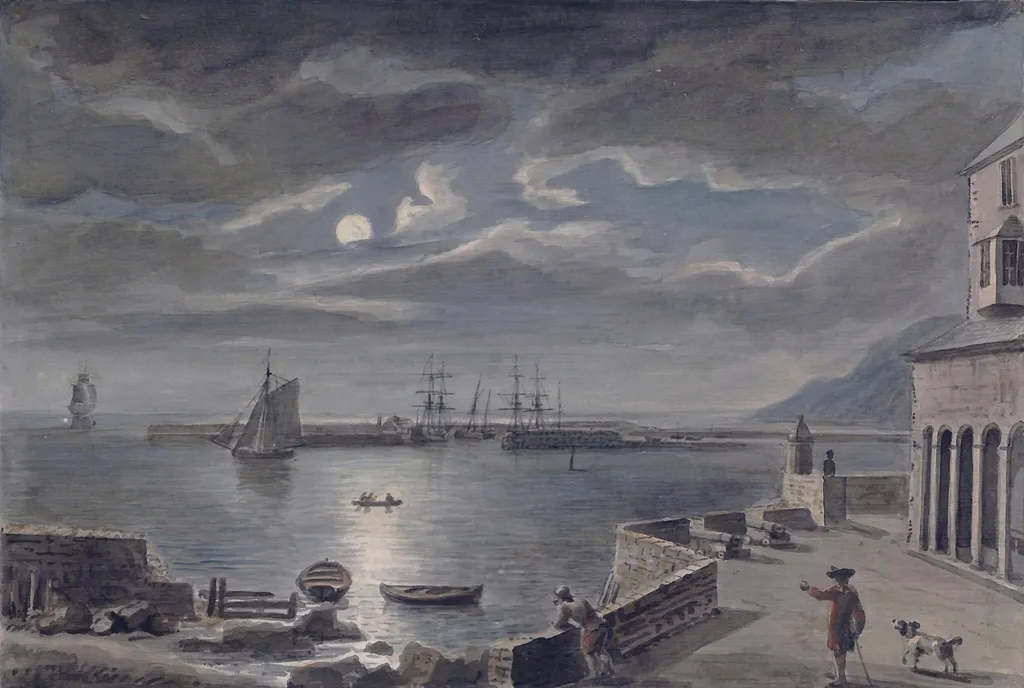
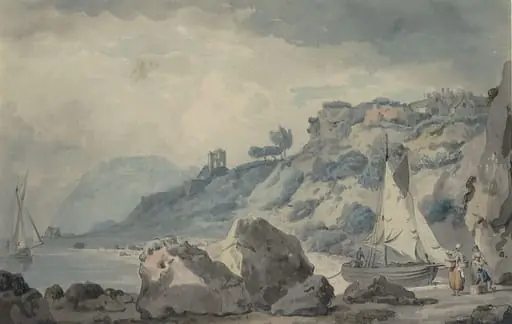
Lyme is a watercolor work on paper by the Rococo painting artist Coplestone Warre Bampfylde. It dates from 1770 and is held in the collection of the Victoria and Albert Museum.
About this work
Overview
Lyme is a watercolor painting attributed to Coplestone Warre Bampfylde, dated around 1770. It is part of the Victoria and Albert Museum’s collection. The work presents a quiet coastal scene rendered in delicate washes, capturing a moment of stillness at twilight. Its modest scale and intimate composition reflect the private, observational nature of 18th-century topographical watercolors.
Subject & Meaning
The painting shows a lone figure in 18th-century dress standing on a shore beside a dog, facing a calm harbor dotted with small boats.
The painting shows a lone figure in 18th-century dress standing on a shore beside a dog, facing a calm harbor dotted with small boats. A building with arched windows rises on the right, suggesting a modest coastal settlement. The moon, partially veiled by soft clouds, casts a quiet glow, reinforcing a mood of solitude and contemplation. The scene evokes no narrative, instead inviting quiet reflection on place and time.
Technique & Style
Bampfylde employed transparent watercolor with restrained tonal variation, using soft grays, pale blues, and muted whites to suggest twilight. Brushwork is light and fluid, allowing the paper’s texture to contribute to the atmospheric effect. The absence of sharp outlines and the blending of sky and water create a seamless, hazy transition, characteristic of amateur watercolorists of the period who favored subtlety over detail.
History & Provenance
The painting entered the Victoria and Albert Museum’s collection through the South Kensington Museum’s early acquisitions of British watercolors. Its attribution to Bampfylde, a lesser-known amateur artist and landowner, reflects the museum’s interest in documenting regional and non-professional artistic practice. No documented exhibition history exists prior to its inclusion in the museum’s holdings.
Context
Created during the late 18th century, Lyme aligns with a growing British interest in landscape as a subject for personal expression, preceding the full emergence of Romanticism. While not part of any formal school, it shares affinities with the topographical tradition—where artists recorded places with quiet precision. The emphasis on mood over topographical accuracy marks a shift toward emotional resonance in landscape depiction.
Legacy
Lyme remains a quiet example of amateur watercolor practice in Georgian England. It contributes to the understanding of how landscape was privately observed and recorded outside academic circles. Though not widely exhibited or studied, it holds value as a representative work of its time, illustrating the aesthetic preferences of educated landowners engaged in artistic pursuits.
Own this work as a print
Artist & collection
Artist
An English watercolor artist in the late 1700s, Bampfylde captured sweeping vistas and studied light across soft hills and Italian shores.

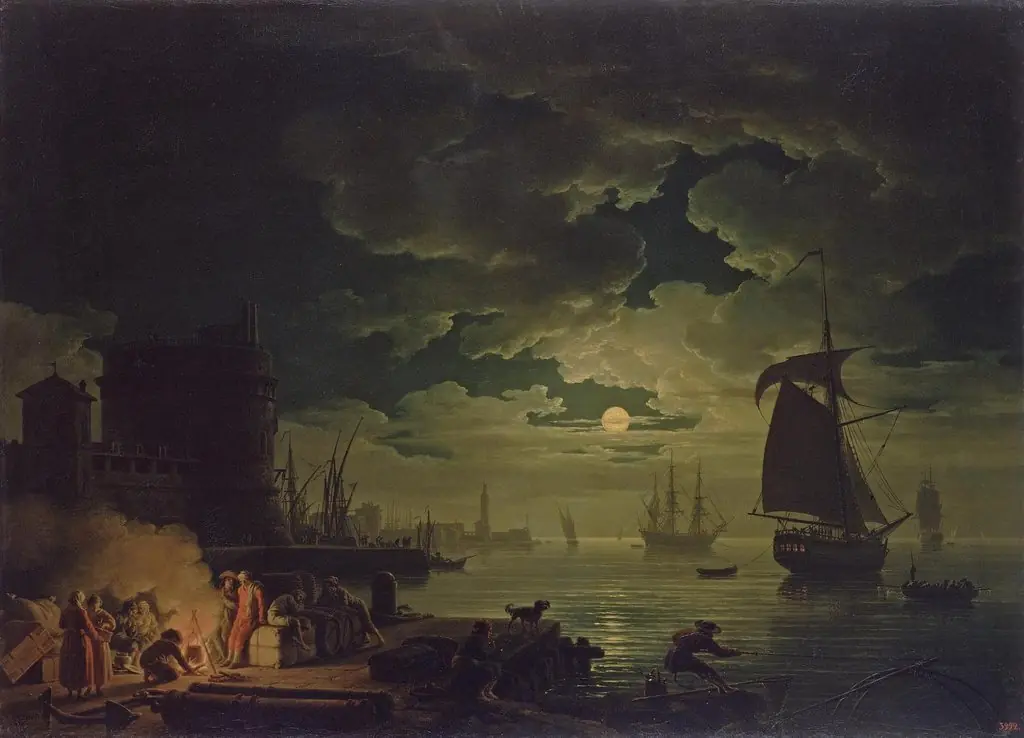 Entrance to the Port of Palermo by Moonlight
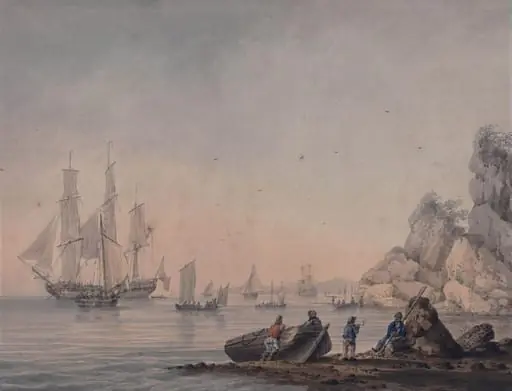 Marine View, with boats and figures on shore
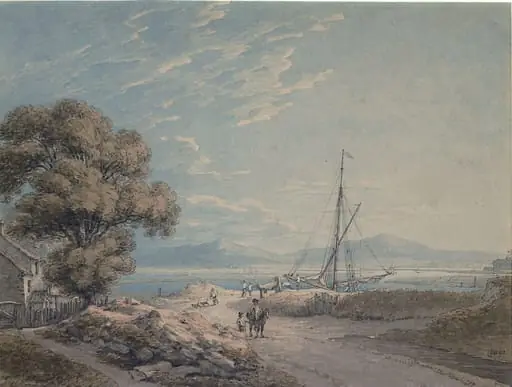 The Isle of Wight from Lymington
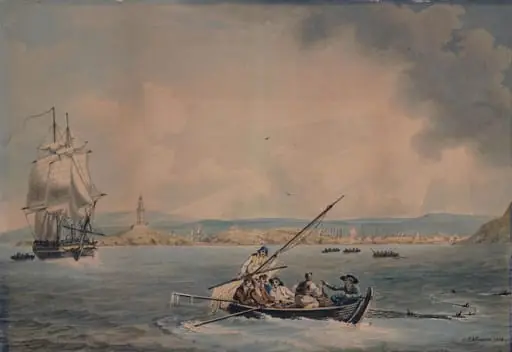 Entrance to a Harbour
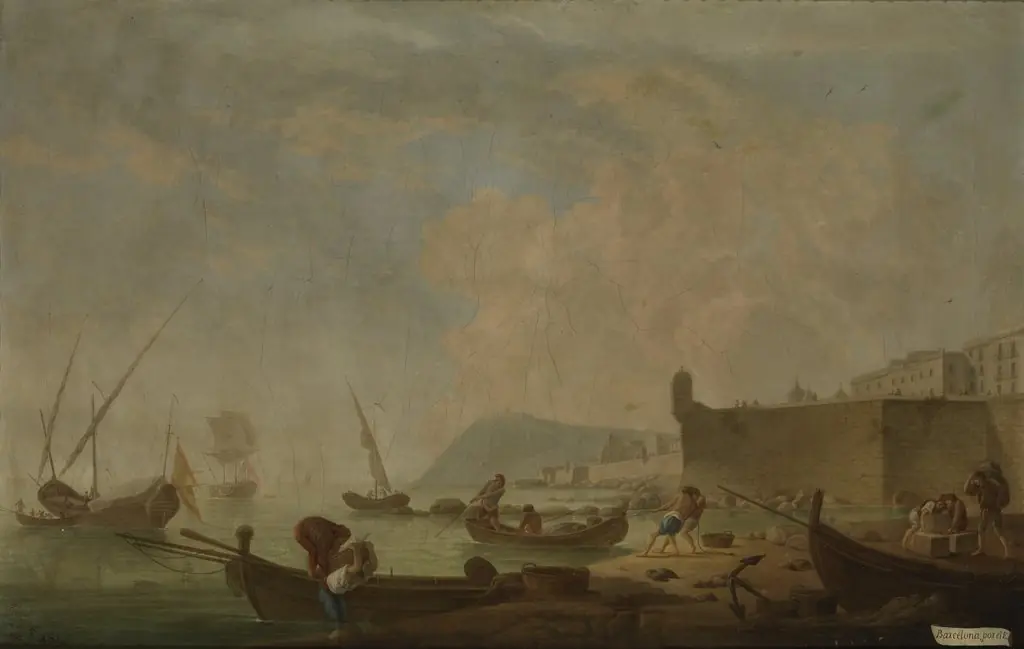 Vista de Barcelona por el Este
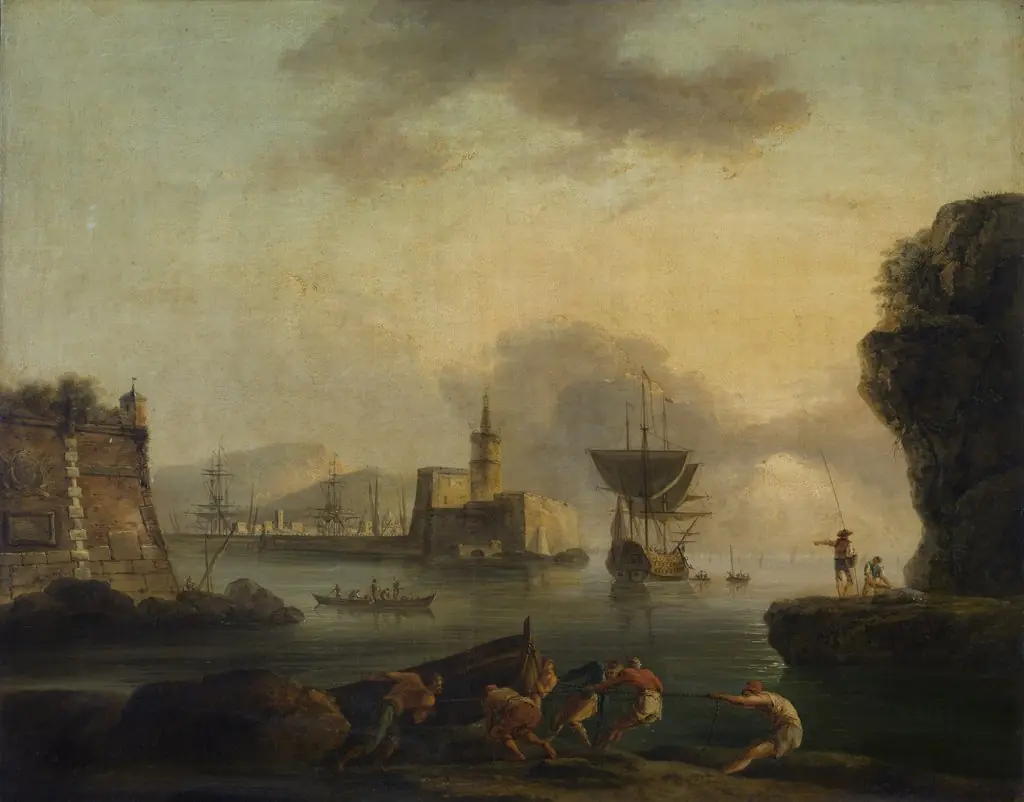 Naples
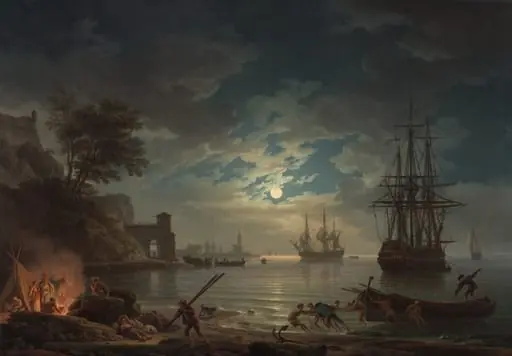 Moonlight
 Howth, Ireland
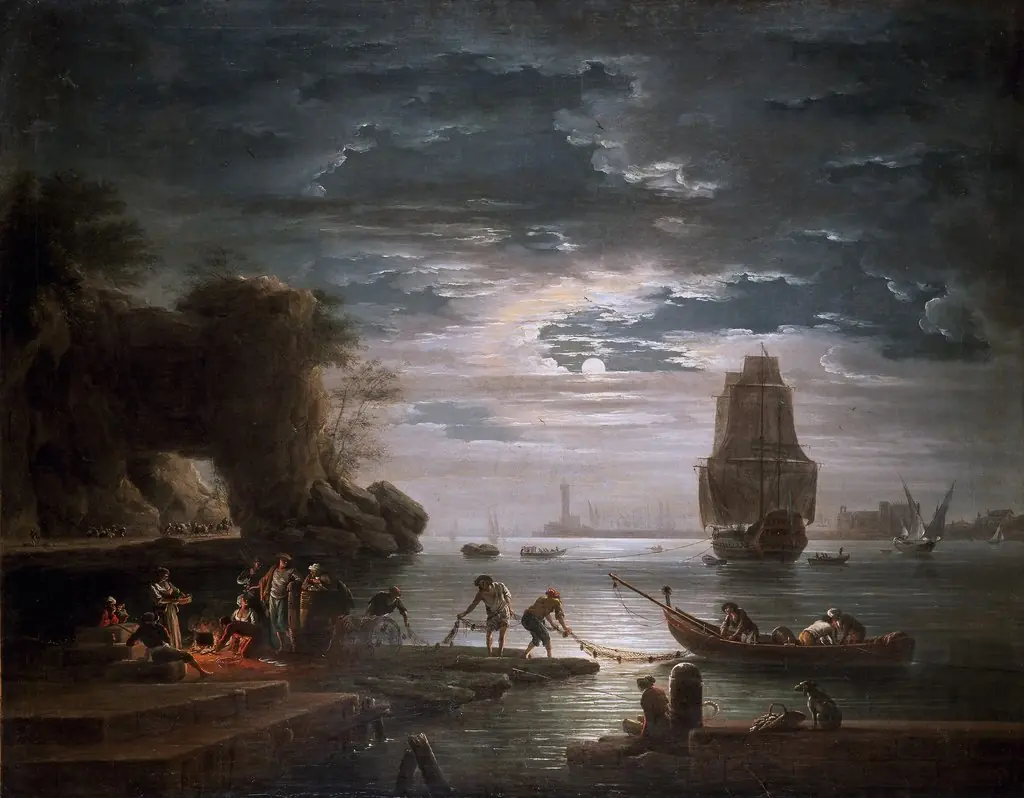 The Night
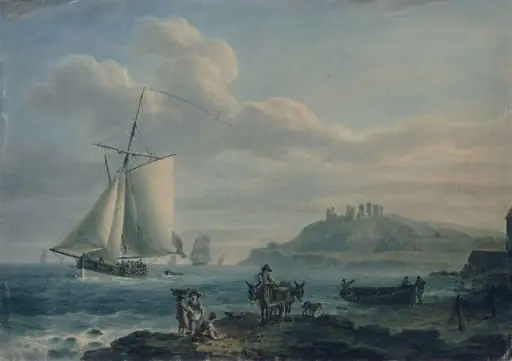 Llanstephan Castle, Coast of Carmarthenshire
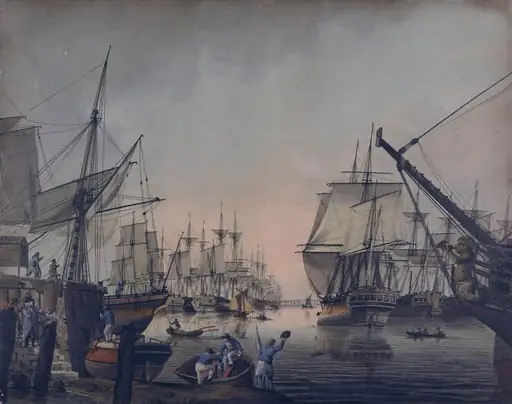 A view of the Pool, below London Bridge.
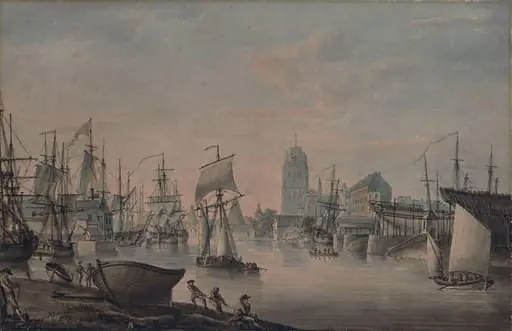 View of Bristol