Artwork
View over a valley and town (possibly Bath?)
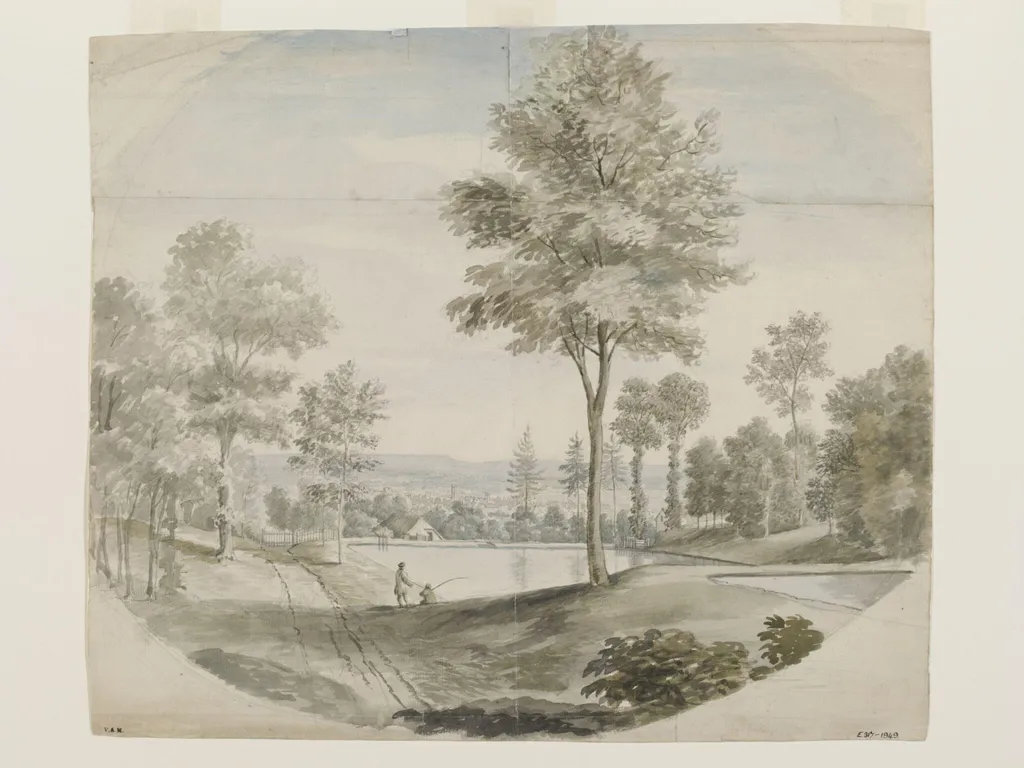
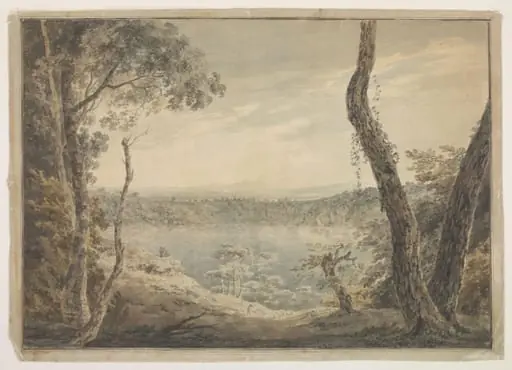
View over a valley and town (possibly Bath?) is a watercolor work on paper by the Rococo painting artist Coplestone Warre Bampfylde. It dates from 1770 and is held in the collection of the Victoria and Albert Museum. This watercolour landscape, dated around 1770, depicts a tranquil valley with a distant town, possibly Bath.
About this work
Overview
Rendered in delicate washes, it captures a quiet rural scene with subtle atmospheric effects, characteristic of late 18th-century British watercolour practice.
This watercolour landscape, dated around 1770, depicts a tranquil valley with a distant town, possibly Bath. Attributed to Coplestone Warre Bampfylde, the work is part of the Victoria and Albert Museum’s collection. Rendered in delicate washes, it captures a quiet rural scene with subtle atmospheric effects, characteristic of late 18th-century British watercolour practice. The composition emphasizes harmony between land and sky, with no overt narrative or human drama.
Subject & Meaning
The scene presents a generalized view of the English countryside, not a specific topographical record. A solitary figure near a body of water suggests contemplation, but no symbolic or religious meaning is evident. The town in the distance remains indistinct, reinforcing the focus on natural serenity rather than urban identity. The work reflects a period interest in quiet, unembellished landscapes as objects of quiet observation.
Technique & Style
Bampfylde employed transparent watercolour washes to build soft gradients of tone, creating depth without sharp outlines. The foreground foliage is lightly brushed, framing the vista with loose, suggestive strokes. Muted earth tones and pale blues dominate, enhancing the calm mood. The technique avoids dramatic contrasts, favoring tonal subtlety and atmospheric cohesion, aligning with emerging British watercolour traditions of the period.
History & Provenance
The work entered the Victoria and Albert Museum’s collection through established institutional acquisitions of British watercolours in the 19th century. Its attribution to Coplestone Warre Bampfylde is based on stylistic comparison and archival records, though few of his works survive. No documented ownership history prior to the museum’s acquisition is available, suggesting it was likely acquired as part of a broader collection of amateur landscape studies.
Context
Created during a time when watercolour was gaining recognition as a serious medium for landscape, this piece reflects the growing interest among British amateurs and artists in capturing natural scenery. It predates the Romantic movement’s emotional intensity but shares its appreciation for quiet, unidealized nature. Similar works by contemporaries like Thomas Malton and Thomas Girtin show comparable approaches to light and composition.
Legacy
Though not widely known today, the painting contributes to the historical record of early British watercolour landscape practice. It exemplifies the transition from topographical illustration to more expressive, atmospheric rendering. Its presence in the V&A underscores the institutional recognition of such works as culturally significant, even when created by non-professional artists of the period.
Artist & collection
Artist
An English watercolor artist in the late 1700s, Bampfylde captured sweeping vistas and studied light across soft hills and Italian shores.

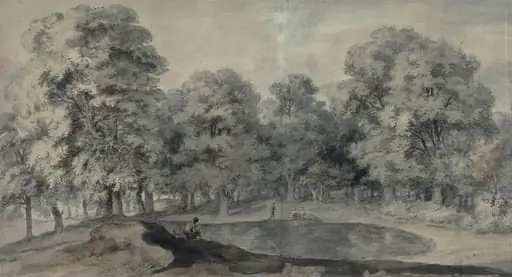 Leg of Mutton Pond, Hampstead Heath
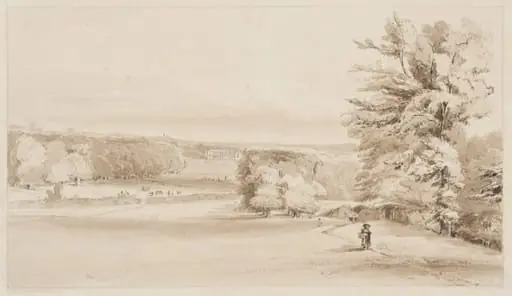 Untitled
 Untitled
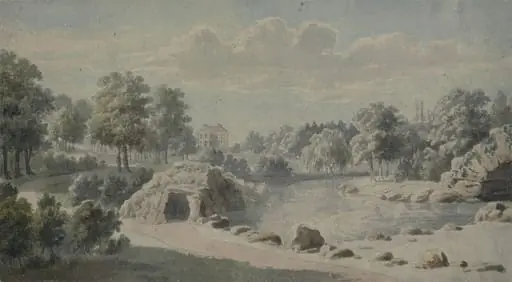 Park Landscape with House, Church, and Ornamental Water
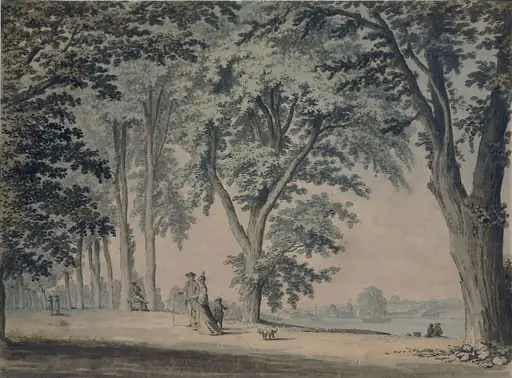 Trees by the Thames, opposite Hammersmith
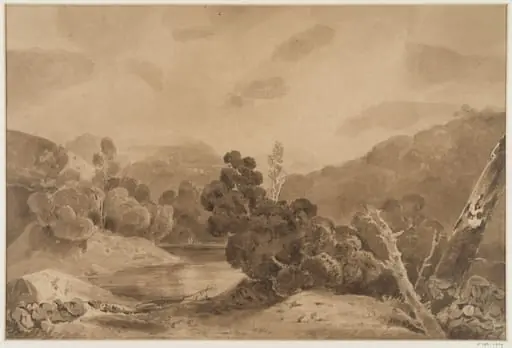 River scene with a temple or palace in the clouds
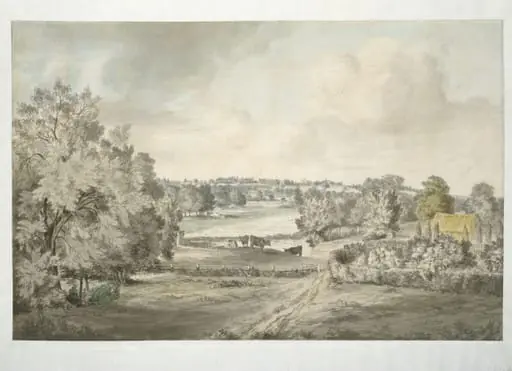 The valley of the Stour, looking towards East Bergholt
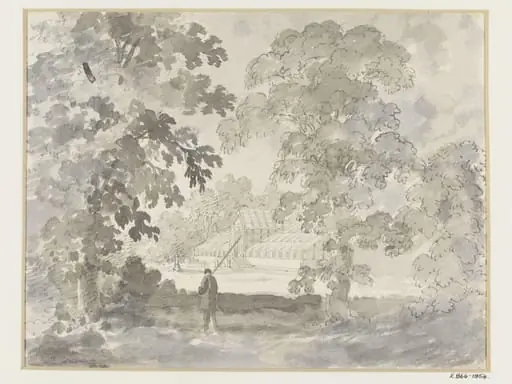 Drawing of Gardens and Greenhouse
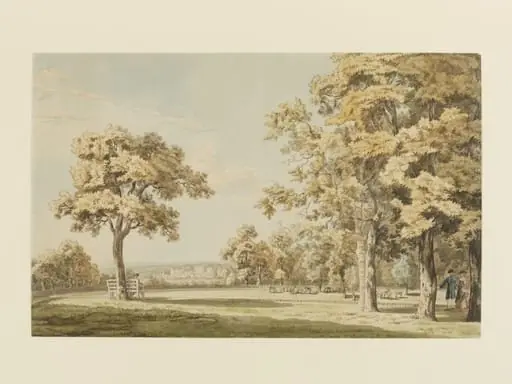 Windsor Castle from the Great Park, near the End of the Long Walk
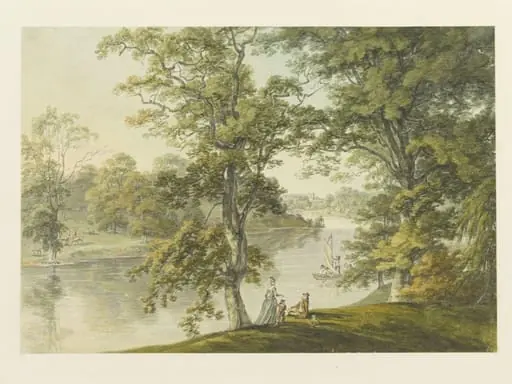 Wynnstay Park, Derbyshire
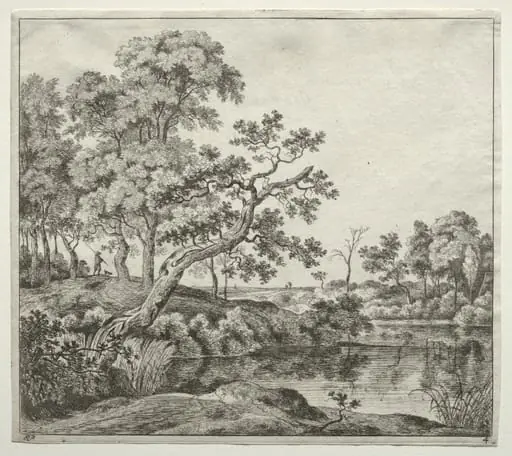 The Bent Tree
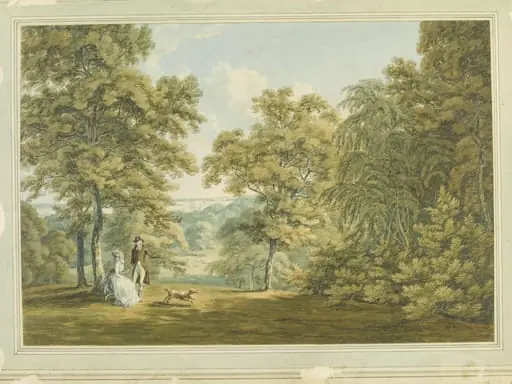 Greenwich Park