Artwork
Kneeling Hermit and Two Draped Figures Contemplating a Skull
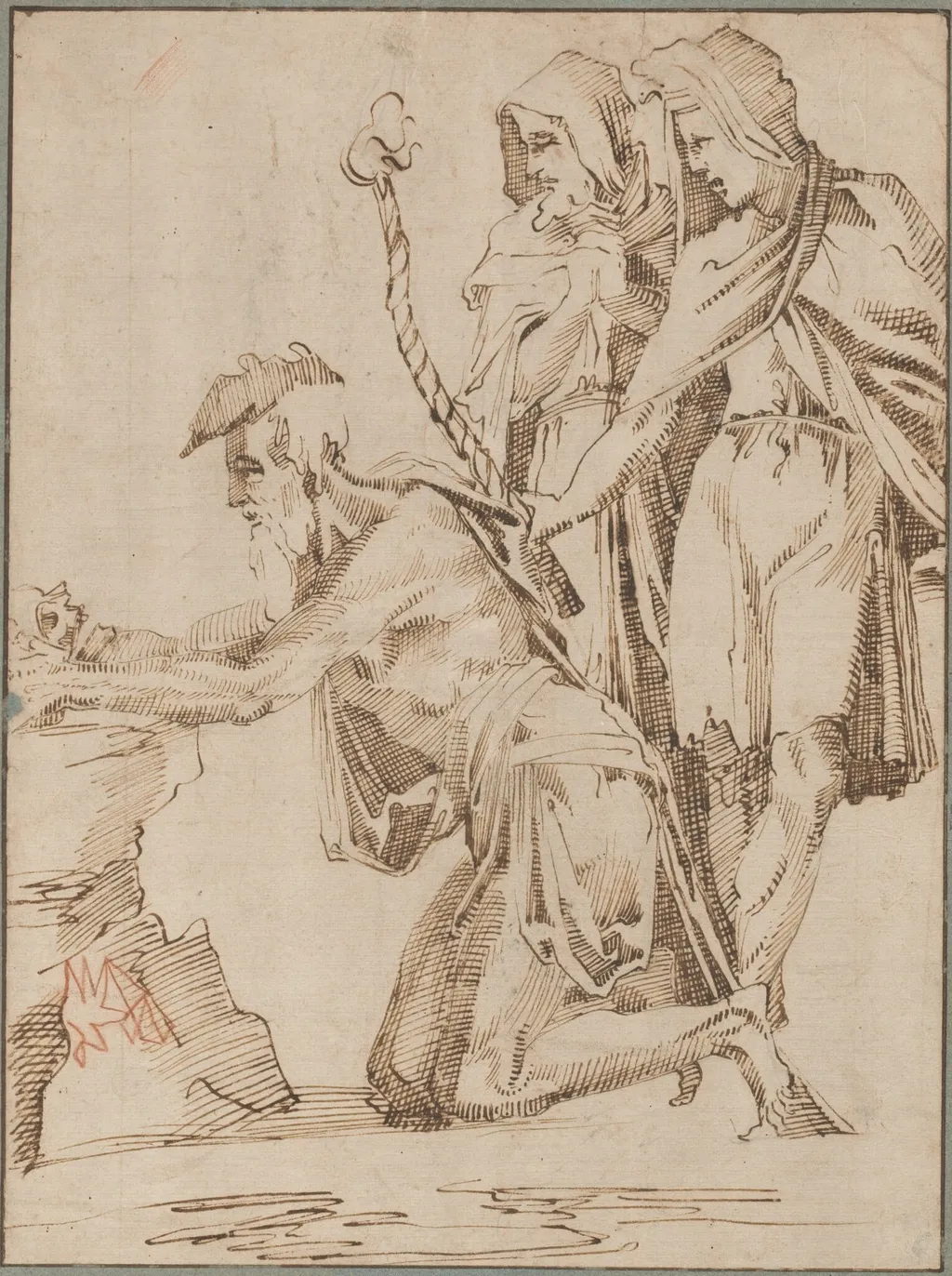
Kneeling Hermit and Two Draped Figures Contemplating a Skull is an ink drawing by the Renaissance artist Giovanni Bandini. It dates from 1574 and is held in the collection of the National Gallery of Art.
About this work
Overview
Giovanni Bandini’s drawing, dated around 1574, depicts three cloaked figures gathered in a shadowy interior. One figure kneels, cradling a human skull, while two others stand nearby, their garments rendered in heavy drapery. The composition is confined, with an indistinct backdrop that hints at stone or ruin.
Subject & Meaning
The central motif—a skull held by a kneeling hermit—evokes the memento mori tradition, reminding viewers of mortality. The presence of the two draped companions suggests a contemplative dialogue, perhaps reflecting on the transience of life and the spiritual duties of ascetic practice.
Technique & Style
Bandini employed brown ink for the main outlines, using tight, rapid strokes to delineate folds in the clothing and the skull’s texture. Cross‑hatching creates subtle shading, while a brief touch of red chalk in the lower left corner appears to be a preparatory note or correction, adding a spontaneous quality to the work.
History & Provenance
The drawing is executed on laid paper that has been mounted on an older support, indicating later conservation. Its attribution to Bandini and its dating to the mid‑1570s are based on stylistic comparison with his other religious studies.
Context
Created during the late Renaissance, the piece aligns with contemporary interests in religious introspection and anatomical study. Such sketches often served as preparatory studies for larger paintings or as didactic tools for monastic audiences.
Artist & collection


 Saint Jerome Reading in the Wilderness
 Sketch for a Baptism of Christ
 Two Standing Saints
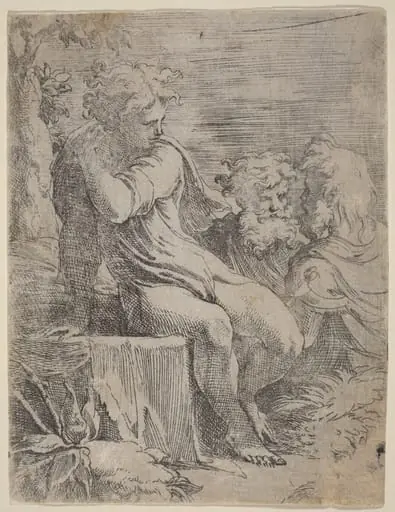 The Boy and Two Old Men
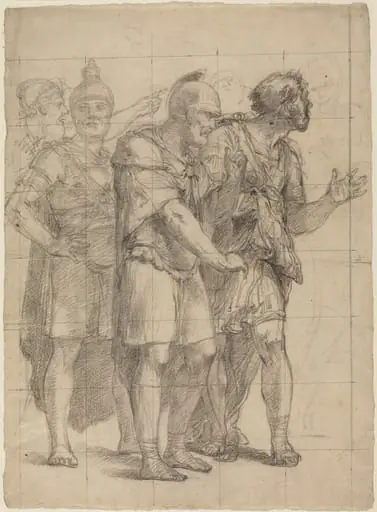 Four Standing Warriors
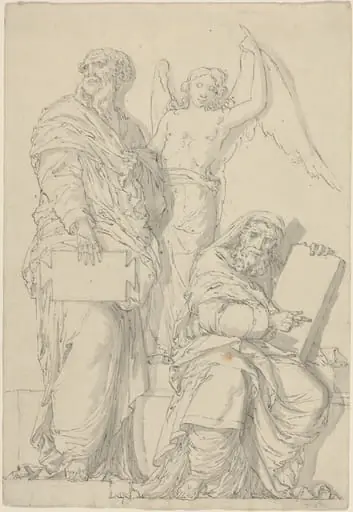 The Prophets Hosea and Jonah
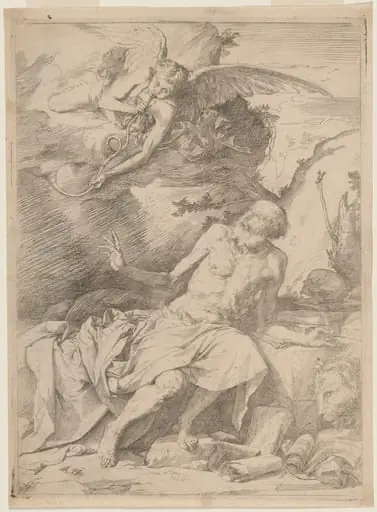 Saint Jerome Hearing the Trumpet of the Last Judgement
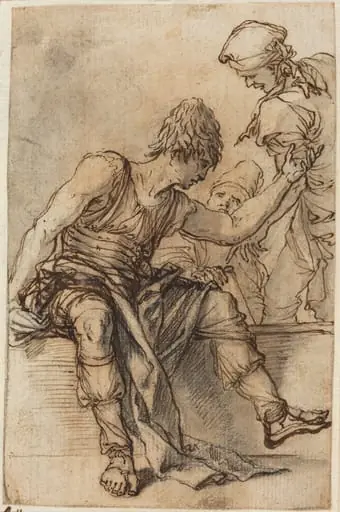 Youth Sitting on a Wall in Conversation with Two Men
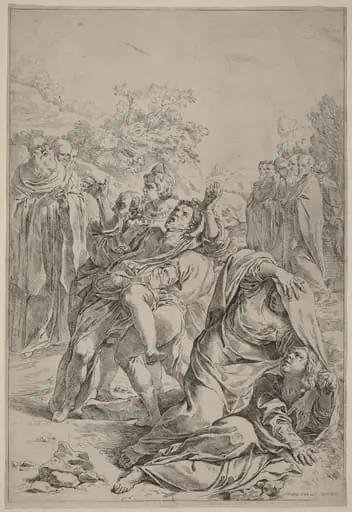 Saint Benedict Healing the Possessed
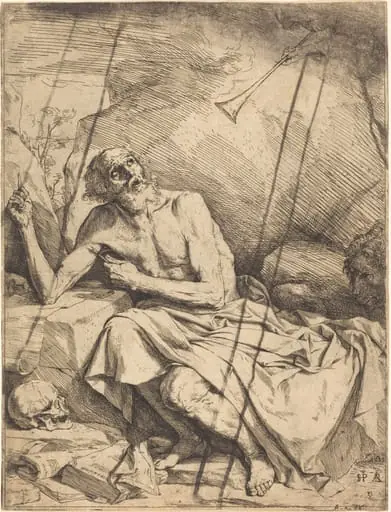 Saint Jerome Hearing the Trumpet of the Last Judgment
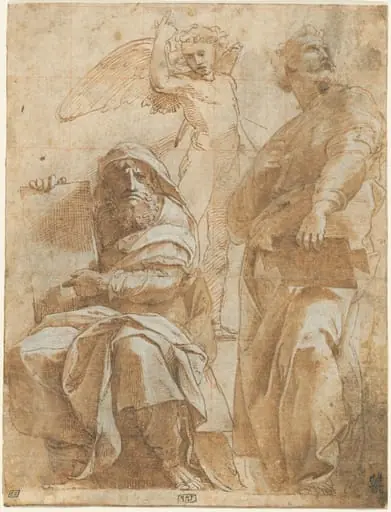 The Prophets Hosea and Jonah
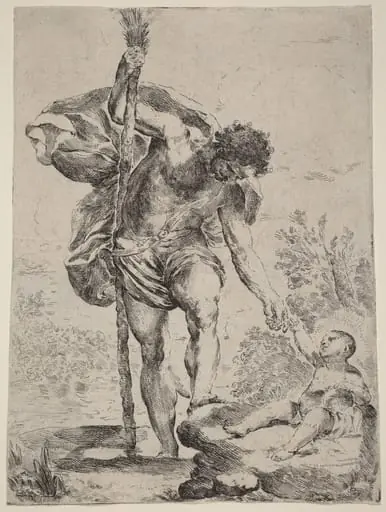 Saint Christopher Giving His Hand to the Infant Jesus