Artwork
The Prophets Hosea and Jonah
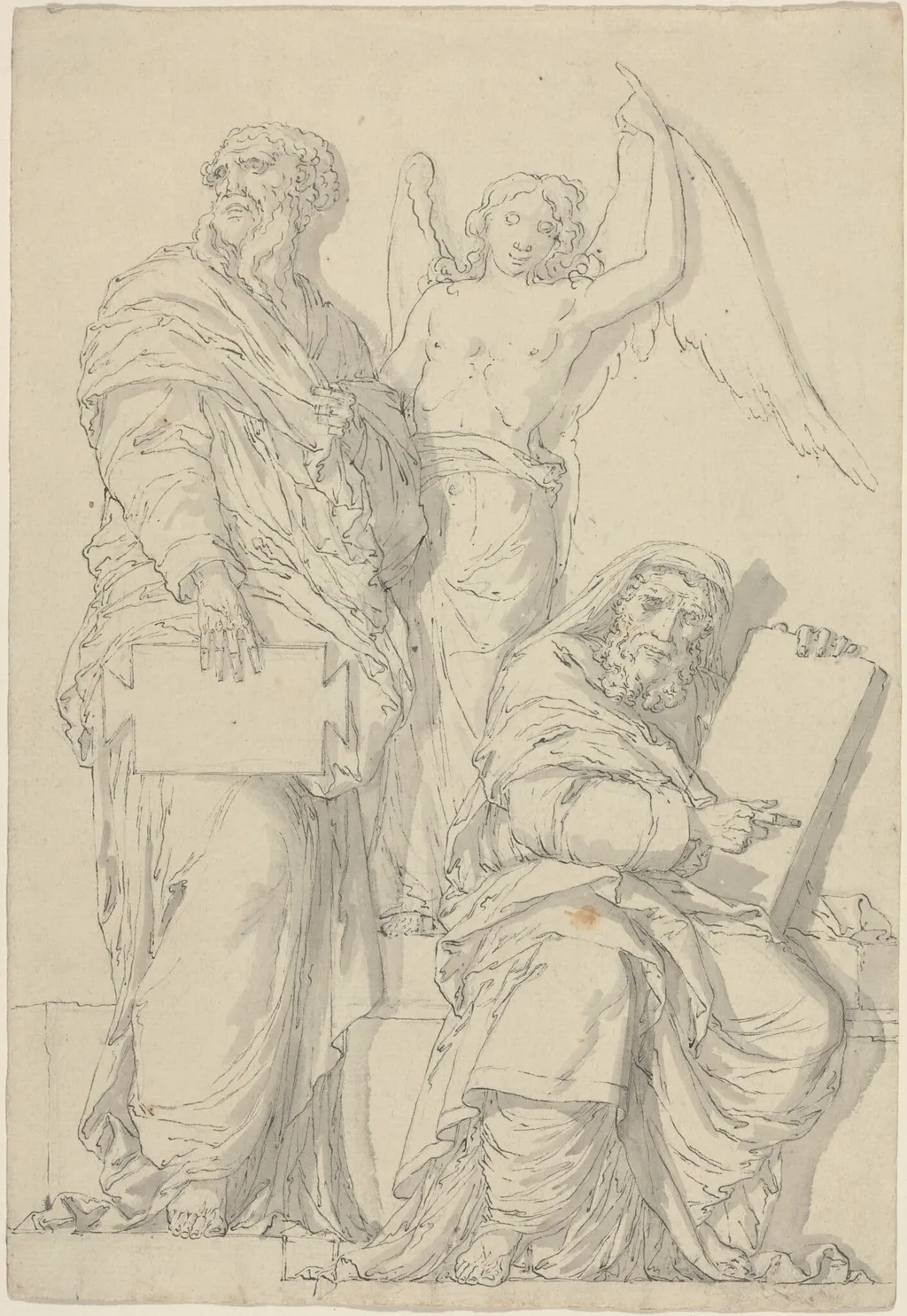
The Prophets Hosea and Jonah is an ink drawing by the Baroque artist Louis-Felix de La Rue. It dates from 1748 and is held in the collection of the National Gallery of Art.
About this work
Overview
It captures a moment of spiritual tension rather than a static scene, suggesting a study for a larger composition that was never completed.
Created in 1748 by Louis-Felix de La Rue, this drawing depicts two biblical prophets alongside an ambiguous winged figure. Executed in pen, black ink, and gray wash over graphite on laid paper, the work is a preparatory sketch notable for its energetic linework and atmospheric shading. It captures a moment of spiritual tension rather than a static scene, suggesting a study for a larger composition that was never completed.
Subject & Meaning
The figures represent the prophets Hosea and Jonah, known for their messages of repentance and divine judgment. The winged entity above Hosea, neither clearly angelic nor demonic, may symbolize divine inspiration or an unsettling spiritual presence. Its human face and raised arms imply communication, perhaps conveying a prophetic utterance. The seated Jonah’s forward lean and intense gaze suggest inner turmoil, aligning with his biblical narrative of reluctance and divine confrontation.
Technique & Style
La Rue employed rapid, expressive pen strokes and layered gray washes to convey volume and motion without polished finish. Cross-hatching builds shadow and depth, particularly in the folds of garments and the contours of faces. The graphite underdrawing remains visible in places, emphasizing the sketch’s immediacy. The winged figure’s form is rendered with looser, more fluid lines, distinguishing it as an ethereal presence amid the grounded figures.
History & Provenance
The drawing is documented as part of La Rue’s personal oeuvre from the mid-18th century, likely created during his time in France as he explored religious themes. It remained in private hands until entering a public collection in the 20th century. No evidence suggests it was intended for public display or reproduction, reinforcing its role as a private artistic exploration rather than a commissioned work.
Context
In 18th-century France, religious subjects remained common in academic art, though often treated with increasing psychological nuance. La Rue’s sketch reflects a shift toward expressive, individualized interpretations of biblical figures, moving beyond idealized iconography. The inclusion of a hybrid winged being suggests engagement with contemporary debates about divine agency and the ambiguity of spiritual revelation in Enlightenment thought.
Legacy
Though not widely exhibited during La Rue’s lifetime, the drawing is now recognized for its emotional intensity and technical economy. It stands as an example of how lesser-known artists contributed to the evolution of religious imagery through intimate, experimental studies. Its unpolished quality invites viewers to consider the creative process itself, offering insight into how ideas took form before final execution.
Artist & collection


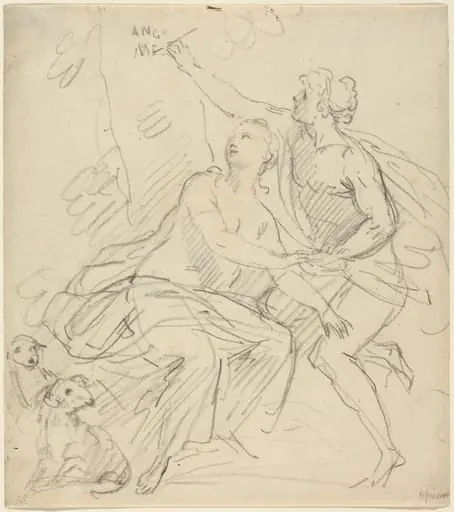 Angelica and Medoro
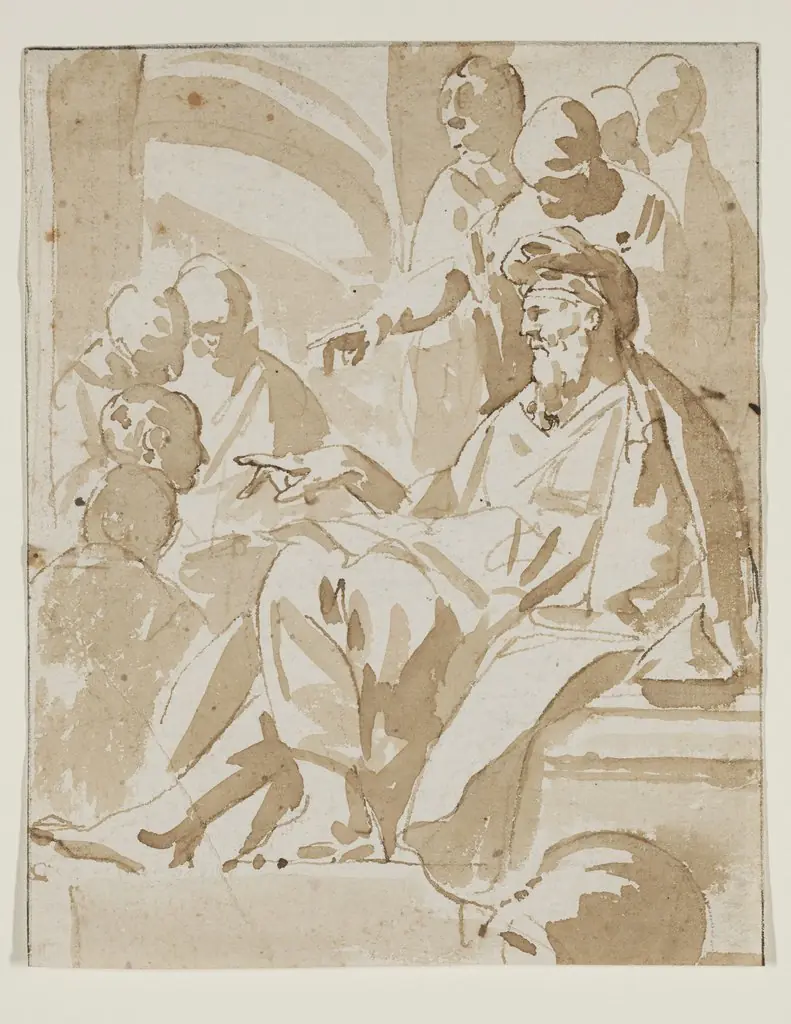 A Seated Old Man, Pointing with his Right Hand and Other Figures
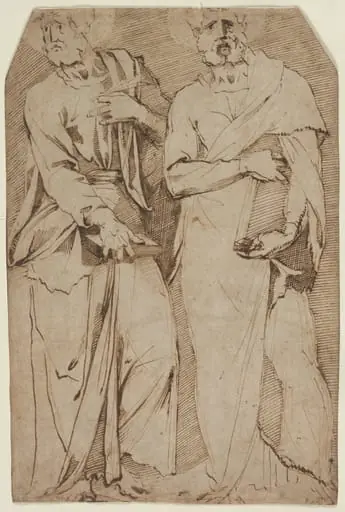 Two Standing Saints
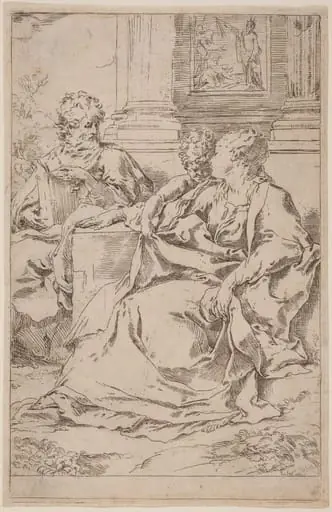 Holy Family
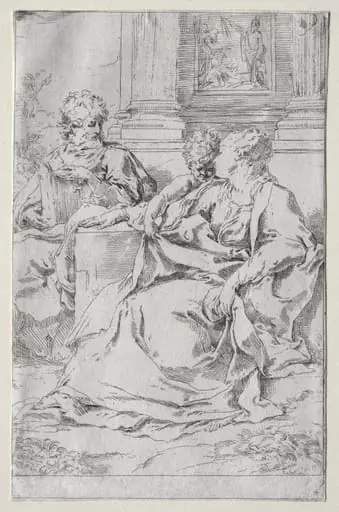 The Holy Family
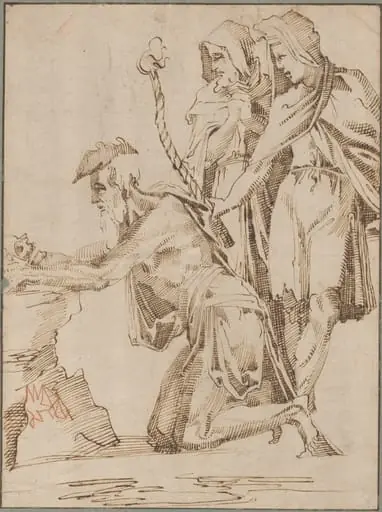 Kneeling Hermit and Two Draped Figures Contemplating a Skull
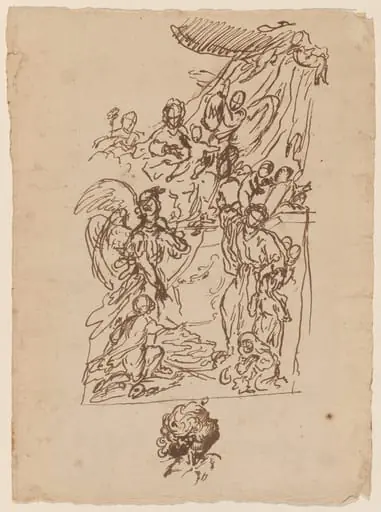 The Madonna and Child Seated on a Dais with Tobias and the Angel and a Saint Presenting Two Children
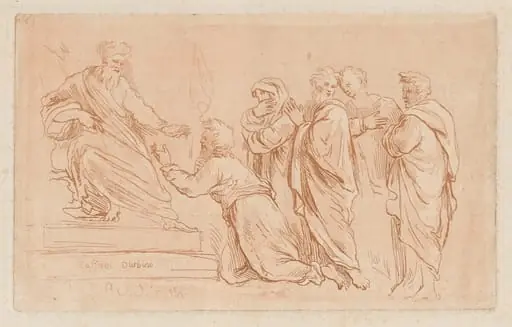 Adonias Imploring the Grace of Solomon or Jeroboam Kneeling before Rehoboam
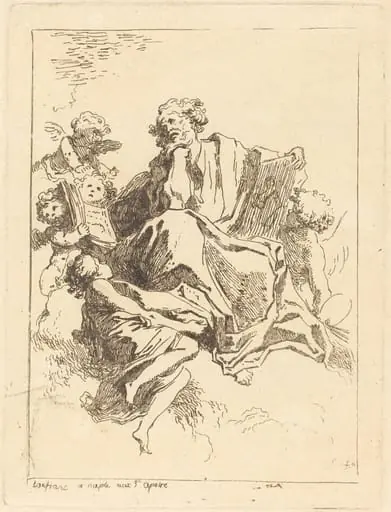 Saint Luke
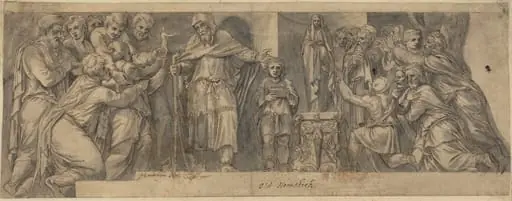 Scene from Ancient History
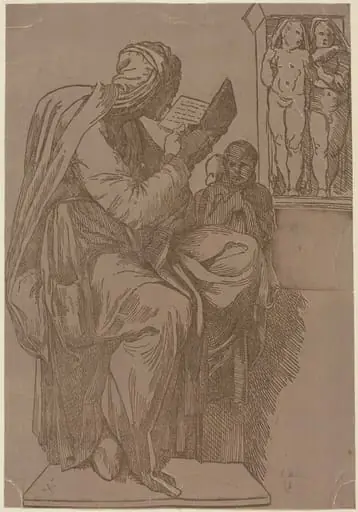 A Sibyl Reading
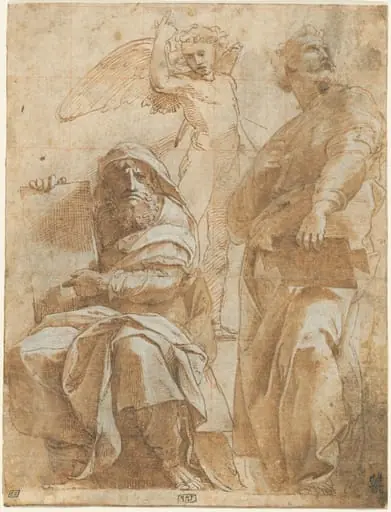 The Prophets Hosea and Jonah