Artwork
Saint Jerome Reading in the Wilderness
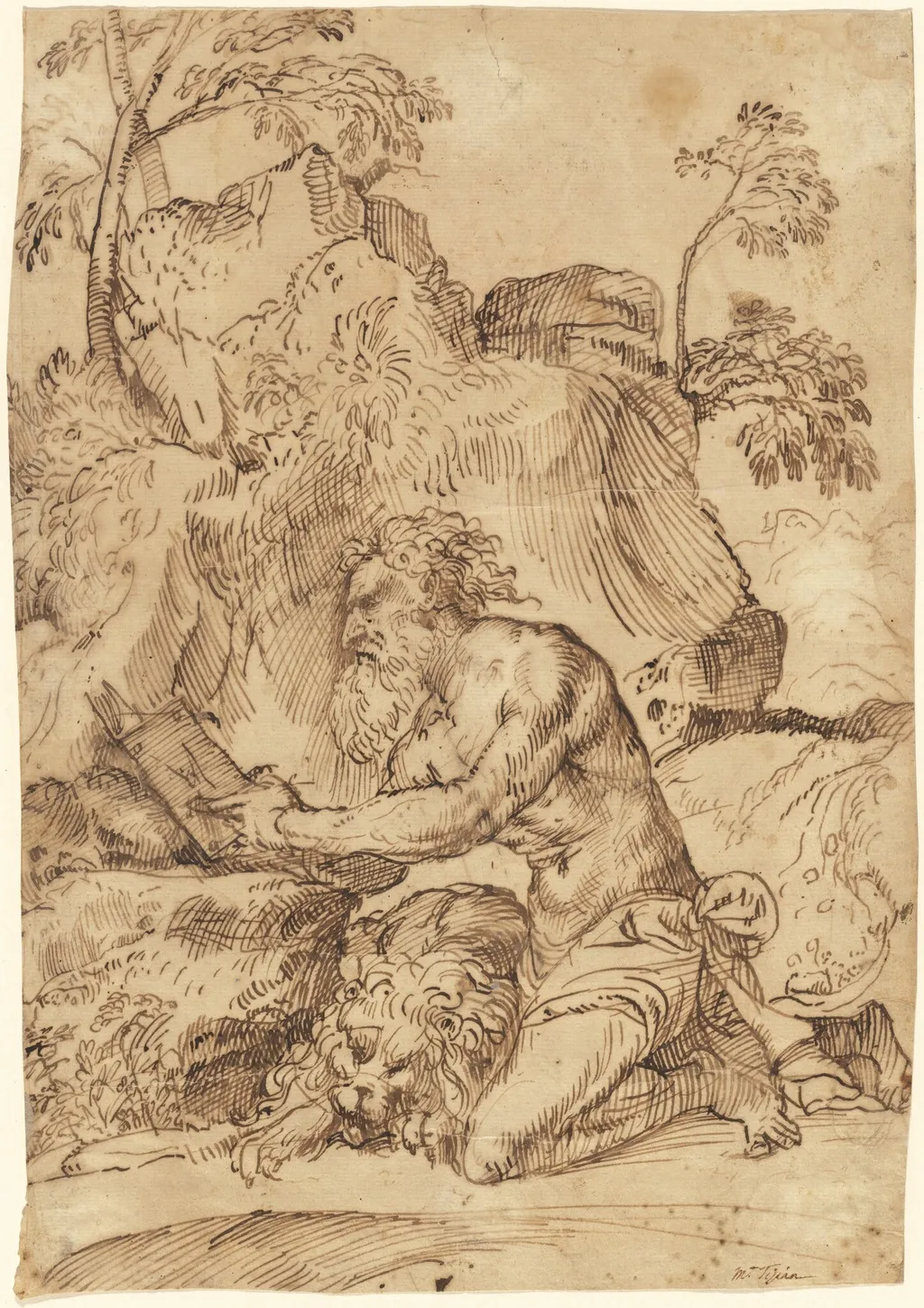
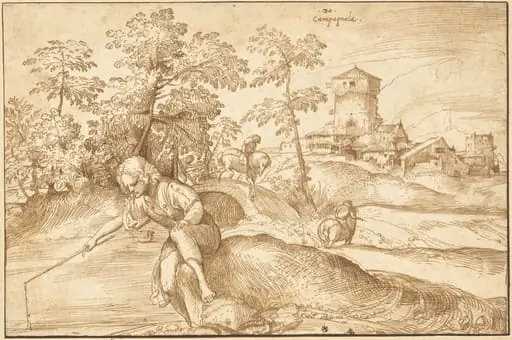
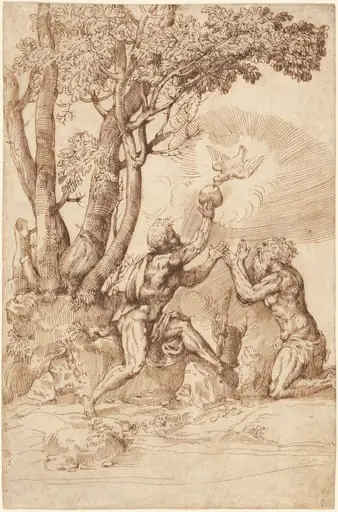
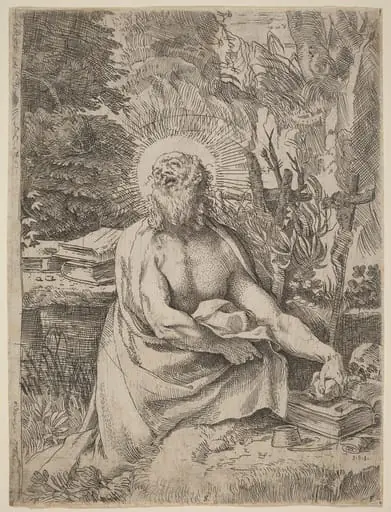
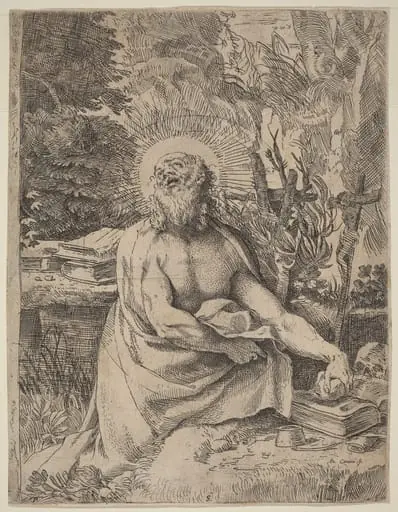
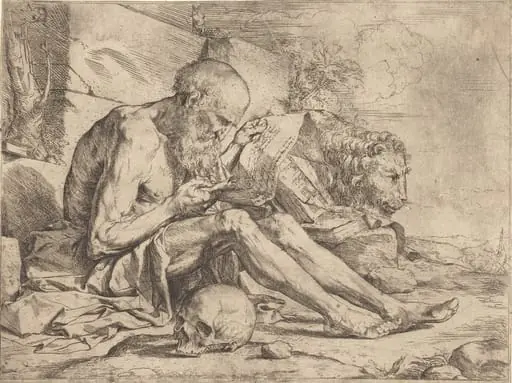
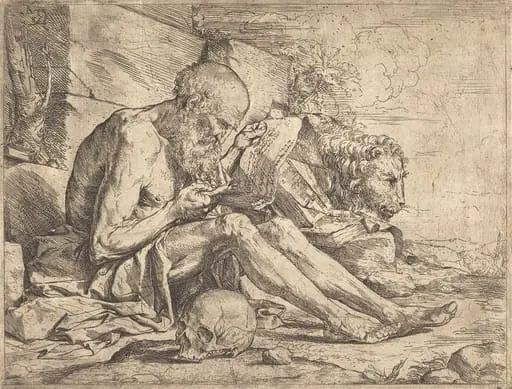
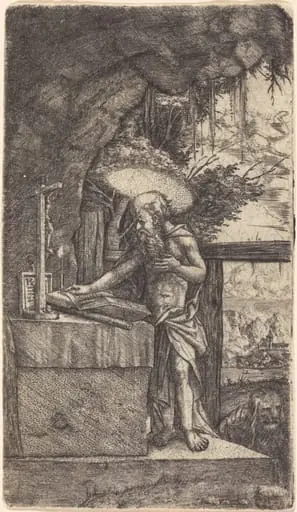
Saint Jerome Reading in the Wilderness is an ink drawing by the Renaissance artist Domenico Campagnola. It dates from 1522 and is held in the collection of the National Gallery of Art.
About this work
Overview
Its intimate scale and delicate handling suggest it was made as a study or personal reflection rather than a finished commission.
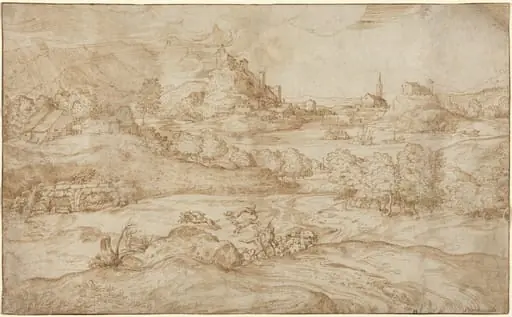
This drawing, executed in 1522 by Domenico Campagnola, portrays Saint Jerome in a secluded natural setting. Rendered in pen and brown ink on brown laid paper, the work was later mounted on an early blue album sheet. Its intimate scale and delicate handling suggest it was made as a study or personal reflection rather than a finished commission. The medium emphasizes tonal gradation over line, capturing mood through subtle ink washes and layered strokes.
Subject & Meaning
The figure is Saint Jerome, the fourth-century scholar and translator of the Bible into Latin. Depicted in solitude, he is absorbed in reading, his hands cradling a volume as if in deep meditation. The wilderness setting reflects his years spent in the Syrian desert, a time of spiritual retreat and textual labor. The scene conveys intellectual devotion rather than dramatic piety, aligning with Renaissance humanist ideals of quiet contemplation.
Technique & Style
Campagnola employed fine pen lines and cross-hatching to model form and suggest texture in rock, foliage, and fabric. The ink varies in density, creating atmospheric depth without heavy outlines. The brown paper grounds the composition, allowing the ink to blend into the surface rather than stand out sharply. This restrained approach prioritizes tonal harmony and spatial suggestion over detail, characteristic of Venetian draftsmanship of the period.
History & Provenance
The drawing was likely made during Campagnola’s early career, possibly as a preparatory study or independent work for private collectors. It was later mounted on a blue album sheet, a common practice among collectors in the 16th and 17th centuries to preserve and display drawings. Its survival in this form indicates it was valued as a refined example of graphic art, though its early ownership remains undocumented.
Context
In early 16th-century Venice, drawings were increasingly appreciated as autonomous works, not merely sketches for paintings. Campagnola, influenced by Titian and the landscape traditions of the Veneto, helped elevate the genre. His depictions of saints in nature responded to growing interest in personal piety and classical solitude, aligning with humanist readings of religious figures as thinkers as much as saints.
Legacy
This drawing exemplifies how Venetian artists used ink to explore mood and environment with minimal means. Campagnola’s approach influenced later draftsmen who favored atmospheric rendering over linear precision. Though not widely known outside specialist circles, the work remains a quiet testament to the Renaissance ideal of contemplative scholarship, preserved in its original, unembellished form.
Own this work as a print
Artist & collection