Artwork
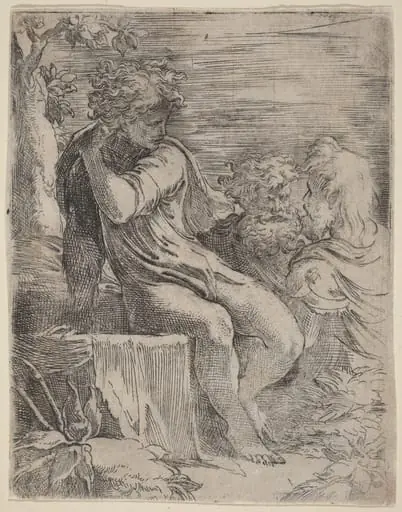
The Boy and Two Old Men
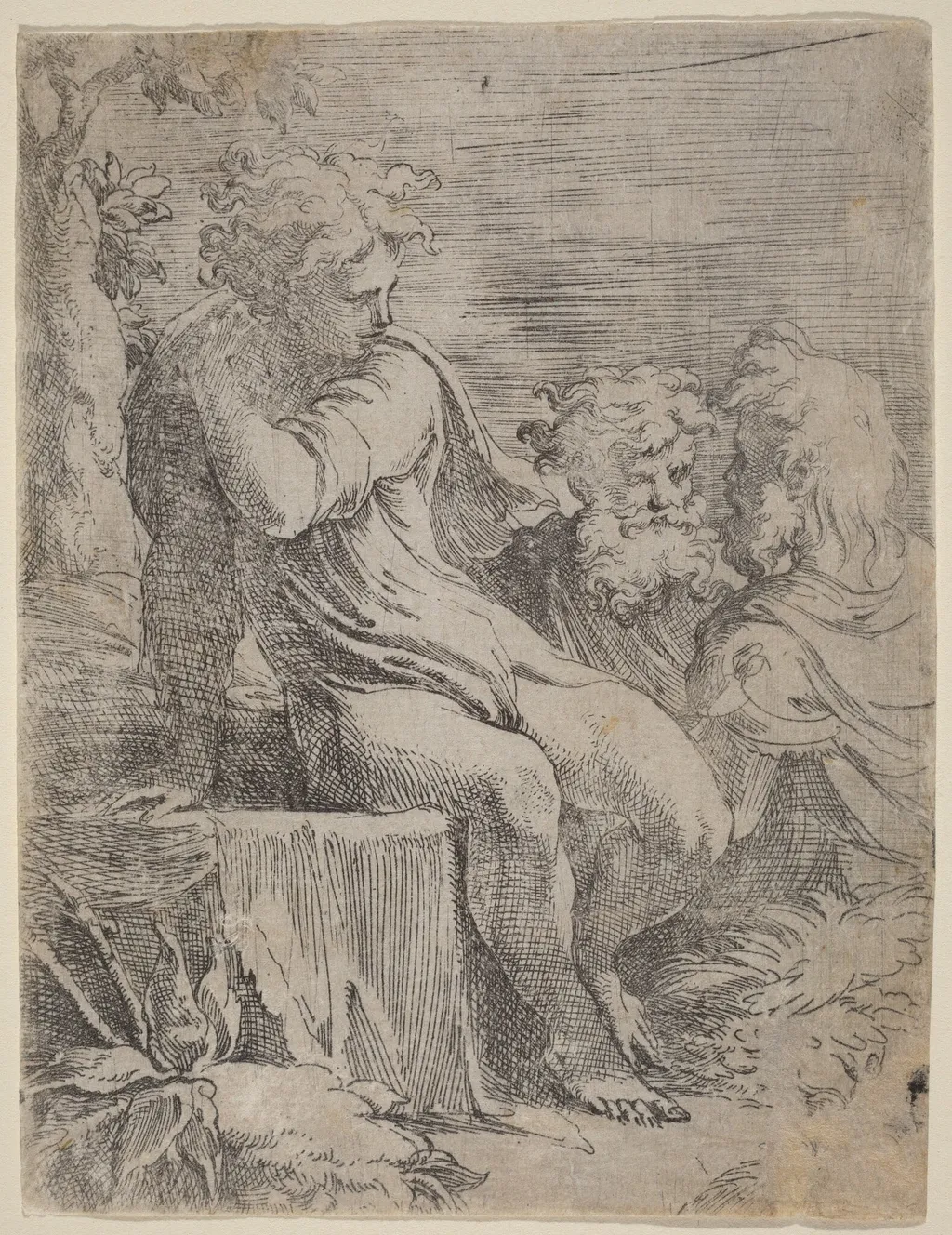
The Boy and Two Old Men is an ink print by the Renaissance artist Parmigianino. It dates from 1522 and is held in the collection of the National Gallery of Art.
About this work
Overview
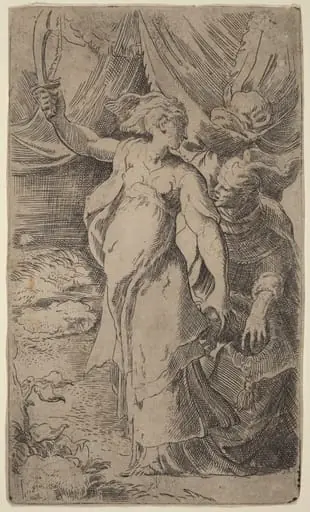
Created in 1522, this etching presents a compact grouping of three figures—a young boy and two elderly men—set within a modestly detailed landscape of trees and foliage. Executed by the Italian artist Parmigianino, the work exemplifies the early stage of his printmaking, preceding later, more elaborate compositions.
Subject & Meaning
The composition shows the boy, rendered in a three‑quarter view, clutching a staff, while the two older men are positioned in profile, one seated and the other standing. Their interaction suggests a moment of quiet conversation or instruction, a theme common in Renaissance depictions of generational exchange.
Technique & Style
Executed in etching, the image relies on fine incised lines and delicate hatching to model form and convey texture. The figures display the elongated, graceful proportions associated with Mannerist aesthetics, yet retain a restrained naturalism typical of early 16th‑century Italian prints.
History & Provenance
Parmigianino, born in Parma in 1503, produced this work during his itinerant period, moving among Florence, Rome, Bologna, and his hometown. The etching predates his later celebrated prints such as the 1527 *Vision of Saint Jerome* and the 1534 *Madonna with the Long Neck*.
Context
The piece reflects the transitional artistic climate of the early 1520s, when Mannerist tendencies were emerging from High Renaissance ideals. Its modest scale and focus on figure interaction align with contemporary print culture, which catered to collectors seeking intimate, portable artworks.
Artist & collection

Artist
Girolamo Francesco Maria Mazzola (11 January 1503 – 24 August 1540), also known as Francesco Mazzola or, more commonly, as Parmigianino (UK: , US: , Italian: ; "the little one from Parma"), was an Italian Mannerist…