Artwork
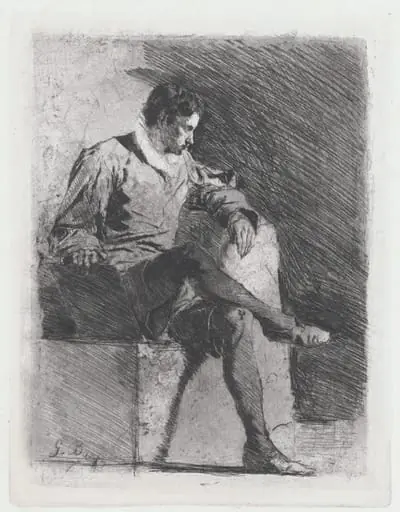
Seated Man in Sixteenth-Century Costume
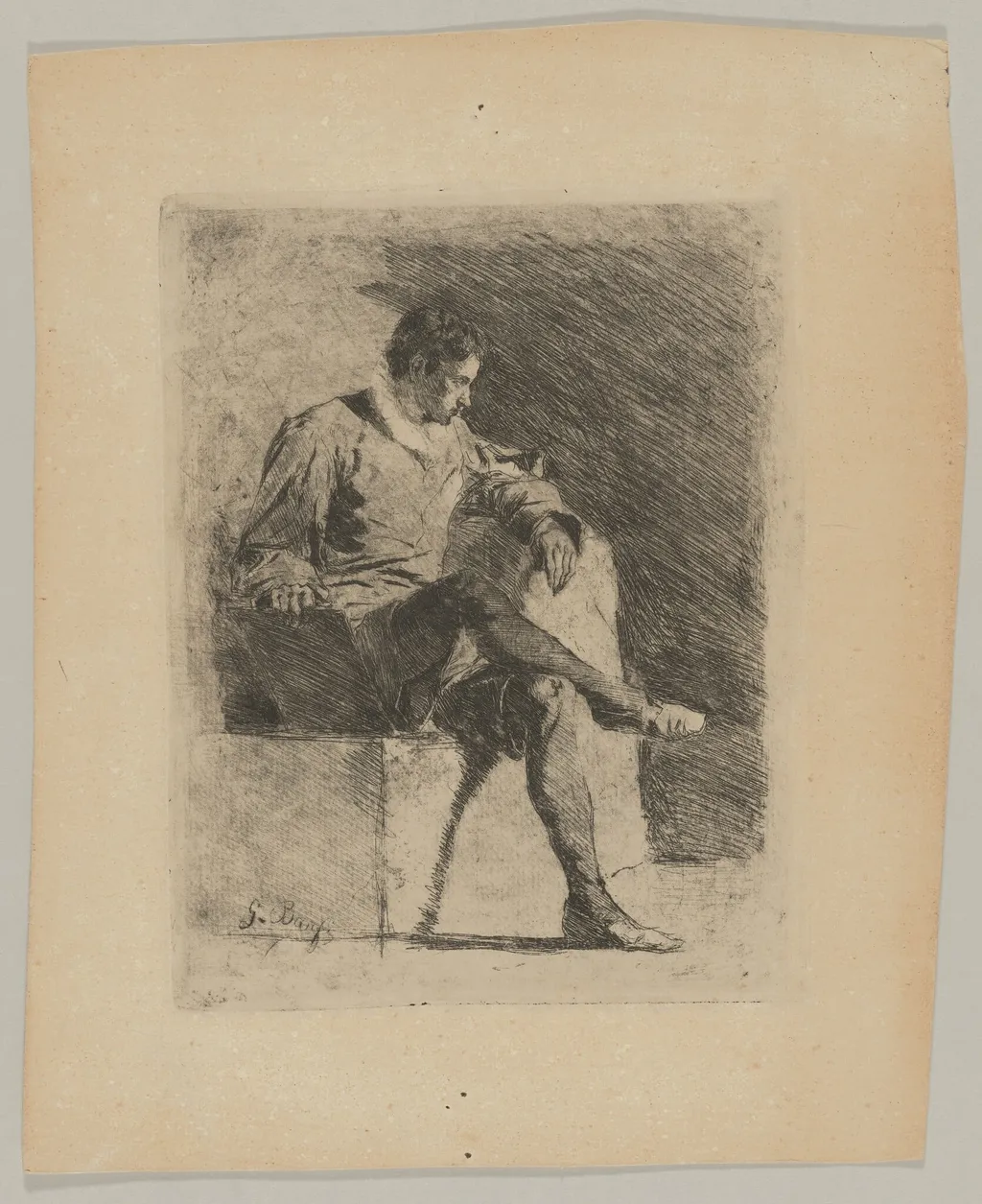
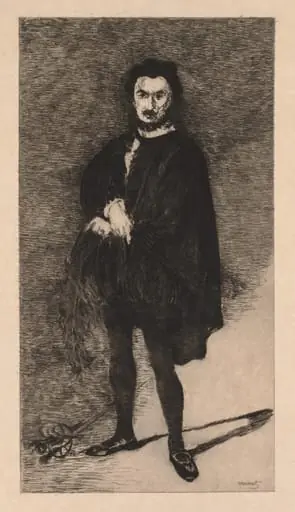
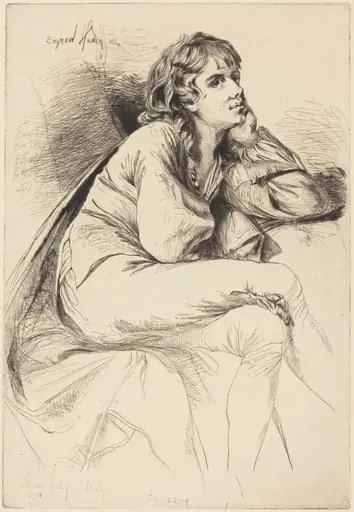
Seated Man in Sixteenth-Century Costume is an ink print by the Impressionist artist Gioacchino Banfi. It dates from 1878 and is held in the collection of the National Gallery of Art.
About this work
Overview
, where it is cataloged as a study rather than a finished composition, reflecting the artist’s interest in informal portraiture and tactile surface variation.
Created around 1878 by Gioacchino Banfi, this print combines etching, aquatint, and drypoint on wove paper. It depicts a seated male figure in attire suggestive of the sixteenth century, rendered with a spontaneous, observational quality. The work resides in the National Gallery of Art in Washington, D.C., where it is cataloged as a study rather than a finished composition, reflecting the artist’s interest in informal portraiture and tactile surface variation.
Subject & Meaning
The figure sits on a low stool, barefoot and loosely dressed, leaning forward with hands clasped as if holding an object. His downward gaze and relaxed posture suggest introspection or quiet concentration. The costume, though historically evocative, is not an accurate reconstruction but a stylized suggestion, emphasizing mood over historical precision. The subject appears unposed, capturing a fleeting moment of stillness rather than formal representation.
Technique & Style
Banfi employed etching for fine lines, drypoint for rich, grainy textures, and aquatint to create soft tonal gradations. The clothing shows delicate cross-hatching, while the background dissolves into broad, blurred washes of ink. The rough, sketch-like quality of the drypoint marks enhances the sense of immediacy. The paper’s wove texture absorbs ink unevenly, contributing to the atmospheric depth and tactile ambiguity of the scene.
History & Provenance
The print was made in the late 1870s during Banfi’s active period in Italy, though its exact commission or original ownership is undocumented. It entered the National Gallery of Art’s collection through established acquisition channels in the twentieth century. Its status as a study suggests it was not intended for public sale but rather as part of the artist’s personal exploration of form and light in printmaking.
Context
Banfi worked during a time when artists in Europe were revisiting old master techniques to explore expressive potential beyond academic norms. His use of historical costume aligns with a broader trend of romanticizing the past, but here it serves as a vehicle for psychological presence rather than narrative. The work reflects the influence of Rembrandt’s etchings, particularly in its emphasis on shadow and intimate gesture.
Legacy
Though not widely exhibited, this print exemplifies Banfi’s contribution to late nineteenth-century printmaking, where technical experimentation met observational realism. It remains a quiet example of how artists used etching not for grand statements, but to capture transient human presence. Its preservation in a major institution underscores its value as a study in material and mood rather than historical reconstruction.
Artist & collection