Artwork
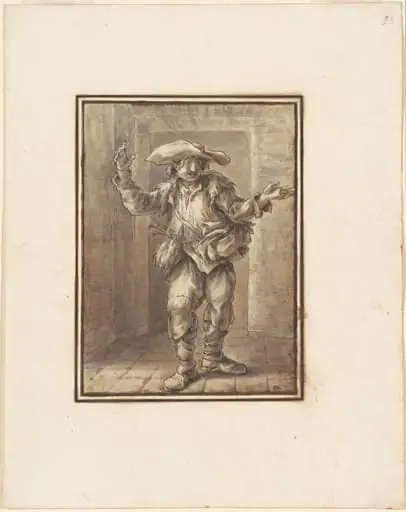
Poisson en habit de Païsan
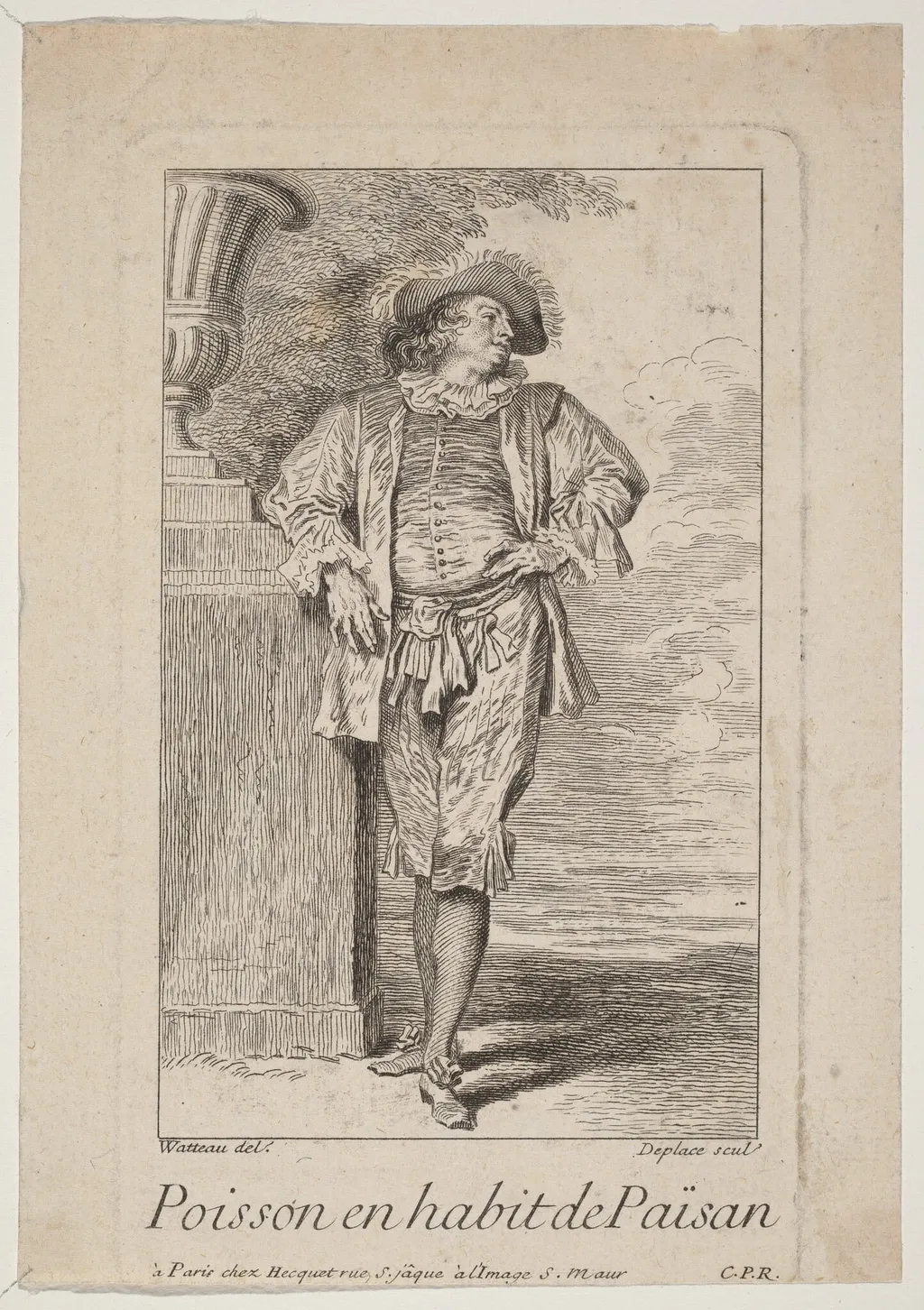
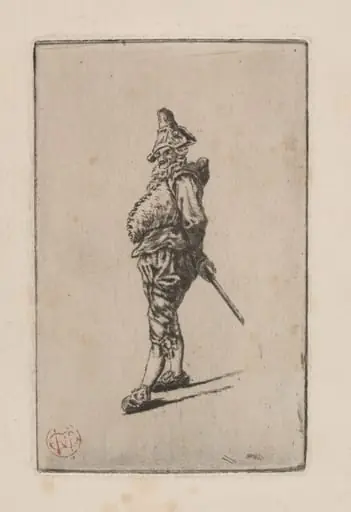
Poisson en habit de Païsan is an ink print by the Baroque artist Louis Deplaces. It dates from 1773 and is held in the collection of the National Gallery of Art.
About this work
Overview
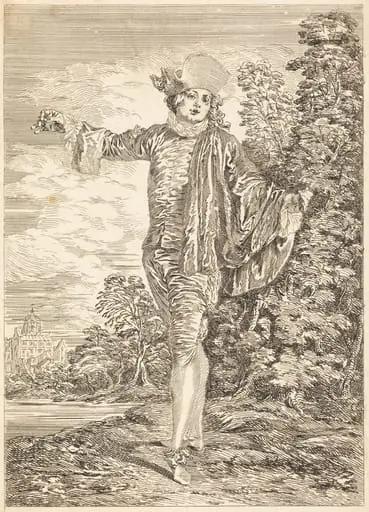
Louis Deplaces produced an etching in 1773 titled Poisson en habit de Païsan. The work presents a solitary figure rendered in monochrome, positioned before a plain wall with a window frame. The composition is straightforward, focusing attention on the subject’s attire and posture.
Subject & Meaning
The central figure is a man dressed in what appears to be rustic clothing: a broad-brimmed hat, a loosely buttoned shirt, baggy trousers tucked into boots, and one hand placed on his hip. The inscription beneath the image identifies him as “Poisson en habit de Païsan,” translating to “Poisson in peasant clothes,” suggesting a deliberate juxtaposition of a possibly aristocratic individual adopting a farmer’s guise.
Technique & Style
Executed as an etching, the image relies on fine, incised lines that convey texture and form with a slightly rough, spontaneous quality. The black‑and‑white palette emphasizes contrast between the figure and the background, while the linear scratches impart a sense of immediacy typical of 18th‑century printmaking.
History & Provenance
Created in the late eighteenth century, the print reflects Deplaces’s engagement with genre subjects that blend humor and social commentary. While specific ownership records are limited, the work remains an example of French print culture of the 1770s, illustrating contemporary tastes for satirical portraiture.
Artist & collection