Artwork
Gravure en Taille-Douce: pl. IV
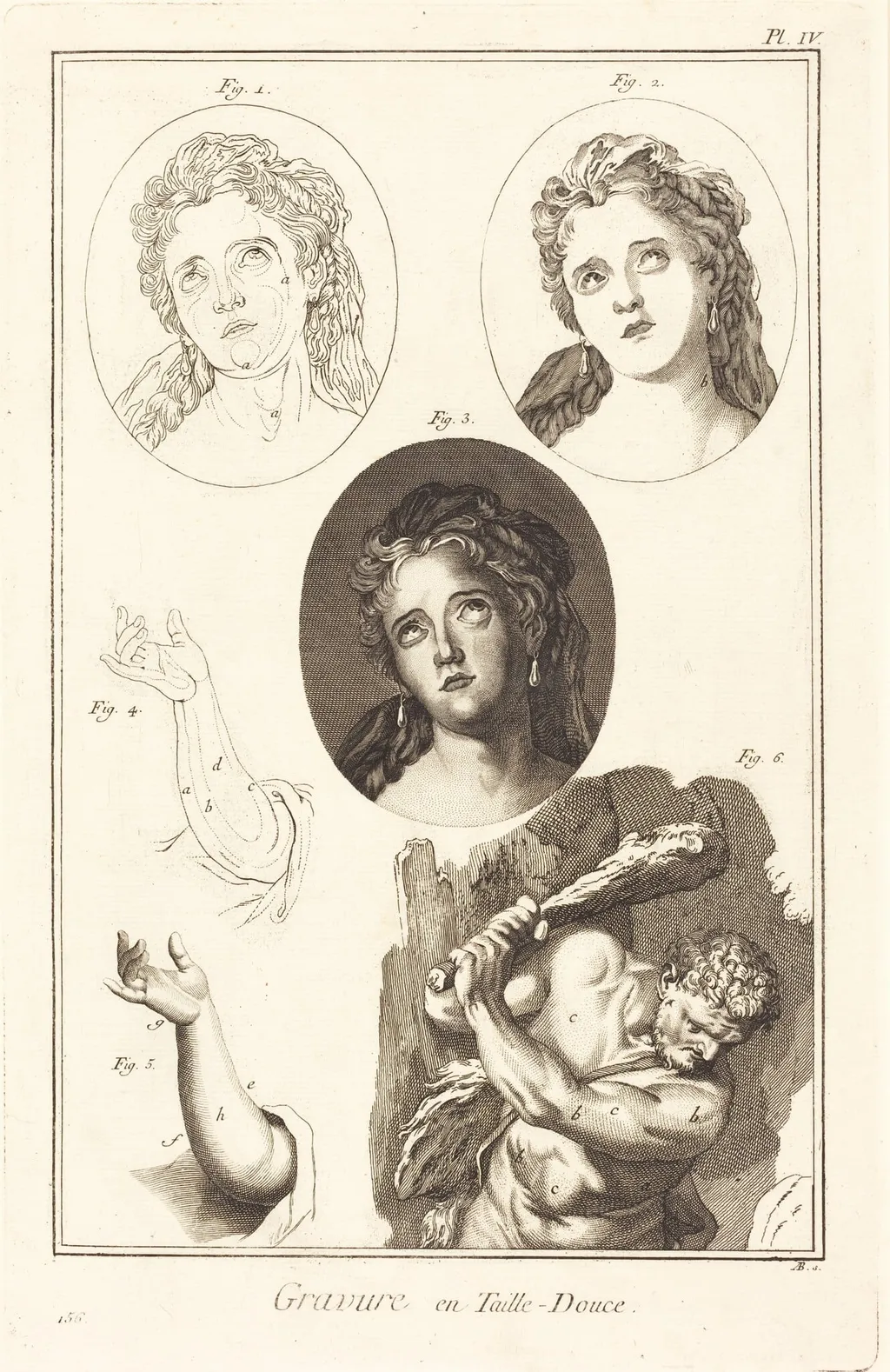
Gravure en Taille-Douce: pl. IV is an ink print by the Romanticist artist Antonio Baratta. It dates from 1775 and is held in the collection of the National Gallery of Art.
About this work
Overview
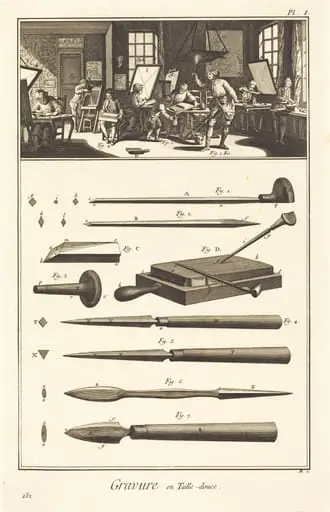
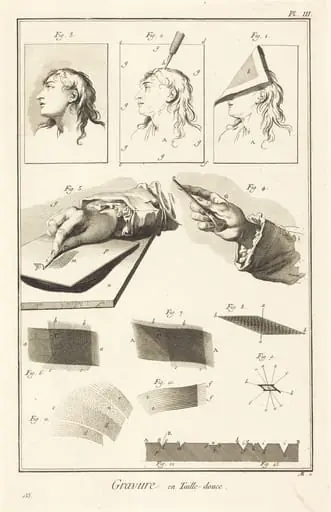
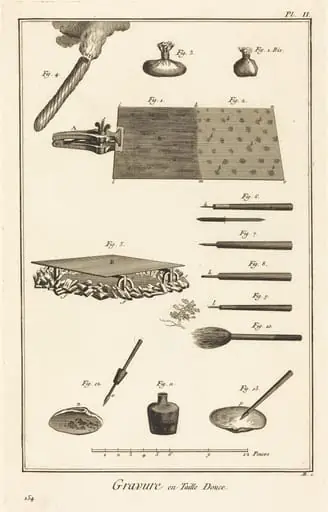
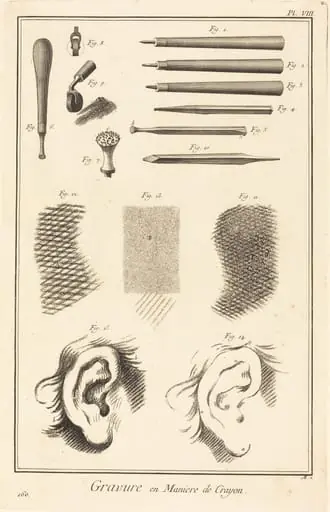
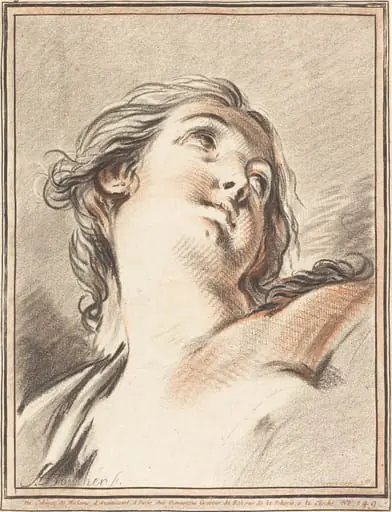
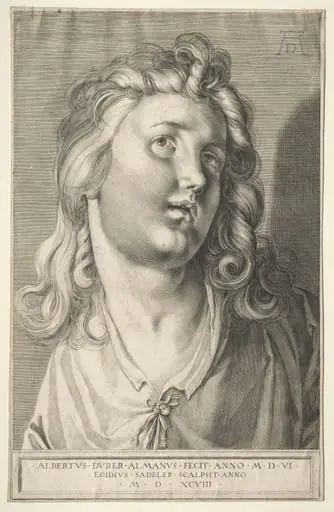
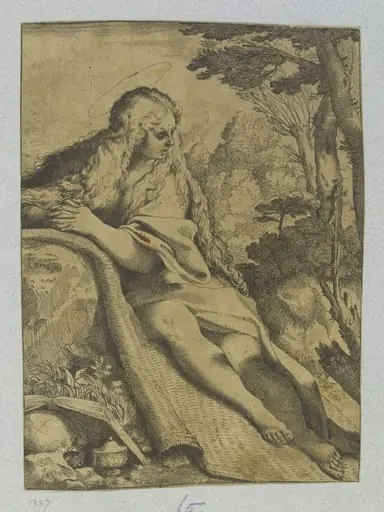
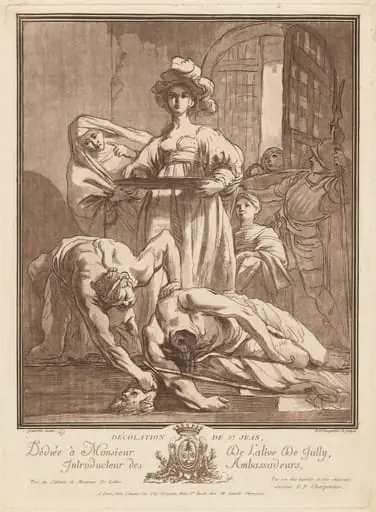
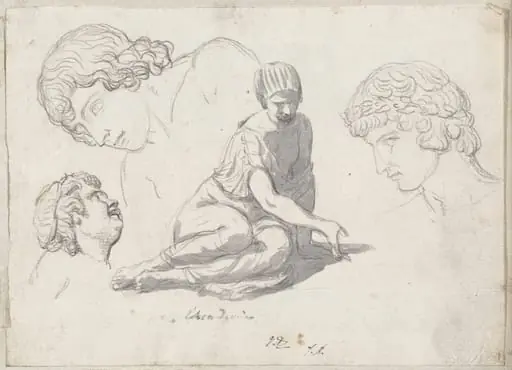
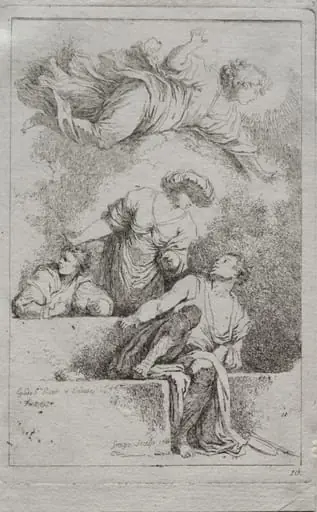
Antonio Baratta’s 1775 work titled *Gravure en Taille-Douce: pl. IV* is a black‑and‑white engraving executed on laid paper. The print comprises a collection of five numbered studies arranged on a single sheet, each rendered in fine, linear detail characteristic of the taille‑douce technique.
Subject & Meaning
The composition includes three close‑up portrait studies of individuals with curly hair, a study of a hand grasping a cloth, and a larger figure adjusting a wreath or headpiece on another’s head. The latter scene suggests an allegorical narrative, possibly invoking themes of adornment, ceremony, or transformation.
Technique & Style
Baratta employed the taille‑douce method, a soft‑ground etching process that allows for delicate, velvety lines and subtle tonal variations. The fine cross‑hatching and careful modulation of light and shadow create a sense of texture in hair, fabric, and skin, while the small scale of the studies highlights the artist’s skill in rendering intricate gestures.
History & Provenance
Created in 1775, the print forms part of a series identified as plate IV, indicating its position within a larger set of Baratta’s engravings. The work has been preserved on laid paper, a common support for fine prints of the period, and has circulated among collections of 18th‑century European graphic art.
Context
Baratta worked in the late Baroque and early Neoclassical era, a time when printmakers produced preparatory studies for larger compositions or for instructional purposes. The inclusion of both portrait fragments and a narrative figure reflects contemporary interests in anatomy, gesture, and allegorical representation.
Legacy
While not a widely reproduced image, this engraving exemplifies the meticulous draftsmanship valued by 18th‑century artists. It offers insight into the preparatory processes behind larger works and continues to serve as a reference for scholars studying Baratta’s technique and the broader practice of taille‑douce engraving.
Artist & collection