Artwork
The Risen Christ
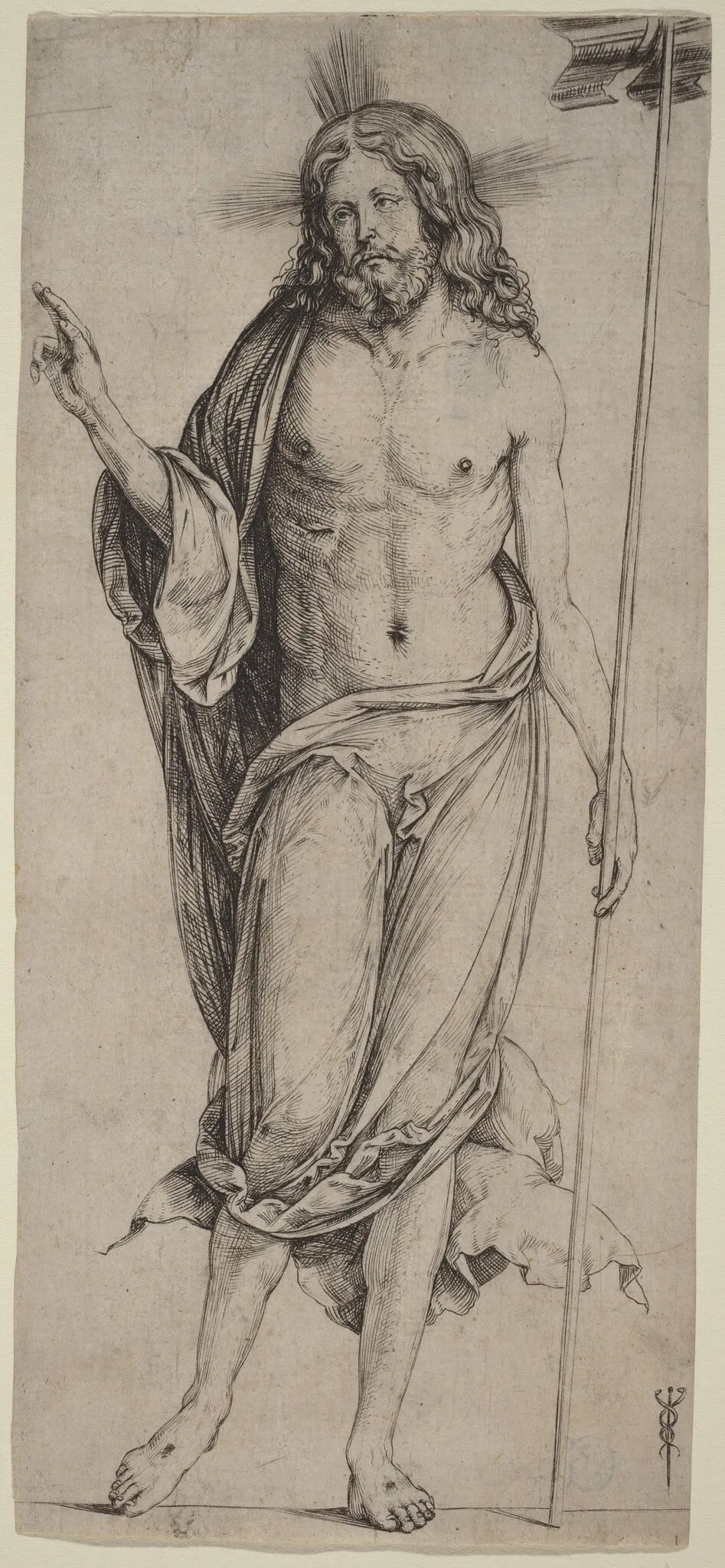
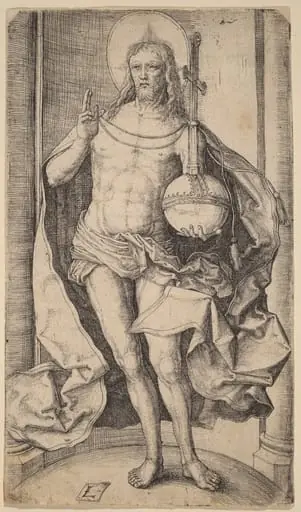
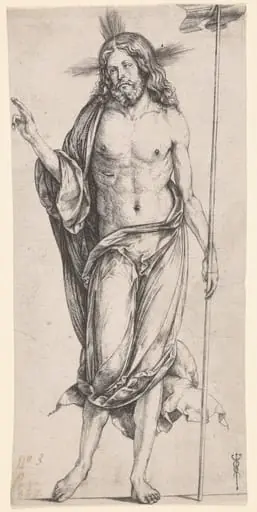
The Risen Christ is an ink print by the Renaissance artist Jacopo de' Barbari. It dates from 1504 and is held in the collection of the Rosenwald Collection.
About this work
Overview
As one of the earliest Italian engravers to work extensively north of the Alps, Barbari helped bridge artistic traditions between regions.
Created around 1504, *The Risen Christ* is an engraving by Jacopo de' Barbari, an Italian artist active during the Renaissance. It reflects his transition from Venice to Northern Europe, where he introduced Italian compositional ideas to German printmaking circles. As one of the earliest Italian engravers to work extensively north of the Alps, Barbari helped bridge artistic traditions between regions. This work stands as a rare surviving example of his religious imagery in print.
Subject & Meaning
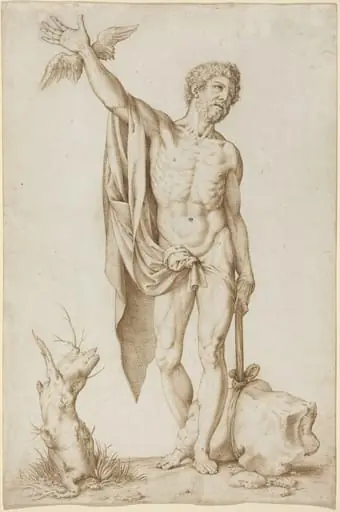
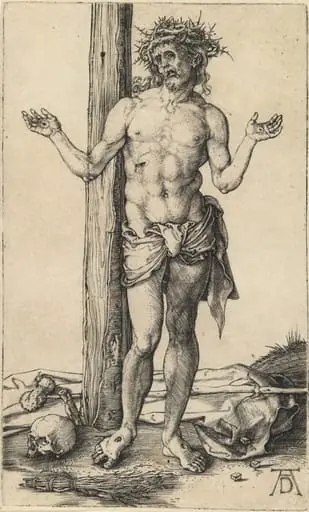
The image portrays Christ standing upright, bare-chested and bearded, with one arm raised in blessing. A loincloth drapes loosely around his hips, suggesting both humanity and divinity. Radiating lines behind his head imply divine light, a conventional symbol of resurrection and spiritual authority. The pose, neither fully frontal nor entirely profile, conveys quiet presence rather than dramatic action, aligning with contemplative devotional imagery of the period.
Technique & Style
Barbari employed fine, precise lines and cross-hatching to model form and suggest volume. The technique involves overlapping parallel strokes at varying angles to build gradations of tone, giving the figure a sculptural solidity. Details in the hair, beard, and fabric folds are rendered with meticulous control, demonstrating his training in draftsmanship. The sharp contrasts between light and shadow enhance the three-dimensionality of the figure without relying on tone or wash.
History & Provenance
Barbari moved to Germany in 1500, where he worked for patrons in Nuremberg and other centers of print production. *The Risen Christ* likely circulated among collectors and clergy familiar with Italian artistic innovations. Few of his engravings survive in large numbers, and this work is among the more clearly attributed examples. Its early date places it within a critical phase of his career, just before his departure from Germany.
Context
In the early 16th century, religious imagery in print was in high demand across Europe, especially as literacy and private devotion expanded. Barbari’s work entered a market dominated by Northern artists like Dürer, yet his Italian sensibility—evident in the idealized anatomy and balanced composition—offered a distinct alternative. His engravings contributed to the dissemination of Renaissance ideals beyond Italy, influencing local artists who sought to blend classical form with Northern detail.
Legacy
Though Barbari’s output was limited, his engravings helped transmit Italian Renaissance aesthetics to Northern Europe. *The Risen Christ* exemplifies how technical precision and classical proportion could be adapted to the medium of print. His approach to figure modeling through line influenced later engravers who sought to achieve sculptural depth without color or tone. His role as a cultural intermediary remains significant in the history of early modern printmaking.
Artist & collection
Artist
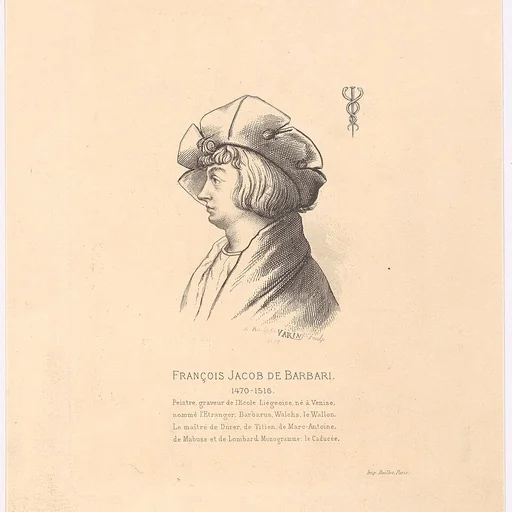
Jacopo de' Barbari, sometimes known or referred to as de'Barbari, de Barberi, de Barbari, Barbaro, Barberino, Barbarigo or Barberigo (c.
![View of Venice [lower right block], by Jacopo de' Barbari](https://artifactworldgallery.com/img/jacopo-de-barbari--view-of-venice-lower-right-block--371460ae957995b9-w320.webp)